The best audio compressors under $200 can smooth vocal levels, add punch to instruments, and make a mix easier to control without requiring a premium rack budget.
This roundup includes dual-channel rack processors, compressor/limiter/gate units, an in-line microphone preamp, and popular compressor pedals for different recording and performance needs.
Best 10 Audio Compressors Under 200 Picks for 2026
Flexible Rackmount Control

- Dual-channel VCA compression with auto attack/release
- Built-in noise gate, LED monitoring, and sidechain insert
- XLR/TRS connectivity in a 1U rackmount design
Best For: Studio, live sound, streaming, and multi-source setups
Pro-Level Dynamics
Behringer Composer Pro-XL MDX2600

- Two-channel compressor, limiter, and gate
- Designed for production, mixing, and mastering
- Portable corded unit with a 2-year warranty
Best For: General-purpose studio dynamics processing
Flexible Stereo Processing
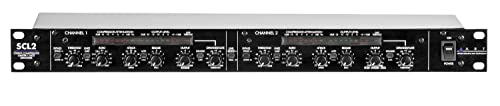
- Dual-channel or linked stereo operation
- Compressor, limiter, expander, and gate functions
- Balanced TRS/XLR connections and LED level meters
Best For: Stereo buses and flexible rack-based dynamics control
Classic Optical Tone
Universal Audio LA-2A Studio Compressor Pedal

- LA-2A optical tube-compressor emulation
- Mix control enables parallel compression
- Compact pedal with stock/fast attack switch
Best For: Pedalboard-based vintage-style instrument compression
Classic Pedal Pick

- Analog pedal compression for guitar signals
- Adds sustain while stabilizing dynamics
- Simple sensitivity control and flexible 9V power
Best For: Guitarists wanting classic, easy-to-use compression
Live Sound Workhorse

- Dual-channel compression and peak limiting
- Built-in noise gate and feedback suppression
- XLR/TRS connectivity in a 1U rackmount design
Best For: Live, studio, streaming, and stage signal processing
Inline Mic Solution
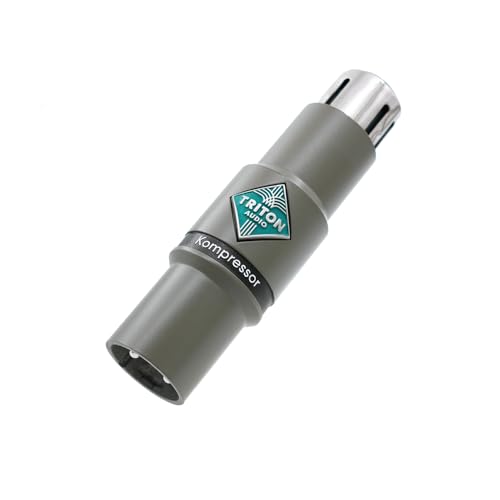
- Inline FET-OPTO compression and 25 dB gain
- Single-knob control for fast microphone leveling
- Phantom-powered design protects ribbon microphones
Best For: Podcasters and vocalists using dynamic or ribbon microphones
Versatile Rackmount Control

- Dual-channel VCA compression with Overeasy action
- Noise gate, LED metering, and sidechain insert
- XLR/TRS I/O for studio, live, and streaming setups
Best For: Vocal processing, streaming, and live sound racks
Feature-Packed Dynamics Processing

- Two-channel compressor, expander, gate, and limiter
- De-esser includes male and female voice modes
- Includes a 10-foot balanced XLR microphone cable
Best For: Vocal processing and flexible studio or live-sound dynamics control
Live-Sound Processing Value
- Compression, peak limiting, and noise gate in a 1U rackmount
- Adds crossover, feedback suppression, and DSP reverb
- XLR/TRS I/O for studio, stage, and streaming systems
Best For: Venue and stage setups needing integrated signal processing
Flexible Rackmount Control – Dual-Channel Audio Compressor
For shoppers comparing audio compressors under 200, this dual-channel rackmount processor offers practical control for studio, live, and streaming setups. Its classic VCA circuitry, automatic attack and release settings, noise gate, LED monitoring, and sidechain insert cover a broad range of dynamics tasks.
Best For: Vocal processing, live sound, streaming, and users who need two channels with sidechain routing.
Pros:
- Dual-channel design with Overeasy compression and auto attack/release settings
- Includes a built-in noise gate and independent LED indicators for monitoring
- XLR and 1/4-inch TRS connectivity with sidechain insert
- Rackmount 1U format suits fixed studio or live rigs
Cons:
- Its 1U rackmount form is less convenient for portable pedalboard-style use
- Operation requires a corded power source
This is a versatile option when you want traditional rack-based compression plus gating and sidechain control in one unit. The dual-channel layout and flexible connections make it particularly adaptable for multi-source setups.
Pro-Level Dynamics – Behringer Composer Pro-XL MDX2600
Among audio compressors under 200, the Behringer Composer Pro-XL MDX2600 is a straightforward two-channel dynamics processor for audio production, mixing, and mastering. It combines compressor, limiter, and gate functions in a portable rack-style unit.
Best For: Buyers seeking a two-channel compressor, limiter, and gate for production or mixing workflows.
Pros:
- Combines compression, limiting, and gating in one unit
- Two-channel design supports processing multiple sources
- Suitable for audio production, mixing, and mastering
- Includes a 2-year manufacturer warranty
Cons:
- Supplied notes provide limited detail about its controls and connectivity
- Requires corded power rather than battery operation
The MDX2600 is a sensible choice if you prioritize core dynamics functions over specialized features. Its two-channel layout and combination of compressor, limiter, and gate functions make it a practical general-purpose processor.
Flexible Stereo Processing – ART SCL2 Compressor/Limiter
The ART SCL2 is a strong contender among audio compressors under 200 for users who need flexible mono or stereo operation. Its dual-channel design can run independently or as a linked stereo processor, with selectable automatic or manual attack and release controls.
Best For: Stereo bus processing, dual-channel setups, and users who want compressor, limiter, expander, and gate functions.
Pros:
- Supports dual-channel or linked stereo operation
- Combines compressor, limiter, expander, and gate functionality
- Offers balanced 1/4-inch TRS and XLR inputs
- Includes selectable auto/manual attack and release plus LED level meters
Cons:
- The listed 240-volt specification may require attention to power compatibility
- Rack-style dimensions are less suitable for compact mobile rigs
With stereo linking, balanced connectivity, and several dynamics functions, the SCL2 is well suited to more involved routing setups. Its automatic and manual timing options also give you flexibility when dialing in a response.
Classic Optical Tone – Universal Audio LA-2A Studio Compressor Pedal
For musicians comparing audio compressors under 200, the Universal Audio LA-2A Studio Compressor Pedal brings an optical tube-compressor character to a compact stompbox. It emulates the Teletronix LA-2A design and adds a mix control for parallel compression.
Best For: Guitarists and performers seeking vintage-style optical compression in a pedal format.
Pros:
- Emulates the Teletronix LA-2A optical tube compressor/limiter
- Includes a mix control for parallel compression
- Offers a stock/fast attack switch and true/buffered bypass
- Compact 9-volt pedal design with USB-C connectivity
Cons:
- Single-pedal format is less suitable for multi-channel rack processing
- Requires a 9-volt power source and draws 100 milliamps
This pedal is the most specialized option in the group, focusing on vintage-inspired optical compression rather than broad rack-based routing. Its mix control and attack switch make it useful when shaping a compressed instrument tone directly in a pedalboard setup.
Classic Pedal Pick – MXR Dyna Comp Compressor
For guitarists comparing audio compressors under 200, the MXR Dyna Comp is a straightforward analog pedal built to even out your signal and add sustain. Its familiar knob-based design makes it a practical choice for players who want stable dynamics without a complicated setup.
Best For: Guitarists seeking classic pedal compression, increased sustain, and consistent output.
Pros:
- Evens out the signal sent to your amplifier.
- Can provide increased sustain with stable dynamics.
- Compact analog design with a simple sensitivity control.
- Powered by a 9-volt battery or compatible Dunlop AC adapter.
Cons:
- Designed primarily as an instrument pedal rather than a rack or microphone processor.
- Offers a focused control layout instead of extensive adjustment options.
The Dyna Comp is a solid fit when you want recognizable pedal-style compression and easy operation. Its limited controls favor quick, musical results over detailed signal shaping.
Live Sound Workhorse – 2-Channel Audio Compressor
Among audio compressors under 200, this 1U rackmount processor stands out for setups that need two channels and broader live-sound control. It combines compression and limiting with noise reduction, crossover, feedback suppression, DSP reverb, and XLR/TRS connectivity.
Best For: Studio, stage, bar, live-performance, and streaming systems needing dual-channel processing.
Pros:
- Provides dual-channel compression and limiting to help prevent overload.
- Includes a built-in noise gate for reducing unwanted background noise.
- Offers feedback suppression, anti-howling processing, and DSP reverb.
- XLR and 1/4-inch TRS inputs and outputs support flexible integration.
Cons:
- Its rackmount format is less convenient than a compact inline unit.
- The broad feature set may require more setup than a single-control compressor.
This is the more versatile choice for users managing multiple channels or demanding venue environments. Choose it when connectivity and additional processing matter as much as basic compression.
Inline Mic Solution – Triton Audio Kompressor
For buyers comparing audio compressors under 200 for microphones, the Triton Audio Kompressor combines inline FET-OPTO compression with a 25 dB preamp in a compact XLR barrel. Its one-knob interface is designed for quick leveling, particularly with dynamic and ribbon microphones.
Best For: Podcasts, recording, and vocal setups using low-output dynamic or ribbon microphones.
Pros:
- Combines compression and 25 dB of microphone gain in one compact unit.
- One-knob control makes adjustment quick and accessible.
- Designed to improve sensitivity and transient response with dynamic and ribbon mics.
- Blocks 48V phantom power from reaching the microphone while using phantom power to operate.
Cons:
- Requires 48V phantom power to operate.
- Provides less hands-on control than a multi-knob or rackmount compressor.
- Its XLR inline format is focused on microphone applications rather than general instrument processing.
The Kompressor is a convenient source-level option when you need both clean gain and simple dynamic control. It is especially appealing for spoken-word and low-output microphone chains where space and speed matter.
Versatile Rackmount Control – Dual-Channel Vocal Compressor
For shoppers comparing audio compressors under 200, this dual-channel rackmount model offers practical control for vocals, instruments, streaming, and live sound. Its VCA circuit, Overeasy compression, noise gate, sidechain insert, LED metering, and XLR/TRS connections provide a flexible feature set for studio and performance setups.
Best For: Vocal processing, streaming, small studio racks, and live sound systems that need two channels of compression and gating.
Pros:
- Dual-channel compression with adjustable attack and release controls
- Built-in noise gate and LED metering for setup feedback
- Sidechain insert supports frequency-based ducking and low-end control
- XLR and 1/4-inch TRS connectivity suits mixers, interfaces, and PA systems
Cons:
- Its 19-inch rackmount format may be excessive for compact desktop rigs
- The supplied notes do not specify a broad range of additional processing features
This is a well-rounded choice when you want straightforward dual-channel dynamics control with useful routing and vocal-oriented features. The two-year warranty is also a practical advantage for a rack-based installation.
Feature-Packed Dynamics Processing – Behringer Composer Pro-XL
Among audio compressors under 200, the Behringer Composer Pro-XL MDX2600 stands out for combining compression, expansion, gating, de-essing, and peak limiting in a two-channel unit. It also includes a 10-foot balanced XLR microphone cable, making the bundle useful for immediate studio or live-sound setup.
Best For: Users who want broad vocal and instrument dynamics processing, including de-essing, stereo-linked operation, and peak protection.
Pros:
- Independent or stereo-linked two-channel processing
- Integrated de-esser with male and female voice detection modes
- Sidechain input/output supports ducking and frequency-dependent compression
- Includes a 10-foot H&A XLR male-to-female microphone cable
Cons:
- Its many controls may require more setup time than a basic compressor
- The listed warranty is one year limited, shorter than some alternatives
The MDX2600 is a strong fit when de-essing, expansion, limiting, and flexible attack/release control matter as much as compression. Its included cable adds convenience, particularly for vocal-oriented systems.
Live-Sound Processing Value – 2-Channel Compressor with DSP
This 1U rackmount unit is an option for buyers seeking audio compressors under 200 with additional live-sound processing features. Alongside dual-channel compression, peak limiting, and a noise gate, it lists an electronic crossover, feedback suppressor, DSP reverb, and anti-howling processing.
Best For: Stage, bar, venue, and streaming setups that need compression plus feedback control and extra vocal-processing functions.
Pros:
- Dual-channel compression with peak limiting for consistent output
- Noise gate helps reduce unwanted background sound
- Electronic crossover, feedback suppression, and DSP reverb add system flexibility
- XLR and 1/4-inch TRS inputs and outputs support professional signal routing
Cons:
- The supplied specifications include unusual voltage and amperage entries, so buyers should verify power requirements
- The notes do not provide detailed attack, release, or ratio specifications
This model is aimed more at integrated live-sound control than minimal studio compression. Its combination of limiting, gating, feedback suppression, and DSP features may appeal to venue users who prefer one rack unit for several signal-management tasks.
How We Picked the Best Audio Compressors Under 200
We focused on signal-control features, connection options, format, and practical value rather than simply choosing the least expensive units. The lineup includes rackmount processors for studio and live use, compact tools for microphones and dynamic sources, and pedals for guitarists who need consistent sustain and level control.
Important features considered include compression and limiting controls, expanders or noise gates, sidechain access, de-essing, balanced XLR/TRS connectivity, channel count, gain availability, and suitability for vocals, instruments, streaming, or front-of-house work. Because prices and bundles can change, verify current specifications and included accessories before purchasing.
Quick Comparison
| Type | Best suited for | Notable capability |
|---|---|---|
| Dual-channel rack compressors | Studios, live sound, and stereo sources | Independent or linked channel processing |
| Compressor/limiter/gate units | Vocals, drums, broadcasts, and stage rigs | Broader dynamic-control toolkit |
| In-line microphone compressor/preamp | Dynamic and ribbon microphones | Added gain in a compact format |
| Compressor pedals | Electric guitar and pedalboards | Simple foot-controlled sustain and leveling |
Key Buying Factors for Audio Compressors Under 200
Choose the Right Format
A 1U rack unit is the most flexible choice for a studio rack, mixer insert, or live system, especially when you need two channels and balanced inputs and outputs. A pedal is better for guitarists who want compression before an amplifier or effects chain. An in-line preamp is useful when a microphone needs extra clean gain, but it is not a replacement for a full two-channel rack processor.
Match the Controls to the Source
Look for threshold, ratio, attack, release, and output or makeup gain when you want detailed control. A limiter can help prevent peaks, while a gate or expander can reduce room noise and bleed. De-essing is particularly useful for vocal sibilance. Sidechain inserts are valuable when you want external filtering or keyed compression.
Check Connections and Signal Level
Confirm whether the unit uses XLR, TRS, instrument, or microphone connections and whether its operating level matches your mixer or interface. For ribbon and low-output dynamic microphones, prioritize a product designed to provide sufficient clean gain. For stereo material, check whether channels can be linked.
Who Should Buy Which Audio Compressors Under 200?
For Studio and Live Vocal Processing
Choose a dual-channel rack compressor with a limiter, gate, and sidechain insert if you want a versatile vocal and instrument processor. These features provide more control as your setup expands.
For a Budget Rack System
The Behringer and ART-style rack options are practical starting points for users who need multiple dynamics tools in one chassis. They are especially suitable for home studios, rehearsal spaces, and small live systems.
For Guitarists
The MXR Dyna Comp and Universal Audio LA-2A pedal are better fits for pedalboards than rack processors. Choose based on whether you prefer a straightforward, familiar compressor sound or a more studio-inspired pedal approach.
For Microphones Needing Extra Gain
The Triton Audio in-line unit is the focused choice for dynamic or ribbon microphones used with preamps that need additional level. Confirm phantom-power compatibility and your microphone chain before buying.