Choosing the best audio mixer for church sound means balancing microphone inputs, monitor control, ease of use, and the needs of your worship team. A compact analog board may suit a small congregation, while a networked digital mixer can simplify larger services and remote mixing.
This roundup compares 10 options across digital, analog, powered, and compact formats so you can match your budget and production workflow to the room.
Best 10 Audio Mixer for Church Sound Picks for 2026
Best Tablet-Controlled Mixer
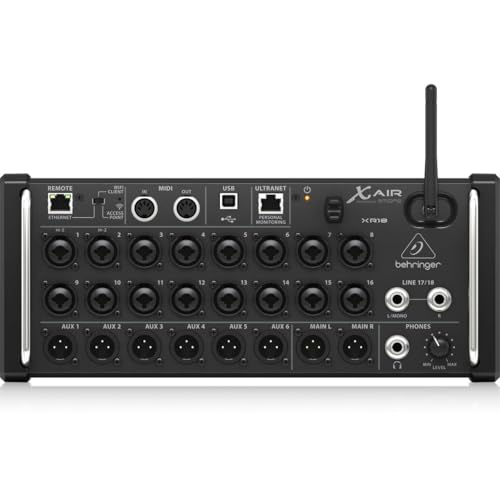
- 18-channel digital mixer with 16 programmable MIDAS preamps
- Built-in Wi-Fi for iPad and Android control
- 18 x 18 USB interface for recording and playback
Best For: Tablet-based church sound setups with flexible digital routing
Best Remote-Controlled Mixer

- Remote control from up to 10 devices
- Built-in dbx, DigiTech, and Lexicon processing
- USB playback and direct-to-memory recording
Best For: Church teams sharing remote control across phones, tablets, and computers
Best Analog-Style Option
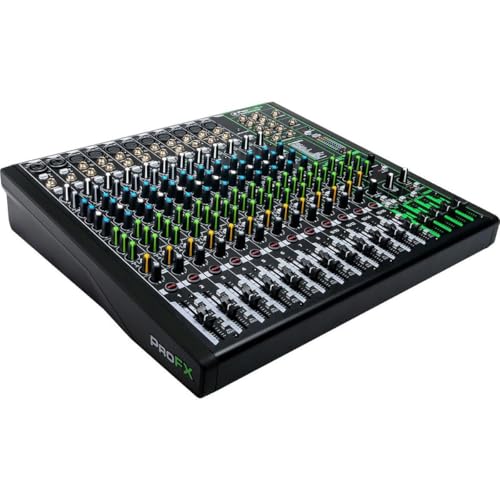
- 16-channel mixer with hands-on analog-style controls
- 24 built-in GigFX effects
- USB multitrack recording while mixing
Best For: Churches wanting simple operation and integrated recording
Best Large-Format Console

- 40 input channels and 25 buses
- 32 programmable MIDAS-designed mic preamps
- Motorized faders and extensive output connectivity
Best For: Larger worship spaces with complex live mixing requirements
Large-Venue Control
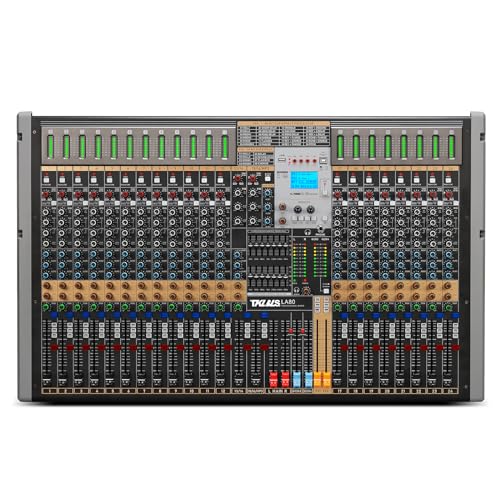
- 20 mic and 4 stereo inputs
- Individual 48V phantom power
- Dual DSP and four-group routing
Best For: Larger church services and complex live sound setups
Powered Main-Speaker Solution
Rockville RPM1870 Powered Mixer
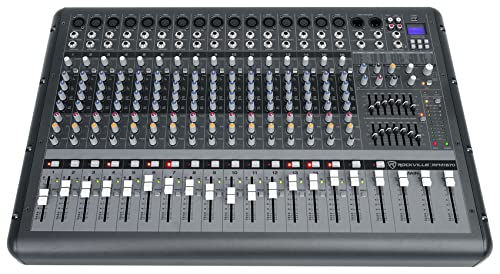
- 18 channels and 16 mic preamps
- 750W x 2 RMS at 4 ohms
- USB, Bluetooth, and onboard effects
Best For: Larger venues needing integrated mixer and amplifier power
Compact Service Setup

- Three XLR mic inputs with 48V power
- USB recording and USB-drive playback
- Bluetooth, effects, and headphone monitoring
Best For: Small churches and simple active-speaker systems
Feature-Rich Pick
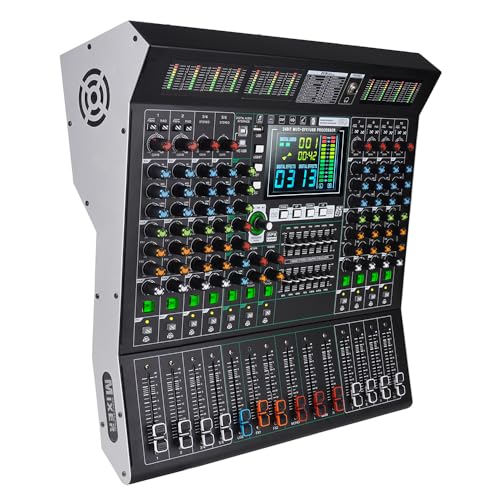
- 10 independent channels with 3-band EQ
- 99 DSP effects with LED display
- Bluetooth, USB playback, and 48V phantom power
Best For: Churches needing flexible control, effects, and playback options
Compact Value Pick
6-Channel Bluetooth Audio Mixer

- Four XLR inputs with 48V phantom power
- Bluetooth and USB playback support
- 16 DSP effects and 3-band channel EQ
Best For: Small church services and compact live sound setups
Expandable Choice

- 16 channels for microphones and other sources
- Per-channel gain, EQ, FX, PFL, and fader controls
- USB, Bluetooth, headphone monitoring, and 48V phantom power
Best For: Larger church systems and multi-microphone services
Best Tablet-Controlled Mixer – Behringer X AIR XR18
The Behringer X AIR XR18 is a strong audio mixer for church sound when you want flexible digital control without a traditional console at the mix position. It provides 18 channels, 16 programmable MIDAS-designed mic preamps, built-in Wi-Fi, and an 18 x 18 USB interface for recording and playback workflows.
Best For: Churches needing tablet-based control, multiple microphone inputs, and integrated USB recording.
Pros:
- Controls from iPad or Android tablets
- 16 programmable MIDAS-designed mic preamps
- Built-in tri-mode Wi-Fi router
- 18 x 18 bidirectional USB audio interface
Cons:
- Requires a tablet or other compatible device for remote operation
- The listed Dugan-style auto-mixing feature is noted as future firmware
The XR18 combines a compact 7.1-pound design with useful digital routing and recording features. It is especially practical for teams comfortable managing a worship mix from a tablet.
Best Remote-Controlled Mixer – Soundcraft Ui16
The Soundcraft Ui16 is a practical audio mixer for church sound when several operators need remote access. It supports control from tablets, phones, computers, and multiple operating systems, while its built-in processing, USB playback, and broad output selection support common worship setups.
Best For: Churches that want remote mixing from multiple devices plus built-in effects and output processing.
Pros:
- Supports up to 10 control devices simultaneously
- Includes dbx, DigiTech, and Lexicon signal processing
- Offers three dedicated Lexicon effects buses
- Includes USB playback and direct-to-memory recording
Cons:
- Remote control depends on network connectivity
- Its 16-input layout is less expansive than larger consoles
With eight XLR combo inputs, four XLR mic inputs, instrument inputs, stereo RCA input, and four balanced XLR aux outputs, the Ui16 covers a wide range of connections. Its 7.9-pound rack-mountable format also suits organized church installations.
Best Analog-Style Option – Mackie ProFX16v3
The Mackie ProFX16v3 is an approachable audio mixer for church sound teams that prefer hands-on controls over a digital learning curve. Its 16-channel layout, Onyx preamps, built-in GigFX effects, and USB multitrack recording make it suitable for mixing a service while recording at the same time.
Best For: Churches and small venues wanting familiar analog-style operation with USB recording.
Pros:
- Provides 16 channels without a digital learning curve
- Onyx preamps deliver up to 60 dB of gain on mic channels
- Includes 24 built-in GigFX effects
- Records multitrack over USB while mixing the room
Cons:
- At 19.7 pounds, it is heavier than the compact digital mixers listed here
- It offers fewer channels than the Behringer X32
The ProFX16v3 balances straightforward physical mixing with useful computer connectivity. It is a sensible choice when volunteers value visible controls and the church also wants a built-in recording interface.
Best Large-Format Console – Behringer X32
The Behringer X32 is a large-format audio mixer for church sound systems handling many microphones, buses, and outputs. It offers 40 input channels, 32 programmable MIDAS-designed mic preamps, 25 buses, motorized faders, and extensive scene-management features for complex live applications.
Best For: Larger churches needing substantial input capacity, flexible bus routing, and motorized console control.
Pros:
- Provides 40 input channels and 25 buses
- Includes 32 programmable MIDAS-designed mic preamps
- 25 automated 100 mm motorized faders support scene management
- Offers 16 XLR outputs plus additional line inputs and outputs
Cons:
- Its 45.4-pound weight and large dimensions require dedicated space
- More console capacity may be unnecessary for smaller worship teams
The X32 is built for churches that need room to grow in channel count and routing complexity. Its motorized faders, LCD scribble strips, and talkback section can help operators manage a demanding live mix.
Large-Venue Control – 24-Channel Audio Mixer
If you need an audio mixer for church sound with many microphones, instruments, and playback sources, this 24-channel model offers substantial input capacity and flexible routing. Its dual DSP, individual phantom-power switches, and group outputs make it suited to more involved live setups.
Best For: Larger church services, live events, and recording setups requiring numerous microphone inputs and detailed signal control.
Pros:
- 20 microphone inputs plus 4 stereo inputs accommodate large, mixed-source setups.
- Individual 48V phantom-power switches let you power condenser microphones channel by channel.
- Dual DSP provides up to 24 reverb effects, with separate control for microphone and music signals.
- Four-group routing, dual 7-band EQ, PAD controls, and high-pass filters support flexible mixing.
Cons:
- Its 24-channel format and approximately 15.99 kg weight may be more than a small church needs.
- It is corded electric and does not list software-update support in the supplied details.
This is the strongest fit when channel count and routing flexibility matter more than a compact footprint. For smaller systems, its extra capacity may add unnecessary complexity.
Powered Main-Speaker Solution – Rockville RPM1870 Powered Mixer
For churches that want an audio mixer for church sound with speaker-driving power built in, the Rockville RPM1870 combines 18 channels with a powered amplifier. USB playback and recording, Bluetooth, onboard effects, and separate graphic EQs add useful flexibility for services and events.
Best For: Larger venues that need a powered mixer for main speakers, vocals, instruments, and event playback.
Pros:
- 18 channels include 16 XDR2 microphone preamps with 48V phantom power.
- Built-in amplifier is rated at 750W x 2 RMS at 4 ohms, with higher peak ratings listed.
- USB supports MP3/WAV/WMA playback and recording, while Bluetooth enables wireless streaming.
- Dual 7-band EQs and aux send/return on every channel provide detailed control options.
Cons:
- At approximately 37 pounds, it is relatively substantial for portable setups.
- Its powered design may be unnecessary if your church already uses separate power amplifiers.
The RPM1870 is a practical all-in-one choice when you need both mixing and amplifier power. Confirm speaker impedance and system requirements before connecting it to your church’s loudspeakers.
Compact Service Setup – Aveek 5-Channel Mixer
For a small church seeking an audio mixer for church sound, the Aveek 5-channel model provides a compact way to connect microphones, instruments, and stereo playback. USB computer recording, USB-drive playback, Bluetooth, and basic effects make it versatile for modest services and events.
Best For: Small churches, meetings, weddings, streaming, and simple systems using active speakers or a power amplifier.
Pros:
- Three XLR inputs plus stereo 1/4-inch and RCA inputs support microphones, instruments, and playback devices.
- USB-B enables plug-and-play computer recording, and a USB drive can play or record MP3 audio.
- Bluetooth supports wireless streaming from compatible devices within approximately 15 feet.
- Includes 48V phantom power, two-band EQ, echo and delay effects, and headphone monitoring.
Cons:
- Five channels offer much less expansion capacity than larger church-sound mixers.
- Bluetooth, USB, and 4/5-channel functions cannot be used simultaneously.
- The supplied notes specify compatibility with active speakers or a power amplifier for outputs.
This mixer is a sensible budget-conscious option for straightforward setups, especially when compact size and recording features are priorities. It is less suitable for large worship teams or complex multi-microphone services.
Feature-Rich Pick – MD-10 10-Channel Stage Mixer
The MD-10 is a versatile audio mixer for church sound when you need independent control across multiple inputs, onboard effects, and playback options. Its 10 channels, 3-band channel EQ, 48V phantom power, and real-time 9-band equalizer support spoken presentations, music, and live performances.
Best For: Churches needing flexible channel control, built-in effects, and wireless or USB music playback.
Pros:
- Ten independent channels with separate 3-band tone controls.
- Includes 99 DSP effects and a large LED display for effect settings.
- Offers Bluetooth, USB lossless playback, 48V phantom power, and XLR/RCA outputs.
- Noise-reduction technology is designed to reduce floor noise and hum.
Cons:
- At 15.2 pounds, it is less portable than smaller mixers.
- The listed warranty is a 30-day return and exchange policy.
The MD-10 stands out for churches that want a broad effects selection and more hands-on tone shaping than a basic compact board. Its larger footprint and shorter listed return policy are worth considering before purchase.
Compact Value Pick – 6-Channel Bluetooth Audio Mixer
This compact six-channel audio mixer for church sound is suited to smaller setups that still need microphone inputs, wireless playback, and basic effects. It provides four XLR inputs with 48V phantom power, stereo channels, USB playback, Bluetooth streaming, and individual 3-band EQ controls.
Best For: Small church services, speech-focused systems, karaoke-style events, and compact live setups.
Pros:
- Six input channels support multiple microphones and instruments.
- Four XLR inputs provide switchable 48V phantom power for condenser microphones.
- Bluetooth and USB functions support music playback and mixing or recording.
- Includes 16 DSP effects plus channel-level 3-band EQ and faders.
Cons:
- Six channels provide less expansion room than larger consoles.
- The product uses a traditional analog design, so operation depends on manual control settings.
- The listed manufacturer warranty is 90 days.
For a modest church sound system, this mixer offers a useful combination of microphone connectivity, phantom power, playback, and effects in a smaller format. Larger worship teams may outgrow its six-channel layout.
Expandable Choice – 16-Channel Professional Mixer
The 16-channel professional console is a strong option when an audio mixer for church sound needs room for several microphones, instruments, and playback sources. Each channel includes gain, effects, PFL, EQ, and fader controls, while USB, Bluetooth, REC/TAPE connections, and headphone monitoring add flexibility for services and events.
Best For: Larger church audio setups, multi-microphone services, live events, and systems that need expansion room.
Pros:
- Sixteen channels provide substantial capacity for microphones and other sources.
- Every channel includes gain, FX, PFL, peak indication, 3-band EQ, and a fader.
- Supports USB mixing and recording, Bluetooth playback, and USB flash-drive recording.
- Includes 48V phantom power, headphone monitoring, reverb, and delay effects.
Cons:
- At 6.33 kg, it is less convenient to move than a compact mixer.
- The larger control layout may be more than a small service requires.
This console is best suited to churches that value channel capacity and independent controls over minimum size. Its one-year warranty is also longer than the policies listed for the other two mixers.
How We Picked the Best Audio Mixer for Church Sound
We focused on the features that matter most during worship services: available input channels, microphone preamps, phantom power, monitor and main outputs, built-in effects, USB connectivity, and control options. We also considered whether each mixer fits a small church, a growing volunteer team, a portable ministry, or a larger production system.
Digital models receive extra consideration for scene recall, remote control, routing flexibility, and streamlined setup. Analog and powered mixers remain useful when fast hands-on operation, straightforward installation, or built-in amplification is the priority.
Quick Comparison
- Small worship teams: Compact five- or six-channel mixers can cover a few microphones, playback sources, and a simple speaker system.
- Medium churches: Sixteen- to eighteen-channel boards provide room for vocalists, instruments, wireless microphones, and auxiliary sends.
- Larger services: A 24- or 32-channel digital console is better suited to multiple monitor mixes, bands, livestream feeds, and future expansion.
- Portable setups: Look for USB audio, wireless control, built-in effects, and a manageable physical footprint.
- Powered systems: A powered mixer can simplify a basic passive-speaker rig, but verify its output ratings and speaker compatibility.
Key Buying Factors for an Audio Mixer for Church Sound
Inputs and Future Capacity
Count every vocalist, instrument, playback device, podium microphone, and livestream feed you use now, then leave spare channels for growth. Do not rely only on the advertised total; check how many are dedicated microphone inputs and whether stereo channels share controls.
Routing and Monitor Mixes
Worship teams often need separate monitor mixes for singers, musicians, and video or broadcast systems. Confirm the number of auxiliary outputs and whether the mixer supports independent pre-fader monitor sends.
Digital Control and Reliability
Remote-controlled mixers can place the engineer in the room instead of behind the console, but they depend on dependable network access and a suitable control device. Physical controls may be preferable for volunteer operators or fast troubleshooting.
Sound Shaping and Connectivity
Parametric EQ, compression, reverb, feedback management, and scene memory can reduce setup time. USB recording or playback is useful for services and livestream workflows, while Bluetooth is convenient for background music but should not replace a dependable wired source.
Phantom Power and Installation
Check whether 48V phantom power is available where needed for condenser microphones and active direct boxes. Also verify balanced outputs, rack or table placement, power requirements, and compatibility with your existing speakers and amplifiers.
Who Should Buy Which Audio Mixer for Church Sound?
Choose a compact mixer for a small chapel, rehearsal space, or spoken-word service with limited microphones. Choose a mid-size analog board if volunteers need immediate tactile control and your routing needs are relatively simple.
Choose a digital mixer when you need saved scenes, multiple monitor mixes, remote operation, complex routing, or an integrated livestream workflow. Choose a larger 24- or 32-channel console for a growing worship band, multiple services, broadcast support, or expansion over the next few years.
Before ordering, map your current signal flow, count outputs as carefully as inputs, and confirm that the mixer works with your microphones, speakers, amplifiers, and operator experience.