The best audio mixers with USB interface combine hands-on level control with convenient computer recording, streaming, and playback. The right model depends on your channel count, microphone requirements, effects, routing options, and available desk space.
These 10 mixers cover compact podcasting and streaming setups, flexible home studios, live performances, and entry-level DJ use. Use the guide below to narrow the list by connectivity, workflow, and long-term value.
Best 10 Audio Mixers with USB Interface Picks for 2026
Balanced Analog Control

- Low-noise, high-headroom analog design
- British-style 3-band EQs
- USB and auxiliary connectivity
Best For: Hands-on mixing with computer audio connectivity
Small-Gig Workhorse
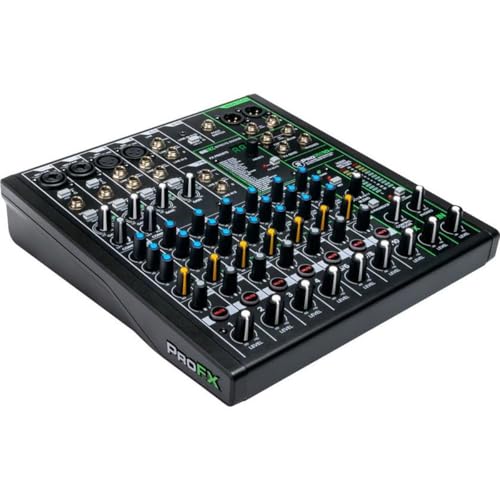
- 10 channels for small setups
- Onyx mic preamps
- USB recording plus 24 GigFX effects
Best For: Small gigs, rehearsals, streams, and recording
Effects-Ready Recording Hub

- Four phantom-powered mic preamps
- Four one-knob compressors
- 24-bit FX and USB interface
Best For: Recording, podcasting, and effect-assisted live mixing
Rugged Performance Mixer

- D-PRE Class-A mic preamps
- USB and SPX digital effects
- Rugged metal chassis
Best For: Performances, recordings, and lectures
Versatile DJ Value

- Bluetooth streaming from smartphones
- Eight inputs with phantom power
- DSP effects and USB-A MP3 playback
Best For: DJs, karaoke, and live performers needing wireless playback
Streaming Simplicity

- Stereo USB interface for computer or mobile audio
- Mixes PC and gaming sounds into streams
- Low-noise analog design for creators
Best For: Streaming, podcasting, and stereo recording setups
Effects-Focused Recording
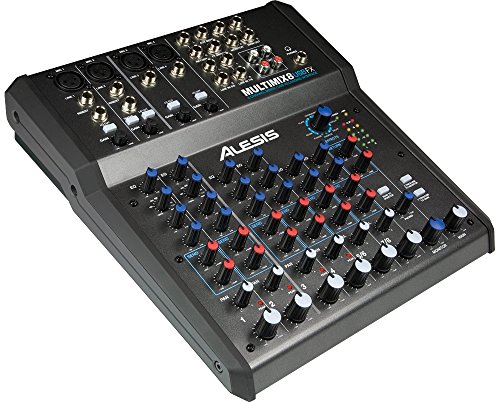
- Eight channels with guitar-level input
- Built-in DSP effects and Aux bus
- Plug-and-play stereo USB for Mac and PC
Best For: Home recording and small live setups with instruments
Best Compact Pick
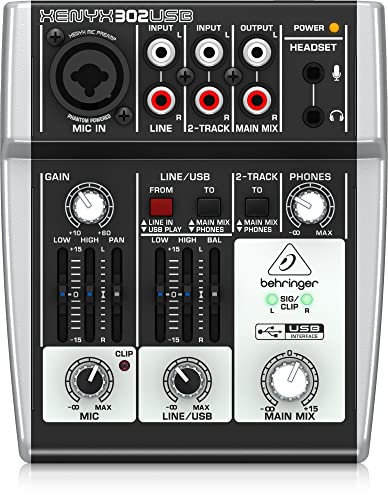
- Five-input compact mixer
- Built-in USB/audio interface
- Phantom-powered mic preamp
Best For: Solo creators, podcasts, and compact home setups
Best Feature-Rich Pick
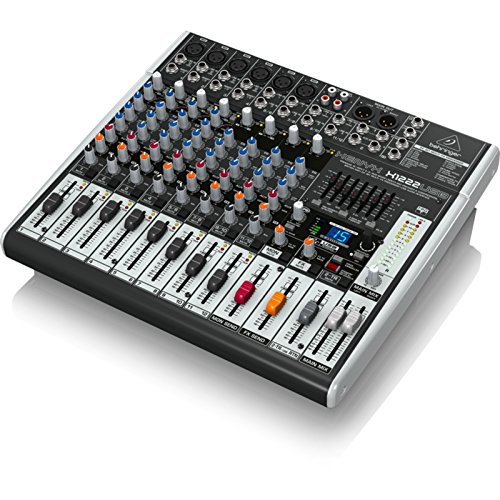
- Four mic preamps and compressors
- Three-band channel EQ
- 24-bit multi-effects processor
Best For: Small bands, live sound, and multi-mic setups
Best Modern Connectivity
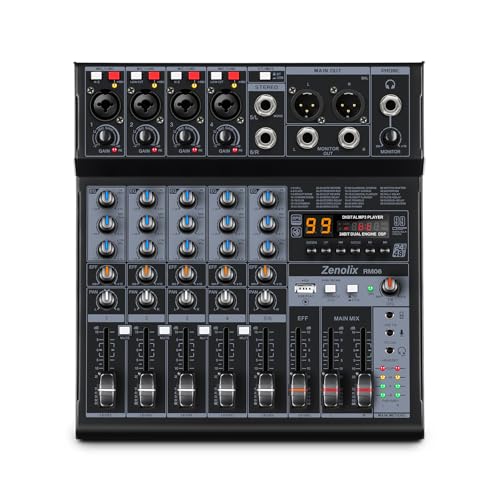
- USB-C 24-bit/192 kHz interface
- Bluetooth and USB playback
- Six channels with onboard effects
Best For: Streaming, podcasts, DJs, and compact live setups
Balanced Analog Control – Behringer XENYX 1204USB
For shoppers comparing audio mixers with USB interface, the Behringer XENYX 1204USB offers a traditional analog layout with low-noise operation, high headroom, British-style EQ, and USB connectivity for computer audio.
Best For: Home recording, rehearsals, and small setups that need hands-on analog mixing with USB connectivity.
Pros:
- Premium ultra-low-noise, high-headroom analog design
- British-style 3-band EQs for warm, musical sound
- Includes auxiliary and USB connectivity
- Provides XLR output connections
Cons:
- Heavier and larger than some compact mixers at 8.4 pounds
- Its feature set is focused on analog mixing rather than built-in effects
The 1204USB is a practical choice when tactile controls and straightforward computer connectivity matter more than an extensive effects section. Its 12-input, 2/2-bus format suits users who want room to manage multiple sources.
Small-Gig Workhorse – Mackie ProFX10v3
The Mackie ProFX10v3 is a strong option among audio mixers with USB interface for small gigs, rehearsals, streams, and recording. It combines Onyx mic preamps, built-in USB, and simple access to 24 GigFX effects.
Best For: Small live performances, streaming, rehearsals, and users who want effects without an external processor.
Pros:
- 10-channel format handles microphones, instruments, and playback
- Onyx preamps provide studio-grade gain on mic inputs
- Built-in USB interface supports recording and streaming
- GigFX engine includes 24 effects with simple controls
Cons:
- Offers fewer channels than the 12-input mixers in this roundup
- Uses a corded power supply and 110-volt operation
Choose the ProFX10v3 if you want a compact, approachable mixer that can cover live sound and computer-based audio without requiring separate effects hardware. Its 10-channel layout keeps the setup manageable for smaller applications.
Effects-Ready Recording Hub – Behringer XENYX X1204USB
For audio mixers with USB interface that add compression and effects to the workflow, the Behringer XENYX X1204USB combines four phantom-powered XENYX mic preamps, one-knob compressors, British EQ, a 24-bit multi-FX processor, and USB audio connectivity.
Best For: Vocal and instrumental recording, podcasting, and live mixing where simple compression and onboard effects are useful.
Pros:
- Four phantom-powered XENYX mic preamps
- Four studio-grade one-knob compressors with control LEDs
- Built-in 24-bit multi-FX processor
- USB interface includes bundled recording and editing software
Cons:
- Larger than the Mackie option at 15.45 inches deep
- Its 12-input layout may be more mixer than a basic setup requires
The X1204USB is a versatile pick for users who want more than basic USB output. Its combination of preamps, compressors, EQ, effects, and bundled software supports a broad range of recording and performance tasks.
Rugged Performance Mixer – Yamaha MG12XU
The Yamaha MG12XU is a durable choice among audio mixers with USB interface, pairing 12 inputs with D-PRE preamps, SPX digital effects, one-knob compressors, and a powder-coated metal chassis for performance and recording environments.
Best For: Performances, recordings, lectures, and buyers who prioritize rugged construction and flexible sound shaping.
Pros:
- Studio-grade discrete Class-A D-PRE preamps
- USB interface and integrated SPX digital effects
- One-knob compressors simplify control of vocals and instruments
- Rugged, impact-resistant powder-coated metal chassis
Cons:
- At 4.2 kg, it is less portable than lighter compact mixers
- The 19.06-inch width requires a relatively generous workspace
The MG12XU makes sense for users who need a full-featured 12-input mixer that can withstand regular handling. Its preamps, EQ, high-pass filters, compression, effects, and USB connection cover both live and recording duties.
Versatile DJ Value – Pyle 8-Channel USB Mixer
The Pyle PMXU83BT is a practical choice among audio mixers with USB interface for DJs, karaoke hosts, and live performers who want Bluetooth streaming, USB MP3 playback, and flexible microphone and line inputs in one compact unit.
Best For: Live gigs, karaoke, DJ playback, and users who need Bluetooth convenience with basic mixing controls.
Pros:
- Bluetooth supports wireless music streaming from a smartphone.
- Eight channels include XLR and unbalanced 1/4-inch inputs, plus +48V phantom power.
- Built-in 16-bit DSP, 3-band EQ, LED peak metering, and USB-A MP3 playback add useful flexibility.
- Rugged steel chassis and sealed rotary controls are suited to regular use.
Cons:
- USB functionality is identified as an MP3 player rather than a detailed computer recording interface.
- The supplied notes do not specify software support or warranty coverage.
Choose this model if wireless playback and live-use features matter more than advanced computer recording workflows. Its compact design and broad input selection make it a value-focused mixing solution.
Streaming Simplicity – Behringer XENYX 802S
Behringer XENYX 802S Premium Analog 8-Input Mixer with USB Streaming Interface
Check Price On AmazonThe Behringer XENYX 802S is one of the more focused audio mixers with USB interface for streaming, podcasting, and recording. It combines analog mixing with a stereo USB connection for bringing computer or mobile-device audio into the setup.
Best For: Streamers, podcasters, and creators who need straightforward computer audio integration and analog mixing.
Pros:
- Stereo USB audio interface connects to a computer or mobile device.
- Directly mixes PC or gaming sounds into the streaming output.
- Analog mixing and equalization provide hands-on control.
- Designed for low-noise streaming, podcasting, and recording applications.
Cons:
- The supplied information does not list phantom power, onboard effects, or detailed input configurations.
- Its USB interface is described as stereo, which may not suit multitrack recording needs.
This is a sensible pick when simple stereo USB routing is the priority. It is especially appropriate for content creators who want to combine computer or gaming audio with an analog mixer workflow.
Effects-Focused Recording – Alesis MultiMix 8 USB FX
Alesis MultiMix 8 USB FX | 8-Channel Mixer with Effects & USB Audio Interface, Black
Check Price On AmazonThe Alesis MultiMix 8 USB FX is a capable option among audio mixers with USB interface for home recording and live mixing. It offers eight channels, instrument-friendly inputs, built-in DSP effects, and a class-compliant USB connection for Mac and PC recording and playback.
Best For: Home musicians and small live setups needing direct guitar input, effects, USB recording, and flexible monitoring.
Pros:
- Eight channels accommodate microphones, line-level sources, and guitar-level inputs.
- Class-compliant USB works with Mac and PC without driver installation and supports 16-bit, 44.1/48 kHz stereo audio.
- Built-in DSP effects include footswitch bypass control, with an Aux bus for external processing.
- Offers phantom power, high-pass filters, LED metering, and independent main and headphone controls.
Cons:
- USB audio is stereo and limited to 16-bit resolution.
- The Apple USB adaptor needed for iPad use is sold separately.
- The supplied notes specify a 1-year parts-and-labor warranty but do not detail included accessories beyond Cubase LE software.
Consider the MultiMix 8 USB FX if hands-on instrument mixing and onboard effects are important. Its plug-and-play USB connection and direct guitar input make it particularly useful for straightforward recording and performance setups.
Best Compact Pick – Behringer XENYX 302USB
The Behringer XENYX 302USB is a practical choice if you want one of the most compact audio mixers with USB interface for podcasting, streaming, recording, or a small home setup. Its five-input design, USB connectivity, and included external power adapter keep the setup simple while providing a dedicated mic preamp and basic tone shaping.
Best For: Solo creators, podcasters, streamers, and home users who need a small USB mixer.
Pros:
- Ultra-compact design with five inputs.
- Built-in stereo USB/audio interface connects directly to a computer.
- Phantom-powered XENYX mic preamp and British-style two-band EQ.
- Can run through USB or the included external power adapter.
Cons:
- Its compact five-input layout offers less expansion than larger mixers.
- Provides basic two-band EQ rather than more extensive channel controls.
The 302USB makes the most sense when portability and straightforward computer connectivity matter more than a large channel count or advanced effects section.
Best Feature-Rich Pick – Behringer XENYX X1222USB
The Behringer XENYX X1222USB is designed for buyers who need a larger analog mixer with USB interface, multiple mic preamps, and onboard processing. It combines four phantom-powered XENYX mic preamps with one-knob compressors, British-style three-band EQ, and a 24-bit multi-effects processor for more hands-on control.
Best For: Small bands, live sound setups, churches, and creators who need multiple microphone inputs and built-in effects.
Pros:
- Four phantom-powered XENYX mic preamps.
- Four studio-grade one-knob compressors with control LEDs.
- Three-band British-style EQs for channel tone shaping.
- 24-bit effects processor with 16 editable presets.
Cons:
- Its 8.2-pound size and larger footprint are less convenient for portable setups.
- More features may be unnecessary for a simple one-microphone recording rig.
Choose the X1222USB when you want a fuller control surface and built-in effects for several performers or sources, rather than a minimal desktop mixer.
Best Modern Connectivity – Zenolix RM06 6-Channel Mixer
The Zenolix RM06 is a flexible option among audio mixers with USB interface, combining six channels with Bluetooth playback, USB-C computer connectivity, onboard recording, and loopback. Its 24-bit/192 kHz interface, multiple headphone outputs, and channel-level EQ and effects controls suit compact live, streaming, and home-studio rigs.
Best For: Podcasters, streamers, DJs, small live events, and home users who want Bluetooth and USB-C features.
Pros:
- Six-channel layout with four XLR/6.35 mm combo inputs.
- USB-C interface supports 24-bit/192 kHz recording and loopback.
- Bluetooth playback plus USB drive playback and onboard recording.
- Channel EQ, pan, FX send, 48 V phantom power, and 99 reverb effects.
Cons:
- At 3.9 pounds, it is less lightweight than an ultra-compact mixer.
- Warranty support is listed as contact-the-seller support.
The RM06 is a strong fit for users who want current connectivity options and built-in playback or recording tools in a single compact mixing console.
How We Picked the Best Audio Mixers with USB Interface
We compared these mixers by practical features that affect daily use: input count, microphone connectivity, USB recording and playback, channel control, built-in effects, monitoring options, portability, and overall flexibility. We also considered whether each model suits a specific use case, such as podcasting, live music, streaming, DJ mixing, or multitrack-style home recording.
Because mixer specifications and included software can vary by version, confirm the current manufacturer listing before buying. Pay particular attention to whether USB sends a stereo mix or supports separate channel recording.
Quick Comparison
| Best For | What to Prioritize | Shortlist |
|---|---|---|
| Podcasting and solo streaming | Simple USB routing, mic preamp, compact controls | Behringer XENYX 302USB, XENYX 802S |
| Small bands and live sound | More inputs, EQ, monitoring, durable construction | Yamaha MG12XU, Mackie ProFX10v3 |
| Home recording | Clean preamps, USB playback, channel flexibility | Alesis MultiMix 8 USB FX, Behringer XENYX models |
| DJ and casual multimedia use | Bluetooth, USB playback, effects, easy controls | Pyle 8 Channel, RM06 6Channel |
Key Buying Factors for Audio Mixers with USB Interface
Inputs and Microphone Support
Count the microphones, instruments, stereo sources, and playback devices you expect to connect at once. XLR inputs with phantom power are important for condenser microphones, while combo inputs provide more flexibility for microphones and line-level instruments.
USB Routing and Recording
USB functionality is not identical across mixers. Many models send the main stereo mix to a computer and return computer audio for monitoring. If you need independent tracks for editing, verify that the mixer supports multichannel USB recording rather than only a two-channel mix.
Effects, EQ, and Monitoring
Built-in reverb, delay, and other effects can simplify live vocals and streaming, but they are not essential for every setup. Look for useful channel EQ, a dedicated headphone output, independent monitor control, and clear meters. These features make troubleshooting and level balancing easier.
Size, Power, and Workflow
A compact mixer saves space for a single creator, while a larger console offers more inputs and physical controls for groups. Check the power requirements, fader layout, USB connection, and whether the controls match how you prefer to work.
Who Should Buy Which Audio Mixers with USB Interface?
Choose the Behringer XENYX 302USB or 802S for a compact desk setup, basic podcast, voiceover, or stream. Step up to the Mackie ProFX10v3 or Yamaha MG12XU when you need more channels, stronger live-sound flexibility, and convenient effects.
For home recording, the Alesis MultiMix 8 USB FX and larger XENYX models are better suited to users who want more sources connected at once. The Pyle and RM06 mixers make sense for buyers who value Bluetooth, USB playback, and straightforward DJ-oriented operation over advanced studio routing.
Before ordering, map every source in your setup and leave at least one or two spare inputs. That small amount of headroom can prevent an immediate upgrade when you add another microphone, instrument, or playback device.