Finding the best camera gimbal with LiDAR autofocus means balancing stabilization, lens compatibility, focusing range, camera payload, and portability. The right setup can make solo filmmaking faster while keeping manual lenses practical.
This roundup includes complete gimbals, integrated cinema systems, and dedicated LiDAR focus accessories, so you can match your gear to your camera, shooting style, and budget.
Best 10 Camera Gimbal with Lidar Autofocus Picks for 2026
Best Pro Gimbal

- 4.5 kg payload for mirrorless and cinema setups
- Optional LiDAR system supports 76,800 ranging points
- Native vertical shooting and dual focus/zoom control
Best For: Heavier camera rigs and professional creators
Best Manual-Lens Focus System

- LiDAR supports multiple scan modes
- High-torque motor offers rapid autofocus response
- Stores focus presets for five lenses
Best For: Manual and cine-lens filmmakers
Best Hybrid Creator Gimbal
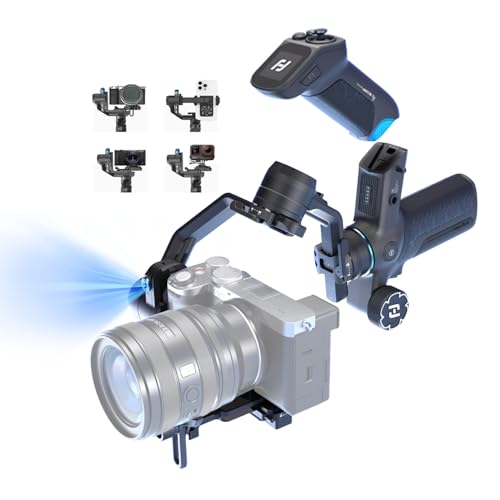
- 4.4 lb payload for cameras, action cams, and phones
- AI tracking reaches up to 59 feet
- Detachable handle with 1.3-inch OLED screen
Best For: Creators using multiple device types
Best Gimbal LiDAR Add-On

- 43,200 ranging points with a 14-meter range
- 70-degree field of view and 30mm-equivalent lens
- Enables manual-lens autofocus with the 2022 Focus Motor
Best For: Owners of compatible DJI RS gimbals
Best All-in-One Kit

- Built-in AI face tracking with gesture control
- Detachable OLED handle for remote operation
- Includes case, light, extension rod, and mounts
Best For: Solo creators using cameras, phones, or action cameras
Best True LiDAR System

- Dedicated LiDAR focusing for autofocus and manual lenses
- Full-frame 8K/75fps camera with 14-plus stops of range
- 4-axis stabilization with integrated wireless transmission
Best For: Professional filmmaking and high-end cinema production
Best Heavy-Duty Camera Gimbal

- Supports camera-and-lens setups up to 7.72 pounds
- Built-in AI face tracking with gesture control
- OLED display and precision quick-release balancing
Best For: DSLR and mirrorless users with heavier lens combinations
Best Professional Focus System
DJI Focus Pro All-in-One Combo

- 20 m LiDAR focusing range
- 76,800 ranging points and AI recognition
- AMF and FIZ lens control
Best For: Professional DJI PRO productions requiring precise collaborative focus control
Best AI Tracking Gimbal

- AI face and body tracking
- 7.72 lb maximum payload
- Native vertical shooting and 14-hour runtime
Best For: Solo creators and vloggers using heavier camera and lens combinations
Best Lightweight Gimbal
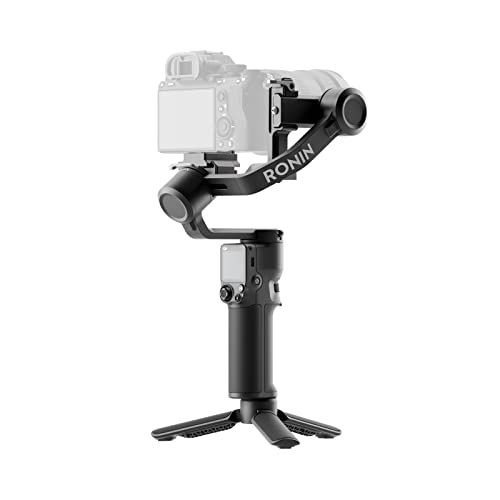
- 795 g travel-friendly design
- 2 kg tested payload
- Native vertical shooting and touchscreen control
Best For: Travel and social-media creators prioritizing portability over LiDAR autofocus
Best Pro Gimbal – DJI RS 4 Pro
The DJI RS 4 Pro is a strong choice if you need a camera gimbal with lidar autofocus for larger mirrorless or cinema-camera setups. Its 4.5 kg payload, native vertical shooting, and optional Focus Pro LiDAR system suit creators who want professional stabilization and more intelligent focusing.
Best For: Solo creators and filmmakers using heavier camera-and-lens combinations who want long runtime, vertical shooting, and advanced LiDAR focusing.
Pros:
- Supports up to 4.5 kg and offers 20% more motor torque.
- Focus Pro LiDAR provides 76,800 ranging points within 20 meters.
- Quickly switches to second-generation native vertical shooting.
- Supports remote dual focus and zoom motor control.
Cons:
- The LiDAR autofocus experience requires the separate Focus Pro LiDAR and Motor system.
- The 29-hour high-capacity battery grip is sold separately.
- The DJI Ronin app must be downloaded from DJI rather than Google Play.
The RS 4 Pro is the most capable stabilizer here for demanding camera rigs, particularly when paired with DJI’s LiDAR focusing accessories. It is less compelling if you only need a lightweight gimbal or basic stabilization.
Best Manual-Lens Focus System – PDMOVIE Live AIR 4
The PDMOVIE Live AIR 4 is a dedicated LiDAR autofocus system rather than a stabilizing gimbal, making it useful when you want camera gimbal with lidar autofocus capabilities for manual or cine lenses. Its wireless controller, high-torque motor, and multiple scan modes are designed for flexible focus control on set or on location.
Best For: Independent filmmakers and small crews using manual lenses who need portable, responsive LiDAR-assisted autofocus.
Pros:
- Multiple LiDAR scan modes support short-range indoor and longer-range outdoor shooting.
- High-torque motor provides rapid, frame-by-frame autofocus response.
- Works with many manual and cine lenses and stores presets for five lenses.
- Master-slave mode can connect with a previous-generation Bluetooth motor.
Cons:
- It is a follow-focus system, not a camera-stabilizing gimbal.
- The supplied information does not specify a detection range or ranging-point count.
- The kit requires six lithium-ion batteries.
Choose the Live AIR 4 when precise autofocus on manual glass matters more than integrated stabilization. It can complement a gimbal setup, but buyers looking for an all-in-one stabilizer should consider a separate gimbal.
Best Hybrid Creator Gimbal – Feiyu SCORP Mini 3 Pro
The Feiyu SCORP Mini 3 Pro is a versatile camera gimbal for creators who use mirrorless cameras, action cameras, or smartphones. While its supplied features emphasize AI subject tracking rather than LiDAR autofocus, its stronger 4.4 lb payload, detachable handle, and rapid response tracking make it a practical option for mobile shooting.
Best For: Hybrid creators who switch among cameras, action cams, and phones and want built-in tracking with a compact, flexible setup.
Pros:
- Handles up to 4.4 lb, a 66% payload increase over the previous model.
- AI tracking offers a stated 59-foot range and 0.003-second response time.
- Detachable handle includes a 1.3-inch OLED screen for direct settings control.
- Quick-release hardware supports horizontal-to-vertical shooting changes.
Cons:
- The supplied notes describe AI tracking, not LiDAR autofocus.
- Maximum payload is lower than the DJI RS 4 Pro’s 4.5 kg capacity.
- Camera compatibility should be checked carefully because supported models and accessories vary.
The SCORP Mini 3 Pro is a good general-purpose stabilizer for mixed-device creators, but it is not the closest match for a strict camera gimbal with lidar autofocus search. Consider it primarily for stabilization and AI tracking.
Best Gimbal LiDAR Add-On – DJI LiDAR Range Finder
The DJI LiDAR Range Finder is an accessory for building a camera gimbal with lidar autofocus when paired with a compatible DJI stabilizer. It adds 43,200 ranging points, a 14-meter detection range, and a 70-degree field of view, while pairing with the 2022 Focus Motor to enable autofocus on calibrated manual lenses.
Best For: DJI RS 4 Pro or RS 3 Pro users who want LiDAR-assisted focus, tracking, and manual-lens autofocus.
Pros:
- Projects 43,200 ranging points and detects subjects up to 14 meters away.
- Built-in camera uses a 30mm-equivalent focal length and 70-degree field of view.
- Can enable autofocus on manual lenses when paired with the 2022 Focus Motor.
- Designed to improve focusing in low-light and texture-limited scenes.
Cons:
- It is not a gimbal and requires a compatible DJI RS 4 Pro or RS 3 Pro.
- The Focus Motor is needed for autofocus on manual lenses and is not listed in the box contents.
- Its 14-meter range is shorter than the RS 4 Pro’s newer 20-meter LiDAR specification.
This is a focused upgrade for compatible DJI gimbals rather than a standalone purchase. It makes the most sense for users who already own an RS 4 Pro or RS 3 Pro and want LiDAR-assisted focus and tracking.
Best All-in-One Kit – Feiyu SCORP Mini 3 Pro
If you want a versatile camera gimbal with lidar autofocus-style subject tracking for solo shooting, the Feiyu SCORP Mini 3 Pro offers built-in AI face tracking, broad device compatibility, and a useful accessory bundle. Its 4.4-pound payload supports select mirrorless cameras, phones, and action cameras, while the detachable touchscreen handle adds remote control flexibility.
Best For: Solo creators who need one stabilizer for cameras, smartphones, action cameras, and vertical video.
Pros:
- Built-in AI tracking recognizes faces and supports gesture controls without requiring a phone app.
- Detachable 1.3-inch OLED touchscreen handle can control framing, settings, and recording from up to 39 feet away.
- Includes a case, fill light, extension rod, articulating arm, phone holder, and action-camera adapter.
- 14-hour battery life and a 4.4-pound payload suit extended shoots with compatible gear.
Cons:
- Its AI tracking is not the same as true LiDAR autofocus.
- The 4.4-pound payload may limit heavier camera-and-lens combinations.
- Compatibility and camera-control features can vary by device.
The SCORP Mini 3 Pro is a flexible choice when portability and included accessories matter more than dedicated cinema autofocus. Choose it for lightweight solo production, but look to the DJI Ronin 4D for genuine LiDAR focusing.
Best True LiDAR System – DJI Ronin 4D-8K
For buyers specifically seeking a camera gimbal with lidar autofocus, the DJI Ronin 4D-8K is the most direct match in this roundup. It combines a full-frame 8K camera, 4-axis stabilization, LiDAR focusing, wireless transmission, and professional recording features in one integrated cinema system.
Best For: Professional filmmakers who need integrated LiDAR focusing, high-resolution recording, and advanced stabilization.
Pros:
- Dedicated LiDAR focusing is designed to remain fast and accurate in low light and works with manual lenses.
- Full-frame X9-8K camera records up to 8K/75fps with 14-plus stops of dynamic range.
- 4-axis stabilization adds a Z-axis designed to reduce vertical camera movement.
- Includes a 1TB PROSSD, 17–28mm lens, remote-control ecosystem, and wireless transmission up to 20,000 feet.
Cons:
- At 4.67 kg, it is substantially heavier than conventional handheld gimbals.
- Its integrated professional cinema design is likely excessive for casual or travel users.
- It is a complete camera system rather than a simple stabilizer for an existing camera.
The Ronin 4D-8K is the clear fit for the keyword because LiDAR focusing is a core feature rather than an approximation through AI tracking. Its weight, complexity, and professional feature set make it better suited to serious production than everyday content creation.
Best Heavy-Duty Camera Gimbal – FeiyuTech SCORP-C2
The FeiyuTech SCORP-C2 is a strong option for mirrorless and DSLR owners comparing a camera gimbal with lidar autofocus. It does not provide LiDAR focusing, but its built-in AI face tracking, upgraded 7.72-pound payload, and broad camera compatibility make it practical for heavier camera-and-lens setups.
Best For: Mirrorless and DSLR users who need a high-payload gimbal with built-in face tracking.
Pros:
- 7.72-pound maximum payload supports a wide range of compatible camera and lens combinations.
- Built-in AI tracking recognizes faces and supports gesture-based tracking control.
- Updated quick-release plate helps with precise camera balance adjustments.
- Integrated rear handle and OLED display keep controls and status information accessible.
Cons:
- AI face tracking is not LiDAR autofocus.
- The integrated handle does not include the optional underslung handle grip.
- It is listed as not water resistant.
The SCORP-C2 makes sense when payload capacity and camera compatibility are more important than true LiDAR. It can handle substantially heavier setups than the SCORP Mini 3 Pro, while the DJI remains the better choice for dedicated LiDAR focusing and integrated cinema capture.
Best Professional Focus System – DJI Focus Pro All-in-One Combo
For filmmakers seeking a camera gimbal with lidar autofocus, the DJI Focus Pro stands out as a dedicated lens-control system rather than a basic stabilizer. Its LiDAR unit offers up to 20 meters of subject focusing range and 76,800 ranging points, while AI recognition helps identify and track people and vehicles.
Best For: Professional productions using compatible DJI PRO equipment, including Ronin 4D and Inspire 3, where precise focus control and collaborative operation matter.
Pros:
- Long-range LiDAR focusing with 76,800 ranging points
- AI recognition for human and vehicle tracking
- AMF combines autofocus precision with operator input
- Controls focus, iris, and zoom through FIZ lens control
Cons:
- Designed for the DJI PRO ecosystem rather than general-purpose gimbal use
- Large 2,512 g listed item weight
- Not water resistant
The Focus Pro is the most specialized option here for advanced focus workflows. Choose it when LiDAR accuracy, FIZ control, and team-based focus operation are more important than a lightweight handheld setup.
Best AI Tracking Gimbal – FeiyuTech SCORP-C2
The FeiyuTech SCORP-C2 is a practical choice for creators who want tracking assistance in a handheld camera gimbal. Its built-in AI 4.0 system tracks faces and bodies without an app or Bluetooth pairing, but the supplied notes describe AI tracking rather than LiDAR autofocus.
Best For: Solo creators, vloggers, interview shooters, and users carrying full-frame cameras with heavier lenses.
Pros:
- Built-in AI face and body tracking with gesture control
- 59-foot tracking range for hands-free shooting
- Supports payloads up to 7.72 lb (3,500 g)
- Native vertical shooting and up to 14 hours of runtime
Cons:
- Supplied information does not specify LiDAR autofocus
- Heavier camera support may make the setup less portable
- Charging takes up to 3 hours despite 18W fast charging
The SCORP-C2 is compelling if your priority is accessible AI tracking and strong payload capacity. However, shoppers specifically requiring lidar autofocus should verify that capability before choosing this model.
Best Lightweight Gimbal – DJI RS 3 Mini
The DJI RS 3 Mini is a compact camera gimbal for travel and everyday stabilization, but it is not described in the supplied notes as a camera gimbal with lidar autofocus. Instead, it focuses on portability, three-axis stabilization, native vertical shooting, and compatibility with a range of mirrorless and DSLR setups.
Best For: Travel creators and social-media shooters who want a lightweight gimbal for cameras and lenses weighing up to 2 kg.
Pros:
- Lightweight 795 g design for extended handheld use
- Supports camera and lens combinations up to 2 kg
- Native vertical shooting for social content
- 1.4-inch full-color touchscreen and Bluetooth shutter control
Cons:
- Supplied information does not specify LiDAR autofocus or subject tracking
- Requires the DJI Ronin app for activation and full functionality
- Not water resistant
The RS 3 Mini is the sensible portability pick in this group. It delivers stabilization and convenient vertical shooting, but buyers seeking lidar-based focusing should consider the DJI Focus Pro instead or confirm accessory compatibility separately.
How We Picked the Best Camera Gimbal with Lidar Autofocus Options
We evaluated these products by looking at stabilization design, payload suitability, LiDAR or assisted-focus capability, camera and lens compatibility, control options, tracking features, portability, and overall workflow value. Because a LiDAR accessory is not the same as a complete gimbal, the list includes both all-in-one systems and modular combinations for different types of creators.
Compatibility is especially important. Check your camera body, lens mount, lens gear requirements, control cables, and whether the focusing system supports manual lenses before buying.
Quick Comparison
| Best For | Recommended Type | What to Prioritize |
|---|---|---|
| Professional cinema rigs | DJI RS 4 Pro or DJI Ronin 4D-8K | Payload, precise focus, monitoring, and production controls |
| Adding LiDAR to an existing setup | DJI LiDAR Range Finder or DJI Focus Pro | Lens compatibility, mounting, and camera control |
| Travel and lightweight cameras | DJI RS 3 Mini or Feiyu SCORP Mini 3 Pro | Low weight, folding design, and battery life |
| Solo creators | FeiyuTech SCORP-C2 or SCORP Mini 3 Pro | AI tracking, simple controls, and fast setup |
Key Buying Factors for a Camera Gimbal with Lidar Autofocus
Payload and Camera Balance
Confirm the gimbal can support your camera, lens, cage, microphone, monitor, and focus motor together. A rig that is technically within the payload limit may still balance poorly if the lens is long or accessories are mounted unevenly.
LiDAR Range and Focusing Behavior
Look at the advertised working distance, subject detection, low-light performance, and transition controls. LiDAR can improve focus speed, but results depend on subject reflectivity, shooting distance, lens settings, and how the system communicates with the camera or focus motor.
Lens and Camera Compatibility
Some systems control compatible electronic lenses, while others drive manual lenses through a focus motor. Check supported brands, required cables, lens calibration, focus limits, and whether autofocus, manual focus, or an assisted mode is available.
Tracking and Operator Controls
AI face or object tracking can help solo shooters, but framing controls and tracking reliability matter more than feature count. Joystick response, focus-wheel feel, subject-lock controls, and app support all affect real-world usability.
Size, Battery, and Accessories
Choose a full-size gimbal for heavier cinema builds and a mini model for travel, phones, or compact mirrorless cameras. Account for batteries, mounting plates, focus motors, LiDAR modules, cables, and spare parts when comparing total cost.
Who Should Buy Which Camera Gimbal with Lidar Autofocus?
Choose the DJI RS 4 Pro or Ronin 4D-8K if you use professional cinema cameras and want a robust production workflow with advanced focus control. Choose DJI Focus Pro or the DJI LiDAR Range Finder if you already own a compatible gimbal and need to add more capable focusing without replacing the entire rig.
Choose the DJI RS 3 Mini or Feiyu SCORP Mini 3 Pro for lightweight mirrorless cameras, phones, and travel shooting. Choose a FeiyuTech SCORP-C2 when built-in AI tracking and straightforward solo operation are higher priorities than a large cinema payload.