The best camera monopods for travel give you extra stability without the bulk of a tripod. They are useful for street photography, wildlife, events, landscapes, and video when packing space and setup time matter.
We selected 10 compact monopods across carbon fiber and aluminum designs, comparing portability, height, load capacity, locking systems, foot design, and included accessories.
Best 10 Camera Monopods for Travel Picks for 2026
Lightweight Carbon Pick
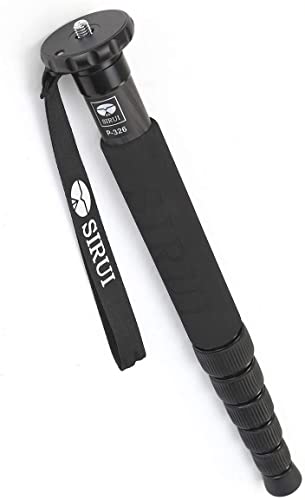
- 400 g carbon-fiber construction
- 15-inch folded size
- 22-pound maximum load
Best For: Travel photographers prioritizing low weight and compact storage
Convertible Setup

- Converts between tripod and monopod
- 71-inch maximum height
- 360-degree ball head
Best For: Travelers needing both tripod stability and monopod flexibility
Phone-Ready Carbon Choice

- 0.41 kg carbon-fiber body
- 65-inch reach and 22-pound capacity
- 360-degree phone clamp included
Best For: Camera and smartphone creators traveling with one compact support
Budget Aluminum Option
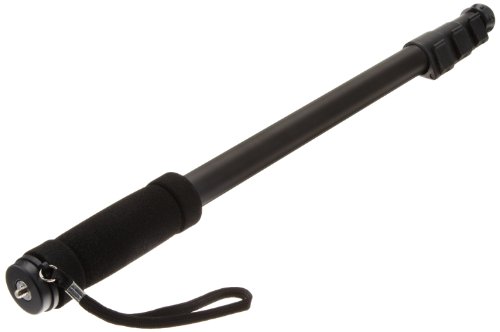
- Under-1-pound aluminum design
- 67-inch maximum height
- Rubber foot, spikes, and carrying bag
Best For: Casual travelers using lighter cameras or scopes
Best All-Terrain Value
K&F CONCEPT 63-inch Aluminum Monopod

- Folds to about 17 inches
- 22-pound listed weight limit
- Rubber feet and metal spikes
Best For: Travelers shooting across varied surfaces
Best Lightweight Heavy-Duty Pick
Manfrotto Element MII Travel Monopod

- Folds to 43 cm
- 15 kg listed payload
- Quick five-section twist locks
Best For: Travel photographers using heavier zoom lenses
Best Carbon Fiber Support
LEOFOTO MP-284C 65-inch Monopod

- Carbon fiber construction
- 18 kg listed weight limit
- Includes shoulder-strap carry case
Best For: Travelers prioritizing lightweight carbon fiber support
Best with Extra Features

- 1.1-pound aluminum build folds to 15.7 inches
- Supports up to 15.4 pounds
- Converts to a walking stick with rubber or metal feet
Best For: Outdoor travelers, sports shooters, and wildlife photographers
Best Lightweight High-Capacity Pick
LEOFOTO MP-284C Carbon Fiber Monopod

- 0.91-pound carbon-fiber construction
- Supports up to 39.68 pounds
- Works as a monopod, trekking pole, or low-angle tripod
Best For: Travelers using heavier camera or video equipment
Best Compact Carry-On Option

- 0.83-pound aluminum body folds to 16.9 inches
- Fits into a 20-inch carry-on
- Supports up to 11.02 pounds and offers multiple use modes
Best For: Carry-on travelers and photographers with lighter camera kits
Lightweight Carbon Pick – SIRUI P-326 Travel Monopod
SIRUI Camera Monopod P-326 6 Section Carbon Fiber Compact Lightweight Travel Monopod
Check Price On AmazonFor travelers seeking camera monopods for travel, the SIRUI P-326 emphasizes low weight and compact packing. Its six-section carbon-fiber design weighs 400 g, folds to 15 inches, and supports up to 22 pounds.
Best For: Photographers who want a lightweight, compact monopod with substantial load capacity.
Pros:
- 8X carbon fiber construction keeps weight to 400 g.
- Six sections fold to a compact 15-inch size.
- Reversible 1/4-inch-20 and 3/8-inch-16 mounting screw improves compatibility.
- Wrist strap, hand grip, and silicon twist lock support comfortable handling.
Cons:
- It is a monopod rather than a freestanding tripod.
- No phone holder is listed in the supplied details.
The P-326 is a strong choice when packability and carrying comfort matter most, while its 22-pound rating also leaves room for heavier camera setups.
Convertible Setup – SmallRig CT-10 Tripod Monopod
The SmallRig CT-10 stands out among camera monopods for travel because it converts from a tripod into a monopod. It reaches 71 inches, folds to 16.9 inches, and includes a 360-degree ball head for adjustable shooting angles.
Best For: Travelers who want one support system that can switch between monopod and tripod use.
Pros:
- 2-in-1 tripod and monopod design adds versatility.
- Adjusts from 16 to 71 inches with quick-release flip locks.
- 360-degree ball head supports horizontal and vertical positioning.
- Supports cameras, phones, and projectors with 1/4-inch-20 and 3/8-inch-16 compatibility.
Cons:
- At 3.4 pounds, it is heavier than the dedicated monopods here.
- Its folded size is listed as 43 cm, less compact than a 15- or 18.5-inch monopod.
- Telephoto zoom users may need an additional mount ring for balance.
The CT-10 is the most flexible option for travelers who value multiple shooting configurations over minimum carry weight.
Phone-Ready Carbon Choice – SIRUI AM-MDP01 Travel Monopod
The SIRUI AM-MDP01 is designed for mobile travel kits as well as cameras. This carbon-fiber monopod weighs 0.41 kg, extends to 65 inches, folds to 18.5 inches, and includes a rotatable phone clamp for portrait or landscape shooting.
Best For: Content creators who switch between cameras and smartphones while traveling.
Pros:
- Lightweight carbon-fiber body weighs 0.41 kg.
- Supports up to 22 pounds for a wide range of camera setups.
- Included 360-degree phone clamp enables portrait and landscape use.
- Carabiner clip, mini compass, and foam grip enhance travel convenience.
Cons:
- It does not include water resistance.
- Its 18.5-inch folded size is longer than the P-326’s listed folded size.
With its included phone accessories and backpack-friendly clip, the AM-MDP01 is particularly appealing for hybrid camera-and-phone travel content.
Budget Aluminum Option – Amazon Basics 67-Inch Monopod
The Amazon Basics WT1003 offers a straightforward, lightweight entry point for camera monopods for travel. Its four aluminum sections extend to 67 inches, the body weighs under a pound, and a carrying bag is included.
Best For: Casual travelers who want affordable, simple support for cameras or scopes.
Pros:
- Lightweight aluminum construction weighs less than 1 pound.
- Extends to 67 inches for flexible shooting height.
- Non-skid rubber foot and retractable spikes help with varied surfaces.
- Includes a carrying bag, cushion grip, and adjustable wrist strap.
Cons:
- Its 6.6-pound capacity is lower than the SIRUI and SmallRig alternatives.
- Four sections and a 21.4-inch collapsed length offer less compact storage.
- Only a 1/4-inch universal thread mount is specified.
The WT1003 makes sense for lighter camera kits and travelers who want basic height adjustment and footing features without a heavier premium build.
Best All-Terrain Value – K&F CONCEPT 63-inch Aluminum Monopod
For travelers seeking camera monopods for travel, the K&F CONCEPT MS16 combines a 63-inch maximum height with a compact 17-inch folded length. Its five-section aluminum design, dual-purpose foot, and 1/4-inch and 3/8-inch interfaces make it adaptable for varied outdoor shooting setups.
Best For: Travelers who need a versatile monopod for hard floors, soft ground, and changing shooting conditions.
Pros:
- Reaches 63 inches while folding to about 17 inches for easier packing.
- Supports up to 22 pounds according to the listed weight limit.
- Rubber feet and metal spikes suit both hard and soft surfaces.
- Includes anti-slip padding, a wrist strap, and dual mounting interfaces.
Cons:
- Aluminum construction may be less weight-efficient than carbon fiber.
- It is not listed as water resistant.
The MS16 is a practical choice when portability and surface adaptability matter more than premium materials. Its compact folded size and interchangeable foot design are especially useful for outdoor travel photography.
Best Lightweight Heavy-Duty Pick – Manfrotto Element MII Travel Monopod
The Manfrotto Element MII is a strong contender among camera monopods for travel, pairing a five-section aluminum build with a 159 cm maximum height and a compact 43 cm folded size. Twist locks support quick setup, while the convertible 1/4-inch and 3/8-inch screw accommodates different mounting approaches.
Best For: Travelers carrying compact cameras, mirrorless bodies, or DSLRs with heavier zoom lenses.
Pros:
- Lightweight aluminum design listed at 0.5 kg and folds to 43 cm.
- Supports a listed payload of up to 15 kg.
- Five ergonomic twist locks enable quick height adjustments.
- Wrist strap, rubber grip, and convertible mounting screw improve travel usability.
Cons:
- It is not listed as water resistant.
- The supplied specifications contain inconsistent accessory and weight details, so shoppers should verify the exact package before purchase.
The Element MII offers a useful balance of compact storage, fast adjustment, and substantial listed load capacity. It is well suited to photographers who want a travel-friendly support tool without giving up compatibility with larger lenses.
Best Carbon Fiber Support – LEOFOTO MP-284C 65-inch Monopod
For photographers prioritizing a lightweight build, the LEOFOTO MP-284C is one of the more travel-oriented camera monopods for travel. Its four-section carbon fiber construction reaches 65 inches, folds to 21 inches, and carries a listed 18 kg load limit.
Best For: Travelers who want carbon fiber portability and support for camera setups requiring a high load capacity.
Pros:
- Carbon fiber construction keeps the monopod lightweight.
- Reaches 65 inches and folds to 21 inches for transport.
- Offers a listed weight limit of 18 kg.
- Includes a nylon carry case with shoulder strap and a 10-year manufacturer warranty.
Cons:
- Its 21-inch folded length is longer than some five-section travel monopods.
- It is not listed as water resistant.
- The supplied specifications do not identify a detailed foot design or quick-lock feature.
The MP-284C is a compelling option when low weight and carbon fiber construction are priorities. Its four-section design and included shoulder-strap case favor photographers who can accommodate a slightly longer packed length.
Best with Extra Features – Manbily A-555L Travel Monopod
For travelers who want a lightweight support that can also handle uneven outdoor terrain, the Manbily A-555L is a versatile choice among camera monopods for travel. It weighs 1.1 pounds, folds to 15.7 inches, and extends to 61 inches, making it practical for packing and quick setup.
Best For: Travel, sports, wildlife, and outdoor photography where a walking-stick function and interchangeable feet are useful.
Pros:
- Supports up to 15.4 pounds with a sturdy aluminum build.
- Quarter-turn locks allow all sections to extend or lock quickly.
- Includes rubber and metal feet, a walking-stick handle, phone holder, and carry case.
- Reversible 1/4-inch and 3/8-inch screw supports cameras, camcorders, and ball heads.
Cons:
- Aluminum construction is heavier than the listed carbon-fiber alternative.
- It is not water resistant.
The A-555L stands out when you want one compact tool for camera support and hiking-style use. Its higher load rating and outdoor-oriented feet make it especially appealing for demanding travel environments.
Best Lightweight High-Capacity Pick – LEOFOTO MP-284C Carbon Fiber Monopod
The LEOFOTO MP-284C is a strong option for camera monopods for travel when low weight and high capacity matter. Its carbon-fiber construction weighs 0.91 pounds, supports up to 39.68 pounds, and adjusts from 20.59 to 64.96 inches.
Best For: Travelers carrying heavier camera setups who want a lightweight monopod with trekking-pole and low-angle tripod functionality.
Pros:
- Very high 39.68-pound maximum load for a 0.91-pound monopod.
- Carbon fiber offers low weight and corrosion resistance compared with aluminum.
- Three-in-one design works as a fixed video monopod, trekking pole, or low-angle camera tripod.
- Flip locks support quick height adjustments across four sections.
Cons:
- Its 20.59-inch folded length is longer than some compact travel models.
- It is not water resistant.
Choose the MP-284C if your travel kit includes a heavier camera, lens, or video setup. Its excellent strength-to-weight ratio and multiple use modes make it the most capable option here, though it takes up a little more packed length.
Best Compact Carry-On Option – ULANZI TB12 61-Inch Monopod
The ULANZI TB12 is designed for photographers who prioritize simple packing and flexible use. At 0.83 pounds and 16.9 inches folded, it is a convenient pick among camera monopods for travel, fitting into a 20-inch carry-on while extending to 61 inches.
Best For: Hobbyist photographers, hikers, and travelers using compact cameras, mirrorless bodies, or lighter DSLRs.
Pros:
- Lightweight 0.83-pound aluminum design is easy to carry.
- Five-section construction provides five listed height settings from 16.9 to 61 inches.
- Supports cameras up to 11.02 pounds.
- Can be used as a monopod, selfie stick, walking stick, hiking stick, or trekking pole.
Cons:
- Its 11.02-pound capacity is lower than the other listed models.
- It is not water resistant.
The TB12 is a practical everyday travel choice with a particularly compact folded size and low carry weight. It is best matched with lighter camera kits rather than large professional telephoto setups.
How We Picked the Best Camera Monopods for Travel
We focused on the features that matter most when carrying camera support through airports, city streets, trails, and outdoor shoots. Each selected model was assessed for portability, collapsed length, maximum height, section count, material, stated load capacity, and practical handling features such as wrist straps, rubber feet, ball heads, phone holders, or carrying bags.
Carbon-fiber models generally provide a lighter, more vibration-resistant build, while aluminum monopods often offer better value and can tolerate demanding everyday use. Because a monopod is not self-supporting in the same way as a tripod, we also considered grip comfort, foot stability, and how easily the leg sections can be adjusted.
Quick Comparison
| Feature | What to Look For | Best For |
|---|---|---|
| Material | Carbon fiber for low weight; aluminum for value | Travel priorities and budget |
| Sections | Four to six sections affect height and folded size | Compact packing versus faster setup |
| Load rating | Choose a rating above your camera, lens, and head weight | Telephoto and video setups |
| Foot design | Rubber feet improve grip on hard surfaces | Indoor, street, and general photography |
Key Buying Factors for Camera Monopods for Travel
Weight and Folded Size
A lighter monopod is easier to carry all day, but an extremely compact model may require more sections and additional setup. Check the folded length against your carry-on, backpack, or luggage.
Height and Load Capacity
Choose a maximum height that lets you use the camera comfortably without excessive bending. The load rating should comfortably exceed the combined weight of your camera, lens, tripod head, and accessories. Heavy telephoto lenses and video rigs need more margin than small mirrorless kits.
Locks, Grip, and Stability
Twist locks can keep the profile smooth and compact, while lever locks are often quicker to inspect and operate. A padded or rubberized grip helps during long walks. A rubber foot is useful on pavement and indoor floors; specialized feet or a small base may offer more support for video, but they can add bulk.
Head and Accessory Compatibility
Some models include a ball head or phone holder, while others use a standard camera mounting screw and let you choose your own head. Verify the mounting thread and confirm that any included head is rated for your equipment.
Who Should Buy Which Camera Monopods for Travel?
Choose carbon fiber if minimizing carry weight is your top priority or you regularly hike with a larger camera kit. Choose aluminum if you want dependable support at a lower price and do not mind a little extra weight.
Choose a compact multi-section model for flights, urban travel, and lightweight mirrorless cameras. Choose a taller, higher-capacity model for full-height shooting, long lenses, or video work. If you mainly shoot stills and need quick stabilization, a simple monopod with a rubber foot may be enough; if you shoot moving subjects or video, prioritize a compatible head, smooth adjustments, and a stable base.