Camera shoulder rigs can make handheld video more stable, comfortable, and controllable without the bulk of a full-size cinema setup. The right beginner rig should balance support, adjustability, camera compatibility, and a manageable learning curve.
This roundup compares 10 options ranging from simple shoulder mounts to expandable 15mm-rod systems, so you can choose a setup that fits your camera, shooting style, and budget.
Best 10 Camera Shoulder Rigs for Beginners Picks for 2026
Best All-Around Starter

- Complete baseplate, rods, shoulder pad, and handles
- Rotatable grips and padded shoulder support
- 15mm system supports future accessories
Best For: Beginners building a versatile shoulder rig for cameras up to 2 kg
Best Compact Handle Setup

- Two rubberized handles for steadier shooting
- 360-degree handle positioning
- Compact aluminum-alloy construction with 15mm clamp
Best For: Beginners adding adjustable handles to an existing 15mm setup
Best Strap-Supported Option
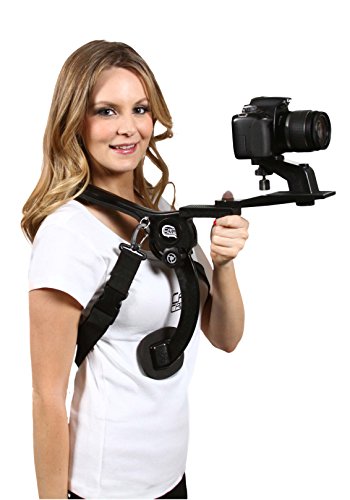
- Adjustable elevator and extension plate
- Includes hands-free camera strap
- Works with cameras, camcorders, GoPros, and phones
Best For: Beginners wanting flexible positioning and strap-supported shooting
Best for Expansion

- 5 kg maximum load capacity
- Extended 15mm rods for accessory placement
- Detachable, adjustable parts for transport and upgrades
Best For: Beginners planning a larger, expandable shoulder-rig build
Best Affordable Kit
DSLR Camera Cage Shoulder Mount Rig

- Includes cage, follow focus, matte box, and shoulder support
- Adjustable 6- to 9-inch cage brackets
- Works handheld, shoulder-mounted, or on a tripod
Best For: Beginners wanting a complete DSLR or camcorder rig kit
Best Modular Upgrade
SmallRig Dual-Handle Shoulder Rig

- Designed for 15mm LWS dual rods
- One-touch handle rotation and adjustment
- Supports monitor and ARRI rosette accessories
Best For: Beginners building a modular rod-based camera setup
Best Portable Design
Foldable Universal Shoulder Rig Kit

- Adjustable handle, shoulder pad, and quick-release grip
- Switches between low-, mid-, and high-angle positions
- Folds compactly for travel and on-location shoots
Best For: Beginners seeking a portable rig for flexible shooting
Most Comfortable
SmallRig 15mm Shoulder Pad Support

- Cushioned shoulder and adjustable back pads
- Quick dual 15mm rod attachment
- 1/4-20 mounting points for expansion
Best For: Beginners building a comfortable, modular shoulder rig
Best All-in-One
Tilta Lightweight Foldable Shoulder Rig

- Includes grips, baseplate, and carrying case
- Manfrotto and Arca quick-release support
- Adjustable arms with 15mm and NATO expansion
Best For: Creators wanting a fuller shoulder-rig package
Best Value Setup
NICEYRIG 15mm Shoulder Rig System
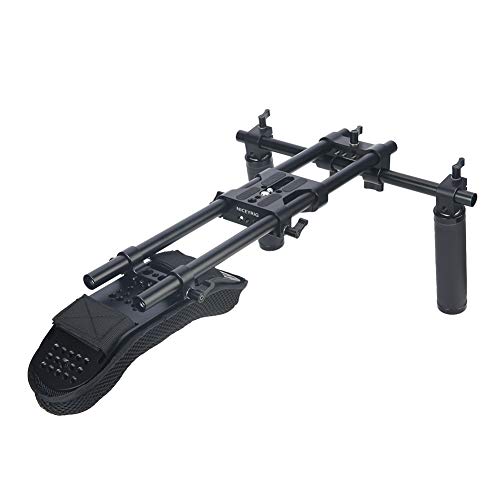
- Includes baseplate, rods, and handle set
- Multiple 1/4- and 3/8-inch mounting holes
- Rated for a maximum 22 lb payload
Best For: Beginners wanting a complete, expandable 15mm system
Best All-Around Starter – Basic Shoulder Mount Kit
For beginners comparing camera shoulder rigs for beginners, the SMALLRIG 2896 is a practical starting point for DSLR, mirrorless, and small-camera video work. It combines a baseplate, 15mm rods, shoulder pad, and dual handgrips in one kit, helping you build a more stable and comfortable handheld setup.
Best For: New filmmakers who want a complete, customizable shoulder rig for cameras up to 2 kg.
Pros:
- Includes the main components needed for shoulder-mounted shooting.
- 360-degree rotatable dual handgrips help with balance and comfort.
- 15mm rods and multiple threaded holes support accessories such as lights, monitors, and microphones.
- Ergonomic shoulder pad is designed for longer shooting sessions.
Cons:
- Maximum recommended camera weight is 2 kg.
- Its larger collection of components may be more than needed for very simple setups.
The 2896 is a sensible all-in-one choice when you want beginner-friendly support now and room to expand later. Its universal baseplate and 15mm system make it especially useful as your camera setup grows.
Best Compact Handle Setup – Rosette Shoulder Rig
If you already have a compatible 15mm rod setup, this SMALLRIG handle-based rig offers a compact way to improve handheld control. For camera shoulder rigs for beginners, its adjustable rosette arms and rubberized handles provide a straightforward introduction to two-handed run-and-gun shooting.
Best For: Beginners who prioritize a compact handle assembly and already own or plan to add 15mm rods.
Pros:
- Two rubberized handles can improve handheld stability and reduce jitters.
- 360-degree adjustment helps position each handle comfortably.
- Aluminum-alloy construction is designed to be sturdy and secure.
- Quick-release 15mm rod clamp simplifies rod attachment.
Cons:
- It is primarily a handle and support assembly rather than a complete shoulder kit.
- A separate 15mm rod system may be needed for a full shoulder-rig configuration.
This is a good minimalist option for shooters who want better grip and positioning without a full baseplate-and-pad package. Check your existing rod hardware before buying to ensure the compact assembly fits your intended build.
Best Strap-Supported Option – Scorpion EX Shoulder Support
The Cam Caddie Scorpion EX takes a different approach to camera shoulder rigs for beginners by pairing a shoulder support with a hands-free camera strap. Its adjustable elevator and extension plate help position compatible DSLR, mirrorless, camcorder, action-camera, and phone setups for a more personalized fit.
Best For: Beginners who want adjustable camera positioning and hands-free support across several camera types.
Pros:
- Camera elevator adjusts height and side-to-side positioning.
- Extension plate helps customize camera distance for comfort.
- Included heavy-duty strap adds hands-free support and security.
- Supports a range of DSLR, mirrorless, camcorder, GoPro, and phone setups.
Cons:
- The Scorpion EX Cheese Plate is sold separately for expanded rig conversion.
- It does not provide the 15mm rod-based accessory ecosystem found in the other kits.
Choose the Scorpion EX if fit adjustment and strap support matter more than building a traditional rod-based cinema rig. It is particularly appealing for beginners using varied cameras or wanting quick removal through the snap connection.
Best for Expansion – SR004 Shoulder Rig Kit
The NEEWER SR004 is a strong choice for camera shoulder rigs for beginners who expect their setup to grow. Its 5 kg maximum load capacity, extended 15mm rods, adjustable handles, and threaded baseplate leave room for accessories such as lens support, a matte box, follow focus, or monitor.
Best For: Beginners who want a portable shoulder rig with substantial adjustment range and accessory capacity.
Pros:
- Supports up to 5 kg according to the supplied specifications.
- Extended rods provide front and rear adjustment space for rig accessories.
- 360-degree rotatable handles allow flexible hand positioning.
- Detachable components make storage and transport easier.
Cons:
- Several useful expansion accessories are not included.
- The expanded rod system may be more equipment than a beginner needs for a basic camera.
The SR004 makes sense when you want a beginner-friendly foundation that can accommodate heavier or more elaborate builds later. Its detachable design helps with portability, while the 15mm rods and multiple mounting threads support future upgrades.
Best Affordable Kit – DSLR Camera Cage Shoulder Mount Rig
For beginners comparing camera shoulder rigs for beginners, the FLYCITY FC-03F is a broad starter kit that combines a cage, shoulder support, follow focus, and matte box. Its adjustable brackets and multiple operating configurations make it a practical option for learning shoulder-mounted DSLR or camcorder shooting.
Best For: Beginners who want an all-in-one, budget-priced rig for DSLR or camcorder video.
Pros:
- Includes a cage, follow focus, matte box, shoulder pad, and counterweight.
- Adjustable cage brackets convert from 9 inches to 6 inches.
- Can be used handheld, shoulder-mounted, or on a tripod.
- Supports lens diameters up to 95mm and weighs 6.6 pounds.
Cons:
- At 6.6 pounds, it may feel heavy during extended handheld use.
- The larger kit may be more equipment than beginners need for simple setups.
This is a strong value-oriented choice if you want several filmmaking accessories in one package. Its weight and full-size design are worth considering before choosing it for travel or long shoots.
Best Modular Upgrade – SmallRig Dual-Handle Shoulder Rig
For camera shoulder rigs for beginners, the SmallRig 5205 offers a more modular starting point for cameras already built around 15mm LWS rods. Its dual handles, one-touch adjustments, cable clips, and accessory mounting points make it suited to users who expect to expand their setup.
Best For: Beginners with a 15mm rod system who want adjustable handles and room for monitor or rosette accessories.
Pros:
- Attaches to 15mm dual rods with 60mm center spacing.
- One-touch rotation and length adjustment help speed setup changes.
- Includes 1/4-inch-20 locating holes for compatible magic arms.
- Detachable handles and included ARRI rosette support accessory expansion.
Cons:
- Requires a compatible 15mm dual-rod setup.
- It is a support component rather than a complete shoulder rig kit.
- Its maximum recommended load is 5 kg.
The 5205 is a sensible choice for beginners who are starting with a rod-based camera system rather than seeking an all-in-one package. It offers useful adjustment and expansion features, but compatibility should be checked first.
Best Portable Design – Foldable Universal Shoulder Rig Kit
Among camera shoulder rigs for beginners, this ASHATA kit emphasizes quick changes, portability, and flexible shooting positions. Its adjustable handle, cushioned shoulder pad, foldable aluminum-alloy frame, and accessory interfaces provide a straightforward way to experiment with handheld and shoulder-mounted video.
Best For: Beginners who prioritize a foldable rig for travel, outdoor filming, vlogging, or live streaming.
Pros:
- Combines an adjustable handle, shoulder pad, and quick-release grip.
- Offers low-, mid-, and high-angle shooting positions.
- Folds for storage in a camera bag and uses an aluminum-alloy frame.
- Provides interfaces for accessories such as lights, monitors, and microphones.
Cons:
- The supplied details list only basic image stabilization.
- It is not water resistant.
- The specifications identify the compatible device as a laptop, so camera compatibility should be confirmed before purchase.
This kit stands out for beginners who need a compact, adaptable support platform rather than a fixed studio rig. Confirm the mounting compatibility for your camera and accessories before ordering.
Most Comfortable – SmallRig 15mm Shoulder Pad Support
For beginners comparing camera shoulder rigs for beginners, the SmallRig 5153 is a focused shoulder-and-back support system built around dual 15mm rods. Its cushioned pads, compact design, and accessory mounting points make it a practical starting point for handheld video work.
Best For: Beginners who want a compact, comfort-focused shoulder support that can grow with a 15mm rod setup.
Pros:
- Soft shoulder and back cushioning helps reduce strain during extended shooting.
- Adjustable back pad helps prevent the rig from slipping forward and can be repositioned as a chest pad.
- Quick one-knob attachment to dual 15mm rods supports faster setup and removal.
- Built-in 1/4-20 holes allow expansion with weights, batteries, and other accessories.
Cons:
- It is a shoulder pad support rather than a complete camera rig with handles and baseplate.
- Its expansion system is most useful when paired with compatible 15mm accessories.
The 510 g aluminum-alloy-and-stainless-steel construction keeps this SmallRig relatively focused and manageable. Choose it when comfort and modularity matter more than an all-in-one package.
Best All-in-One – Tilta Lightweight Foldable Shoulder Rig
Among camera shoulder rigs for beginners, the Tilta TA-LSR-B stands out as a more complete package. It combines adjustable arms and handgrips, a dual-standard quick-release baseplate, a rear 15mm rod mount, and a NATO rail adapter for balancing compatible camera setups.
Best For: Beginners and video creators who want a ready-to-use rig with broad camera and mounting compatibility.
Pros:
- Designed for mirrorless, DSLR, and lightweight cinema cameras.
- Dual quick-release baseplate supports both Manfrotto and Arca standards.
- Adjustable arms and handgrips improve operating comfort.
- Includes two handgrips, the baseplate, and a soft carrying case.
Cons:
- The 3.5 kg rig is heavier than a minimal shoulder support.
- Setups over 15 lb require careful balance adjustments to help limit fatigue.
- Its larger folded dimensions may be less convenient for compact kits.
With universal rosettes and multiple balance options, this Tilta offers room to refine a setup as skills develop. It is a strong choice when convenience and flexibility outweigh low weight.
Best Value Setup – NICEYRIG 15mm Shoulder Rig System
The NICEYRIG 435 gives beginners a traditional 15mm shoulder-rig setup with a baseplate, 16-inch rods, and a handle set. For anyone shopping camera shoulder rigs for beginners, its many threaded mounting points and stated 22 lb maximum payload make it suitable for building a more substantial handheld configuration.
Best For: Beginners who need a complete, expandable 15mm rig for DSLR, camcorder, or cinema-camera work.
Pros:
- Includes the shoulder support, baseplate, 15mm rods, and handle set.
- Cheese plate provides 1/4-inch and 3/8-inch threaded mounting options.
- Quick release via both wingnuts makes moving between shoulder rig and tripod easier.
- Leather-covered handles provide a more comfortable grip for extended shooting.
Cons:
- The 15mm-rod design may require additional accessories for a more customized build.
- At 2.4 lb, it is not the lightest option for long handheld sessions.
The solid aluminum-alloy construction balances portability with support for larger camera packages. Its included components and generous mounting options make it a practical foundation for run-and-gun shooting.
How We Picked These Camera Shoulder Rigs for Beginners
We focused on the practical features that matter most when moving from handheld shooting to shoulder-mounted video: camera compatibility, shoulder-pad comfort, handle placement, balance, adjustability, build materials, and expansion options. We also considered whether each design is straightforward for a first-time rig user or better suited to a more modular setup.
The selection includes compact support mounts, dual-handle rigs, 15mm rod systems, follow-focus and matte-box-ready kits, and foldable aluminum designs. This range helps beginners start with only the support they need while leaving room to add accessories later.
Quick Comparison
| Rig type | Best for | What to check |
|---|---|---|
| Basic shoulder mount | Simple DSLR or mirrorless setups | Camera plate fit and balance |
| 15mm rod system | Expandable video rigs | Rod spacing, clamps, and accessory compatibility |
| Dual-handle rig | More control during handheld shooting | Handle adjustment and grip comfort |
| Follow-focus or matte-box kit | More advanced lens control | Lens diameter, rail alignment, and added weight |
| Compact support mount | Travel and lightweight cameras | Weight capacity and shoulder stability |
Key Buying Factors for Camera Shoulder Rigs for Beginners
Camera and Lens Compatibility
Confirm that the mounting plate, cage, or base supports your camera body and leaves enough clearance for the battery door, ports, and lens. A large lens can shift the center of gravity, so look for adjustable plates or extended support when needed.
Comfort and Balance
A padded shoulder support and a properly positioned rear balance point make long takes easier. The camera should sit naturally near your eye without forcing your wrist, neck, or shoulder into an awkward angle. A counterweight or rear accessory can improve balance, but it also increases total weight.
15mm Rods and Expansion
Standard 15mm rods can support handles, follow-focus units, matte boxes, and other accessories. They are useful if you expect your rig to grow, but a rod-based system may be heavier and more complicated than a beginner needs.
Adjustability and Portability
Look for adjustable handles, foldable components, quick-release plates, and tool-free controls if you frequently change setups. Check the folded size and total weight before choosing a rig for travel or event work.
Build Quality and Load Limits
Aluminum construction is common because it offers a useful balance of strength and weight. Still, inspect the clamps, rosettes, screws, and quick-release connections. A rigid rig is safer for the camera and easier to control than one with excessive flex.
Who Should Buy Which Camera Shoulder Rigs for Beginners?
Choose a basic shoulder mount if you want the simplest path to steadier handheld footage with a small DSLR, mirrorless camera, or camcorder. It is usually the best starting point for beginners who do not plan to add many accessories.
Choose a 15mm rod or dual-handle system if you want improved control or expect to add a follow focus, matte box, monitor, or other accessories. These systems are more adaptable but require more attention to balance and setup.
Choose a compact or foldable rig for travel, documentary work, and quick changes between handheld and supported shooting. If you already use cinema-style accessories, a more complete kit with adjustable rods and accessory mounts may save money compared with upgrading a basic rig later.
Before buying, compare the rig’s weight with your camera and lens, verify every mounting standard, and prioritize a comfortable shoulder position. The best Camera Shoulder Rigs for Beginners are the ones you can adjust quickly and use consistently without adding unnecessary bulk.