The best condenser microphones for voiceover capture speech with clarity, detail, and a polished presence—but the right choice depends on your recording space, connection type, and workflow.
We compared 10 popular USB and XLR models to help you find a microphone that fits your budget, studio setup, and production goals.
Best 10 Condenser Microphones for Voiceover Picks for 2026
Studio Vocal Pick

- Very low 4.5 dBA self-noise
- Cardioid XLR studio microphone
- Includes shock mount, pop filter, and cable
Best For: Voiceover artists building an interface-based studio
Easy USB Control

- USB-C plug-and-play recording
- Clipguard 2.0 and Auto Gain
- Built-in DSP effects and headphone monitoring
Best For: PC and Mac creators who want simple audio control
Classic XLR Value

- Cardioid pattern for improved isolation
- Wide dynamic range and high SPL handling
- Includes stand mount and protective pouch
Best For: Project and home studios using an XLR interface
Complete Budget Kit

- Plug-and-play USB recording
- Includes boom arm and isolation accessories
- 24-bit/192 kHz chipset with 16 mm capsule
Best For: Beginners needing a complete computer voiceover setup
Best for Easy Setup

- Detailed large-diaphragm condenser sound
- Cardioid pattern helps reduce room noise
- Includes shock mount and carrying case
Best For: Voiceover and home-studio XLR setups
Best Complete Voiceover Kit

- Includes boom arm, shock mount, pop filter, and cable
- 16 mm capsule for detailed vocal capture
- Cardioid design helps limit ambient noise
Best For: Beginners building an XLR voiceover setup
Best USB Flexibility

- Plug-and-play USB recording on Mac or PC
- Four selectable pickup patterns
- Onboard controls and no-latency monitoring
Best For: Computer-based voiceover and content creation
Professional Studio Pick
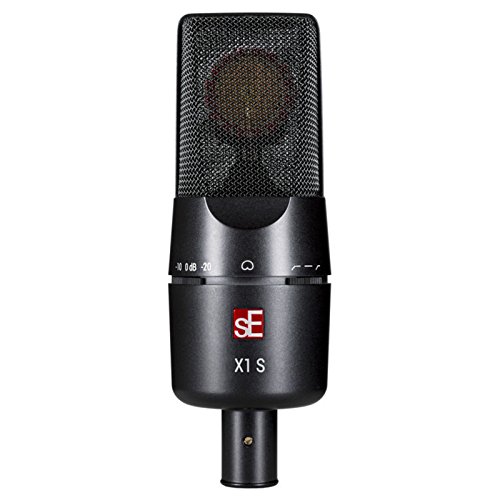
- Hand-tuned capsule with clear, balanced sound
- 80/160 Hz filters and -10/-20 dB pads
- Low self-noise and 160 dB SPL handling
Best For: Voiceover artists with an XLR recording setup
Complete USB Setup
FIFINE T669 Studio Condenser Mic

- Plug-and-play USB recording
- Boom arm, shock mount, and pop filter included
- Cardioid pickup for focused voice capture
Best For: Beginners building a home voiceover or podcast station
Simple Desktop Value
Amazon Basics USB Condenser Mic

- Plug-and-play USB connectivity
- Cardioid pickup and adjustable 360-degree stand
- One-tap mute with built-in shock absorption
Best For: Basic desktop voiceover, streaming, and conferencing
Studio Vocal Pick – RØDE NT1 Signature
The RØDE NT1 Signature is a strong choice among condenser microphones for voiceover when you want a traditional XLR studio setup and very low self-noise. Its cardioid pattern focuses on the speaker, while the included shock mount, pop filter, and cable make the package ready for pairing with an audio interface.
Best For: Voiceover artists, vocal recording, and streamers who already have or plan to add an audio interface.
Pros:
- Very low 4.5 dBA self-noise for quiet recordings.
- Cardioid pickup helps reject room sound.
- Includes SM6 shock mount, pop filter, XLR cable, and dust cover.
- Large-diaphragm condenser voicing is designed for vocals.
Cons:
- Requires an audio interface and phantom power setup.
- XLR connectivity is less direct than USB for computer recording.
The NT1 Signature is the most studio-oriented option here, especially for buyers prioritizing quiet XLR recording and a useful accessory bundle.
Easy USB Control – Elgato Wave:3 MK.2
The Elgato Wave:3 MK.2 is a convenient USB option among condenser microphones for voiceover, streaming, and recording. It connects directly through USB-C and adds Auto Gain, Clipguard 2.0, onboard processing, headphone monitoring, and Wave Link software for managing audio without a separate interface.
Best For: Computer-based voiceover, streaming, and creators who want built-in level protection and hands-on controls.
Pros:
- USB-C plug-and-play connection for PC or Mac.
- Clipguard 2.0 helps prevent clipping, while Auto Gain simplifies setup.
- Built-in voice enhancer, compressor, EQ, and VST signal-chain support.
- Includes headphone output, multifunction dial, tap-to-mute, and LED feedback.
Cons:
- USB connectivity is not intended for a traditional XLR interface chain.
- Its super-cardioid pattern may require more careful positioning.
This is a practical all-in-one choice for creators who value fast setup, monitoring, and software-based audio control over a conventional studio interface.
Classic XLR Value – Audio-Technica AT2020
The Audio-Technica AT2020 remains a straightforward option among condenser microphones for voiceover and home-studio work. Its cardioid pattern reduces pickup from the sides and rear, while the low-mass diaphragm, wide dynamic range, and high SPL handling support versatile recording through an audio interface.
Best For: Home-studio users seeking an established, affordable XLR microphone for voiceover and general recording.
Pros:
- Cardioid pattern improves isolation from side and rear sounds.
- High SPL handling and wide dynamic range suit varied sources.
- Includes a stand mount, thread adapter, and protective pouch.
- Uses a standard three-pin XLRM output.
Cons:
- Requires phantom power and an audio interface.
- The package does not include a shock mount or pop filter.
The AT2020 is a sensible foundation for a project studio, particularly if you already own the supporting XLR equipment and want a proven cardioid design.
Complete Budget Kit – MAONO A04 USB Microphone
The MAONO A04 is a convenient starter package among condenser microphones for voiceover, podcasting, and online content. Its USB connection is plug-and-play, and the kit includes a boom arm, shock mount, pop filter, windscreen, and cables, so you can begin recording without buying a separate sound card.
Best For: Beginners recording voiceover, podcasts, calls, streams, or videos directly to a computer or compatible console.
Pros:
- USB plug-and-play operation without an external sound card.
- 24-bit/192 kHz chipset and 16 mm condenser capsule.
- Includes boom arm, shock mount, pop filter, windscreen, and USB cables.
- Compatible with many computers, PS4, PS5, and mobile phones.
Cons:
- Not compatible with Xbox according to the supplied notes.
- The desk clamp is intended for surfaces under 2.1 inches thick.
- Its stated frequency range is 30 Hz–16 kHz.
The A04 offers the most complete out-of-the-box setup in this group, making it well suited to first-time voiceover recording where convenience matters more than an expandable XLR workflow.
Best for Easy Setup – MXL 990
The MXL 990 is a practical choice among condenser microphones for voiceover if you want detailed vocal capture through an XLR setup. Its cardioid pattern helps reduce sound from the sides and rear, while the included shock mount and carrying case add useful value for home studios and mobile recording.
Best For: Voiceover artists, podcasters, singers, and home-studio users with an audio interface or preamp.
Pros:
- Large-diaphragm condenser design with a 20 Hz–20 kHz response for male and female vocals.
- Cardioid pickup helps focus on the speaker and reduce room noise.
- Includes a shock mount, stand adapter, and carrying case.
- Balanced XLR output with a FET preamp and detailed high end.
Cons:
- Requires +48V phantom power from an interface or microphone preamp.
- XLR connectivity is less direct than a USB microphone for computer-only setups.
The MXL 990 is a strong fit when you want a traditional studio microphone and already have compatible recording hardware. Its accessories and focused pickup pattern make it especially appealing for voiceover work in a reasonably controlled room.
Best Complete Voiceover Kit – MAONO PM320S
The MAONO PM320S is one of the more convenient condenser microphones for voiceover because it combines an XLR condenser mic with a boom arm, shock mount, pop filter, windscreen, and cable. Its cardioid capsule is designed to emphasize the speaker while helping limit off-axis room noise.
Best For: New voiceover creators, podcasters, streamers, and home-studio users who need a ready-to-use XLR kit.
Pros:
- Includes a boom arm, shock mount, pop filter, windscreen, and XLR cable.
- 16 mm condenser capsule captures vocal detail and transient response.
- Cardioid pattern and included accessories help manage ambient noise and plosives.
- Rugged all-metal housing and adjustable, foldable boom arm support regular use.
Cons:
- Requires a stable 48V phantom power source.
- Needs an audio interface, mixer, or preamp for XLR connection.
- Its supplied setup is less compact than a simple USB desktop microphone.
The PM320S stands out for value and convenience rather than requiring you to assemble a studio setup piece by piece. It is a sensible starting point for voiceover when you have phantom power available and want basic positioning and plosive-control accessories included.
Best USB Flexibility – Logitech Blue Yeti
The Logitech Blue Yeti offers a straightforward alternative among condenser microphones for voiceover, using USB connectivity for plug-and-play recording on Mac or PC. Its selectable pickup patterns and onboard controls make it adaptable for solo narration, interviews, podcasts, and other computer-based recording.
Best For: Voiceover beginners, streamers, podcasters, and creators who want direct computer recording without an audio interface.
Pros:
- USB setup works directly with Mac or PC.
- Four pickup patterns provide cardioid, omnidirectional, bidirectional, and stereo options.
- Onboard gain, headphone-volume, mute, and pattern controls simplify recording.
- Includes a desktop stand and supports no-latency monitoring.
Cons:
- USB connectivity does not offer the same upgrade path as an XLR microphone system.
- The 3.5-pound body and desktop stand are less portable than a compact mic.
- Multiple pickup patterns require careful selection to avoid capturing unwanted room sound.
The Blue Yeti is an easy recommendation for computer-based voiceover when convenience and flexibility matter most. Choose cardioid mode for solo narration, and use the onboard controls and headphone monitoring to refine levels before recording.
Professional Studio Pick – sE Electronics X1 S
For buyers seeking condenser microphones for voiceover, the sE Electronics X1 S is a versatile XLR option built for detailed, professional-quality recording. Its hand-tuned capsule, low self-noise, cardioid pattern, and switchable filters make it suitable for controlled studio and home-studio setups.
Best For: Voiceover artists, musicians, and creators using an audio interface or mixer.
Pros:
- Hand-crafted 1-inch capsule delivers clear, balanced sound.
- 80/160 Hz high-pass filters help reduce rumble and proximity effect.
- -10/-20 dB pads and up to 160 dB SPL handling support loud sources.
- Rugged metal housing and gold-plated XLR output support dependable studio use.
Cons:
- Requires an XLR-compatible interface, mixer, or preamp.
- Its studio-focused design may require additional accessories for a complete voiceover setup.
The X1 S is the strongest choice here for users prioritizing recording control and upgrade potential. The filters and pads are especially useful when adapting from spoken voice to louder instruments.
Complete USB Setup – FIFINE T669 Studio Condenser Mic
The FIFINE T669 is a practical choice among condenser microphones for voiceover because it combines USB plug-and-play connectivity with a boom arm, shock mount, and double pop filter. It is designed for straightforward recording on a PC or laptop without extra audio hardware or drivers.
Best For: Beginners, podcasters, streamers, and voiceover users who want an all-in-one desktop setup.
Pros:
- USB connection enables simple setup with compatible computers.
- Cardioid capsule focuses on sound from the front and helps limit ambient noise.
- Included boom arm offers adjustable positioning with up to 30 inches of reach.
- Double pop filter, shock mount, and 8.2-foot cable are included.
Cons:
- Not compatible with Xbox according to the supplied notes.
- USB connectivity is less suited to users planning an XLR-based upgrade path.
The T669 offers strong convenience for home recording. Its included mounting and pop-filter accessories reduce the need to assemble a separate voiceover rig, making it an approachable starting point.
Simple Desktop Value – Amazon Basics USB Condenser Mic
For an uncomplicated entry into condenser microphones for voiceover, this Amazon Basics USB model provides plug-and-play operation, cardioid pickup, and a compact adjustable stand. Its one-tap mute control also suits users recording, streaming, or joining online meetings from a computer.
Best For: Casual voiceover, streaming, podcasting, conferencing, and basic computer recording.
Pros:
- USB connection works without additional drivers on supported computers.
- Cardioid pickup helps isolate the speaker from background sound.
- 360-degree adjustable stand makes desktop positioning convenient.
- One-tap mute, built-in shock absorption, and tripod compatibility add flexibility.
Cons:
- Designed for USB computer use rather than an XLR studio signal chain.
- The supplied notes list broad compatibility but do not specify detailed voice-specific controls beyond mute.
This is a sensible low-complexity option for users who want a compact microphone they can connect and use quickly. It is best suited to everyday voice recording rather than a highly configurable studio workflow.
How We Picked the Best Condenser Microphones for Voiceover
We focused on microphones suited to spoken-word recording, including narration, podcasts, streaming, online courses, and home-studio voiceover. Our comparison considers connection type, pickup pattern, included accessories, recording flexibility, control features, and how easily each model can fit into a practical desktop or studio setup.
USB microphones are evaluated for plug-and-play convenience, while XLR models are considered for compatibility with audio interfaces, mixers, and more expandable recording chains. Because room acoustics affect voice quality as much as microphone specifications, we also considered features such as cardioid pickup, filters, pads, and sensitivity to surrounding noise.
Quick Comparison
- Best for professional studio growth: RØDE NT1 Signature Series or sE Electronics X1 S.
- Best USB upgrade: Elgato Wave:3 MK.2 for creators who want software-based control and DSP features.
- Best established budget XLR option: Audio-Technica AT2020 or MXL 990.
- Best complete starter kits: MAONO A04, MAONO PM320S, or FIFINE T669.
- Best flexible USB desktop microphone: Logitech Blue Yeti.
Key Buying Factors for Condenser Microphones for Voiceover
USB Vs. XLR Connectivity
USB models connect directly to a computer and are usually the simplest choice for beginners, remote work, and portable setups. XLR microphones require an audio interface or mixer, but they offer a more upgradeable path and can integrate with professional studio equipment.
Room Acoustics and Pickup Pattern
A cardioid microphone focuses primarily on sound in front of the capsule and helps reduce noise from behind. It cannot eliminate room reflections, however. For clear narration, place the microphone away from hard reflective surfaces, use a pop filter, and record in the quietest, least echo-prone area available.
Voice Character and Sensitivity
Condenser microphones generally capture more detail than dynamic models, which can make speech sound crisp and intimate. That detail also reveals mouth noise, computer fans, traffic, and room echo. Listen for a microphone whose tonal character complements your voice rather than relying on sensitivity or frequency figures alone.
Accessories and Controls
A shock mount, pop filter, boom arm, stand, and headphone monitoring can make a bigger practical difference than small specification changes. Built-in gain controls, mute buttons, headphone outputs, software mixing, filters, and pads are especially useful for USB recording and live production.
Who Should Buy Which Condenser Microphones for Voiceover?
Choose a USB model if you want the fastest setup with minimal additional equipment. The Elgato, Blue Yeti, MAONO, FIFINE, and Amazon Basics options are aimed at creators who value convenience and straightforward computer recording.
Choose an XLR model if you already own an interface or expect to build a more capable studio. The RØDE, Audio-Technica, MXL, and sE Electronics microphones offer a better fit for users who want flexible gain staging, interchangeable equipment, and a longer-term recording setup.
Prioritize a kit if you are starting from scratch and need basic accessories included. For the cleanest results, budget for acoustic treatment and a stable microphone position after choosing the microphone itself.