A dependable DI box can turn an instrument or line-level source into a cleaner, mixer-ready signal while helping prevent hum, distortion, and connection problems. You do not need to spend hundreds of dollars to get useful features for live sound, rehearsal spaces, home studios, or installed systems.
We compared 10 passive DI options under $200, focusing on channel count, connectivity, attenuation, ground-lift functionality, build quality, and practical setup flexibility.
Best 10 Di Boxes Under 200 Picks for 2026
Versatile Stereo Choice
Radial ProD2 Passive 2 Channel Direct Box

- Passive two-channel stereo design
- Isolation transformer, ground lift, and 15 dB pad
- 1/4-inch and XLR connectivity
Best For: Stereo setups needing passive isolation and signal padding
Roadworthy Stereo Pick
Mackie MDB-2P Passive Stereo DI Box

- Dual high-impedance 1/4-inch inputs
- Ground lift and 15 dB pads
- Passive steel design needs no power
Best For: Stereo keyboards, DJ controllers, and backing-track rigs
Flexible Level Handling
Palmer PAN04 2-Channel Passive DI Box

- Two-channel passive operation
- Parallel THRU connections
- Handles line- and speaker-level signals
Best For: Stereo routing with varied source levels
Compact Mono Workhorse
Samson S-Max MD1 Passive Mono DI Box

- Balanced XLR output from 1/4-inch input
- Passive design with ground lift
- Thru output and 0 dB/-15 dB handling
Best For: Mono guitar, keyboard, and line-level connections
Flexible Rack-Mount Control

- Two DI channels in a 1/2-rack package
- Independent pads and ground lifts
- Per-channel volume and pan controls
Best For: Compact setups needing flexible two-channel routing
Rugged Dual-Channel Value
Pyle-Pro PDC22 Dual Passive DI

- Two-channel direct box
- Steel chassis for durability
- Handles instruments and line sources
Best For: Affordable live sound and basic recording connections
Compact Professional Simplicity
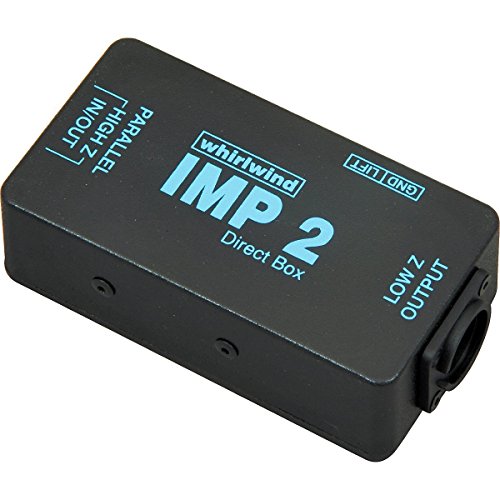
- Single-channel passive design
- Converts unbalanced signals to balanced mic level
- Riveted TRHL transformer and compact footprint
Best For: Individual instruments and simple, durable DI setups
Best Budget Hum Eliminator

- Handles guitars, basses, keyboards, and line sources
- Input attenuation helps with signal matching
- Hum-cancellation support with balanced and unbalanced XLR
Best For: Flexible instrument and consumer-audio connections
Best Two-Input Option

- Two-input merge function for flexible routing
- Ground lift helps address connection hum
- Attenuation switch supports signal matching
Best For: Live PA, club, monitor, and DJ systems
Best Adjustable-Attenuation Pick
Livewire SPDI Passive Direct Box

- 1/4-inch instrument input and throughput
- Variable attenuation for input flexibility
- Floating XLR output and selectable ground lift
Best For: Live instrument rigs with passthrough needs
Versatile Stereo Choice – Radial ProD2 Passive 2 Channel Direct Box
The Radial ProD2 is a practical option for shoppers comparing di boxes under 200 who need passive stereo signal conversion. It combines two-channel operation with transformer isolation, a ground-lift switch, and a 15 dB pad.
Best For: Stereo keyboard, playback, and other dual-channel setups requiring isolation and flexible signal handling.
Pros:
- Passive stereo, two-channel design
- Isolation transformer and ground-lift switch help address noise and ground-loop concerns
- 15 dB pad accommodates hotter signals
- Compact stainless-steel build with 1/4-inch and XLR connectors
Cons:
- Passive stereo format may be more than needed for a single-channel setup
- The supplied notes do not specify a warranty or frequency response
The ProD2 stands out when stereo operation and isolation are priorities. Its passive design and compact enclosure make it a focused choice for straightforward stage or studio routing.
Roadworthy Stereo Pick – Mackie MDB-2P Passive Stereo DI Box
The Mackie MDB-2P is a strong contender among di boxes under 200 for stereo keyboards, DJ controllers, and backing-track rigs. Its passive design needs no power, while dual inputs, ground lift, and 15 dB pads support flexible live connections.
Best For: Stereo keyboards, DJ rigs, and playback systems where hum reduction and simple, power-free operation matter.
Pros:
- Dual 1/4-inch high-impedance inputs for stereo sources
- Ground lift helps stop ground-loop buzz
- 15 dB pads help handle hot signals without distortion
- Passive construction in a roadworthy steel case; no power required
Cons:
- Designed for stereo sources, so it may be unnecessary for basic mono setups
- The supplied notes do not provide dimensions or frequency-response details
With its clear focus on stereo instruments and playback gear, the MDB-2P offers useful controls without requiring batteries or phantom power. It is especially practical for portable rigs that encounter hum or strong output levels.
Flexible Level Handling – Palmer PAN04 2-Channel Passive DI Box
The Palmer PAN04 is worth considering when comparing di boxes under 200 for a two-channel passive setup. Its parallel THRU connections and ability to handle line- and speaker-level signals make it adaptable for keyboards, computers, and other source-routing applications.
Best For: Two-channel setups that need parallel signal routing and support for both line-level and speaker-level sources.
Pros:
- Two-channel passive DI design
- Parallel THRU connections support signal splitting
- Handles line-level and speaker-level signals
- Includes a five-year limited manufacturer warranty
Cons:
- The supplied notes do not mention a ground-lift switch or pad control
- Its 0.47 kg weight is heavier than some compact single-channel options
The PAN04 is a useful choice when signal pass-through and broader input-level compatibility are more important than a minimal feature set. Its two-channel layout also suits stereo sources.
Compact Mono Workhorse – Samson S-Max MD1 Passive Mono DI Box
The Samson S-Max MD1 is a practical mono entry among di boxes under 200, converting an unbalanced 1/4-inch instrument or line signal to a balanced mic-level XLR output. It adds ground lift, selectable 0 dB/-15 dB handling, and a passive thru output for parallel connections.
Best For: Guitar, keyboard, and other mono instrument or line sources routed to a mixer or USB audio interface.
Pros:
- Converts 1/4-inch unbalanced signals to balanced mic-level XLR
- Passive operation requires no batteries or phantom power
- Ground lift helps fight buzz and hum
- Thru output supports pedals, an amplifier, or parallel tracking
Cons:
- One-channel design is not suited to stereo sources by itself
- The supplied notes do not list product dimensions
For a straightforward mono rig, the MD1 provides useful routing flexibility in a durable 14-gauge steel chassis. Its transformer circuitry, Mu-Metal shielding, and 18 Hz–40 kHz stated range further suit stage and studio use.
Flexible Rack-Mount Control – dbx DJDI Passive 2-Channel DI
If you need DI boxes under 200 for a compact live or recording setup, the dbx DJDI provides two channels in a half-rack package. Each channel has its own 20dB pad, ground lift, volume, and pan controls, making it practical for managing different source levels and mixer routing.
Best For: Musicians and small-format setups needing two-channel DI functionality with line-mixer control.
Pros:
- Two-channel design in a compact 1/2-rack enclosure.
- Independent 20dB pad and ground-lift switches for each channel.
- Per-channel volume and pan controls for line-mixer output.
- Supports 1/4-inch TS and XLR connectivity.
Cons:
- Requires corded electric power.
- Its controls may be more than needed for a simple single-channel setup.
The DJDI stands out when space and routing flexibility matter. Its independent channel controls make it a versatile option for compact systems using multiple instruments or line-level sources.
Rugged Dual-Channel Value – Pyle-Pro PDC22 Dual Passive DI
Among DI boxes under 200, the Pyle-Pro PDC22 is a straightforward dual-channel option for connecting unbalanced instruments and line sources to a PA or recording mixer. Its steel chassis, 1/4-inch device connections, and ground-lift design suit live sound and basic recording applications.
Best For: Musicians who need an affordable two-channel DI for guitars, keyboards, processors, or consumer line outputs.
Pros:
- Provides two channels in one direct box.
- Connects guitars, keyboards, processors, submixers, and consumer stereo sources.
- Ground-lift function helps address buzz and hum in connected systems.
- Heavy-duty all-steel chassis.
Cons:
- The supplied notes identify a detachable AC power cord, so power requirements should be checked for your setup.
- Product details do not specify additional channel-level controls.
The PDC22 focuses on practical connectivity and durability rather than extensive controls. It is a sensible fit when two channels and basic hum reduction are more important than advanced routing features.
Compact Professional Simplicity – Whirlwind IMP 2 Passive DI
If your search for DI boxes under 200 centers on a dependable single-channel unit, the Whirlwind IMP 2 offers a simple signal-conversion design. Its transformer converts an unbalanced line- or instrument-level signal to a low-impedance, balanced microphone-level signal in an economical package.
Best For: Players and engineers needing one durable DI channel for instrument or line-level sources.
Pros:
- Converts unbalanced instrument or line signals to balanced mic-level output.
- Uses a TRHL transformer riveted to the chassis.
- Compact footprint and lightweight 8.8-ounce design.
- Designed as an economical professional-quality option.
Cons:
- Only one channel is provided.
- The supplied notes do not list pad, ground-lift, or level controls.
The IMP 2 is best suited to users who value a focused, durable signal path over extra controls. Its single-channel format keeps the unit simple for individual instruments and compact rigs.
Best Budget Hum Eliminator – Pyle Premium Passive DI Unit
If you need DI boxes under 200 for connecting instruments or unbalanced audio sources to a PA or mixer, the Pyle PDC21 offers a straightforward passive solution. Its 1/4-inch connector, input attenuation, and hum-cancellation features support guitars, basses, keyboards, and other line-level devices.
Best For: Musicians and home-recording users who need flexible instrument and consumer-audio connections with ground-lift hum reduction.
Pros:
- Connects guitars, basses, keyboards, effects processors, and other unbalanced sources.
- Includes input attenuation and buzz- or hum-cancellation capability.
- Supports balanced and unbalanced XLR connections.
Cons:
- Its passive design may require careful level matching with connected equipment.
- The compact feature set is focused on basic DI and hum-elimination duties.
The PDC21 is a versatile choice when you want one compact box for instruments, submixers, or even a consumer stereo output. It is especially practical for setups where ground noise is a concern.
Best Two-Input Option – Passive Direct Box/Merge DI
Among DI boxes under 200, this passive direct box stands out for its two-input merge function and practical controls. It converts high-impedance unbalanced signals to low-impedance balanced XLR output while offering ground lift and attenuation for cleaner, better-matched connections.
Best For: Live sound, club, PA, monitor, and DJ setups that need flexible input handling and basic noise control.
Pros:
- Converts high-impedance unbalanced signals to low-impedance balanced XLR signals.
- Ground-lift switch helps reduce hum from multiple connected devices.
- Attenuation switch supports signal-level matching.
- Rugged housing is designed for steady use in live or installed environments.
Cons:
- At 1.2 pounds, it is heavier than some compact passive DI units.
- The supplied notes do not specify detailed frequency-response or power-handling figures.
This model is a sensible pick when routing flexibility matters more than an ultra-small enclosure. Its combination of merging, attenuation, and ground lift suits straightforward live-sound signal management.
Best Adjustable-Attenuation Pick – Livewire SPDI Passive Direct Box
For shoppers comparing DI boxes under 200, the Livewire SPDI provides a focused passive design with variable attenuation and both instrument passthrough and XLR output. It is built for connecting high-impedance instrument sources to balanced low-impedance systems.
Best For: Live instrument rigs that need flexible input levels, a thru connection, and selectable ground isolation.
Pros:
- Provides a 1/4-inch high-impedance input and throughput output.
- Balanced, floating XLR output ignores +48V phantom power.
- Variable attenuation accommodates different input levels.
- Lift mode separates the input and XLR-output ground connection.
Cons:
- The supplied notes do not identify multiple input channels or merge functionality.
- Its controls are centered on passive DI duties rather than broader signal processing.
The SPDI is a good fit for performers who want to send an instrument signal to a mixer while retaining a 1/4-inch throughput connection. Variable attenuation and selectable ground handling add useful flexibility on stage.
How We Picked the Best Di Boxes Under 200
We selected these models based on the features that matter most in real-world signal routing: passive transformer operation, balanced XLR output, input and thru connections, channel configuration, attenuation controls, ground-lift options, and suitability for instruments or line-level sources. We also considered whether each box fits common use cases such as bass, keyboards, DJ equipment, playback devices, and compact live rigs.
Passive DI boxes are generally straightforward, reliable, and do not require batteries or phantom power. Their simplicity makes them especially practical when you need a durable backup or several DI channels for a stage setup.
Quick Comparison
| Best For | Features to Prioritize | Recommended Type |
|---|---|---|
| Single guitar or bass | Thru output, ground lift, rugged enclosure | Single-channel passive DI |
| Stereo keyboards or playback | Two channels, paired inputs and outputs | Stereo passive DI |
| DJ or line-level sources | Attenuation, line mixing, flexible input handling | Multi-purpose two-channel DI |
| Multiple instruments | Compact footprint and independent channels | Dual-channel passive DI |
Key Buying Factors for DI Boxes Under $200
Channel Count and Routing
A mono DI is sufficient for one guitar, bass, or other single output. Choose a two-channel model for stereo keyboards, mixers, DJ controllers, or two separate instruments. Check whether the channels are independent and whether the unit provides a thru connection for sending the unbalanced signal to an amplifier.
Input Level and Attenuation
Instrument outputs are usually easier for a DI to handle than hot line-level sources. If you plan to connect a mixer, DJ system, keyboard, or playback device, look for a pad or attenuation switch. This reduces the risk of overload and gives you more useful headroom.
Ground Lift and Noise Control
A ground-lift switch can help eliminate hum caused by ground loops between connected equipment. It is a valuable feature for live setups, although it should be used appropriately and never treated as a substitute for safe electrical practices.
Construction and Connectors
Metal enclosures, recessed switches, sturdy XLR connectors, and clearly labeled controls are worthwhile for frequent transport. Confirm that the unit has the connector layout you need, particularly if you expect to mount it in a crowded stage or studio setup.
Who Should Buy Which Di Boxes Under 200?
Choose a single-channel model if you want a simple, dependable interface for guitar, bass, or a single mono source. A dual-channel unit is the better choice for stereo instruments, two-channel playback, or anyone who wants one box to cover more situations. For DJs and line-level applications, prioritize attenuation and mixing flexibility. For touring musicians or venues, favor rugged construction, independent channels, and an accessible ground lift.
Among DI boxes under $200, the best value is not necessarily the model with the most controls. Match the channel count, input handling, and routing features to your equipment first; then choose the enclosure and control layout that will be easiest to use under pressure.