A DJ mixer with a USB interface can simplify everything from live streaming and recording to casual mixing and karaoke. The right model combines the inputs, controls, effects, and connectivity your setup actually needs.
Our roundup covers compact mixers, feature-rich sound boards, and more established analog options, making it easier to match your budget and workflow with a practical choice.
Best 10 Dj Mixer with USB Interface Picks for 2026
Best Value Analog Hub

- 8-input analog mixer
- Stereo USB interface
- PC and gaming audio mixing
Best For: Streamers, podcasters, and simple home recording setups
Best Feature-Packed Portable Pick
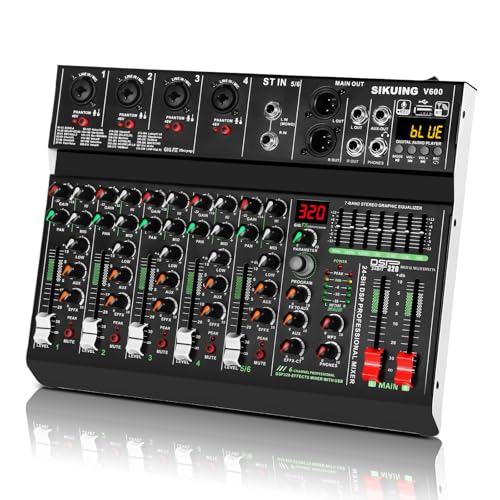
- 320 DSP effects and 7-band EQ
- Bluetooth 5.0 and USB sound card
- Portable metal chassis
Best For: Mobile performers, streamers, and creators needing effects
Best for USB Recording

- Onyx preamps with up to 60 dB gain
- 24-bit/192kHz recording
- 2x4 USB I/O and 24 effects
Best For: Creators and musicians recording with a computer
Best for Larger Small-Setup Mixing

- 10-input mixer with USB
- SPX effects and one-knob compressors
- Rugged metal chassis
Best For: Small bands, live performers, and home studios
Versatile Value

- Eight channels with XLR and 1/4-inch inputs
- Bluetooth and USB-A MP3 playback
- Phantom power, DSP effects, and rugged steel chassis
Best For: Live performers, karaoke, and flexible small-event mixing
PC Recording Pick

- Plug-and-play USB-B PC recording
- USB-stick playback and recording
- Three XLR inputs with 48V phantom power
Best For: Podcasters, livestreamers, and beginner home recording
Effects-Focused Choice

- 99 DSP effects for vocals and live content
- USB, Bluetooth, and flash-drive recording
- Compressor, HPF, and zero-latency monitoring
Best For: Streaming, karaoke, vocals, and home recording
Best for Full-Bandwidth Mixing

- Eight inputs for microphones and instruments
- USB playback and recording with Bluetooth
- Per-channel EQ, gain, FX, and monitoring controls
Best For: Small bands, streaming, podcasting, and multi-source live audio
Best for DSP Effects

- Six channels with four XLR inputs
- USB, Bluetooth, and flash-drive playback
- 16 DSP effects with 48V phantom power
Best For: Karaoke, streaming, studio recording, and live gigs
Best Value Analog Hub – Behringer XENYX 802S
Behringer XENYX 802S Premium Analog 8-Input Mixer with USB Streaming Interface
Check Price On AmazonIf you need a dj mixer with usb interface for straightforward streaming, podcasting, or recording, the Behringer XENYX 802S combines analog mixing with stereo USB connectivity. Its eight-input layout also supports direct mixing of computer or gaming audio into the streaming output.
Best For: Streamers, podcasters, and home users who want an uncomplicated analog mixer with computer or mobile-device connectivity.
Pros:
- Eight inputs provide useful flexibility for small setups.
- Stereo USB interface connects to a computer or mobile device.
- Supports direct mixing of PC and gaming sounds into the stream output.
- Analog equalization and low-noise design suit streaming and recording.
Cons:
- It uses a corded-electric power source.
- The supplied notes do not specify software update support.
The XENYX 802S is a practical choice when analog control and simple USB integration matter more than extensive onboard effects or wireless features.
Best Feature-Packed Portable Pick – 6-Channel DJ Audio Mixer
For buyers seeking a dj mixer with usb interface plus wireless playback and onboard processing, this six-channel console offers USB sound-card functionality, Bluetooth 5.0, a seven-band EQ, and 320 DSP effects. Its portable metal chassis is designed for home studios, streaming, rehearsals, and live use.
Best For: Mobile performers, streamers, and creators who want effects, Bluetooth playback, phantom-power capability, and PC/Mac recording in one compact mixer.
Pros:
- Six channels accommodate microphones, instruments, smartphones, and computers.
- Seven-band graphic EQ and 320 DSP effects provide extensive sound shaping.
- Bluetooth 5.0 supports wireless backing tracks or background music.
- USB sound-card functionality supports PC/Mac recording and monitoring.
Cons:
- It requires corded power.
- The supplied notes do not specify software update support.
Choose this model if built-in effects and flexible connectivity are priorities. It offers more integrated features than a basic USB mixer while remaining portable.
Best for USB Recording – Mackie ProFX6v3
The Mackie ProFX6v3 is a strong dj mixer with usb interface for live sound, content creation, streaming, and home recording. It combines Onyx microphone preamps, 24-bit/192kHz recording, 2×4 USB I/O, and built-in GigFX effects in a six-channel format.
Best For: Creators and musicians who need high-gain microphone inputs, detailed USB recording, and flexible computer-monitoring options.
Pros:
- Onyx preamps provide up to 60 dB of gain and low-noise performance.
- Supports 24-bit/192kHz recording quality.
- 2×4 USB I/O enables custom computer mixes and playback monitoring.
- Includes 24 effects options and a blend control for computer and direct signals.
Cons:
- It has six channels, which may limit larger setups.
- It uses corded power.
- The supplied notes do not specify software update support.
The ProFX6v3 stands out for recording-focused workflows, especially when clean microphone gain and separate computer-monitoring mixes are important.
Best for Larger Small-Setup Mixing – Yamaha MG10XU
For a dj mixer with usb interface that offers more input capacity, the Yamaha MG10XU provides 10 inputs, USB connectivity, SPX digital effects, and practical channel-shaping controls. Its rugged powder-coated metal chassis is suited to repeated use in home, rehearsal, and live environments.
Best For: Small bands, live performers, and home studios that need additional inputs, analog control, and built-in effects.
Pros:
- Ten-input design accommodates larger small-format setups.
- USB connectivity and SPX digital effects support recording and performance.
- D-PRE preamps use a discrete Class A design for natural bass and smooth highs.
- Three-band EQ, high-pass filters, and one-knob compressors aid mix control.
Cons:
- USB operation is specified at 48 kHz.
- It is heavier than the other compact options listed, at 7.7 pounds.
- It uses corded power.
The MG10XU is the better fit when channel count and hands-on mixing controls matter more than ultra-high USB recording rates or a highly portable chassis.
Versatile Value – Pyle 8-Channel USB DJ Mixer
The Pyle PMXU83BT is a practical DJ mixer with USB interface for performers who want eight channels, Bluetooth streaming, USB MP3 playback, and basic computer-ready connectivity in one compact console. Its XLR and 1/4-inch inputs, 3-band channel EQ, LED peak indicators, and +48V phantom power cover a broad range of small live setups.
Best For: Live performers, karaoke setups, and DJs who need multiple inputs, wireless playback, and a rugged compact mixer.
Pros:
- Eight channels with XLR and unbalanced 1/4-inch inputs
- Bluetooth streaming and USB-A MP3 playback
- +48V phantom power, 3-band EQ, and 16-bit DSP effects
- Steel chassis with sealed rotary controls
Cons:
- The supplied notes do not specify detailed computer recording workflow or software compatibility
- USB functionality is described primarily for MP3 playback rather than confirmed multitrack recording
This is a strong feature-per-dollar option when channel count and flexible playback matter more than advanced studio routing. The multi-voltage power supply also makes it convenient for users who need a mixer suitable for different electrical systems.
PC Recording Pick – Aveek 5-Channel USB Mixer
The Aveek 5-channel board is a compact DJ mixer with USB interface built around plug-and-play PC recording. It combines three XLR inputs, stereo line connections, USB-stick playback and recording, Bluetooth streaming, headphone monitoring, and simple echo or delay effects for home and live-content setups.
Best For: Podcasters, livestreamers, small performers, and beginners who want straightforward USB recording with multiple input options.
Pros:
- Built-in USB recording chip supports plug-and-play PC recording
- USB-stick playback and recording add convenient standalone functionality
- Three XLR inputs with switchable 48V phantom power
- Headphone monitoring, Bluetooth streaming, and echo or delay effects
Cons:
- Bluetooth, USB, and 4/5-channel functions cannot be used simultaneously
- Bluetooth range is specified at approximately 15 feet
- Outputs are intended for active speakers or power amplifiers rather than passive speakers directly
The Aveek is particularly appealing if recording to a computer is central to your setup. Its operating limitations should be considered, but the combination of USB recording, physical inputs, and monitoring makes it approachable for home production and streaming.
Effects-Focused Choice – 5-Channel USB Streaming Mixer
This 5-channel analog console is a versatile DJ mixer with USB interface for home recording, streaming, karaoke, and small gigs. It supports Bluetooth, PC/Mac USB connection, flash-drive playback and recording, plus 99 DSP effects, channel compression, 3-band EQ, and zero-latency headphone monitoring.
Best For: Streamers, vocalists, podcasters, and home users who want onboard effects and flexible playback options.
Pros:
- USB, Bluetooth, and flash-drive playback and recording
- 99 DSP effects including reverb, delay, chorus, and flanger
- 3-band EQ and compressor on the first three channels
- Independent phantom power, HPF, and zero-latency monitoring
Cons:
- USB recording is limited to a stereo 2-track mix at 16-bit/48kHz
- It is an analog mixer intended for home use and personal projects
- Only five channels are available
The standout feature is the large effects library, while the compressor and high-pass filter add useful control for vocals and unpredictable live sources. Choose it for creative processing and simple stereo recording rather than multitrack studio production.
Best for Full-Bandwidth Mixing – 8-Channel USB Mixer
If you need a dj mixer with usb interface that can handle several microphones and playback sources, this 8-channel console offers a flexible setup for live shows, streaming, recording, karaoke, and small-stage use. Its combination of USB, Bluetooth, XLR, and auxiliary connectivity makes it practical for varied audio configurations.
Best For: Small bands, live streamers, podcasters, event hosts, and users who need eight input channels with independent controls.
Pros:
- Eight channels with XLR and 1/4-inch input support for connecting multiple devices.
- USB playback and recording, plus Bluetooth music streaming from compatible devices.
- Individual gain, FX, PFL, fader, and 3-band EQ controls on each channel.
- Includes 48V phantom power, headphone monitoring, reverb, and delay effects.
Cons:
- The corded-electric design requires access to mains power.
- The supplied notes do not specify supported software or operating systems.
This is the most expandable option of the three for users who expect to connect several microphones or instruments. Choose it when channel count and detailed per-channel control matter more than a compact footprint.
Best for DSP Effects – 6-Channel USB DJ Mixer
This dj mixer with usb interface is a balanced choice for karaoke, studio work, streaming, and live gigs. The six-channel layout provides multiple connection options, while the USB interface, Bluetooth playback, 3-band EQ, and built-in DSP effects support flexible everyday mixing.
Best For: Karaoke performers, home studios, streamers, and live users who want four XLR inputs plus stereo channels and built-in effects.
Pros:
- Six-channel design includes four XLR/1/4-inch input channels and stereo channels 5/6.
- USB interface supports flash-drive or MP3 playback and mixing or recording.
- Built-in Bluetooth and 16 DSP effects provide wireless playback and reverb-style processing.
- Four XLR inputs support switchable 48V phantom power for condenser microphones.
Cons:
- The manufacturer warranty is listed as 90 days from purchase.
- The supplied notes do not specify supported software or operating systems.
- Operation may require careful setup to avoid loss of sound, according to the product notes.
With more inputs than a compact four-channel board and a dedicated 16-effect processor, this model suits users who want extra routing and vocal-processing flexibility without moving to a larger eight-channel console.
Best Compact Setup – 4-Channel USB DJ Mixer
For a smaller rig, this dj mixer with usb interface combines four channels with USB playback, Bluetooth, phantom power, and DSP effects. It is suited to karaoke, live streaming, recording, and other setups where a straightforward mixer with multiple output choices is more useful than a high channel count.
Best For: Compact karaoke systems, solo performers, streamers, and home recording setups using a few microphones or instruments.
Pros:
- Four-channel layout includes two XLR/1/4-inch mono inputs and stereo inputs for other sources.
- USB playback, Bluetooth streaming, and built-in controls support convenient music mixing.
- Offers 48V phantom power for condenser microphones and a 6.35mm headphone monitoring jack.
- Includes 16 DSP effects, 3-band EQ, multiple main outputs, and speaker connection options.
Cons:
- Bluetooth and USB functions cannot be used simultaneously.
- The listed Bluetooth operating range is only 1.5 feet.
- Four channels provide less expansion room than the six- and eight-channel alternatives.
This model is the most space-conscious choice and still covers essential playback, monitoring, microphone, and effects needs. Its connection limit and short stated Bluetooth range make it better for compact, nearby-device setups than larger productions.
How We Picked the Best Dj Mixer with USB Interface
We focused on the features that matter most in real-world setups: USB connectivity, channel count, input flexibility, onboard effects, EQ controls, monitoring options, and suitability for recording, streaming, live performance, or karaoke. We also considered whether each mixer offers useful extras such as Bluetooth playback, phantom power, stereo inputs, and dedicated controls for fast adjustments.
Because these products target different users, the list includes both recognizable mixer lines and affordable feature-heavy consoles. Specifications can vary by configuration, so check the current listing for exact input layouts, USB functions, included accessories, and software compatibility before buying.
Quick Comparison
| Best For | What to Look For |
|---|---|
| Home recording | Clean USB output, practical gain controls, and dependable monitoring |
| Live streaming | USB audio, Bluetooth or stereo playback, and quick-access level controls |
| DJ practice | Multiple line inputs, responsive EQ, headphone monitoring, and effects |
| Karaoke and casual use | Microphone inputs, echo or DSP effects, Bluetooth, and simple operation |
| Small live shows | More channels, phantom power, balanced outputs, and sturdy construction |
Key Buying Factors for a Dj Mixer with USB Interface
Channel Count and Input Types
Count the sources you will connect at the same time, including microphones, decks, instruments, phones, and computers. Extra channels provide flexibility, but a compact mixer may be easier to position and operate.
USB Functionality
Confirm whether the USB connection supports playback, recording, or both. Also check whether it appears as a standard audio device on your computer and whether separate channel routing is available. Many affordable mixers provide a simple stereo USB feed rather than multitrack recording.
Effects, EQ, and Monitoring
Built-in DSP effects can be useful for vocals, karaoke, and streaming, while a capable EQ helps shape music and speech. Headphone monitoring and a dedicated USB or computer-return control are valuable when balancing live audio against playback.
Phantom Power and Connectivity
If you use condenser microphones, look for 48V phantom power. Bluetooth is convenient for wireless music playback, but it may introduce latency and should not replace wired connections for timing-sensitive DJ work.
Who Should Buy Which Dj Mixer with USB Interface?
Choose a compact analog model if you want straightforward controls for a home desk or small setup. A mixer with Bluetooth and numerous DSP presets suits karaoke, casual events, and beginner streaming. For regular recording, prioritize reliable USB operation, clean preamps, and useful monitoring over a long effects list. Performers and small venues should favor higher channel counts, phantom power, balanced outputs, and durable construction. DJs who need quick transitions should give extra attention to input routing, EQ layout, headphone cueing, and the number of stereo sources supported.