Capturing immersive audio takes more than a capable microphone. You also need a recorder with clean preamps, dependable power, suitable inputs, and a workflow that matches how you work in the field.
We compare 10 portable recorders and ambisonic-ready options for filmmakers, musicians, podcasters, and content creators, focusing on recording quality, flexibility, portability, and value.
Best 10 Field Recorder with Ambisonic Microphone Picks for 2026
Best Dedicated Ambisonic Mic
NT-SF1 Premium Ambisonic Microphone

- Four-capsule tetrahedral array
- Includes four-channel breakout cable
- Comes with shockmount and wind protection
Best For: Dedicated immersive recording with external XLR hardware
Best Complete Ambisonic Recorder
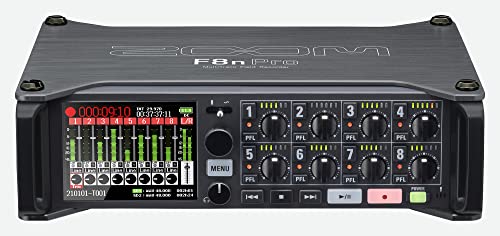
- Eight inputs and 10-track recording
- Ambisonics mode with 32-bit float
- Dual SD slots for redundant recording
Best For: Professional film and location recording with an external ambisonic mic
Best for Long Voice Recording

- Up to 100 hours of continuous recording
- Voice activation and noise reduction
- Large storage capacity for voice files
Best For: Lectures, meetings, and interviews—not immersive audio
Best Compact Handheld Recorder
Zoom H4 Essential Handheld Recorder

- Built-in stereo microphones
- Two XLR/TRS external inputs
- 32-bit float and USB-C connectivity
Best For: Portable stereo recording and general creator workflows
Filmmaker’s Multitrack Choice
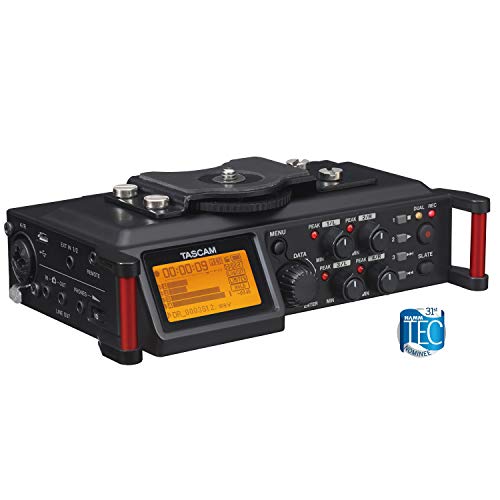
- Four balanced XLR/TRS inputs with phantom power
- Built-in microphones and camera-mountable design
- Dual Recording mode helps protect against clipping
Best For: Filmmakers and DSLR shooters needing multitrack production audio
Expandable Field Recording Pick

- Includes XYH-6 and MSH-6 microphone capsules
- Mid-side module supports detailed stereo capture
- Records up to 12 simultaneous tracks
Best For: Expandable field, music, and podcast recording
Compact 32-Bit Filmmaking Recorder

- 32-bit/96kHz recording for detailed audio
- Two locking XLR/TRS inputs
- Compact 6.4-ounce design with waveform display
Best For: Portable filmmaking, interviews, music, and podcast setups
Best Budget Voice Recorder
NekSide 72GB Voice Activated Recorder
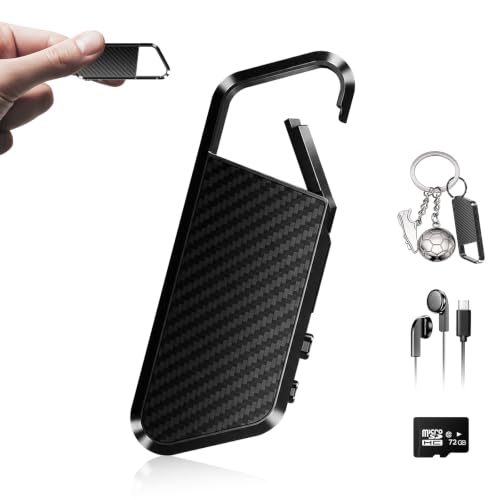
- 72GB storage and up to 10,860 hours stated capacity
- DSP 6.0 noise reduction for speech recording
- OTG transfers to compatible phones and tablets
Best For: Long-duration lectures, meetings, interviews, and voice notes
Best Compact Stereo Recorder

- X/Y stereo microphones for music, voices, and ambience
- 32-bit float recording for clip-free audio capture
- USB-C microphone mode for calls and content creation
Best For: Portable stereo recording, podcasts, music, and field ambience
Best for Multi-Mic Interviews
Zoom PodTrak P4 Podcast Recorder

- Four XLR inputs with phantom power
- Four headphone outputs with individual volume control
- Mix-minus support for phone and remote interviews
Best For: Portable podcasts, panel discussions, and multi-person interviews
Best Dedicated Ambisonic Mic – NT-SF1 Premium Ambisonic Microphone
If you need a field recorder with ambisonic microphone capability, the SoundField by RØDE NT-SF1 is a purpose-built microphone for capturing immersive four-channel sound. Its tetrahedral array uses four subcardioid condenser capsules and includes the breakout cabling and mounting accessories needed for a location-recording setup.
Best For: Filmmakers, VR creators, and location recordists who already have a compatible multichannel recorder or interface.
Pros:
- Four-capsule tetrahedral array is designed for ambisonic recording.
- Includes a 10-pin XLR to four 3-pin XLR breakout cable.
- Comes with a shockmount, pop shield, blimp-style windshield, and furry wind cover.
- 20Hz–20kHz frequency range supports a broad range of recorded sound.
Cons:
- It is a microphone rather than a complete field recorder.
- Requires external recording hardware with suitable XLR inputs.
- The four-channel setup may require additional processing after recording.
The NT-SF1 is the most direct choice here for dedicated ambisonic capture, but it should be paired with a multichannel recorder and the appropriate ambisonic processing workflow.
Best Complete Ambisonic Recorder – Zoom F8n Pro Field Recorder
For a field recorder with ambisonic microphone support and professional production features, the Zoom F8n Pro combines eight inputs, 10-track recording, and an Ambisonics mode. Its 32-bit float recording, high-gain preamps, timecode, and dual SD slots make it suited to demanding film and location workflows.
Best For: Film crews and professional field recordists who need multichannel inputs, timecode, redundant recording, and flexible routing.
Pros:
- Records up to eight channels and 10 tracks with 32-bit float capture.
- Ambisonics mode supports compatible immersive microphone workflows.
- Dual SD card slots allow redundant recording.
- Can function as an 8-in/4-out USB audio interface while recording to card.
Cons:
- At 1.8 kg, it is substantially heavier than a compact handheld recorder.
- Its professional feature set may be more than basic users need.
- It provides recording hardware but does not include an ambisonic microphone.
The F8n Pro is the strongest all-around recorder in this group for pairing with an ambisonic microphone, especially when reliable synchronization and backup recording matter.
Best for Long Voice Recording – Elasound 132G Voice Recorder
The Elasound is a compact voice recorder rather than a true field recorder with ambisonic microphone support. It focuses on long-form voice capture, offering voice activation, AI-based triple noise reduction, a built-in microphone, and up to 100 hours of continuous recording.
Best For: Lectures, meetings, interviews, and users who prioritize storage capacity and simple voice recording over immersive audio.
Pros:
- Built-in microphone with AI-intelligent triple noise reduction.
- Voice activation can start recording when sound is detected.
- 128GB TF-card capacity is listed for up to 9,800 hours at 32kbps.
- Includes a clip-on microphone, headphones, OTG adapters, and USB-C cable.
Cons:
- It does not provide ambisonic recording or multichannel inputs.
- Records in MP3 format rather than the WAV workflow used by the other recorders here.
- Its noise-cancellation design is aimed at voice clarity, not immersive sound capture.
Choose the Elasound for convenient, high-capacity voice recording, but look elsewhere if your project requires a field recorder with ambisonic microphone compatibility.
Best Compact Handheld Recorder – Zoom H4 Essential Handheld Recorder
The Zoom H4 Essential is a versatile handheld recorder for stereo field work, with built-in microphones, two XLR/TRS inputs, and 32-bit float recording. It is not a field recorder with ambisonic microphone capability by itself, but its external inputs make it a practical compact recorder for compatible microphone setups and general production audio.
Best For: Musicians, podcasters, filmmakers, and creators who want a lightweight recorder for stereo capture and external microphones.
Pros:
- Built-in stereo microphones support quick handheld recording.
- Two XLR/TRS inputs accommodate external microphones or instruments.
- 32-bit float recording helps avoid distorted takes across changing levels.
- USB-C supports recording or streaming to a phone, tablet, or computer while saving to SD card.
Cons:
- It has four-track capacity rather than the multichannel design of the F8n Pro.
- The supplied notes identify stereo microphones, not an ambisonic microphone array or Ambisonics mode.
- Its two-AA-battery design may require spare batteries for extended field sessions.
The H4 Essential is a convenient entry point for portable stereo and external-mic recording, but dedicated immersive projects will need a compatible ambisonic microphone and a recorder designed for its channel requirements.
Filmmaker’s Multitrack Choice – TASCAM DR-70D
If you need a field recorder with ambisonic microphone flexibility for video production, the TASCAM DR-70D is a compact multitrack option built around four balanced XLR/TRS inputs. Its built-in microphones, camera-mountable design, and level-protection features make it practical for production sound.
Best For: Filmmakers, documentarians, television producers, and DSLR shooters who need multiple XLR inputs.
Pros:
- Four balanced XLR/TRS inputs with phantom power and individual gain controls.
- Built-in microphones provide an additional on-set recording option.
- Dual Recording mode creates a lower-level safety copy to help prevent distorted takes.
- Supports SD, SDHC, and SDXC cards up to 128GB.
Cons:
- Uses four AA batteries, which may be less convenient for extended shoots.
- Its 1.5-inch screen is compact for detailed menu navigation.
- The supplied notes do not indicate an included ambisonic microphone capsule.
The DR-70D is strongest when your priority is flexible, multitrack production recording rather than a dedicated ambisonic setup. Its independent controls and safety recording mode are especially useful for fast-moving shoots.
Expandable Field Recording Pick – Zoom H8 MS Pack
The Zoom H8 MS Pack is a versatile field recorder with ambisonic microphone potential through its expandable capsule system. This special edition includes XYH-6 and MSH-6 capsules, giving you stereo and mid-side recording options for music, podcasts, and field work.
Best For: Users who want an expandable recorder for field recording, music, and podcasting.
Pros:
- Includes both XYH-6 and MSH-6 microphone capsules.
- MS module supports detailed mid-side stereo capture.
- Touchscreen interface is designed for intuitive control.
- Supports up to 12 simultaneous tracks.
Cons:
- The supplied notes do not confirm a dedicated ambisonic capsule is included.
- At 1.91 pounds, it is heavier than some compact handheld recorders.
- Its broad feature set may be more than needed for simple stereo recording.
The H8 MS Pack stands out for flexibility: it gives you two included capsule approaches now while leaving room to expand with compatible Zoom capsules later. It is a strong choice when your recording needs may change across projects.
Compact 32-Bit Filmmaking Recorder – Zoom H1 XLR
The Zoom H1 XLR is a compact option to consider when choosing a field recorder with ambisonic microphone compatibility for filmmaking, interviews, or podcasts. It combines two locking XLR/TRS inputs with 32-bit/96kHz recording and a waveform display for straightforward level monitoring.
Best For: Filmmakers, musicians, and podcasters who need a small recorder for external microphones and instruments.
Pros:
- Records at up to 32-bit/96kHz for detailed audio capture.
- Two locking XLR/TRS inputs accommodate microphones and instruments.
- 3.5mm stereo input and headphone output add connection flexibility.
- Supports SDXC cards up to 1TB.
Cons:
- The supplied notes do not indicate an included ambisonic microphone.
- Only two XLR/TRS inputs are available for larger recording setups.
- Its compact 0.96-inch display may limit on-device viewing space.
With its small 6.4-ounce body and locking inputs, the H1 XLR is well suited to portable setups. It is best viewed as a simple external-input recorder rather than a high-channel-count field production hub.
Best Budget Voice Recorder – NekSide 72GB Voice Activated Recorder
If you need a compact field recorder with ambisonic microphone capabilities, note that this NekSide model uses a built-in mono microphone instead. Its strengths are generous storage, voice activation, and DSP 6.0 noise reduction for lectures, interviews, meetings, and personal notes.
Best For: Long-duration voice recording when portability and built-in storage matter most.
Pros:
- 72GB of built-in storage with up to 10,860 hours of stated capacity.
- DSP 6.0 noise reduction is designed to filter background noise.
- OTG support allows direct transfers to compatible smartphones or tablets.
- Voice activation and playback support convenient note-taking and review.
Cons:
- The built-in microphone operates in mono, not ambisonic or stereo.
- Recordings default to WAV; MP3 requires conversion on a computer.
- The supplied details list a mini-USB headphone jack rather than a standard 3.5mm jack.
This is a practical choice for speech-focused recording and extended storage, but it is not the right fit for immersive environmental capture or ambisonic microphone workflows.
Best Compact Stereo Recorder – Zoom H1 Essential
The Zoom H1 Essential is a stronger match for buyers comparing a field recorder with ambisonic microphone options, although its supplied microphone is an X/Y stereo pair rather than an ambisonic capsule. It combines portable stereo recording with 32-bit float, USB microphone mode, and support for music, interviews, ambience, and content creation.
Best For: Musicians, podcasters, creators, and anyone wanting portable stereo sound with clip-free 32-bit float recording.
Pros:
- X/Y stereo microphones capture natural stereo sound for music, voices, and ambience.
- 32-bit float recording is designed for clip-free audio capture.
- USB-C microphone mode supports livestreams, calls, podcasts, and computer or mobile recording.
- Compact 92g design and approximately 10-hour battery life support mobile use.
Cons:
- It does not provide an ambisonic microphone according to the supplied specifications.
- Two AAA batteries are required.
- The listed recording format is WAV.
For most portable stereo applications, this is the most versatile option in the group. Choose it over a mono voice recorder when spatial stereo detail and creator-oriented connectivity are priorities.
Best for Multi-Mic Interviews – Zoom PodTrak P4 Podcast Recorder
The Zoom PodTrak P4 is not a field recorder with ambisonic microphone built in; it is a battery-powered podcast and interview recorder designed around external microphones. Its four XLR inputs, headphone outputs, phone connectivity, and mix-minus features make it suited to organized multi-person recording rather than one-mic environmental capture.
Best For: Podcasts, panel discussions, remote interviews, and portable setups using multiple XLR microphones.
Pros:
- Four microphone inputs include phantom power for compatible microphones.
- Four headphone outputs provide individual volume control for participants.
- Automatic mix-minus supports phone call-in and remote interviews.
- Sound pads and multitrack recording add flexibility for podcast production.
Cons:
- It does not include an ambisonic microphone; microphones must be connected externally.
- Battery life is listed at up to 3.5 hours on two AA batteries.
- Its feature set is geared toward speech and podcast production rather than compact stereo ambience recording.
This is the practical pick when your recording plan involves several speakers, headphones, and call-ins. For immersive field sound, pair it with an appropriate external microphone system or choose a recorder designed for ambisonic capture.
How We Picked the Best Field Recorder with Ambisonic Microphone
For this roundup, we prioritized recorders and microphone systems that can support serious location recording, including options suited to an ambisonic microphone such as the SoundField by RØDE NT-SF1. We considered input count, connector types, preamp performance, multitrack capability, monitoring, storage, battery operation, and ease of use.
The list includes dedicated multichannel field recorders as well as compact handheld and podcast-focused models. Not every product is a complete ambisonic recording system, so check channel requirements and compatibility before buying.
Quick Comparison
| Type | Best for | What to prioritize |
|---|---|---|
| Multichannel recorder | Ambisonic, film, and location work | Four or more synchronized inputs, low-noise preamps, and multitrack recording |
| Handheld recorder | Fast field capture and music | Portability, built-in microphones, simple controls, and battery life |
| Camera-mounted recorder | Videographers | Combo inputs, camera connectivity, monitoring, and compact mounting |
| Podcast recorder | Interviews and conversational production | Multiple XLR inputs, headphone outputs, routing, and remote-call support |
Key Buying Factors for a Field Recorder with Ambisonic Microphone
Channel Count and Input Compatibility
A first-order ambisonic microphone commonly requires four synchronized input channels. Confirm that the recorder can capture all channels at the same time and supports the microphone’s connector and power requirements. A two-channel recorder may work for conventional stereo microphones but is generally not enough for a full ambisonic setup.
Preamps, Noise, and Headroom
Quiet preamps matter when recording ambience, nature, or room tone. Look for adequate gain, low self-noise, phantom power when required, and enough headroom for sudden peaks. Limiters and high-pass filters can help protect recordings, but they should not replace careful gain staging.
Recording Format and Workflow
Choose a recorder that supports uncompressed WAV files at the resolution you need. Multitrack files give you more control in post-production, while simpler stereo workflows are quicker for publishing. Timecode, overdubbing, onboard mixing, and USB audio functions can also matter for film and production work.
Power, Storage, and Handling
Field sessions often run longer than expected. Check battery type and runtime, memory-card support, weather protection, mounting options, and whether the controls are usable while wearing gloves. A lightweight recorder is convenient, but a larger model may offer better connectivity and physical control.
Who Should Buy Which Field Recorder with Ambisonic Microphone?
- Choose a multichannel model if you are recording with an ambisonic microphone, capturing film sound, or need isolated tracks for post-production.
- Choose a handheld recorder if portability and quick stereo recording matter more than extensive routing or channel count.
- Choose a camera-oriented recorder if you need clean dialogue and location audio integrated with a video rig.
- Choose a podcast recorder if your priority is several microphones, headphone monitoring, remote guests, and fast spoken-word production.
- Choose a compact voice recorder for notes, interviews, lectures, or convenience—not as a substitute for a professional multichannel ambisonic setup.
Before purchasing, verify the complete signal chain: microphone output, required phantom power, input count, recording format, cables, storage, and your preferred editing software.