A field recorder with dual card recording can protect valuable takes by saving audio to two memory cards at once, making it a practical choice for filmmakers, musicians, journalists, and production teams.
Our 2026 roundup compares portable recorders and related options by input flexibility, recording reliability, monitoring features, portability, and overall workflow fit.
Best 10 Field Recorder with Dual Card Recording Picks for 2026
Professional Pick

- 32-bit float recording for clip-resistant capture
- Dual locking XLR/TRS inputs
- Low-noise preamps and flexible power
Best For: Run-and-gun filmmakers and location recordists
Filmmaker Workhorse
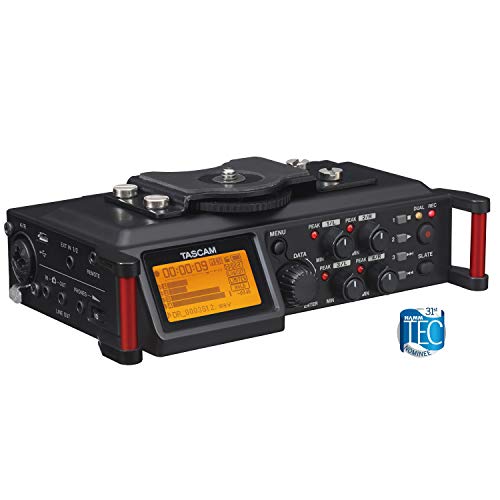
- Four balanced XLR inputs with phantom power
- Dual Recording safety copy mode
- Camera-mountable design with built-in microphones
Best For: DSLR filmmakers and multi-microphone production
Flexible 32-Bit Option

- Large 19.4mm X/Y stereo microphones
- 32-bit float recording
- Up to four tracks at 192kHz WAV
Best For: Musicians and filmmakers needing built-in stereo capture
Long-Battery Voice Recorder
NEXTSIGNAL 160GB Voice Recorder

- 160GB stated storage capacity
- 68-plus-hour rechargeable battery life
- One-click recording with WAV/MP3 support
Best For: Lectures, meetings, interviews, and personal notes
Best Clip-Free Field Recorder

- 32-bit float recording with dual A/D converters
- Two locking XLR inputs for two-track capture
- Includes 64GB card, mounting plate, and XLR cables
Best For: Two-channel XLR field recording and location audio
Best Multitrack Field Recorder

- Records up to six tracks plus a stereo mix
- 32-bit float recording and look-ahead limiters
- 19.4mm microphones handle up to 140 dB SPL
Best For: Multitrack film, music, and location recording
Best Compact Stereo Recorder

- 32-bit float stereo recording with X/Y microphones
- USB-C microphone mode for calls and streaming
- Lightweight 92-gram body with 10-hour battery life
Best For: Portable stereo recording for content, interviews, and music
Best Compact XLR Pick

- Two locking XLR/TRS inputs
- 32-bit float/96kHz recording
- SDXC support up to 1TB
Best For: Portable two-source recording
Best Versatile 4-Track Option

- Four-track recording
- Built-in mics plus two XLR/TRS inputs
- USB-C recording with SD backup
Best For: Music, video, podcasts, and live performances
Best Built-In Mic Flexibility

- Three mics with nine patterns
- 32-bit float/96kHz capture
- USB mic mode with SD backup
Best For: Interviews, soundscapes, and field recording
Professional Pick – Zoom F3
For a field recorder with dual card recording expectations, the Zoom F3 is a strong professional option when dependable capture and clip-resistant audio matter most. Its 32-bit float workflow, dual A/D converters, and locking inputs suit demanding location work, although the supplied specifications identify one microSD storage interface rather than dual card slots.
Best For: Run-and-gun filmmakers, musicians, and location recordists using XLR microphones.
Pros:
- 32-bit float recording helps capture quiet dialogue and sudden peaks without constant level adjustments.
- Two locking XLR/TRS inputs help secure microphone connections in mobile or mounted setups.
- Ultra-low-noise preamps, flexible power options, and USB or standalone operation support extended sessions.
Cons:
- The supplied details list a single microSD hardware interface, not dual card recording.
- It relies on external microphones rather than offering a multi-input built-in microphone setup.
The F3 is best viewed as a compact, focused recorder for clean two-channel production audio. Choose it when 32-bit float protection and secure XLR connections are more important than multiple card media or a larger track count.
Filmmaker Workhorse – TASCAM DR-70D
If you are comparing a field recorder with dual card recording, the TASCAM DR-70D offers a practical safety-oriented alternative through Dual Recording mode. It records a lower-level backup copy to SD, SDHC, or SDXC media, while four XLR inputs provide room for multi-microphone production setups.
Best For: DSLR filmmakers, documentarians, and production crews needing multiple balanced inputs.
Pros:
- Four balanced XLR inputs with phantom power support multi-microphone recording.
- Dual Recording mode creates a lower-level safety copy to help protect against distorted takes.
- Individual gain controls, limiters, and high-pass filtering support quick production adjustments.
- It can mount above or below a camera and includes two built-in microphones.
Cons:
- The supplied details describe dual-level recording, not recording to two separate cards.
- It requires four AA batteries and weighs 1.2 pounds.
- Supported card capacity is listed up to 128GB.
The DR-70D is a useful production recorder when input count and a safety track matter more than modern 32-bit float capture. Its dual recording feature is not true dual-card recording, but it can provide valuable protection against clipped takes.
Flexible 32-Bit Option – Zoom H5 Studio
The Zoom H5 Studio is worth considering if you want a versatile field recorder with dual card recording-style backup concerns, but the supplied specifications list one USB hardware interface and do not confirm dual card slots. Its large stereo microphones, 32-bit float recording, and up to four-track operation make it adaptable for music, film, and location work.
Best For: Musicians and filmmakers who want built-in stereo microphones plus XLR/TRS connectivity.
Pros:
- Large 19.4mm X/Y microphones are designed for detailed stereo capture.
- 32-bit float recording helps preserve takes across changing sound levels.
- Dedicated gain knobs provide direct hands-on control.
- It can record up to four tracks simultaneously at up to 192kHz in WAV format.
Cons:
- The supplied notes do not confirm dual-card recording.
- Four AA batteries provide a listed digital recording time of 15 hours.
- Its four-track limit may be restrictive for larger production rigs.
The H5 Studio balances portability with more expansive recording features than a basic voice recorder. It is a compelling choice for users who value built-in stereo capture and flexible inputs, but shoppers specifically requiring two simultaneous memory cards should verify that capability separately.
Long-Battery Voice Recorder – NEXTSIGNAL 160GB Voice Recorder
For shoppers searching for a field recorder with dual card recording, this compact NEXTSIGNAL model offers high storage capacity rather than professional dual-card workflow. The supplied notes describe 160GB of combined storage, 68-plus hours of battery life, stereo recording, and simple controls for meetings, lectures, interviews, and personal notes.
Best For: Students, professionals, and anyone recording long meetings or lectures.
Pros:
- 160GB of stated storage supports up to 11,500 hours of stereo recordings.
- A 68-plus-hour battery life suits extended recording sessions.
- One-click recording, voice control, scheduled recording, and segment recording simplify operation.
- Password protection and WAV/MP3 support add privacy and playback flexibility.
Cons:
- The supplied details do not confirm dual-card recording or professional XLR inputs.
- Its 1,536kbps stereo specification is aimed at voice capture rather than high-end production recording.
- The 1.44-inch screen is relatively small for navigating many recordings.
This recorder is a sensible storage-and-battery choice for speech-focused use, not a substitute for a multi-input production recorder. Choose it for convenient lectures, meetings, and interviews, and look elsewhere if dual cards or XLR connectivity are essential.
Best Clip-Free Field Recorder – Zoom F3 Pro Field Kit
The Zoom F3 is a strong choice if you need a field recorder with dual card recording capabilities for dependable two-track capture. Its 32-bit float workflow and dual A/D converters help preserve dynamic range without requiring manual gain setting, while the locking XLR inputs suit external microphones and location work.
Best For: Filmmakers, interview setups, musicians, and other users recording two XLR sources in the field.
Pros:
- 32-bit float recording with dual A/D converters helps deliver clip-resistant audio.
- Two locking XLR inputs support professional microphones and two-track recording.
- Compact metal body includes mounting bars and a tripod mount.
- Records WAV files up to 192 kHz to SD cards up to 512GB.
Cons:
- Designed for two inputs, so it offers less track capacity than larger recorders.
- Requires two AA batteries for portable operation.
The F3 is the most focused option here for compact, professional two-channel recording. The included microSD card, mounting plate, and XLR cables make this bundle especially convenient for getting started.
Best Multitrack Field Recorder – Zoom H6 Studio
The Zoom H6 Studio is a versatile field recorder with dual card recording potential for users who need more than a basic stereo setup. It can record up to six individual tracks plus a stereo mix, combines 32-bit float recording with look-ahead limiters, and includes microphones designed to handle loud sources.
Best For: Filmmakers, musicians, and location recordists who need multiple tracks and flexible microphone capture.
Pros:
- Records up to six individual tracks plus a stereo mix.
- 32-bit float recording supports a wide dynamic range and distortion-resistant capture.
- 19.4mm microphones handle sound levels up to 140 dB SPL.
- Supports recording from 44.1 to 192 kHz.
Cons:
- Larger and heavier than the compact F3 and H1 Essential options.
- Uses four AA batteries, with up to 15 hours of stated operation.
The H6 Studio is the strongest pick when track count matters more than minimum size. Its combination of multitrack recording, high-SPL microphones, and broad sample-rate support suits demanding music and film sessions.
Best Compact Stereo Recorder – Zoom H1 Essential
The Zoom H1 Essential is a simple, portable option for shoppers comparing a field recorder with dual card recording features for everyday stereo capture. Its X/Y microphones record 32-bit float WAV audio, and USB-C microphone mode adds flexibility for calls, streaming, voiceovers, and computer or mobile recording.
Best For: Content creators, podcasters, musicians, students, and travelers who need straightforward stereo recording.
Pros:
- 32-bit float recording provides clip-resistant capture without complex gain adjustment.
- Built-in X/Y microphones capture stereo audio for interviews, music, ambience, and video.
- USB-C microphone mode supports streaming, calls, and voiceovers.
- Compact 92-gram design and two AAA batteries suit portable use.
Cons:
- Offers stereo recording rather than the multitrack capacity of the H6 Studio.
- Its built-in X/Y microphone design is less suited to setups requiring multiple external XLR inputs.
The H1 Essential is the easiest grab-and-go choice in this group. Choose it for quick stereo content and field sounds, while selecting the F3 or H6 Studio when external XLR inputs or additional tracks are priorities.
Best Compact XLR Pick – Zoom H1 XLR
The Zoom H1 XLR is a practical field recorder with dual card recording users may consider when they need a compact two-channel setup for interviews, podcasts, music, or everyday audio work. Its two XLR/TRS combo inputs, 32-bit/96kHz recording, and waveform display keep the workflow straightforward.
Best For: Filmmakers, musicians, podcasters, and interview recording with external microphones or instruments.
Pros:
- Two locking XLR/TRS combo inputs support microphones, instruments, and other sources.
- 32-bit float/96kHz recording helps produce detailed, clip-free audio.
- OLED waveform display makes level monitoring easier at a glance.
- Supports SDXC cards up to 1TB and offers 3.5mm input and headphone output.
Cons:
- Uses two AA batteries rather than a built-in rechargeable battery.
- Its two-channel design is less suited to larger multi-source productions.
Choose the H1 XLR when portability and direct XLR connectivity matter more than extensive track capacity. It is a focused option for clean two-source recordings and extended SDXC-based sessions.
Best Versatile 4-Track Option – Zoom H4 Essential
The Zoom H4 Essential is a flexible field recorder with dual card recording capability for projects that need built-in microphones, external inputs, and multiple recording options. It combines stereo microphones with two XLR/TRS inputs and can save audio to an SD card while connecting to a device over USB-C.
Best For: Musicians, filmmakers, podcasters, and live-performance recording that benefits from four-track capability.
Pros:
- Four-track recording supports larger projects than a basic stereo recorder.
- Built-in stereo microphones and two XLR/TRS inputs accommodate varied sources.
- 32-bit float recording helps reduce concern about distorted takes.
- Can record or stream through USB-C while saving a backup to an SD card.
Cons:
- Its two-AA-battery design provides a stated digital recording time of 10 hours.
- The feature set may be more than needed for simple two-channel recordings.
The H4 Essential is the stronger fit when you want one handheld unit for microphones, instruments, live audio, and computer-based work. Its USB-to-device recording alongside SD-card backup adds useful flexibility for production workflows.
Best Built-In Mic Flexibility – Zoom H2 Essential
The Zoom H2 Essential is a versatile field recorder with dual card recording workflow for users who prefer built-in microphones and selectable pickup patterns. Three microphones provide nine recording patterns, while simultaneous USB microphone use and SD-card recording can preserve a backup of each session.
Best For: Journalists, podcasters, musicians, and field recordists capturing interviews, stereo soundscapes, or surround material.
Pros:
- Three built-in microphones and nine patterns cover a wide range of recording situations.
- 32-bit float/96kHz recording supports clip-free capture without constant gain adjustment.
- Works as a USB microphone while recording simultaneously to an SD card.
- Offers Bluetooth timecode synchronization for multiple H2 Essential units.
Cons:
- It does not list XLR/TRS inputs for connecting external microphones or instruments.
- Requires two AA batteries, despite its stated 20-hour battery life.
The H2 Essential stands out for fast, self-contained recording where microphone placement and pattern choice matter. It is particularly useful when you want hands-off gain control, broad built-in pickup options, and a simultaneous device-and-card recording workflow.
How We Picked the Best Field Recorder with Dual Card Recording Options
We evaluated these recorders around the needs that matter most in the field: dependable storage, clean preamps, input count, microphone compatibility, battery life, portability, and ease of operation. We also considered whether each model suits professional production, music recording, interviews, content creation, or simple voice capture.
Not every listed model offers true simultaneous recording to two cards. Confirm the manufacturer’s specifications before purchase if redundant card recording is essential. Some products may instead provide a single-card workflow, internal storage, bundled media, or other backup options.
Quick Comparison
| Use case | What to prioritize | Best fit |
|---|---|---|
| Film and video production | XLR inputs, time-saving controls, camera compatibility | Zoom F3, TASCAM DR-70D, Zoom H5 |
| Multi-microphone recording | More inputs, flexible routing, strong monitoring | Zoom H6 |
| Music and live sessions | Low-noise preamps, microphone flexibility, high-resolution capture | Zoom H4 Essential, H5, H6 |
| Interviews and everyday notes | Small size, simple controls, long battery life | Zoom H1 Essential, H2 Essential, voice recorder options |
Key Buying Factors for a Field Recorder with Dual Card Recording
Recording Redundancy
Dual-card recording is valuable when a retake would be expensive or impossible. Check whether the recorder records identical files to both cards simultaneously, uses one card as overflow, or supports a different backup method. Also verify maximum card capacities and supported formats.
Inputs and Microphone Support
Choose 3.5mm input support for compact microphones, or balanced XLR/TRS inputs for professional microphones, mixers, and line-level sources. Phantom power is important for condenser microphones, while plug-in power may be needed for smaller camera microphones.
Audio Quality and Safety Features
Look for suitable bit depth and sample rates, quiet preamps, limiter or safety-track functions, and enough headroom for unpredictable levels. Float recording can reduce clipping concerns, but it does not replace proper microphone placement or monitoring.
Workflow and Portability
Physical gain controls, a readable display, headphone monitoring, battery options, mounting accessories, and USB connectivity can matter as much as specifications. A compact recorder is easier to carry, while a larger unit may provide better routing and expansion.
Who Should Buy Which Field Recorder with Dual Card Recording?
Filmmakers should favor models with balanced inputs, camera-friendly mounting, reliable monitoring, and safety features. Musicians recording rehearsals or live performances may prefer more inputs and flexible microphone configurations. Podcasters and creators can prioritize fast setup, clear controls, and USB use. For interviews, lectures, and personal notes, a small stereo or voice recorder is usually more practical than a full production unit.
If redundant media is a non-negotiable requirement, narrow your choice to models that explicitly document simultaneous dual-card recording. Otherwise, select the recorder whose inputs, backup workflow, and portability best match the way you actually capture audio.