The right field recorder can make the difference between usable production audio and a take that needs to be repeated. Models with XLR inputs give filmmakers, musicians, podcasters, and interview crews access to professional microphones, while newer 32-bit float designs provide more protection against unexpected volume changes.
We’ve selected 10 strong options across compact two-channel recorders, multitrack music tools, podcast-focused systems, and advanced production recorders. Use the guide below to match input flexibility, portability, recording format, and workflow features to your needs.
Best 10 Field Recorder with Xlr Inputs Picks for 2026
Professional Clip-Free Capture

- 32-bit float recording for clip-resistant capture
- Dual locking XLR/TRS inputs
- Low-noise preamps and flexible power options
Best For: Run-and-gun filmmakers and compact professional rigs
Timecode-Ready Video Audio

- 32-bit float recording with dual ADCs
- Dual XLR/TRS combo inputs
- Internal timecode generation and synchronization
Best For: Videographers managing synchronized production audio
Six-Track Handheld Flexibility

- Four XLR/TRS inputs plus built-in X/Y mics
- Six-track 32-bit float recording
- USB interface with simultaneous SD backup
Best For: Multi-source music, podcast, and video recording
Versatile Four-Channel Recording
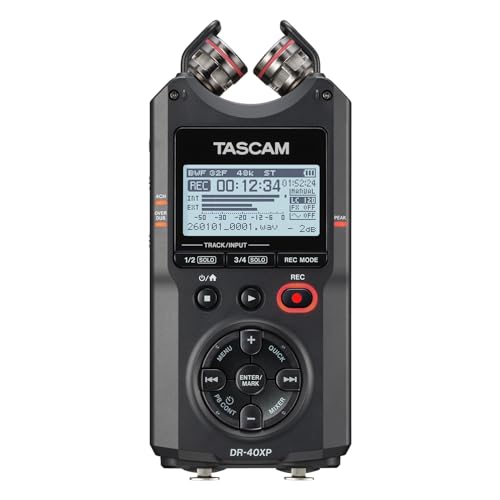
- Two XLR/TRS inputs with adjustable stereo mics
- Four-channel recording combines internal and external sources
- 32-bit float recording and USB-C interface
Best For: Creators combining ambient and external microphones
Professional Production Pick

- 32-bit float recording helps avoid clipping
- Six XLR inputs and up to 14 tracks
- Timecode I/O for video synchronization
Best For: Professional film, broadcast, and multi-microphone recording
Podcasting and Interviews Pick

- Four XLR inputs with phantom power
- Four headphone outputs with volume control
- Phone, USB, and remote-interview support
Best For: Mobile podcasts, interviews, and multi-person speech recording
Versatile Handheld Pick
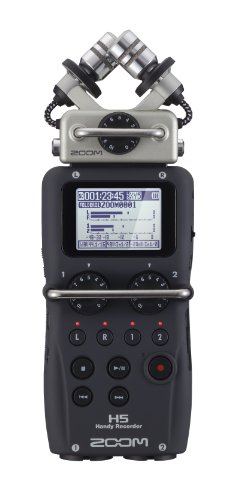
- Two XLR/TRS combo inputs with phantom power
- Interchangeable input capsules
- Four-track recording and USB interface mode
Best For: Portable film audio, music recording, and flexible handheld setups
Compact XLR Starter

- 32-bit/96kHz WAV recording
- Two locking XLR/TRS inputs
- OLED waveform level display
Best For: Portable interviews, podcasts, and two-source recording
Layering Session Recorder

- Four-track recording with bounce workflow
- Two XLR/TS combo inputs
- Built-in rhythms and USB interface mode
Best For: Mobile songwriting and layered music demos
Accessible Four-Track Choice

- Four-track 32-bit float recording
- Two XLR/TRS inputs plus stereo mics
- USB-C and SD backup recording
Best For: Flexible music, video, podcast, and field capture
Professional Clip-Free Capture – Zoom F3
For filmmakers and musicians who need a dependable field recorder with XLR inputs, the Zoom F3 combines dual locking XLR/TRS connections with 32-bit float recording. Its compact design, low-noise preamps, and flexible power options suit demanding location work.
Best For: Run-and-gun filmmakers, location recordists, and compact professional rigs.
Pros:
- 32-bit float recording helps capture quiet dialogue and sudden peaks without constant level adjustments.
- Dual locking XLR/TRS inputs help keep microphone connections secure.
- Ultra-low-noise preamps support clean recordings in unpredictable environments.
- Supports battery-powered, standalone, and USB workflows.
Cons:
- Only two XLR/TRS inputs are provided.
- Built-in microphone functionality is listed as mono and stereo, rather than a dedicated multi-microphone array.
The F3 is a focused choice when secure connections and clip-resistant recording matter more than a large input count or extensive onboard controls.
Timecode-Ready Video Audio – TASCAM FR-AV2
The TASCAM FR-AV2 is a practical field recorder with XLR inputs for videographers who need clip-resistant audio and synchronized production workflows. It pairs dual 32-bit float recording with internal timecode generation and compact dimensions.
Best For: Videographers working with timecode-equipped production setups.
Pros:
- Dual ADCs and 32-bit float recording support fast setup and no-clip audio capture.
- Two XLR/TRS combo inputs accommodate professional microphones and line-level sources.
- Built-in timecode generation and timecode input/output can simplify synchronization.
- Supports 48, 96, and 192 kHz recording formats.
Cons:
- Wireless monitoring requires the optional AK-BT2 Bluetooth adapter.
- It provides two XLR/TRS inputs, which may limit larger multi-source sessions.
Choose the FR-AV2 when timecode integration is central to your video workflow and you want a compact recorder with flexible high-resolution capture.
Six-Track Handheld Flexibility – Zoom H6 Essential
If you need a field recorder with XLR inputs for several sources, the Zoom H6 Essential offers four XLR/TRS combo inputs alongside built-in X/Y microphones. Its six-track 32-bit float capability, interchangeable capsule system, and USB interface make it adaptable for music, podcasts, interviews, and video.
Best For: Musicians, podcasters, filmmakers, and creators recording multiple sources.
Pros:
- Four XLR/TRS inputs support multiple external microphones or instruments.
- Six-track 32-bit float recording helps protect takes from clipping.
- Built-in X/Y microphones capture up to 135 dB SPL.
- Can function as a USB audio interface while recording to an SD card for backup.
Cons:
- Its larger feature set and four-input layout may be more recorder than simple two-mic setups require.
- The listed battery requirement is four AAA batteries.
The H6 Essential is the strongest fit here for source-heavy sessions, especially when you want built-in stereo microphones, multiple XLR connections, and computer or mobile interface capability in one unit.
Versatile Four-Channel Recording – TASCAM DR-40XP
The TASCAM DR-40XP is a flexible field recorder with XLR inputs for creators who also want adjustable built-in stereo microphones. Its 4-channel design can record the internal mics and external inputs together, while 32-bit float recording and USB-C connectivity support streamlined production.
Best For: Musicians, interview producers, and video creators combining ambient and external microphones.
Pros:
- Two XLR/TRS inputs provide external microphone and source connections.
- Four-channel recording can combine the built-in microphones with external inputs.
- Adjustable A-B or X-Y condenser microphones support flexible stereo capture.
- Works as a 2-in/2-out USB-C audio interface and supports 32-bit float recording.
Cons:
- MicroSD card and batteries are not included.
- Two external XLR/TRS inputs may be limiting for larger ensembles.
The DR-40XP makes sense when you want the convenience of a handheld recorder with built-in stereo capture, plus the ability to add two external sources and send audio over USB-C.
Professional Production Pick – Zoom F6
For filmmakers, broadcast crews, and musicians seeking a field recorder with XLR inputs, the Zoom F6 combines six XLR inputs with 32-bit float recording. Its dual A/D converters, timecode I/O, and portable design suit demanding location workflows.
Best For: Professional film, broadcast, and multi-microphone location recording.
Pros:
- 32-bit float recording helps capture quiet and loud sources without clipping.
- Six XLR inputs support simultaneous multi-microphone recording.
- Timecode I/O enables frame-accurate synchronization with video.
- Can operate as a standalone recorder or USB audio interface.
Cons:
- Its professional feature set may be more than basic users need.
- At 2.4 pounds, it is less lightweight than the handheld options here.
The F6 is the strongest choice when input count, clip-free recording, and timecode matter more than simplicity. Multiple power options and rugged construction add flexibility for location work.
Podcasting and Interviews Pick – Zoom PodTrak P4
The Zoom PodTrak P4 is a practical field recorder with XLR inputs for podcasts, interviews, and small mobile productions. Four microphone inputs, four headphone outputs, sound pads, and phone or USB connectivity make it especially useful for conversational recording.
Best For: Mobile podcasts, remote interviews, and multi-person speech recording.
Pros:
- Four XLR microphone inputs include phantom power.
- Four headphone outputs provide individual volume control.
- Automatic mix-minus supports phone and remote interviews.
- Battery-powered operation and USB interface mode support mobile setups.
Cons:
- Its maximum battery life is listed as up to 3.5 hours on two AA batteries.
- It is designed around podcasting and speech workflows rather than advanced location-film features.
The P4 prioritizes accessible podcast production over cinema-oriented synchronization or large track counts. If you need several microphones, headphone monitoring, and remote-call support in a compact recorder, it is a focused option.
Versatile Handheld Pick – Zoom H5
The Zoom H5 is a compact field recorder with XLR inputs for filmmakers and musicians who want a straightforward handheld setup. Its two XLR/TRS combo inputs, interchangeable capsules, and four-track recording provide flexibility without the larger footprint of a dedicated production recorder.
Best For: Portable film audio, music recording, and users who want interchangeable microphone options.
Pros:
- Two XLR/TRS combo inputs offer selectable phantom power and a -20 dB pad.
- Interchangeable input capsules expand microphone configurations.
- Four-track simultaneous recording supports compact multi-source sessions.
- Works as a multichannel or stereo USB audio interface.
Cons:
- With two XLR inputs, it offers less simultaneous input capacity than the F6 and P4.
- Recording is limited to SD/SDHC cards up to 32GB.
The H5 is a sensible middle ground for buyers who want a portable field recorder with XLR inputs and more flexibility than a fixed stereo recorder. Its capsule system is particularly useful when recording needs change between projects.
Compact XLR Starter – Zoom H1 XLR
The Zoom H1 XLR is a practical field recorder with XLR inputs for interviews, podcasts, filmmaking, and everyday recording. Its two locking XLR/TRS combo inputs support microphones and instruments, while 32-bit float recording helps reduce worries about clipped takes.
Best For: Creators who want a compact, straightforward two-input recorder with flexible mic and line connectivity.
Pros:
- Records WAV audio at up to 32-bit/96kHz for detailed sound.
- Two locking XLR/TRS combo inputs accommodate microphones, instruments, and other sources.
- OLED waveform display provides a quick view of recording levels.
- 3.5mm stereo input and headphone output add monitoring and connection flexibility.
Cons:
- Designed for two-channel recording rather than larger multitrack sessions.
- Requires two AA batteries for portable operation.
The H1 XLR keeps the workflow simple while covering the core needs of mobile recording. Its 1TB SDXC support is useful for extended sessions, and the small 6.4-ounce body is easy to carry.
Layering Session Recorder – Zoom R4 Multi-Track
The Zoom R4 is a field recorder with XLR inputs built for musicians who want to record, layer, and bounce ideas without a computer. It combines four-track recording, 32-bit float capture, built-in effects, rhythm patterns, and USB audio-interface functionality in a battery-powered unit.
Best For: Songwriters and mobile musicians who need multitrack layering, built-in rhythms, and flexible standalone or USB recording.
Pros:
- Records up to four tracks and lets users bounce them to keep adding layers.
- Two XLR/TS combo inputs connect microphones, instruments, keyboards, and other sources.
- More than 80 built-in rhythm patterns support practice and songwriting.
- Works as a 32-bit float 2-in/2-out USB audio interface and runs on four AA batteries or USB-C.
Cons:
- Its music-focused multitrack features may be more than needed for simple interviews.
- Requires four AA batteries when used away from USB-C power.
The R4 stands out when the priority is building a song or arrangement on the go. Its two combo inputs limit simultaneous external sources, but four-track recording, bouncing, rhythms, and effects make it a capable creative workstation.
Accessible Four-Track Choice – Zoom H4 Essential
The Zoom H4 Essential is a versatile field recorder with XLR inputs for music, interviews, podcasts, video audio, and live performances. Along with two XLR/TRS inputs, it offers built-in stereo microphones, 32-bit float recording, four-track capability, and USB-C recording or streaming.
Best For: Creators who need a flexible handheld recorder for both built-in-mic capture and external microphones or instruments.
Pros:
- Four-track recording and 32-bit float capture help accommodate larger or louder projects.
- Two XLR/TRS inputs support external microphones, instruments, mixers, and soundboards.
- Built-in stereo microphones allow quick recording without extra gear.
- Can record or stream through USB-C while saving a backup to an SD card.
Cons:
- Two AA batteries provide about 10 hours of digital recording time.
- Its broader feature set may be unnecessary for users who only need basic two-channel recording.
The H4 Essential is a strong all-around option for creators moving between field recordings, performances, and video work. Spoken menu guidance is an added accessibility feature, while SD recording and USB-C connectivity support flexible workflows.
How We Picked the Best Field Recorder with Xlr Inputs
We compared these recorders by looking at the features that matter most in real recording situations: XLR or XLR/TRS connectivity, channel count, preamp and gain flexibility, 32-bit float support, timecode or synchronization options, monitoring, battery practicality, portability, and computer connectivity. We also considered intended use, since a compact recorder for a camera rig has different priorities from a multitrack unit for musicians or a podcast mixer.
32-bit float recording received particular attention because it can provide useful headroom when input levels are difficult to set in advance. It does not replace good microphone placement, but it can make unpredictable dialogue, live events, and location work more forgiving.
Quick Comparison
| Best For | Look For | Notable Fit |
|---|---|---|
| Film and location audio | Compact body, quiet preamps, camera-friendly outputs | Zoom F3, Zoom F6, TASCAM FR-AV2 |
| Music and multitrack recording | More tracks, overdubbing, effects, instrument connectivity | Zoom R4, Zoom H6 Essential, Zoom H5 |
| Podcasts and interviews | Multiple headphone outputs, mix-minus, simple routing | Zoom PodTrak P4 |
| Portable general-purpose recording | Built-in microphones, USB audio, straightforward controls | Zoom H4 Essential, Zoom H1 XLR, TASCAM DR-40XP |
Key Buying Factors for a Field Recorder with Xlr Inputs
Input Count and Connector Type
Two XLR inputs cover many solo interviews, stereo microphone setups, and camera-mounted applications. Choose four or more inputs if you regularly record several speakers, a multichannel ensemble, or multiple microphones at once. XLR/TRS combo jacks can also accept balanced line-level sources and some instruments.
32-Bit Float Recording
For changing sound levels, 32-bit float is a valuable safety feature. It can help recover recordings made with conservative or overly hot input settings, provided the analog front end was not overloaded. Traditional 24-bit recorders remain entirely capable when levels are monitored carefully.
Monitoring and Workflow
Check headphone output quality, display readability, physical gain controls, limiters, low-cut filters, and file-management features. Timecode support matters for multicamera productions, while multitrack bouncing, overdubbing, and effects are more relevant to musicians. USB audio capability can let the recorder double as a computer interface.
Power, Size, and Mounting
Confirm battery type and expected runtime before buying. A small recorder is easier to mount on a camera or carry on location, but larger units may offer better controls, more inputs, or longer operating time. Wind protection and a secure mounting solution are also worth budgeting for.
Who Should Buy Which Field Recorder with Xlr Inputs?
Choose the Zoom F3 or TASCAM FR-AV2 if you want a compact Field Recorder with Xlr Inputs for filmmaking, dialogue, or stereo microphones. Step up to the Zoom F6 when you need more inputs, advanced production features, and room to grow. The TASCAM DR-40XP and Zoom H4 Essential are practical all-around choices for creators who want XLR connectivity plus built-in microphones.
Musicians should consider the Zoom R4 for compact multitrack work, or the H6 Essential and H5 for broader recording flexibility. Podcasters and remote interviewers will get the most from the Zoom PodTrak P4 because of its multiple headphone outputs and podcast-oriented routing. For a simple, lightweight two-channel setup, the Zoom H1 XLR is an appealing option.