Moving huge media archives, backups, or disk images demands more than a basic dock. The best hard drive duplicators for large files save time, reduce setup friction, and help keep copies consistent.
Below, we focus on standalone cloners and duplicators that balance speed, capacity, and ease of use for both home and professional workflows.
Best 10 Hard Drive Duplicators for Large Files Picks for 2026
Dual-Bay SATA Dock & Cloner
SABRENT USB 3.0 Dual Bay Cloning Dock
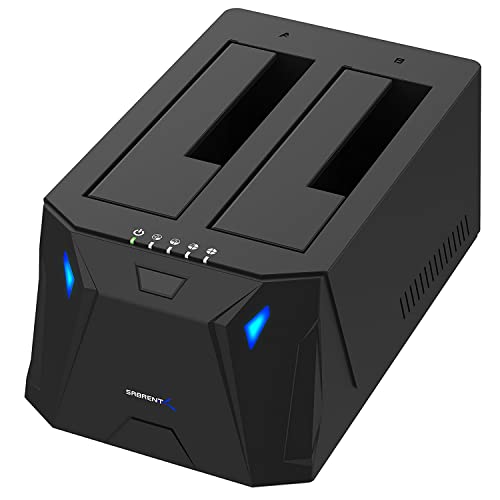
- Dual bay for 2.5"/3.5" SATA HDDs and SSDs
- Offline cloning up to 60Mbps
- USB 3.0 transfer speeds up to 5Gbps
Best For: A simple dock-and-clone setup for large SATA drives
IT-Grade SATA Duplicator & Eraser
StarTech 1:1 SATA Duplicator and Eraser

- Standalone 1:1 cloning plus drive erasure
- Supports SATA HDDs/SSDs of any capacity
- Copy-and-compare verification on LCD menu
Best For: IT teams that need cloning and secure drive wiping
Triple-Bay Mixed-Drive Cloner
Rosewill M.2 NVMe & SATA Triple-Bay Dock

- Supports M.2 NVMe, SATA SSDs, and 2.5"/3.5" HDDs
- Offline cloning without a host computer
- USB 3.2 Gen 2x1 up to 10Gbps
Best For: Mixed-drive workflows that need fast docking and offline cloning
Image-Manager SATA Duplicator
StarTech Disk Image Library Cloner

- Built-in disk image library manager
- Supports SATA HDDs and SSDs of any capacity
- LCD interface with multiple copy modes
Best For: Deployment workflows that need image storage and restore
Standalone 1:1 Cloner
Systor SYS101HS-DP standalone HDD/SSD duplicator

- No computer or software needed
- Copies HDDs and SSDs up to 5.4GB/min
- Supports 2.5" and 3.5" SATA drives
Best For: Simple one-to-one cloning and drive erasure
Dual-Bay Dock Cloner
StarTech dual-bay SATA duplicator dock
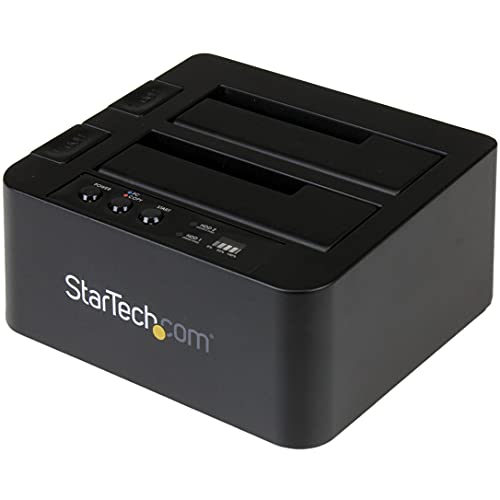
- Standalone sector-by-sector cloning
- Up to 28GB/min with 2.5"/3.5" SATA support
- Also works as a USB-to-SATA dock
Best For: IT pros who want cloning and docking in one device
High-Capacity Batch Cloner
Systor SYS307DP 1:7 HDD/SSD duplicator

- Clones one drive to seven targets
- Standalone with no PC or software needed
- Up to 18GB/min with DoD erasure support
Best For: Batch cloning and sanitizing multiple drives at once
High-Capacity Standalone Cloning
DupliM 1:5 SSD HDD SATA Duplicator

- 1:5 stand-alone duplicator for SATA HDDs and SSDs
- Supports over 8TB drives and up to 120 MB/s data-only copying
- Includes secure erase options up to DoD 7-pass
Best For: Large-capacity SATA duplication with built-in sanitization
IT Docking Duplicator
StarTech 4-Bay Hard Drive Duplicator

- Standalone 4-bay cloner, eraser, and docking station
- Supports SATA and IDE drives with included adapters
- Up to 4.2 GB/min sector-by-sector cloning
Best For: IT workflows that need cloning, erasing, and docking in one
Mixed-Interface Standalone Cloning

- Supports SATA and IDE source/target drives
- Handles 3.5-inch and 2.5-inch drives up to 8TB
- Optional adapters add mSATA and M.2 NGFF SATA support
Best For: Mixed SATA/IDE cloning with optional SSD adapter support
Dual-Bay SATA Dock & Cloner – SABRENT USB 3.0 Dual Bay Cloning Dock
If you want hard drive duplicators for large files that also double as a convenient dock, this SABRENT unit is a practical pick. It supports 2.5″ and 3.5″ SATA HDDs or SSDs, handles drives up to 10TB each, and offers offline cloning without needing a driver or host computer. With USB 3.0 speeds up to 5Gbps, it also works well as a quick access dock for moving big data sets.
Best For: Users who want a simple dual-bay dock with offline cloning and solid USB 3.0 transfer speeds.
Pros:
- Supports 2.5″/3.5″ SATA HDDs and SSDs.
- Offline cloning up to 60Mbps for stand-alone duplication.
- USB 3.0 transfer speeds up to 5Gbps.
- Plug and play with no drivers needed.
Cons:
- Limited to two drives at once.
- Cloning speed is modest versus USB transfer speed.
Overall, this is a straightforward choice if you need a dock-first solution that can also clone drives for large-file workflows. It is best when simplicity and compatibility matter more than advanced duplication features.
IT-Grade SATA Duplicator & Eraser – StarTech 1:1 SATA Duplicator and Eraser
For hard drive duplicators for large files in professional deployment or recovery work, this StarTech model is built to do more than copy. It supports 2.5″ and 3.5″ SATA HDDs and SSDs of any capacity, offers standalone 1:1 duplication, and adds erase modes for sanitizing drives. The LCD menu and copy-and-compare option make it easier to verify results without a computer.
Best For: IT professionals who need standalone duplication, verification, and drive erasure in one unit.
Pros:
- Supports 2.5″/3.5″ SATA HDDs and SSDs of any capacity.
- Three duplication modes, including sector-by-sector copy.
- Four erase modes, including secure erase and 3-pass overwrite.
- Copy-and-compare helps verify cloned drives.
Cons:
- Designed as a 1:1 duplicator, so it is not a multi-bay workflow tool.
- Best suited to SATA drives and adapter-based expansion.
This is the strongest fit when you need a standalone duplicator that can also sanitize drives after use. It leans toward professional IT tasks rather than casual home cloning.
Triple-Bay Mixed-Drive Cloner – Rosewill M.2 NVMe & SATA Triple-Bay Dock
If your hard drive duplicators for large files need to cover modern SSDs and traditional drives, this Rosewill dock offers broad flexibility. It supports M.2 NVMe and SATA SSDs plus 2.5″ and 3.5″ HDDs, includes offline cloning, and runs over USB 3.2 Gen 2×1 at up to 10Gbps. The tool-free design also makes drive swaps faster when you are moving big files or working on multiple systems.
Best For: Users who want one compact dock for cloning and reading mixed drive types.
Pros:
- Supports M.2 NVMe, SATA SSDs, and 2.5″/3.5″ HDDs.
- Offline cloning works without a host computer.
- USB 3.2 Gen 2×1 supports up to 10Gbps transfers.
- Tool-free installation simplifies drive changes.
Cons:
- Product details do not specify cloning speed.
- Plastic enclosure may feel less robust than metal alternatives.
This is a versatile option if you want a single station that handles both cloning and day-to-day drive access. It is especially appealing when your workflow mixes legacy HDDs with newer NVMe or SATA SSDs.
Image-Manager SATA Duplicator – StarTech Disk Image Library Cloner
Among hard drive duplicators for large files, this StarTech unit stands out if you need more than a simple clone. It can create and manage a disk image library, restore images to a host drive, and duplicate 2.5″ or 3.5″ SATA HDDs and SSDs without a computer. With multiple copy modes, a 6GB/min copy speed, and an LCD interface, it is aimed at repeatable deployment and backup tasks.
Best For: System builders and IT teams that want image management plus standalone drive duplication.
Pros:
- Built-in image library manager for backup and restore workflows.
- Supports 2.5″/3.5″ SATA HDDs and SSDs of any capacity.
- Multiple duplication modes, including sector-by-sector copy.
- LCD menu and indicators make drive management easier.
Cons:
- Single-drive duplication design limits batch throughput.
- 6GB/min speed is slower than some newer high-speed docks.
This model makes sense when your workflow involves stored images as much as raw drive-to-drive copying. It is more specialized than a basic duplicator, but that extra flexibility can save time in deployment environments.
Standalone 1:1 Cloner – Systor SYS101HS-DP standalone HDD/SSD duplicator
For hard drive duplicators for large files, this Systor 1:1 unit is a practical pick when you want a fully standalone workflow and need to move data without a computer. It copies HDDs and SSDs at up to 5.4GB per minute, supports both 2.5-inch and 3.5-inch SATA drives, and can duplicate either selected data or the entire drive.
Best For: Small businesses or IT users who need a no-PC duplicator for occasional one-to-one drive cloning and drive erasure.
Pros:
- Standalone operation with no software or computer required.
- Supports 2.5-inch and 3.5-inch SATA HDDs and SSDs without adapters.
- Copies data-only or whole drives and includes DoD 5220.22-M sanitization support.
- Can erase HDDs and SSDs as part of its duplication workflow.
Cons:
- 1:1 design is better for single-drive jobs than high-volume batches.
- Transfer speed is lower than the faster multi-bay duplicators in this roundup.
If you need a straightforward standalone duplicator for routine large-file moves or drive setup, this model covers the essentials well. It is strongest when simplicity, drive compatibility, and erase options matter more than raw throughput.
Dual-Bay Dock Cloner – StarTech dual-bay SATA duplicator dock
If you need hard drive duplicators for large files that also double as a daily dock, this StarTech dual-bay model is a flexible choice. It performs standalone sector-by-sector cloning of 2.5-inch and 3.5-inch SATA drives, and it can also act as a USB-to-SATA dock for quick access over USB.
Best For: IT pros and power users who want a dual-bay duplicator dock with both cloning and USB access in one unit.
Pros:
- Standalone cloning with no computer required.
- Up to 28GB/min duplication speed for faster large-drive jobs.
- Works as a USB-to-SATA dock for drive access and recovery tasks.
- Supports 2.5-inch and 3.5-inch SATA HDDs and SSDs, plus 4Kn and TRIM.
Cons:
- Target disk must be equal to or larger than the source disk.
- IDE support requires a separate adapter.
This is the most versatile option here if you want duplication plus dock functionality. Its speed and OS-independent sector-by-sector cloning make it well suited to large transfers and regular IT workflows.
High-Capacity Batch Cloner – Systor SYS307DP 1:7 HDD/SSD duplicator
For hard drive duplicators for large files where throughput matters, this Systor 1:7 unit is built for batch work. It runs completely standalone, supports both 2.5-inch and 3.5-inch SATA HDDs and SSDs, and can copy to multiple drives simultaneously at up to 18GB per minute.
Best For: Teams that need to duplicate one source drive to several targets at once and want built-in erasure support.
Pros:
- Copies one source to up to seven drives at the same time.
- Standalone operation with no computer or software required.
- Supports data-only or full-drive duplication.
- Includes DoD 5220.22-M compliant erasure for HDDs and SSDs.
Cons:
- More duplicator than most home users need.
- Physical batch workflow is best suited to organized drive-copy jobs.
This model makes the most sense when you need to scale beyond single-drive cloning. Its multi-target design and fast transfer rate are strong advantages for repeated imaging, deployment, or sanitization tasks.
High-Capacity Standalone Cloning – DupliM 1:5 SSD HDD SATA Duplicator
DupliM 1:5 SSD HDD SATA Duplicator and Hard Drive Sanitizer Stand-Alone Cloner Copier Burner
Check Price On AmazonIf you need hard drive duplicators for large files, this DupliM 1:5 stand-alone unit is built for straightforward SATA-to-SATA copying and drive sanitizing. It supports 3.5-inch SATA HDDs and SSDs, handles capacities over 8TB, and offers up to 120 MB/s transfer speed for data-only copies.
Best For: IT and shop environments that need a standalone 1:5 duplicator with sanitization options for large-capacity SATA drives.
Pros:
- Supports 1:5 duplication for up to five drives at once
- Handles 3.5-inch SATA HDDs and SSDs, with optional 2.5-inch adapters
- Over 8TB capacity support makes it suitable for large-file workflows
- Includes multiple sanitize modes, from quick erase to DoD 7-pass
Cons:
- 2.5-inch drive support requires optional adapters not included
- Transfer rate is listed for SATA data-only copying, not every copy mode
- Bulkier metal unit at 19 pounds
This is a practical choice when your priority is stand-alone duplication of large SATA drives with built-in erase tools. It is less flexible than multi-interface models, but it focuses on capacity, simplicity, and secure drive handling.
IT Docking Duplicator – StarTech 4-Bay Hard Drive Duplicator
For hard drive duplicators for large files, this StarTech 4-bay standalone unit is designed to clone, erase, and dock drives without a computer. It supports 2.5-inch and 3.5-inch SATA drives, plus IDE drives with included adapters, and reaches up to 4.2 GB/min in standalone sector-by-sector cloning.
Best For: IT professionals who want a versatile standalone dock for cloning, erasing, and quick drive access.
Pros:
- Standalone cloning and erasing without needing a host PC
- Supports 2.5/3.5-inch SATA and IDE SSDs/HDDs with adapters
- USB 3.0 and eSATA docking features add file transfer flexibility
- LCD menu and drive doors make operation and drive checks simple
Cons:
- Target disk must be equal to or larger than the source disk
- Cloning speed is listed in sector-by-sector mode, not a universal file-copy rate
- 2.5-inch form factor focus may not suit every desktop-drive workflow
This model stands out when you need both duplication and everyday docking in one unit. It is especially appealing if you work across SATA and IDE media and want a tool that can also support erase and recovery workflows.
Mixed-Interface Standalone Cloning – DupliM 1:1 SATA IDE Cloner
DupliM 1:1 SSD HDD SATA IDE Cloner Duplicator and Hard Drive Sanitizer Burner Cloner Stand-Alone
Check Price On AmazonIf you are comparing hard drive duplicators for large files, this DupliM 1:1 stand-alone cloner is a good fit for mixed-drive environments. It supports 3.5-inch IDE and 3.5/2.5-inch SATA HDDs, works with 8TB drives, and can also handle mSATA SSDs and M.2 NGFF SATA SSDs with optional adapters.
Best For: Users who need a simple stand-alone duplicator for both SATA and IDE drives, including some SSD formats with adapters.
Pros:
- Supports both SATA and IDE sources and targets in one unit
- Handles 3.5-inch and 2.5-inch drives up to 8TB
- Optional adapters extend support to mSATA and M.2 NGFF SATA SSDs
- Includes sanitize modes with 1-pass and 3-pass with verify
Cons:
- Some SSD support depends on optional adapters sold separately
- Only 1:1 duplication, so it is not built for copying to multiple targets at once
- Best suited to drive cloning rather than broader docking features
This is a flexible choice if your drive library includes older IDE hardware alongside SATA drives. It keeps the workflow simple while still covering large-capacity disks and secure sanitization tasks.
How We Picked the Best Hard Drive Duplicators for Large Files
We prioritized sustained duplication speed, drive compatibility, bay count, and standalone operation. For large-file workflows, faster transfer rates matter, but so does reliability when moving multi-terabyte drives or repeatedly cloning the same disk set. We also favored units with clear status indicators, solid offline cloning support, and practical erase functions for reuse and sanitization.
Quick Comparison: Which Type Fits Your Workflow?
Single-bay and dual-bay models are usually best for direct 1:1 cloning and compact workstations. Triple- and four-bay units suit users who need more flexibility, while 1:5 or 1:7 duplicators are better for batch deployment when many identical copies are needed. If you mainly copy one drive at a time, a faster 1:1 unit can be the simplest choice. If you manage multiple large drives regularly, a higher-bay duplicator may be worth the extra footprint.
Key Buying Factors for Hard Drive Duplicators for Large Files
Copy Speed
Look at the rated duplication speed, not just the USB interface speed. A fast connection helps, but the duplicator’s internal controller determines how quickly large files and full-disk images are replicated.
Drive Support
Make sure the unit supports the drive types you actually use, including 2.5-inch and 3.5-inch SATA drives, SSDs, and, if needed, M.2 NVMe. Compatibility matters more as file sizes and storage capacities grow.
Offline Cloning and Erasing
Standalone operation is a major advantage for large-file duplication because it avoids software overhead and reduces the chance of system interruptions. Sanitizing and erase modes are useful if you repurpose drives or handle client data.
Bay Count and Workflow
Choose the smallest bay count that matches your job size. More bays improve batch output, but they also add cost and complexity. For many users, a dual-bay or triple-bay dock is the best balance.
Who Should Buy Which Hard Drive Duplicators for Large Files?
If you want simple one-to-one cloning for backups or drive upgrades, a fast dual-bay 1:1 unit is the most straightforward pick. If you need to deploy the same image to multiple drives, choose a multi-target duplicator with 1:3, 1:5, or 1:7 support. If your workflow includes mixed media, such as SATA SSDs plus M.2 NVMe, a hybrid dock is the most flexible option. In short, the best Hard Drive Duplicators for Large Files are the ones that match your drive types, copy volume, and speed needs without adding unnecessary complexity.