If you move photos, video, or mixed media between cards and a computer, a memory card reader with multiple simultaneous slots can save a lot of time. The best models let you copy, compare, and offload several cards at once without constant swapping.
In this roundup, we focus on readers that balance speed, format support, and real-world convenience for photographers, videographers, and power users.
Best 10 Memory Card Reader with Multiple Simultaneous Slots Picks for 2026
4-in-1 Universal Reader

- Reads SD, microSD, MS, and CF cards simultaneously
- USB-C and USB 3.0 connections add wide compatibility
- Compact plug-and-play design for everyday use
Best For: Mixed-card users who want one compact reader for multiple formats
SD-Focused 4-Slot Reader

- Four-slot design for SD and MMC-format cards
- USB 3.0 transfer rate up to 5 Gbps
- Portable aluminum build with plug-and-play support
Best For: SD-card users who want a simple 4-slot reader
Creator-Focused 4-Slot Reader

- Reads up to 4 SD cards or 2 SD plus 2 microSD cards
- USB-C and USB-A support makes it easy to connect
- Independent LEDs help track card activity
Best For: Photographers and creators offloading multiple cards at once
High-Speed Multi-Format Reader

- Supports XQD, SD, TF, CF, MS, and XD cards
- Reads up to six cards at the same time
- USB 3.2 Gen 2 offers up to 10Gbps transfer support
Best For: Advanced users who work with XQD and multiple legacy card types
Multi-Card Desk Reader
UGREEN 4-Slot USB 3.0 Card Reader
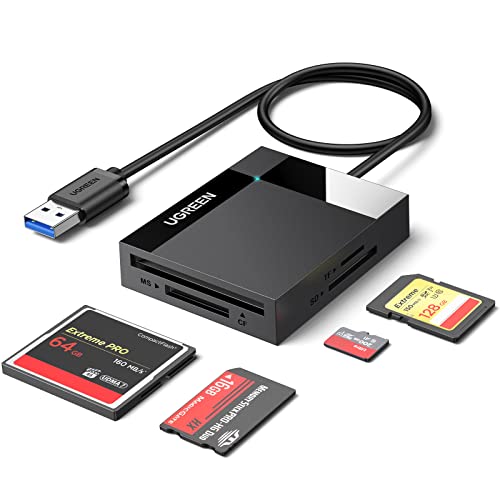
- Reads and writes 4 cards at once
- USB 3.0 speeds up to 5Gbps
- Supports SD, microSD, CF, and MS formats
Best For: Multi-card transfers on Windows, Mac, Linux, or Chrome OS
USB-C Cross-Device Reader

- USB-C connector with included USB adapter
- Supports CF, SD, TF, and MS cards
- Plug-and-play with phones, tablets, and computers
Best For: Cross-platform transfers on USB-C phones, tablets, and laptops
Seven-Slot Format Champion
Kxable 7-in-1 USB 3.0 Card Reader

- Seven slots for SD, microSD, CF, XD, and MS cards
- Reads and writes simultaneously
- Includes USB-A and USB-C cables
Best For: Heavy multi-format workflows with older and newer card types
Yeemie Pro 7-in-1 Multi Slot Reader
7-in-1 USB-C Reader for SD, TF, CF, XD, and MS

- Supports 5-card simultaneous reading
- Includes dual SD and dual TF slots
- USB-C design with 5Gbps transfer speed
Best For: Users who need to move files across several card formats at once
Rocketek 7-in-1 USB C + USB3.0 Reader
Dual-connector reader for SD, CF, MS, XD, and microSD

- Reads and writes 5 cards simultaneously
- USB-C and USB-A connectors in one hub
- Supports seven common memory card formats
Best For: Mixed-device users who want flexible multi-card access
Rytaki Pro 8-Slot CFexpress Reader
10Gbps 8-slot reader for CFexpress, XQD, SD, and more

- 8-slot simultaneous multi-card reading
- 10Gbps USB 3.2 Gen 2 transfer speed
- Supports CFexpress Type B and Type A
Best For: Professional offload workflows with CFexpress and XQD media
4-in-1 Universal Reader – BENFEI USB-C/USB 3.0 4-in-1
If you need a memory card reader with multiple simultaneous slots for different card formats, this BENFEI 4-in-1 is built for that job. It supports SD, microSD, MS, and CF cards in one compact unit, and it can read all four at the same time. The USB-C/USB 3.0 dual interface also makes it easy to use with newer laptops, tablets, and USB-A ports.
Best For: Mixed-card users who want one compact reader for SD, microSD, MS, and CF workflows.
Pros:
- Reads four card types at once, reducing swapping during transfers
- Dual USB-C and USB 3.0 design improves compatibility across devices
- Up to 160MB/sec transfer support in UHS-I mode
- Compact build with plug-and-play convenience
Cons:
- Performance depends on the card and USB port being used
- Not compatible with Memory Stick Standard, Memory Stick Micro (M2), or CF Type I
- SDXC support can be limited by older operating systems
This is a practical all-rounder if your work spans several card families and you want simultaneous access without carrying separate adapters. Its broad device support makes it especially useful for everyday laptop and USB-C use.
SD-Focused 4-Slot Reader – XtremPro 4-Slot SD Reader
This memory card reader with multiple simultaneous slots is aimed at users who work mainly with SD-format cards and want a simple 4-slot setup. It supports SD, SDHC, SDXC, and several MMC formats, and the USB 3.0 connection is rated up to 5 Gbps. For a straightforward desktop or travel reader, it keeps the focus on fast access and easy plug-and-play use.
Best For: SD-card users who want a compact 4-slot reader for home, office, or travel.
Pros:
- Four slots for SD and related card types in one unit
- USB 3.0 speeds up to 5 Gbps for quick transfers
- Plug-and-play support across Windows, Mac, Linux, and Android
- Portable aluminum enclosure for easy transport
Cons:
- Focuses on SD/MMC formats rather than a broader multi-card lineup
- Requires compatible operating system versions
- Best suited to SD-centric workflows, not mixed professional card ecosystems
If your workflow is mostly SD cards, this reader keeps things simple and efficient. It is a good fit when you want a portable 4-slot option without extra complexity.
Creator-Focused 4-Slot Reader – UTECHMIX 4-Port SD Reader
For photographers and content creators looking for a memory card reader with multiple simultaneous slots, this UTECHMIX model is built around fast batch transfers. It can read up to four SD cards at once, or a mix of two SD and two microSD cards, which is handy when you are offloading multiple cameras or card types after a shoot. The USB-C and USB-A cable options also make it easy to connect to modern laptops and older systems.
Best For: Photographers and creators who need to offload several cards at the same time.
Pros:
- Reads up to 4 SD cards simultaneously, or 2 SD plus 2 microSD cards
- USB-C and USB-A connectivity for flexible device support
- Supports UHS-I and UHS-II memory cards
- Independent LED indicators show detection and transfer activity
Cons:
- Actual speeds vary based on the card and connected device
- SD cards are not included
- Designed around SD/TF formats rather than broader card families
This is a strong pick if your main priority is moving multiple SD-based cards without constant swapping. The dual-interface design and status LEDs add convenience during busy shoots.
High-Speed Multi-Format Reader – Rocketek 10Gbps XQD Reader
This memory card reader with multiple simultaneous slots is made for users who need broad format support and higher-speed transfers. It includes XQD, SD, TF, CF, MS, and XD slots, and it can read up to six cards at the same time. With USB 3.2 Gen 2 and 10Gbps support, it is designed for demanding photo and video workflows that need a single compact reader.
Best For: Advanced photographers and videographers working with XQD and multiple legacy card types.
Pros:
- 8-in-1 design supports XQD, SD, TF, CF, MS, and XD cards
- Can read up to six cards simultaneously
- USB 3.2 Gen 2 connection supports up to 10Gbps transfers
- Metal shell offers compact, durable, travel-friendly construction
Cons:
- More specialized than a basic SD reader
- Listed hardware and compatibility details are geared toward desktop-style use
- Speed and compatibility depend on the card type and host device
If you juggle XQD alongside several other card formats, this Rocketek reader is the most versatile option in the group. It balances wide compatibility with fast transfer support in a portable design.
Multi-Card Desk Reader – UGREEN 4-Slot USB 3.0 Card Reader
If you need a memory card reader with multiple simultaneous slots for fast, practical transfers, this UGREEN model is built for exactly that kind of workflow. It supports SD, microSD, CompactFlash, and Memory Stick formats, and it can read and write up to four cards at once so you spend less time swapping media and more time moving files.
Best For: Photographers and creators who regularly move files between several card types at the same time.
Pros:
- Reads and writes 4 cards simultaneously, reducing plug-and-unplug cycles.
- USB 3.0 transfer speed up to 5Gbps for quicker large-file moves.
- Supports a wide mix of formats, including SD, microSD, CF, and MS.
- Plug-and-play compatibility with Windows, Mac OS, Linux, and Chrome OS.
Cons:
- Uses a cable-connected desktop-style design rather than a tiny pocket dongle.
- Does not add USB-C native connectivity in the listed specs.
Overall, this is a straightforward multi-slot reader for people who need broad card support and true simultaneous access. The compact body and 1.7 ft cable make it easy to keep on a desk or pack with a laptop kit.
USB-C Cross-Device Reader – 4-in-1 USB-C SD/CF/MS Reader
This memory card reader with multiple simultaneous slots is aimed at users who want direct access from USB-C devices, including phones, tablets, and laptops. It combines CF, SD, TF, and MS slots in one unit and adds a detachable USB-C to USB adapter, making it easier to move files across newer and older devices without changing tools.
Best For: iPhone, iPad, Android, and USB-C laptop users who want a compact cross-device card reader.
Pros:
- 4-in-1 design covers CF, SD, TF, and Memory Stick cards.
- USB-C connector plus included USB adapter expands device compatibility.
- Plug-and-play operation with no extra driver or software required.
- Works with iOS, Android, Windows, and macOS devices listed in the notes.
Cons:
- Listed transfer rate is 480Mbps, which is slower than USB 3.0 readers.
- Does not support Wi-Fi SD cards.
For people who care more about convenience and broad device compatibility than top speed, this is a practical pick. It is especially useful if you want one reader that can plug straight into modern USB-C gear or adapt for older USB ports.
Seven-Slot Format Champion – Kxable 7-in-1 USB 3.0 Card Reader
If you want a memory card reader with multiple simultaneous slots and maximum format coverage, this Kxable 7-in-1 model is the most expandable option here. It includes seven slots for SD, microSD, CF, XD, and Memory Stick variants, and the notes say it can read and write simultaneously for faster downloads, editing, and file transfers.
Best For: Users who handle many different card formats and want the broadest slot selection in one reader.
Pros:
- Seven slots cover SD, microSD, CF, XD, MMC, and multiple Memory Stick types.
- Supports simultaneous read and write for better workflow efficiency.
- USB 3.0 speed up to 5Gbps with OTG support.
- Includes both USB-A and USB-C cables for flexible connection options.
Cons:
- Only one listed color and a slightly bulkier multi-cable setup than simpler readers.
- The notes specify Windows compatibility in the details, so double-check your system needs.
This is the strongest choice when slot count matters most, especially if your work involves older or less common card formats. The included cables also make it easier to use with different computers without hunting for adapters.
Yeemie Pro 7-in-1 Multi Slot Reader – 7-in-1 USB-C Reader for SD, TF, CF, XD, and MS
If you want a memory card reader with multiple simultaneous slots, this Yeemie Pro model is built to handle mixed cards without constant swapping. It offers two SD slots, two TF slots, plus CF, MS, and XD support, and it can read up to 5 cards at the same time for faster importing, exporting, and file sharing.
Best For: Creators and users who regularly move files between several card formats at once on USB-C devices.
Pros:
- Reads 5 cards at the same time, reducing repeated insertions
- 7-in-1 layout covers SD, TF, CF, XD, and MS cards
- USB-C connection with up to 5Gbps transfer speed
- LED indicators help show when transfers are active
Cons:
- Designed around USB-C, so legacy USB-A use is not the focus
- Large multi-slot design may be more than casual users need
This is a practical pick if your workflow involves several older and newer memory card types, especially when speed and convenience matter more than a single-purpose reader.
Rocketek 7-in-1 USB C + USB3.0 Reader – Dual-connector reader for SD, CF, MS, XD, and microSD
This memory card reader with multiple simultaneous slots is a flexible option if you still work with both USB-C and USB-A devices. It supports seven card types and can read and write 5 different cards at the same time, which makes it useful when you need to offload several cards without cycling them one by one.
Best For: Users who need a dual-connector reader for mixed computer setups and multiple card formats.
Pros:
- Reads and writes 5 cards at the same time
- Dual USB-C and USB3.0 connectors for broader compatibility
- Supports CF, SD, micro SD, XD, MS, and related formats
- Plug-and-play design with no extra driver required
Cons:
- Not the fastest option listed here, as it is rated at 5Gbps
- Best fit is for general multi-card use rather than premium high-speed formats
Overall, this is a straightforward multi-slot hub for everyday file transfers, especially if your devices are split between modern USB-C ports and older USB-A systems.
Rytaki Pro 8-Slot CFexpress Reader – 10Gbps 8-slot reader for CFexpress, XQD, SD, and more
If your priority is a memory card reader with multiple simultaneous slots for professional media offload, this Rytaki Pro model is the most advanced of the three. It supports eight formats at once, including CFexpress Type B, CFexpress Type A, XQD, SD, TF, MS, XD, and CF, and it is designed for simultaneous multi-card reading with 10Gbps performance.
Best For: Professional creators handling high-volume camera media from CFexpress, XQD, and other legacy cards.
Pros:
- 8-slot design supports simultaneous multi-card reading
- 10Gbps USB 3.2 Gen 2 transfer speed
- Works with CFexpress Type B and Type A, plus XQD and other formats
- Includes a 2-in-1 USB cable for Type-A and Type-C connections
Cons:
- More specialized than a basic everyday reader
- Only USB-protocol XQD cards are supported
This is the strongest choice for demanding workflows where speed, format coverage, and simultaneous access matter more than simplicity.
How We Picked the Best Memory Card Reader with Multiple Simultaneous Slots
We prioritized readers that support true multi-card access, dependable transfer speeds, and broad compatibility across common card types. Build quality, USB connection options, and platform support for Windows, macOS, Linux, and mobile workflows also mattered.
Because this category is all about efficiency, we gave extra weight to models that can handle simultaneous reads or writes without bottlenecks, especially for users working with multiple camera bodies or mixed-format archives.
Quick Comparison
At a high level, the right choice depends on what cards you use most. Basic SD and microSD users usually do best with a simpler multi-slot reader, while professionals dealing with CFexpress, CF, XQD, MS, or XD cards should look for a more specialized hub-style reader with faster USB 3.2 connectivity.
If you often manage several cards at once, choose a Memory Card Reader with Multiple Simultaneous Slots that explicitly supports concurrent access rather than just multiple bays in one enclosure.
Key Buying Factors for a Memory Card Reader with Multiple Simultaneous Slots
Card Formats Supported
Check the exact formats you need, including SD, microSD, CF, CFexpress, XQD, MS, XD, or MMC. A broad-format reader is useful, but only if it covers your actual workflow.
Simultaneous Performance
Some readers have several slots but only work efficiently with one card at a time. Look for clear support for simultaneous read/write operation if speed matters to you.
USB Standard and Bandwidth
USB 3.0 is enough for many everyday transfers, but larger photo and video jobs benefit from USB 3.2 or higher. Faster ports reduce wait times, especially when moving multiple high-capacity cards.
Device Compatibility
Make sure the reader works with your computer and, if needed, tablets or phones. USB-C is increasingly important for newer laptops, iPads, and hybrid setups.
Workflow Fit
If you ingest cards daily, look for a stable dock-like design, clear slot labeling, and a compact footprint. If you travel often, portability may matter more than maximum slot count.
Who Should Buy Which Memory Card Reader with Multiple Simultaneous Slots?
Casual users who mainly handle SD and microSD cards should choose a simple multi-slot reader with solid USB 3.0 performance. Photographers and editors who regularly juggle several cards should step up to a true Memory Card Reader with Multiple Simultaneous Slots and better bandwidth.
Professionals working with CFexpress, XQD, or legacy formats should narrow the field to readers that explicitly support those cards and offer the speed to match. If you need one device for many jobs, prioritize format coverage; if you want the fastest daily workflow, prioritize simultaneous transfer performance.