Looking for a mesh system that stays fast room to room? Ethernet backhaul can make a big difference by giving each node a dedicated wired link for steadier performance.
In this roundup, we focus on the best options for larger homes, busy households, and anyone who wants more consistent Wi-Fi without sacrificing flexibility.
Best 10 Mesh Wifi Systems with Ethernet Backhaul Picks for 2026
Wi-Fi 6 Multi-Gig Pick

- 2 x 2.5G ports per unit
- Supports wired ethernet backhaul
- Up to 6,500 sq. ft. coverage
Best For: Homes with fast internet and multi-gig wired devices
Wi-Fi 7 Performance Pick

- Wi-Fi 7 speeds up to 5 Gbps
- Enhanced backhaul for mesh performance
- Covers up to 6,000 sq. ft.
Best For: Large homes wanting Wi-Fi 7 and easy expansion
Tri-Band Wi-Fi 6E Pick

- 6 GHz band can act as backhaul
- Up to 7,200 sq. ft. coverage
- Supports up to 200 devices
Best For: Tri-band mesh buyers who want flexible backhaul
Budget Wired-Backhaul Pick

- Supports Ethernet backhaul
- Up to 3.0 Gbps Wi-Fi 6 speeds
- Covers up to 5,000 sq. ft.
Best For: Value shoppers wanting wired backhaul and easy setup
Editor's Pick
TP-Link Deco BE63 WiFi 7 Tri-Band Mesh

- Wi‑Fi 7 tri-band mesh with wired backhaul support
- Up to 5,800 sq. ft. coverage and 200+ devices
- 4× 2.5G WAN/LAN ports plus 10G Ethernet support
Best For: Large homes that want Wi‑Fi 7 and multi-gig wired backhaul
Value Upgrade

- Wi‑Fi 7 dual-band mesh with 2.5G Ethernet backhaul
- Covers up to 6,600 sq. ft. for 150+ devices
- Easy Deco app setup and management
Best For: Homes that want Wi‑Fi 7 with simple wired backhaul
Budget-Friendly Pick

- Wi‑Fi 6 mesh with wired Ethernet backhaul support
- Up to 6,500 sq. ft. coverage and 150 devices
- Three Gigabit Ethernet ports per unit
Best For: Budget buyers who still want wired mesh backhaul
Wi‑Fi 7 upgrade pick

- Wi‑Fi 7 with MLO and 4K-QAM
- Two 2.5 Gbps ports per node
- Wired and wireless backhaul supported
Best For: Buyers who want Wi‑Fi 7 and multi-gig wired backhaul
Balanced wired-backhaul pick

- Wi‑Fi 6 AX3000 mesh system
- Three Gigabit Ethernet ports per unit
- Supports wired Ethernet backhaul
Best For: Most homes wanting a simple, reliable wired-backhaul mesh
Budget-friendly coverage pick
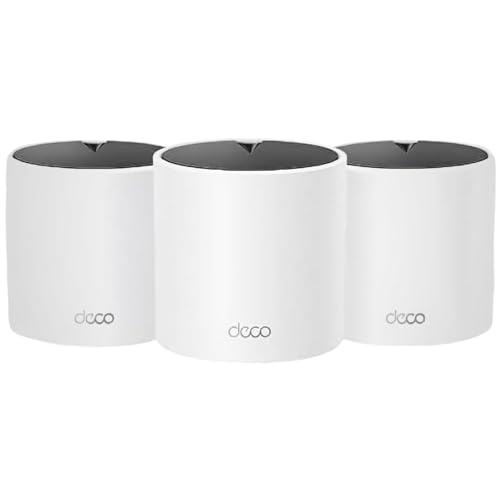
- Wi‑Fi 6 AX1500 mesh kit
- Wired Ethernet backhaul supported
- Covers up to 5,600 sq. ft.
Best For: Large homes that want lower-cost wired backhaul coverage
Wi-Fi 6 Multi-Gig Pick – TP-Link Deco X55 Pro
If you want mesh wifi systems with ethernet backhaul that can keep up with faster internet plans, the TP-Link Deco X55 Pro is built around wired performance. Each node includes 2 x 2.5G ports, so you can use wired ethernet backhaul and still have room for multi-gig devices like a NAS.
Best For: Homes with 1 Gig+ internet, multi-gig wired devices, and large coverage needs
Pros:
- 2 x 2.5G ports per unit for superior wired backhaul and multi-gig connectivity
- Up to 6,500 sq. ft. coverage with support for more than 150 devices
- Wi-Fi 6 AX3000 speeds with dual-band performance
- Easy Deco app setup and management
Cons:
- Dual-band design may be less flexible than tri-band systems for some mesh setups
- Best-fit performance depends on home layout, distance, and obstacles
The X55 Pro is a practical choice if wired backhaul is a priority and you want multi-gig ports in a mainstream Wi-Fi 6 mesh package. It balances strong coverage, app-based management, and security-focused features without overcomplicating setup.
Wi-Fi 7 Performance Pick – NETGEAR Orbi 370 Series
For shoppers comparing mesh wifi systems with ethernet backhaul, the NETGEAR Orbi 370 Series stands out for next-gen wireless speed and enhanced backhaul. It uses dual-band Wi-Fi 7 technology with support for up to 5 Gbps and is ready for cable or fiber internet plans up to 2.5 Gbps.
Best For: Larger homes that want Wi-Fi 7 performance and easy expansion
Pros:
- Wi-Fi 7 with up to 5 Gbps speeds
- Enhanced backhaul for fast whole-home mesh performance
- Covers up to 6,000 sq. ft. and supports up to 70 devices
- App-guided setup and straightforward expansion with additional satellites
Cons:
- Dual-band design may be less specialized than tri-band systems for some users
- Extra security features may require a separate subscription for the Armor trial
The Orbi 370 is a strong fit if you want a modern Wi-Fi 7 mesh system with simple setup and room to grow. It emphasizes fast wireless performance, broad coverage, and compatibility with common internet service setups.
Tri-Band Wi-Fi 6E Pick – TP-Link Deco XE75
If you’re looking at mesh wifi systems with ethernet backhaul alternatives, the TP-Link Deco XE75 is appealing because its 6 GHz band can work as a backhaul by default. That gives you a tri-band design with a built-in path for stable node-to-node connections, plus the option to use the 6 GHz band for Wi-Fi 6E devices.
Best For: Users who want tri-band Wi-Fi 6E with flexible backhaul options
Pros:
- Tri-band Wi-Fi 6E with a dedicated 6 GHz band
- 6 GHz can act as backhaul by default for stable connections
- Up to 7,200 sq. ft. coverage and support for up to 200 devices
- Easy Deco app setup and HomeShield security features
Cons:
- Uses 1 Gb LAN port bandwidth rather than multi-gig wired ports
- Wi-Fi 6E benefits depend on compatible devices
The XE75 is a smart middle ground for buyers who want tri-band mesh performance without moving all the way to Wi-Fi 7. Its 6 GHz backhaul option and strong coverage make it a versatile home-network upgrade.
Budget Wired-Backhaul Pick – WAVLINK AX3000 Mesh System
The WAVLINK AX3000 is a straightforward option if you want mesh wifi systems with ethernet backhaul without moving into premium pricing. It supports wired backhaul, offers AX3000 dual-band Wi-Fi 6 speeds, and includes app or web setup for quick deployment.
Best For: Value-focused buyers who want wired backhaul and simple setup
Pros:
- Supports Ethernet backhaul for better speed and lower latency
- AX3000 Wi-Fi 6 dual-band performance up to 3.0 Gbps
- Coverage up to 5,000 sq. ft. and 256+ devices
- App/web setup with mesh router or AP mode
Cons:
- Dual-band design may not match the flexibility of tri-band systems
- Coverage figure is lower than some larger mesh kits in the roundup
WAVLINK’s mesh system is best viewed as a practical wired-backhaul solution for homes or small offices that need strong coverage and easy administration. It keeps the feature set focused on speed, flexibility, and simple installation.
Editor's Pick – TP-Link Deco BE63 WiFi 7 Tri-Band Mesh
If you want one of the most capable mesh wifi systems with ethernet backhaul, the Deco BE63 is built for fast, high-capacity homes. Its tri-band Wi-Fi 7 design, 10G Ethernet support, and 2.5G ports make it a strong fit when you want wired backhaul between nodes and room to grow later.
Best For: Larger homes and power users who want Wi‑Fi 7 performance with multi-gig wired backhaul options.
Pros:
- Tri-band Wi-Fi 7 with up to 5,188 Mbps on 6 GHz and 10G Ethernet support
- 2-pack covers up to 5,800 sq. ft. and supports over 200 devices
- Includes four 2.5G WAN/LAN ports plus USB 3.0 for flexible wired setup
- AI-Roaming and a single network name simplify whole-home use
Cons:
- Backhaul requires at least two Deco units
- Full Wi‑Fi 7 and multi-gig benefits depend on compatible devices and wiring
Overall, this is the most future-ready pick here if you care about wired backhaul, high device counts, and top-end throughput. It’s especially appealing for homes that can take advantage of multi-gig Ethernet between mesh nodes.
Value Upgrade – Deco 7 Dual-Band WiFi 7 Mesh
The Deco 7 is a practical choice if you’re shopping for mesh wifi systems with ethernet backhaul but want a simpler dual-band setup. It still supports 2.5G Ethernet backhaul between Deco units, and its Wi‑Fi 7 radios are designed to cover a busy home without a complicated install.
Best For: Buyers who want Wi‑Fi 7 mesh convenience with wired backhaul and straightforward setup.
Pros:
- Wi‑Fi 7 dual-band design with up to 5,000 Mbps data transfer rate
- Supports 2.5G Ethernet backhaul between Deco units
- Covers up to 6,600 sq. ft. and over 150 devices
- Deco app setup and management are designed to be quick and simple
Cons:
- Dual-band system lacks the extra 6 GHz band found on tri-band models
- Backhaul requires at least two Deco units
For homes that prioritize easy expansion and wired stability, this model lands in a very workable middle ground. It gives you Ethernet backhaul support without stepping up to the more expensive tri-band class.
Budget-Friendly Pick – TP-Link Deco X55 AX3000 Mesh
If you’re mainly looking for reliable mesh wifi systems with ethernet backhaul at a lower price point, the Deco X55 is the most straightforward option here. It uses Wi‑Fi 6, includes three Gigabit Ethernet ports per unit, and supports wired backhaul for better speeds across the home.
Best For: Families who want dependable whole-home mesh coverage with wired backhaul support on a Wi‑Fi 6 budget.
Pros:
- Wi‑Fi 6 AX3000 mesh system covers up to 6,500 sq. ft.
- Three Gigabit Ethernet ports per unit with wired Ethernet backhaul support
- Supports up to 150 devices with AI-driven mesh optimization
- Deco app setup and HomeShield security features add convenience
Cons:
- Wi‑Fi 6 is less future-proof than Wi‑Fi 7 models
- Wired backhaul uses Gigabit ports, not multi-gig ports
The X55 is the most cost-conscious pick in this group if you want mesh stability and Ethernet backhaul without paying for the newest wireless standard. It’s a solid fit for everyday streaming, work, and general home coverage.
Wi‑Fi 7 upgrade pick – TP-Link Deco 7 BE23 2-Pack
If you want mesh wifi systems with ethernet backhaul and you also want a newer Wi‑Fi 7 platform, the Deco 7 BE23 is built for fast homes with a lot of devices. It supports simultaneous wireless and wired backhaul, and each node includes two 2.5 Gbps WAN/LAN ports for multi-gig wired gear and faster backhaul options.
Best For: Households that want Wi‑Fi 7 performance, multi-gig ports, and flexible wired backhaul in a 2-pack mesh.
Pros:
- Wi‑Fi 7 features include MLO, Multi-RUs, and 4K-QAM
- Each node has two 2.5 Gbps WAN/LAN ports
- Supports simultaneous wireless and wired backhaul
- Covers up to 4,500 sq. ft. and 150 devices with the 2-pack
Cons:
- Only a 2-pack is included, so larger homes may need more units
- Dual-band design may not suit buyers looking for tri-band flexibility
The Deco 7 BE23 stands out if your priority is a newer networking standard plus practical wired expansion. It is a strong fit for buyers who want a modern mesh system that can grow around Ethernet backhaul and multi-gig internet.
Balanced wired-backhaul pick – TP-Link Deco X55 2-Pack
For mesh wifi systems with ethernet backhaul, the Deco X55 is a practical middle ground that keeps the setup simple while adding wired-backhaul support. Each unit has three Gigabit Ethernet ports, and the 2-pack covers up to 4,500 square feet with support for up to 150 devices.
Best For: Buyers who want a well-rounded Wi‑Fi 6 mesh system with plenty of Ethernet ports and easy wired backhaul.
Pros:
- Supports wired Ethernet backhaul for better speeds
- Three Gigabit Ethernet ports per unit
- Covers up to 4,500 sq. ft. and 150 devices
- Includes Wi‑Fi 6 AX3000 performance and AI-driven mesh
Cons:
- Dual-band design may be less flexible than higher-end mesh systems
- Maximum value depends on using the wired ports effectively
The X55 is the easiest recommendation for most homes that want a straightforward Ethernet-backed mesh without stepping up to a pricier tier. It gives you the core features people usually want: good coverage, solid wired connectivity, and simple app setup.
Budget-friendly coverage pick – TP-Link Deco X15 3-Pack
If you need mesh wifi systems with ethernet backhaul and want to stretch coverage across a bigger home, the Deco X15 3-pack is built to do that on Wi‑Fi 6. It offers wired Ethernet backhaul, two Gigabit Ethernet ports per unit, and enough coverage for up to 5,600 square feet.
Best For: Larger homes that want an affordable Wi‑Fi 6 mesh with wired backhaul support and broad coverage.
Pros:
- Supports wired Ethernet backhaul for better speeds
- Three-node kit covers up to 5,600 sq. ft.
- Handles up to 120 devices
- Each unit includes two Gigabit Ethernet ports
Cons:
- AX1500 speeds are lower than faster Wi‑Fi 6 and Wi‑Fi 7 options
- Only two Ethernet ports per node, so wired device flexibility is more limited
The X15 is the best fit when coverage matters more than top-end speed. It is a sensible choice for a whole-home wired-backhaul mesh where you want to keep costs lower while still getting the stability benefits of Ethernet.
How We Picked the Best Mesh Wifi Systems with Ethernet Backhaul
We focused on mesh Wi-Fi systems with Ethernet backhaul support, modern Wi-Fi standards, enough wired ports for practical home networking, and coverage that fits real-world households. We also favored systems that balance speed, app-based setup, and upgrade value for different home sizes and budgets.
Quick Comparison
Wi-Fi 6 systems are still the best value for many homes, especially if you already have strong wired Ethernet between rooms. Wi-Fi 6E adds a 6 GHz band for less congestion, while Wi-Fi 7 brings the newest performance features and more headroom for multi-gig internet and heavy device loads.
Key Buying Factors for Mesh Wi-Fi Systems with Ethernet Backhaul
Number of Ethernet Ports
Check how many LAN ports each node provides and whether they support multi-gig speeds. If you plan to wire consoles, PCs, TVs, or access points, extra ports can matter as much as peak wireless speed.
Backhaul Flexibility
Some systems automatically prefer Ethernet backhaul when available, while others make setup easier through dedicated app controls. The best Mesh Wifi Systems with Ethernet Backhaul should let you mix wired and wireless nodes without complicated configuration.
Coverage and Node Count
Match the system size to your floor plan, not just square footage claims. Multi-story homes, plaster walls, and basement setups often benefit from three nodes or more, even if the advertised coverage looks generous.
Wi-Fi Standard and Device Mix
Choose Wi-Fi 6 if you want strong value, Wi-Fi 6E if you need cleaner spectrum for newer devices, and Wi-Fi 7 if you want the most future-ready platform. Your internet plan and device count should guide the decision as much as the headline speed rating.
Who Should Buy Which Mesh Wifi Systems with Ethernet Backhaul?
If you already have Ethernet runs in place, prioritize value and stability over the highest speed tier. A well-placed Wi-Fi 6 or Wi-Fi 6E system can outperform a pricier setup that relies only on wireless backhaul.
Buy Wi-Fi 7 if you have fast internet, many connected devices, or you want a longer upgrade window. Choose Wi-Fi 6 if you want the lowest cost per square foot, and go with tri-band or 6 GHz-equipped models when your home has more congestion or tougher layout challenges.