Portable 3D scanners have become far more capable, making it easier to capture parts, props, products, and even people with impressive detail. Whether you need a scanner for 3D printing, reverse engineering, or content creation, the right model can save time and reduce cleanup work.
This roundup highlights 10 of the best options available in 2026, with a focus on accuracy, ease of use, wireless convenience, and value across different budgets and skill levels.
Best 10 Portable 3d Scanners Picks for 2026
Ultra-Portable Flagship Pick
Creality Pika Portable 3D Scanner

- 0.03mm accuracy with 0.1mm resolution
- Dual laser and NIR modes for small or full-body scans
- 260g body with Wi‑Fi 6 and swappable batteries
Best For: users who want maximum portability with premium scanning features
Beginner-Friendly Medium-Format Pick

- 0.07mm accuracy and 0.10mm resolution
- Markerless AI tracking helps recover missed areas
- JMStudio handles scanning, editing, and optimizing
Best For: beginners who want a straightforward scanner for printing and modeling
Wireless All-Rounder Pick
Creality Otter Lite Wireless 3D Scanner

- Wi‑Fi 6 wireless scanning with no cables
- 330g body and up to 3 hours of outdoor use
- Quad-lens system for small and large objects
Best For: buyers who want a lightweight wireless scanner for varied object sizes
Lightweight Outdoor Pick
Revopoint INSPIRE 2 3D Scanner

- 190g body for easy portability
- Wi‑Fi 6 scanning with outdoor support up to 20,000 lux
- Dual scan modes plus full-color texture capture
Best For: people who need a lightweight scanner for outdoor and color-rich scans
Portable Precision Pick

- 0.05mm resolution with dual scan ranges
- RGB + infrared cameras for color texture capture
- 235g handheld design with full accessory kit
Best For: Makers and DIY users who want a lightweight high-precision scanner
Budget-Friendly Starter
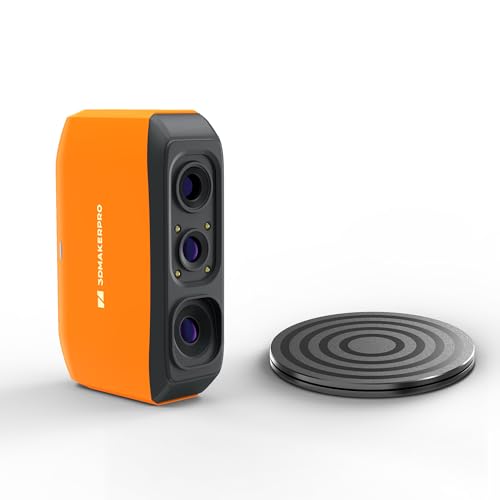
- 0.07mm accuracy with safe NIR lighting
- Markerless tracking and anti-shake support
- Good for 40mm to 1200mm objects
Best For: Beginners and STEM users who want an affordable entry into scanning
Wireless Mobility Choice

- Up to 0.1mm accuracy and 30FPS scanning
- WiFi 6 bridge for wireless transfer
- Anti-shake tracking for smoother handheld use
Best For: Users who want wireless scanning support and reliable handheld performance
AI-Tracked Beginner-Friendly Scanner
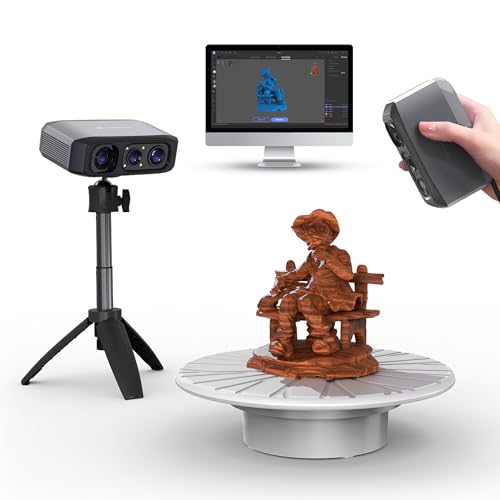
- AI Visual Tracking with automated model repair support
- Anti-shake module plus re-scanning for easier recovery
- Marker-free scanning with free lifetime OTA software updates
Best For: Beginners who want a forgiving handheld scanner for 3D printing
Wireless Travel-Ready Scanner

- WiFi6 wireless scanning with broad platform support
- Ultra-light 105g body for easy travel and field use
- Full-color 24-bit scans with up to 0.1mm accuracy
Best For: Mobile users who want a lightweight wireless scanner with broad compatibility
Fast Flexible Scanner

- ASIC chipset for faster processing and smoother scanning
- Dual-mode scanning for wide-range and fine-detail capture
- Can run from a 5V power bank or compatible Android devices
Best For: Users who want a handheld scanner focused on speed and portable power
Ultra-Portable Flagship Pick – Creality Pika Portable 3D Scanner
If you want portable 3d scanners that can handle both tiny parts and full-body captures, the Creality Pika stands out for its mix of mobility, speed, and detail. It is designed for scanning on the go, with wireless PC mode, a pocket-sized body, and dual scanning modes that help it adapt to different subjects without a complicated setup.
Best For: creators who want a highly portable scanner with strong detail capture, wireless flexibility, and full-body scanning options.
Pros:
- 0.03mm accuracy and 0.1mm resolution for fine-detail work on small parts and collectibles.
- Dual-mode scanning with 7-line blue laser and NIR structured light for objects from miniatures to life-size scans.
- Very portable at 260g, with Wi‑Fi 6, touchscreen control, and dual swappable batteries.
- AI features like body completion, retexturing, and hole filling can streamline model cleanup.
Cons:
- Higher-end features may be more than casual users need.
- Best suited to users who will actually use its software and AI tools.
- Wireless convenience is strong, but full accessory-based workflow still adds some setup.
Overall, the Pika is a strong choice if you want one of the most versatile portable 3d scanners in a compact package. It combines travel-friendly hardware with serious scanning capability, making it a good fit for detailed hobby work, body scanning, and reverse engineering.
Beginner-Friendly Medium-Format Pick – 3DMakerpro Fox 3D Scanner
The 3DMakerpro Fox is aimed at buyers who want portable 3d scanners without jumping straight into a complex pro setup. It offers medium-format scanning in an entry-level package, while the included JMStudio software handles scanning, editing, and optimization in one workflow.
Best For: beginners and hobbyists who want an approachable scanner for 3D printing, modeling, and basic inspection.
Pros:
- Entry-level design with medium-format scanning for accessible everyday use.
- 0.07mm accuracy and 0.10mm resolution deliver solid detail for useful 3D models.
- Markerless AI visual tracking can relock onto the object if you move too fast.
- JMStudio combines scanning, editing, and optimizing in one software ecosystem.
Cons:
- Not as precise as the more advanced scanners in this roundup.
- Heavier than some compact portable options at 2.39 pounds.
- Best suited to beginners rather than users needing top-end detail capture.
Fox makes sense if you want a simpler entry into portable 3d scanners and value software support as much as hardware. It is a practical pick for hobby projects and straightforward 3D printing workflows.
Wireless All-Rounder Pick – Creality Otter Lite Wireless 3D Scanner
The Creality Otter Lite is built for buyers who want portable 3d scanners with true wireless convenience and enough flexibility for both small and large subjects. Its quad-lens system, anti-shake tracking, and 30 FPS capture make it a practical handheld option for scanning in different environments.
Best For: users who want a lightweight wireless scanner for mixed-size objects, outdoor work, and fuller feature sets.
Pros:
- Wireless Wi‑Fi 6 operation with no USB or power cords required.
- Only 330g, with a built-in battery rated for up to 3 hours of outdoor scanning.
- 30 FPS scanning plus One-Shot 3D technology and backtracking for smoother handheld use.
- Quad-lens design helps capture both fine details and larger objects in one device.
Cons:
- Not the highest-accuracy scanner in the lineup based on the provided details.
- Battery life is solid, but still finite for long sessions away from power.
- Advanced workflow features may be more than casual users need.
Otter Lite is a strong middle-ground choice if you want wireless portability without giving up versatility. It should appeal to users who scan everything from jewelry and figurines to furniture and larger objects.
Lightweight Outdoor Pick – Revopoint INSPIRE 2 3D Scanner
Revopoint’s INSPIRE 2 is a compact option for shoppers comparing portable 3d scanners for outdoor use and detailed capture. It combines Wi‑Fi 6 connectivity, dual scanning modules, and a lightweight aluminum design to make mobile scanning easier to manage in real-world settings.
Best For: users who want a lightweight scanner for outdoor work, color capture, and flexible scanning modes.
Pros:
- At 190g, it is the lightest scanner in this group and easy to carry.
- Wi‑Fi 6 mobile scanning supports on-the-go work and PC-to-mobile streaming.
- Dual infrared structured light and multi-line laser modes improve flexibility across materials and sizes.
- Full-color texture capture and outdoor scanning up to 20,000 lux add useful real-world versatility.
Cons:
- Requires relatively capable systems for best performance, especially on Windows and macOS.
- Some workflow elements, such as Revo Design, are sold separately.
- Not the best fit if you need the highest stated accuracy in this list.
INSPIRE 2 is a practical pick if weight, outdoor use, and scan flexibility matter more than chasing the absolute top accuracy spec. It offers a strong balance of portability and features for 3D printing, reverse engineering, and archiving.
Portable Precision Pick – Creality Otter Lite Basic
If you want a portable 3D scanner that still aims at pro-level detail, the Creality Otter Lite Basic is built around accuracy, speed, and convenience. Its 0.05mm resolution, dual scan ranges, and full-color texture capture make it a practical choice for 3D printing, reverse engineering, and DIY work where fine detail matters.
Best For: Makers and DIY users who want a lightweight handheld scanner with high precision and color texture capture.
Pros:
- 0.05mm resolution with close-range and long-range scanning modes
- RGB and infrared cameras capture full-color textures up to 30 fps
- Weighs just 235g and includes a carrying case, turntable, markers, and calibration board
- USB 3.0/2.0 connectivity plus Windows and macOS support
Cons:
- Best results depend on using the included setup accessories and learning the workflow
- Software support is tied to Creality Scan on Windows and macOS only
Overall, this is a strong portable 3D scanner option if you want a compact kit with broad scanning flexibility and detailed color output. It looks especially appealing for users who value an all-in-one package they can carry and start using quickly.
Budget-Friendly Starter – 3DMakerpro Fox
The 3DMakerpro Fox is an entry-level portable 3D scanner aimed at users who want an easier path into digital capture without a big upfront commitment. It uses NIR light, offers up to 0.07mm accuracy, and skips marker placement, making it a practical fit for small to medium objects and educational or DIY projects.
Best For: Beginners, STEM users, and DIY prototypers who want a budget-friendly scanner with markerless tracking.
Pros:
- Up to 0.07mm accuracy with safe NIR lighting
- Markerless tracking and anti-shake support simplify setup
- Works on objects from 40mm to 1200mm with 150–400mm working distance
- JMStudio handles scanning, editing, fusion, and export to common formats
Cons:
- Results may take patience and a learning curve to refine
- A capable PC with a dedicated GPU is strongly recommended
- Advanced mesh refinement and slicing knowledge may be needed for best print results
As portable 3D scanners go, this one is less about instant mastery and more about accessible entry-level scanning. If you are willing to learn the workflow, it offers a sensible balance of ease, accuracy, and object-size flexibility.
Wireless Mobility Choice – Creality CR-Scan Ferret Pro
The Creality CR-Scan Ferret Pro stands out among portable 3D scanners for wireless flexibility and fast capture. With WiFi 6 bridging, 30FPS scanning, and 0.1mm accuracy, it is a strong fit for users who want a handheld scanner that can move from desktop workflows to more mobile scanning sessions.
Best For: Users who want wireless scanning support and dependable handheld performance for 3D printing or reverse engineering.
Pros:
- Up to 0.1mm accuracy with 30FPS fast scanning
- WiFi 6 bridge offers faster wireless transmission than WiFi 5
- Anti-shake tracking helps maintain smoother scans for beginners
- Supports OBJ, STL, and PLY exports for common workflows
Cons:
- Outdoor performance is best on surfaces that are not highly reflective, transparent, or extremely dark
- Device compatibility and app requirements vary by platform
This is a compelling choice if you value mobility in a portable 3D scanner and want wireless scanning support on compatible devices. It combines fast data capture with practical tracking features, making it a versatile pick for general 3D scanning tasks.
AI-Tracked Beginner-Friendly Scanner – 3DMakerpro Moose Lite Premium
For buyers comparing portable 3d scanners, the 3DMakerpro Moose Lite Premium stands out for its AI Visual Tracking, anti-shake support, and marker-free workflow. It is built to make scanning feel more forgiving, while the included JMStudio software gives you a live view of the process and free lifetime OTA upgrades.
Best For: Beginners and hobbyists who want a more forgiving handheld scanner for 3D printing projects.
Pros:
- AI Visual Tracking helps detect vulnerabilities and supports automated model repair.
- Anti-shake module and re-scanning function make interrupted scans easier to recover.
- Marker-free scanning keeps setup simple and saves time.
- Compatible with Android, iOS, Windows, and macOS.
Cons:
- At 3.65 pounds, it is heavier than some ultra-light portable options.
- Best suited for users who value guided scanning more than maximum travel convenience.
The Moose Lite Premium focuses on ease of use and scan recovery, which makes it a practical pick if you want portability without a steep learning curve. Its feature set is especially appealing for 3D printing users who want cleaner workflow support rather than a barebones scanner.
Wireless Travel-Ready Scanner – Creality CR-Scan Ferret Pro
Among portable 3d scanners, the Creality CR-Scan Ferret Pro is designed for flexible wireless use with WiFi6, a lightweight 105g body, and cross-platform support. It combines anti-shake tracking with full-color scanning, making it a practical handheld option for users who want to scan at home, in the studio, or on the go.
Best For: Beginners and mobile users who want a lightweight wireless scanner with broad device compatibility.
Pros:
- WiFi6 wireless scanning supports convenient untethered use.
- Weighs just 105g, making it easy to carry and travel with.
- Captures full-color 24-bit scans with up to 0.1mm accuracy.
- Works with Windows, macOS, Android, and iOS.
Cons:
- Not suitable for very small or highly detailed items like jewelry or precision parts.
- Best results depend on avoiding reflective, transparent, or very dark surfaces.
- Requires stronger system specs and 8GB+ RAM on most platforms.
The Ferret Pro is a strong fit if you want a portable scanner that balances mobility with feature depth. Its included kit, wireless workflow, and broad compatibility make it especially useful for users who need a scanner that can move easily between locations.
Fast Flexible Scanner – Creality CR-Scan Ferret
If you want portable 3d scanners with faster capture and flexible power options, the Creality CR-Scan Ferret is built around speed and convenience. It uses an ASIC chipset for quicker processing, offers dual-mode scanning for both wide and detailed capture, and can be powered by a 5V power bank for scanning away from a desk.
Best For: Users who want a handheld scanner that emphasizes speed, portable power, and full-color capture.
Pros:
- ASIC chipset delivers up to 60 FPS image processing and up to 30 FPS point cloud capture.
- Dual-mode scanning supports both wide-range and high-accuracy work.
- Built-in RGB camera captures full-color textures.
- Can be powered by a 5V power bank or compatible Android devices.
Cons:
- Mobile phone scanning is limited to Android devices only.
- iOS support is reserved for the Ferret Pro, not this model.
- Updated firmware is needed to get the latest performance improvements.
The Ferret is a sensible pick if your priority is a portable scanner that moves quickly and runs flexibly. It is less universal than the Pro on mobile device support, but its speed and power options make it attractive for on-the-go scanning setups.
How We Picked These Portable 3d Scanners
We focused on practical buying factors that matter most in real-world use: accuracy, scan speed, tracking stability, portability, software support, and overall workflow. We also looked for models that serve different needs, from entry-level scanning to more advanced capture for CAD, 3D printing, and object digitization.
Because Portable 3d Scanners are used in many environments, we favored devices that balance ease of setup with reliable results. Wireless options, anti-shake tracking, and support for a range of object sizes were especially important.
Quick Comparison
At a high level, the lineup includes beginner-friendly scanners, midrange handheld options, and more feature-rich models with higher precision or dual-mode capture. If you want the simplest path to scanning, look for automatic tracking and strong app support. If accuracy matters more, prioritize scanners with tighter stated precision and better handling of fine detail.
For most buyers, the best choice comes down to what you scan most often: small items for 3D printing, medium-size products, or larger subjects that need flexible working distance and stable tracking.
Key Buying Factors for Portable 3d Scanners
Accuracy and Resolution
Accuracy affects how closely the digital model matches the real object. Higher precision is especially important for reverse engineering, fit testing, and detailed prints. Resolution helps with fine surface detail, but it should be considered alongside software quality and tracking performance.
Tracking and Scanning Speed
Good tracking reduces drift and missing data, which can save a lot of cleanup time later. Faster frame rates are useful for smoother handheld scanning, but only if the scanner can keep alignment stable as you move around the object.
Object Size and Use Case
Some Portable 3d Scanners are better for small parts, while others handle medium or larger objects more comfortably. Think about whether you mainly scan tabletop items, mechanical components, body parts, or larger props before choosing.
Connectivity and Software
Wireless operation can make scanning more convenient, especially in tighter workspaces or when moving around larger objects. Software matters just as much as hardware, since strong apps help with alignment, mesh cleanup, export formats, and post-processing.
Who Should Buy Which Portable 3d Scanners?
Beginners should look for an easy-to-use scanner with automatic modes and dependable tracking. Makers and 3D printing users may want a balanced model that offers solid accuracy without a steep learning curve. More advanced users, including product designers and reverse engineers, should prioritize precision, color capture if needed, and stronger performance on complex geometry.
If portability is your top priority, choose a lighter handheld option with wireless support. If detail and versatility matter more, a dual-mode or higher-precision scanner is often worth the extra investment. The best Portable 3d Scanners are the ones that match your workflow, not just the ones with the longest spec sheet.