Choosing the right DI box can make instruments, laptops, keyboards, and playback sources easier to connect cleanly to a church mixing console. The best option depends on your inputs, cable runs, available phantom power, and how much hum control your system needs.
This roundup compares 10 practical DI solutions, including passive, active, stereo, multi-channel, and USB-friendly designs, so worship teams can match features to their stage and signal-flow requirements.
Best 10 Di Boxes for Church Sound Systems Picks for 2026
Reliable Stage Conversion
Monoprice Sound Block Passive DI Box

- Heavy-duty 14-gauge steel housing
- Bidirectional impedance matching
- Ground lift and attenuator controls
Best For: Single-channel church audio setups
Simple Instrument Connection
Hosa DIB-443 Sidekick Passive DI Box

- Converts 1/4-inch TS to balanced XLR3M
- Needs no external power
- Metal construction for live use
Best For: Guitars, basses, and keyboards
Multi-Channel Control
dbx DI4 Active 4-Channel Direct Box

- Four independent DI channels
- Per-channel 20 dB pad and ground lift
- Half-rack design with mixer controls
Best For: Multi-source worship and church PA setups
USB Playback Flexibility
On-Stage DB2150 Passive Stereo USB DI Box
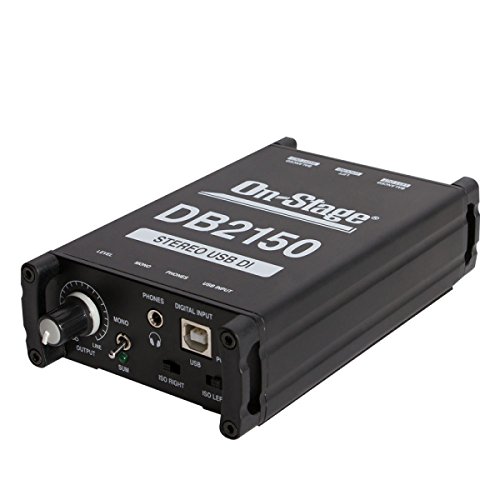
- USB connectivity for computer audio
- Stereo output with headphone jack
- Mono sum, ground lift, and isolation switches
Best For: Computer-based church playback systems
Simple Passive Pick

- Passive and needs no power
- Pad and ground-lift switches
- 1/4-inch input, through, and XLR output
Best For: Guitars, keyboards, and basic instrument-to-PA connections
Premium Stereo Choice

- Passive stereo configuration
- 10Hz–40kHz specified response
- Premium Radial Engineering option
Best For: Stereo playback or instrument setups needing a premium passive DI
AV Connectivity Specialist
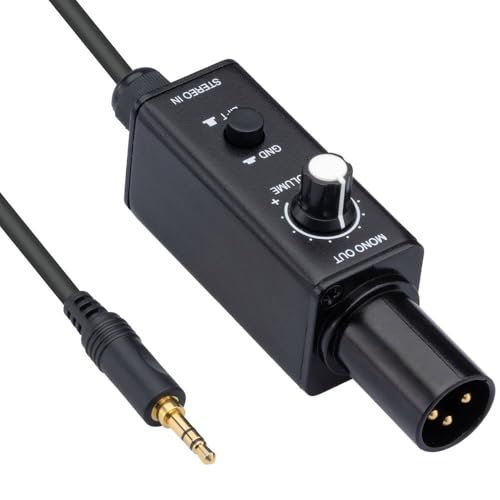
- Accepts 3.5mm stereo device output
- Creates balanced mono mic-level output
- Ground lift and compact aluminum build
Best For: Connecting laptops, phones, and tablets to church PA systems
Best USB-Ready Pick
StudioMan MOB-2 Active USB DI Box

- USB-C audio interface needs no driver installation
- Bluetooth streaming plus stereo XLR outputs
- Ground lift helps address loop noise
Best For: Church setups combining instruments, phones, and computers
Best Straightforward Instrument DI
Radial Engineering ProDI Bundle

- Passive, plug-and-play instrument DI
- 140kΩ input impedance and custom transformer
- Bundle includes mic cable and polishing cloth
Best For: Simple, reliable instrument connections on stage
Best Hum-Reduction Value
Passive XLR Ground Loop Isolator

- Targets hum and buzz from ground loops
- Accepts XLR and 1/4-inch combo inputs
- Passive, compact, and housed in metal
Best For: Cleaning noisy connections between consumer and PA gear
Reliable Stage Conversion – Monoprice Sound Block Passive DI Box
Monoprice Sound Block Passive Direct Box - With Ground Lift and Attenuator - Stage Right Series
Check Price On AmazonThe Monoprice Sound Block is a straightforward option for church sound systems that need to connect and balance a single audio source. Its passive design includes ground lift and attenuation controls, while the steel housing is built for regular stage use.
Best For: Churches needing one durable passive DI box for microphones, mixers, or audio interfaces.
Pros:
- Heavy-duty 14-gauge steel construction
- Bidirectional impedance matching
- Ground lift and attenuator controls
- Uses XLR connectivity
Cons:
- Only one channel
- Passive operation may not suit every signal source
For a simple, rugged single-channel setup, the Sound Block offers useful signal-management features without adding a complicated power requirement.
Simple Instrument Connection – Hosa DIB-443 Sidekick Passive DI Box
The Hosa DIB-443 is a plug-and-play choice for church sound systems that need to send an unbalanced 1/4-inch signal to a mixer or PA system. Its passive design requires no external power and is suited to instruments such as guitars, basses, and keyboards.
Best For: Worship teams connecting an instrument to a mixing console over a longer cable run.
Pros:
- Converts unbalanced 1/4-inch TS to balanced XLR3M
- Requires no external power
- Designed to reduce hum and noise on long cable runs
- Robust metal construction
Cons:
- Single-channel design
- Limited to the listed 1/4-inch TS-to-XLR3M conversion
The DIB-443 keeps the connection process simple and practical, making it a useful basic DI for instrument inputs in a church PA system.
Multi-Channel Control – dbx DI4 Active 4-Channel Direct Box
The dbx DI4 is designed for church sound systems handling several sources at once. It combines four independent DI units in a compact half-rack package, with channel-specific pad, ground-lift, volume, and pan controls for flexible system integration.
Best For: Churches that need four DI channels and per-channel control in a rack-friendly format.
Pros:
- Provides four independent DI channels
- Includes an independent 20 dB pad per channel
- Offers independent ground-lift switches
- Per-channel volume and pan controls feed the line mixer output
Cons:
- Requires corded electric power
- Heavier and more complex than a basic single-channel passive DI
- Analog design may not fit every signal-chain preference
When a worship setup needs multiple inputs with individual adjustments, the DI4 provides considerably more control than a basic one-channel box.
USB Playback Flexibility – On-Stage DB2150 Passive Stereo USB DI Box
The On-Stage DB2150 brings USB connectivity to church sound systems that use a computer for playback or other audio sources. It provides stereo output, a 3.5mm headphone output, mono summing, and isolation switches for adapting the signal to a sound system.
Best For: Churches routing computer audio into a PA or mixer while retaining stereo monitoring options.
Pros:
- Supports USB hardware connectivity
- Provides stereo output and a 3.5mm headphone output
- Includes a mono sum switch
- Offers ground lift and left/right isolation switches
Cons:
- More specialized than a conventional instrument DI
- Designed around computer and USB source connectivity
For services using computer-based music or media, the DB2150 offers useful stereo routing and isolation features in a purpose-built USB DI format.
Simple Passive Pick – Compact Instrument DI Box
For church sound systems needing a straightforward way to connect instruments to balanced mixer inputs, this passive DI box supports a 1/4-inch instrument connection and provides an XLR output. Its pad and ground-lift controls add useful flexibility for live sound setups.
Best For: Guitars, keyboards, and basic instrument-to-PA connections.
Pros:
- Passive design requires no power.
- Includes 1/4-inch input and through jacks.
- Pad switch helps manage hot sources.
- Ground lift can help reduce grounding-related buzz.
Cons:
- Single-channel output limits it to one signal path.
- Designed for instrument connections rather than dedicated stereo device conversion.
The metal enclosure and compact size make this a practical, uncomplicated option when a church needs a basic DI for instruments without adding another powered device to the signal chain.
Premium Stereo Choice – Radial JDI Stereo DI
Church sound systems that need a premium stereo DI option may consider the Radial JDI Stereo. The supplied specifications identify it as a passive stereo unit with a broad 10Hz–40kHz frequency response, making it suited to stereo signal-routing applications where maintaining the source character matters.
Best For: Stereo playback or instrument setups that call for a higher-end passive DI.
Pros:
- Passive stereo configuration.
- Specified 10Hz–40kHz frequency response.
- Premium positioning from Radial Engineering.
- Compact unit weighs 1.8 pounds.
Cons:
- Supplied notes do not list detailed input, output, or control types.
- Its stereo format may be more than needed for a single mono instrument.
This is the most premium-oriented choice in the group, but buyers should confirm the exact connector layout and control set before integrating it into a church’s existing stage box or mixer workflow.
AV Connectivity Specialist – Laptop and Mobile DI Box
For church sound systems that play audio from laptops, smartphones, or tablets, the Kopul LT-PDI converts unbalanced stereo line-level signals into balanced mono mic-level signals. Its 3.5mm TRS input, XLR output, and ground-lift switch address common playback and hum-control needs.
Best For: Connecting laptops, phones, and tablets to PA systems, mixers, or recorders.
Pros:
- Supports laptops, smartphones, tablets, and other AV devices.
- Converts unbalanced stereo line-level audio to balanced mono mic-level output.
- Ground lift helps address unwanted hum.
- Lightweight, compact aluminum construction is easy to carry.
Cons:
- Stereo input is converted to a mono output.
- Designed around a 3.5mm TRS input, so other source connectors may require an adapter.
The LT-PDI is a focused solution for playback and AV integration rather than a general instrument DI. Its compact format makes it especially convenient for portable worship, presentation, and recording setups.
Best USB-Ready Pick – StudioMan MOB-2 Active USB DI Box
For church sound systems that need flexible connections for instruments, mobile devices, or computers, the StudioMan MOB-2 combines an active stereo DI box with a USB audio interface. Its balanced XLR outputs, Bluetooth support, and ground-lift switch make it a versatile option for services, live music, and recording.
Best For: Churches needing USB, Bluetooth, and dual-channel connectivity in one compact DI box.
Pros:
- USB-C connection works without driver installation with compatible computers, smartphones, and tablets.
- Balanced left and right XLR outputs connect to PA systems or studio monitors.
- Bluetooth support allows wireless audio streaming from a phone.
- Ground-lift switch can help address ground-loop noise.
Cons:
- As an active DI, its feature set may be more than needed for a simple instrument-to-mixer connection.
- Bluetooth and USB features depend on the connected device and setup.
The MOB-2 stands out among DI boxes for church sound systems when digital playback and wireless sources matter as much as instrument inputs. Its compact design and included warranty support add practicality for regular use.
Best Straightforward Instrument DI – Radial Engineering ProDI Bundle
The Radial Engineering ProDI Bundle is a passive instrument DI designed for simple, dependable stage and studio signal routing. Its custom-wound transformer, high input impedance, and transformer-isolated output make it a strong choice for church sound systems focused on clean instrument connections and ground-loop control.
Best For: Churches wanting a plug-and-play passive DI for instruments and live performance.
Pros:
- Passive design requires no power for operation.
- High 140kΩ input impedance is designed to handle instrument signals.
- Transformer-isolated output helps reduce ground-loop noise.
- Bundle includes a Pig Hog mic cable and polishing cloth.
Cons:
- It does not include USB, Bluetooth, or other digital connectivity.
- The bundle is primarily intended for instrument DI use rather than broader stereo source conversion.
For a conventional church stage, the ProDI keeps the signal path uncomplicated while providing transformer isolation and a cable in the bundle. It is a sensible fit when ease of use and instrument compatibility take priority over extra features.
Best Hum-Reduction Value – Passive XLR Ground Loop Isolator
When a church sound system develops hum or buzz between consumer and professional equipment, this passive stereo direct box can help isolate the problem. Its combo inputs accept XLR or 1/4-inch plugs, while the isolator converts between unbalanced and balanced signals for connections such as laptops, mixers, power amps, and PA systems.
Best For: Churches troubleshooting ground-loop noise from laptops, DJ controllers, mixers, or other connected audio gear.
Pros:
- Designed to reduce hum, buzz, and static caused by ground loops.
- Two combo inputs accept XLR and 1/4-inch TS/TRS plugs.
- Requires no power and is designed to add virtually no coloration.
- Compact all-metal housing suits stage and studio use.
Cons:
- It is primarily a noise-isolation and signal-conversion solution, not a feature-rich instrument DI.
- It does not provide USB or Bluetooth connectivity.
This model is especially useful when the main issue is unwanted noise rather than a need for instrument-specific features. Its flexible inputs and passive operation make it a practical troubleshooting tool for church AV racks and portable PA setups.
How We Picked These Di Boxes for Church Sound Systems
We focused on the connection problems church audio teams encounter most often: converting unbalanced instrument or playback outputs to balanced XLR, reducing noise over longer runs, solving ground-loop hum, and accommodating stereo or multi-source setups. We also considered whether each design is passive or active, how it handles attenuation and ground lift, and whether it requires batteries or phantom power.
Because worship environments vary widely, this list includes straightforward single-channel boxes, stereo options, a four-channel unit, laptop-focused models, and a USB-capable design. The goal is not to identify one universal winner, but to make it easier to choose a dependable fit for your stage.
Quick Comparison
- Passive DI boxes: Simple, durable, and usually do not require power. They are strong choices for guitars, keyboards, and general stage use.
- Active DI boxes: Better suited to passive pickups and sources that need a more buffered signal, but they typically require batteries or phantom power.
- Stereo DI boxes: Useful for keyboards, playback devices, and laptops that must preserve left and right channels.
- Multi-channel models: Efficient for churches connecting several instruments or sources in a compact rack or stage setup.
- USB and laptop DI boxes: Designed for computers and digital playback, where convenient connectivity and ground isolation can be especially valuable.
Key Buying Factors for Di Boxes for Church Sound Systems
Passive or Active Operation
Passive models are generally plug-and-play and can handle many line-level or instrument sources without an external power supply. Active units can offer higher input impedance and more flexibility for certain instruments, but confirm whether your console supplies phantom power or whether batteries are practical for your team.
Channel Count and Stereo Support
A mono DI is enough for a guitar or single playback feed. Keyboards, laptops, and stereo media sources often need two channels to avoid collapsing or losing part of the mix. A four-channel DI can reduce clutter when multiple sources share one stage position.
Ground Lift, Attenuation, and Isolation
Ground-lift switches can help address hum caused by different electrical paths, while pad or attenuation controls prevent hot keyboard and playback outputs from overloading the mixer input. Transformer isolation is particularly useful when connecting consumer electronics or long cable runs.
Connection Compatibility
Check the source outputs before buying. Common connections include 1/4-inch TS, XLR, USB, and stereo outputs. Also verify that the DI provides the balanced XLR outputs your snake, stage box, or console requires.
Who Should Buy Which Di Boxes for Church Sound Systems?
Choose a basic passive model for a guitar, keyboard, or occasional instrument connection when simplicity and durability matter most. Choose an active DI for passive pickups or setups that benefit from a stronger buffered interface. Choose a stereo model for keyboards, laptops, and playback rigs where left-right imaging matters.
Choose a multi-channel unit for worship teams with several regular sources and limited stage space. Choose a USB-focused or laptop DI for computer-based worship playback, livestream audio, or media presentations. Finally, if persistent hum is the main issue, prioritize a model with ground lift or isolation rather than relying on a basic adapter.