A power amplifier with balanced inputs can help reduce hum and interference while giving your system more connection flexibility. The models in this roundup range from compact Class-D monoblocks and stereo amps to higher-output rack and multi-channel units.
Use the guide below to match amplifier power, connectivity, speaker compatibility, and features to your listening space and system design.
Best 10 Power Amplifier with Balanced Inputs Picks for 2026
Best Compact Monoblock

- 240W maximum output at 4 ohms
- XLR/TRS balanced and RCA inputs
- Compact single-channel Class D design
Best For: Modular home-audio and home-theater systems
Best All-in-One DAC Amp

- TRS balanced, USB, optical, coaxial, and Bluetooth inputs
- 300W x 2 TPA3255 stereo amplification
- Built-in DAC, sub-out, remote, and VU display
Best For: Flexible stereo or 2.1 home-audio systems
Best for Live Sound Power
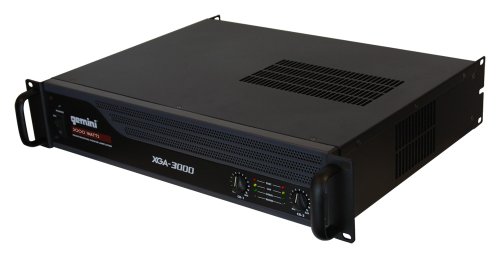
- Two-channel amplifier rated at 3,000W
- Balanced XLR and 1/4-inch inputs
- Bridge mode, Speakon outputs, and protection circuits
Best For: DJ rigs, PA systems, live events, and venues
Best Reference-Style Stereo Amp

- Fully balanced stereo design with XLR input
- Adjustable 60–200Hz high-pass filter and sub-out
- 116dB SNR and 0.002% THD+N claimed
Best For: Balanced HiFi stereo and 2.1 systems
Best for Rack-Mount Power

- Up to 2,000W bridged output
- XLR and TRS balanced inputs
- Rack-mount design with cooling fans
Best For: Larger speaker installations and rack-based systems
Best Compact Balanced Design

- 140W × 2 at 4 ohms
- Balanced TRS and RCA inputs
- Compact aluminum Class-D chassis
Best For: Desktop Hi-Fi and studio-monitor setups
Best for Flexible 2.1 Systems

- 300W × 2 stereo output
- TRS balanced input and Bluetooth 5.2
- High-pass filter and subwoofer pre-out
Best For: Home theater and bookshelf-speaker systems with a subwoofer
Best Balanced Monoblock

- XLR/TRS balanced and RCA inputs
- 240W at 4 ohms per mono amplifier
- PFFB Class-D design with op-amp customization
Best For: HiFi and home-theater systems using passive speakers
Best Karaoke Versatility

- Four microphone inputs with vocal effects
- USB/SD and analog source playback
- AC 110V and DC 12V operation
Best For: Karaoke, parties, camping, and multi-source analog setups
Best 5.1 Entertainment Option

- 5.1-channel output with subwoofer channel
- Three microphone inputs for karaoke
- USB/SD playback and RCA source connections
Best For: Home theater, karaoke, and small gatherings using active audio equipment
Best Compact Monoblock – Fosi Audio V3 Mono
If you need a power amplifier with balanced inputs for a modular home-audio or theater setup, the Fosi Audio V3 Mono is a compact single-channel option. Its XLR/TRS balanced and RCA inputs, 240W maximum output at 4 ohms, and Class D design make it suitable for driving one passive speaker per amplifier.
Best For: Building a flexible multi-channel HiFi or home-theater system around passive speakers or an AVR.
Pros:
- Supports XLR/TRS balanced and RCA single-ended inputs.
- Provides up to 240W at 4 ohms from a small monoblock chassis.
- Includes PFFB technology, high-grade capacitors, and a four-layer PCB.
- Offers auto power or signal sensing and swappable DIP8 op-amps.
Cons:
- It is a single-channel amplifier, so multiple units are needed for stereo or multichannel systems.
- The supplied 48V/5A power supply is required for the stated output capability.
The V3 Mono is a strong fit when space and system flexibility matter more than having a conventional integrated amplifier. Its balanced-input support and thermal design make it especially appealing for clean, high-power component systems.
Best All-in-One DAC Amp – AIYIMA A80
The AIYIMA A80 combines a power amplifier with balanced inputs, a DAC, Bluetooth, and several digital connections. Its TRS balanced inputs, TPA3255 amplification, and up to 300W x 2 output make it a versatile choice for a compact stereo or 2.1-channel system.
Best For: Listeners who want balanced connectivity, built-in digital conversion, wireless playback, and flexible home-audio inputs in one component.
Pros:
- Includes TRS balanced inputs alongside USB, optical, coaxial, Bluetooth, and analog connections.
- Combines an ESS9038Q2M DAC with a TPA3255 Class D amplifier.
- Supports up to 300W x 2 output and includes a subwoofer pre-out.
- Adds a 12V trigger, remote control, tone control, and digital VU display.
Cons:
- Its many functions may be unnecessary for buyers seeking a straightforward power amp.
- The supplied notes do not specify the included power supply rating or chassis dimensions.
The A80 is the most feature-rich option here for a desktop or living-room setup. It is particularly practical when a system needs balanced source connections and digital inputs without adding separate DAC and Bluetooth components.
Best for Live Sound Power – Gemini XGA-3000
For live sound, DJ, and PA applications, the Gemini XGA-3000 is a rack-mount power amplifier with balanced inputs and substantial stated output. It accepts XLR, 1/4-inch, and RCA sources, while bridge mode, Speakon outputs, and protection circuits support demanding event and installation setups.
Best For: DJs, venues, and live-sound users who need a rugged two-channel amplifier with multiple connection and output options.
Pros:
- Provides two channels and up to 3,000W of stated output.
- Accepts balanced XLR and 1/4-inch inputs as well as unbalanced RCA.
- Offers stereo and mono bridge modes with Speakon and binding-post outputs.
- Includes DC, short-circuit, limiter protection, status LEDs, and variable-speed cooling.
Cons:
- The 2U rack-mount chassis is less suited to compact home-audio installations.
- Its 17.6-pound listed chassis weight may matter for portable rigs.
- The supplied notes list a one-year warranty.
The XGA-3000 is designed around practical system integration rather than minimalist listening-room use. Its balanced inputs, bridge capability, protection features, and professional outputs make it the natural choice for higher-output PA applications.
Best Reference-Style Stereo Amp – AIYIMA A20
The AIYIMA A20 is a fully balanced stereo power amplifier with XLR and RCA input selection, making it a focused choice for systems built around balanced sources. Its adjustable high-pass filter and subwoofer output also make it useful when integrating a 2.1 speaker arrangement.
Best For: Audiophiles who want clean stereo amplification, balanced connectivity, and direct control over main-speaker and subwoofer integration.
Pros:
- Uses fully balanced XLR connectivity with an XLR/RCA input toggle.
- Offers a 60–200Hz adjustable high-pass filter and subwoofer output.
- Features a bypass mode, +3dB gain switch, 12V trigger, and swappable op-amps.
- Lists 116dB SNR and 0.002% THD+N in the supplied specifications.
Cons:
- It is primarily a power amplifier, so source devices and some system controls must be supplied separately.
- The supplied details do not state the included amplifier’s exact dimensions.
The A20 stands out for system tuning and integration. Its filter, bypass, trigger, and balanced-input options give a more advanced setup considerable flexibility, especially when paired with a preamp and subwoofer.
Best for Rack-Mount Power – Pyle PTA1000BT
The Pyle PTA1000BT is a practical choice if you need a high-output power amplifier with balanced inputs for multi-speaker setups, live sound, or installations. Its XLR and 1/4-inch TRS inputs, bridge mode, and rack-mount design provide flexible connectivity and substantial power.
Best For: Rack-mounted stereo or bridged systems using 4- to 8-ohm speakers.
Pros:
- Provides up to 1,000 watts per channel in stereo or 2,000 watts in bridged mode.
- Includes both XLR and 1/4-inch TRS inputs, plus Speakon and binding-post outputs.
- Built-in cooling fans, LED level indicators, Bluetooth, and USB-A MP3 playback add convenience.
Cons:
- Its 19-inch rack-mount format is less suitable for compact desktop systems.
- The supplied details list a 220-volt rating and a 120-volt minimum supply specification, so power compatibility should be checked.
Choose this model when connection flexibility and high peak output matter more than a small footprint. It is especially well suited to equipment racks and larger speaker installations.
Best Compact Balanced Design – TOPPING Mini300
The TOPPING Mini300 is a compact power amplifier with balanced inputs designed for desktop Hi-Fi listening and studio monitoring. Its fully balanced Class-D architecture, TRS and RCA compatibility, and aluminum chassis make it a space-efficient option for clean, detailed two-channel playback.
Best For: Desktop audio systems, studio monitors, and balanced DAC or preamp setups.
Pros:
- Delivers up to 140 watts per channel at 4 ohms.
- Supports balanced TRS and unbalanced RCA inputs without an adapter.
- Offers 124dB SNR/DNR, very low stated distortion, trigger-linked power, and protection circuitry.
Cons:
- Its compact 12-volt DC design is intended for smaller systems rather than high-power installations.
- It is freestanding rather than rack-mountable.
The Mini300 stands out when you want balanced connectivity and strong stated specifications in a very small enclosure. Its trigger control is also useful for systems that coordinate power across multiple components.
Best for Flexible 2.1 Systems – Ampapa Douk Audio D1
The Ampapa Douk Audio D1 combines a TRS balanced input with Bluetooth 5.2, tone controls, and subwoofer-oriented features, making it a versatile power amplifier with balanced inputs for home audio. Its adjustable high-pass filter and full-range pre-out are particularly useful when building a 2.1 system.
Best For: Home theater, bookshelf speakers, and stereo systems paired with an active subwoofer.
Pros:
- Offers up to 300 watts per channel and includes a TRS balanced input.
- Adjustable 30–200Hz high-pass filter helps integrate stereo speakers with a subwoofer.
- Includes Bluetooth 5.2, digital VU display, remote control, tone controls, and a 12V trigger.
Cons:
- Its surface-mount design is not intended for standard equipment racks.
- The extensive controls and lighting may be more than a minimalist system requires.
- The supplied details identify a 48-volt DC power supply, so system power compatibility should be confirmed.
The D1 is a strong fit for listeners who want balanced input support alongside everyday convenience features. Its filter and pre-out make it more adaptable than a basic stereo power amplifier when a subwoofer is part of the plan.
Best Balanced Monoblock – Fosi Audio V3 Mono
For shoppers seeking a power amplifier with balanced inputs, the Fosi Audio V3 Mono is a focused option for driving a single passive speaker. Its XLR/¼-inch TRS balanced and RCA inputs, 240W output at 4 ohms, and compact monoblock design make it suitable for stereo upgrades or multi-channel systems.
Best For: HiFi listeners and home-theater owners building stereo or multi-channel systems with passive speakers.
Pros:
- XLR/TRS balanced and RCA single-ended input options
- Up to 240W at 4 ohms for driving demanding passive speakers
- PFFB Class-D design with a TPA3255 chip and low stated distortion
- Op-amp replacement support enables sound customization
Cons:
- Designed as a mono amplifier, so stereo setups require two units
- Requires passive speakers and a suitable preamp or source connection
This is the strongest match here for buyers specifically prioritizing balanced inputs and clean power delivery. Its two-pack configuration can also simplify a left/right stereo setup, while the signal-sensing mode helps reduce unnecessary power use.
Best Karaoke Versatility – 2000W Peak Stereo Amplifier
This 2.0-channel unit is a flexible choice for shoppers who want a power amplifier with balanced inputs only if balanced connectivity is not essential. It focuses instead on karaoke and multi-source playback, with four microphone inputs, USB/SD support, EQ controls, and AC/DC operation.
Best For: Karaoke, small parties, camping, and users connecting several analog sources.
Pros:
- Four microphone inputs with individual reverb and delay controls
- Five-band EQ and balance controls for flexible tuning
- Supports AUX/DVD, USB, and SD-card playback
- Works with AC 110V home power or DC 12V vehicle power
Cons:
- Does not provide XLR or other balanced inputs
- Analog connectivity only; no optical interface
- It is a 2.0-channel design without a built-in subwoofer
Choose this model for features rather than balanced connectivity. Its microphone mixing and dual-voltage design make it more practical for entertainment-focused setups than for a dedicated audiophile system.
Best 5.1 Entertainment Option – Viprh 3000W Peak Amplifier
The Viprh amplifier is aimed at home-theater and karaoke users rather than shoppers specifically seeking a power amplifier with balanced inputs. It provides 5.1-channel playback, an independent subwoofer channel, three microphone inputs, USB/SD playback, and RCA connectivity for common home sources.
Best For: Home theaters and small gatherings that need surround sound, karaoke inputs, and an active-subwoofer connection.
Pros:
- 5.1-channel configuration with an independent subwoofer channel
- Three microphone inputs for karaoke, announcements, and events
- USB/SD playback plus RCA connections for TV, PC, and CD sources
- Includes remote control and built-in protection features
Cons:
- No balanced XLR inputs are listed
- Subwoofer and speaker outputs are intended for active equipment according to the supplied notes
- Best suited to entertainment use rather than a dedicated balanced-input HiFi system
This model makes sense when surround sound and party functionality matter more than balanced signal connections. Confirm your speaker and subwoofer setup carefully, since the listed output design is intended for active subwoofers or active speakers.
How We Picked the Best Power Amplifier with Balanced Inputs
We selected models across several use cases, including compact hi-fi systems, home theater, studio-style setups, karaoke, and event audio. Our comparisons focus on balanced input availability, rated output, impedance support, amplifier topology, input and output options, size, and practical system features such as Bluetooth, subwoofer outputs, bridging, tone controls, and digital displays.
Pay close attention to the difference between a genuinely balanced signal path and an amplifier that simply provides an XLR or TRS connector. Manufacturer power ratings may also use different test conditions, so treat peak or bridged figures as different from continuous stereo output.
Quick Comparison
| Best For | What to Prioritize | Most Relevant Types |
|---|---|---|
| Compact hi-fi | Low noise, efficient Class-D design, small footprint | Mini stereo amps and monoblocks |
| Balanced source components | XLR or TRS inputs and a clean signal path | Fully balanced stereo amplifiers |
| Home theater | Speaker impedance compatibility and sufficient headroom | Two-channel or multi-channel power amps |
| Live sound and karaoke | Rack mounting, multiple inputs, cooling, and durable outputs | High-power rack amplifiers |
Key Buying Factors for a Power Amplifier with Balanced Inputs
Power, Impedance, and Headroom
Match continuous amplifier output to your speakers and listening needs rather than relying on the largest advertised wattage. Confirm whether the rating applies at 4 or 8 ohms, whether it is per channel, and whether it is measured in stereo or bridged mode. Extra headroom can improve dynamics, but excessive power without appropriate speakers can cause damage through clipping or accidental overdrive.
Balanced Connectivity
XLR and TRS inputs are useful when your preamp, DAC, mixer, or processor also supports balanced output. They can help reject noise over longer cable runs. Check the input sensitivity, available gain, and whether RCA inputs are included if you use consumer hi-fi sources.
System Features and Installation
Bluetooth, USB, tone controls, digital VU meters, high-pass filters, and subwoofer pre-outs may simplify a particular setup, but they are not substitutes for amplifier quality. Also check cooling requirements, rack depth, speaker terminals, Speakon compatibility, and whether the amplifier is intended for home or professional use.
Who Should Buy Which Power Amplifier with Balanced Inputs?
Choose a compact Class-D stereo amplifier or monoblock pair when space, efficiency, and straightforward hi-fi integration matter most. A fully balanced stereo model is the better fit for a DAC or preamp with XLR outputs and a short, low-noise signal path. For home theater, prioritize reliable two-channel power, impedance compatibility, and enough headroom for your main speakers. Buyers running karaoke, parties, or small events should favor rack-ready units with flexible TRS/XLR inputs, robust speaker outputs, cooling, and convenient source controls.
Before ordering, verify the exact power supply, included accessories, input type, and return policy. Balanced inputs improve connectivity, but the best choice still depends on speaker sensitivity, room size, source equipment, and how loudly you plan to listen.