A well-equipped home theater depends on more than a receiver, projector, and speakers. The right rack power conditioner can organize connections, provide surge protection, reduce unnecessary cable clutter, and make it easier to power multiple components safely.
We selected 10 options ranging from compact Panamax and Furman conditioners to rack-mounted sequencers with independent outlet control. Use the guide below to match outlet capacity, power management, and installation features to your theater setup.
Best 10 Rack Power Conditioners for Home Theaters Picks for 2026
Best Feature-Rich Pick
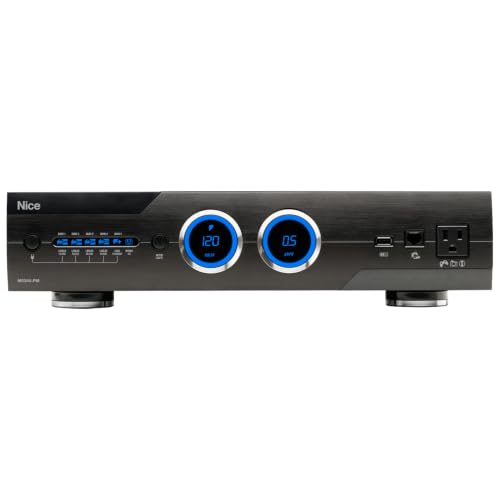
- 11 outlets with two high-current outlets
- Level 4 filtration and five isolated banks
- Voltage display, USB, LAN, and phone protection
Best For: Feature-heavy home theater racks
Best Sequenced Rack Option
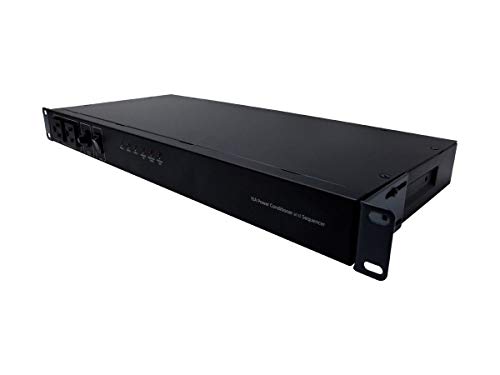
- Three zones for power sequencing
- Eight outlets and 15-amp operation
- 1U rack-mount metal enclosure
Best For: Systems requiring controlled startup
Best Compact Protection Pick

- Eight filtered outlets in a 1U chassis
- AVM and Protect-or-Disconnect protection
- Coax and LAN signal-line protection
Best For: Compact home theater racks
Best Audio-Focused Filtering Pick

- PG-90 filtering technology
- Nine total outlets, including one front outlet
- Front USB port and two-year warranty
Best For: Audio-focused rack systems
Best Overall Protection

- Nine filtered and protected outlets
- Automatic voltage monitoring and disconnection protection
- Two USB ports and AV-focused noise filtration
Best For: Conventional home theater systems needing monitored, filtered 15A power
Best 20A Rack Option

- 20A design with a 10-foot 12-gauge cord
- Eight rear outlets plus a front convenience outlet
- SMP, Lift, and EVS protection features
Best For: AV racks with a compatible 20-amp receptacle
Best for Sequenced Control

- Eight independently switched sequenced outlets
- Two always-on outlets and real-time voltage display
- Bypass mode and external remote-switch input
Best For: Complex racks needing outlet control and power sequencing
Flexible Power Management

- Sequential startup and shutdown helps reduce system impact
- Eight rear outlets have independent switches
- 110V–240V monitoring with 3000W total output
Best For: Home theaters and audio racks needing flexible outlet control
Connected Rack Control
10-Socket USB Power Conditioner

- Eight rear and two front power sockets
- USB, Type-C, LCD, and channel status indicators
- Sequential control with AC noise filtering
Best For: Multi-device audio or theater racks needing monitoring and charging
Compact Rack Protection

- 10 outlets with two always-on front outlets
- Surge, spike, overload, and noise protection
- 1U chassis with USB port and LCD voltage display
Best For: Compact home theater and studio racks
Best Feature-Rich Pick – Panamax M5300-PM
For shoppers comparing rack power conditioners for home theaters, the Panamax M5300-PM combines power filtration, voltage monitoring, outlet isolation, and connection protection in a substantial 11-outlet chassis. Its five isolated outlet banks can help separate connected components, while the high-current outlets suit demanding equipment.
Best For: Home theater racks needing extensive outlet capacity, monitoring, and component isolation.
Pros:
- 11 outlets, including two high-current outlets
- Level 4 power cleaning and filtration with five isolated banks
- Automatic Voltage Monitoring, digital volt/amp display, USB charging, and LAN/phone protection
Cons:
- Large and heavy at 18 pounds
- Feature set may be more than a simple rack needs
The M5300-PM is a strong choice when you want a centralized, highly configurable power-management unit rather than a basic surge protector. Its 17-inch width and 3.5-inch height should be checked against available rack space.
Best Sequenced Rack Option – Monoprice Stage Right 604830
The Monoprice Stage Right is a practical option among rack power conditioners for home theaters when controlled startup matters. It provides eight outlets across three zones, 15-amp operation, surge protection, and a metal enclosure in a 1U rack-mount design.
Best For: Rack systems that need three-zone power sequencing and straightforward 15-amp distribution.
Pros:
- Three zones provide sequenced power control
- Eight outlets with 15-amp capacity
- 1U rack-mount form factor with metal enclosure
Cons:
- Offers fewer outlets than some larger conditioners
- The supplied notes do not specify advanced noise-filtration features
Choose this model if sequencing is more important than extensive monitoring or signal-line protection. Its stated compatibility includes amplifiers, speakers, computers, and home theater equipment, making it a flexible rack-distribution choice.
Best Compact Protection Pick – Panamax MR4000
The Panamax MR4000 is a focused choice for rack power conditioners for home theaters, pairing eight filtered outlets with automatic voltage monitoring and Protect-or-Disconnect surge protection. It also covers coax and LAN connections, helping address power and signal-line surge concerns in one 1U unit.
Best For: Home theater racks seeking compact protection with filtered outlets and signal-line coverage.
Pros:
- Eight Level-2 filtered outlets in a 1U rack-mount design
- AVM disconnects equipment during unsafe over- or under-voltage conditions
- Coax, LAN/Ethernet, and satellite signal-line protection
Cons:
- Eight outlets may limit larger installations
- It is rated for 15 amps, so total system demand must be considered
With 1,350 joules of surge protection and a 52,000-amp peak rating listed in the supplied specifications, the MR4000 emphasizes core protection without the larger chassis or feature set of the M5300-PM. Note that it may arrive branded Nice while retaining the MR4000 model number.
Best Audio-Focused Filtering Pick – Black Lion Audio PG-X
The Black Lion Audio PG-X is a straightforward choice among rack power conditioners for home theaters, especially where filtering and convenient access are priorities. It uses PG-90 filtering technology, provides eight rear outlets plus one front outlet, and adds a front-panel USB port.
Best For: Audio and home theater racks needing rack-mount filtering with a convenient front outlet and USB port.
Pros:
- PG-90 filtering technology with Panasonic and Wima capacitors
- Eight rear outlets plus one front-panel outlet
- Front-panel USB port and stainless-steel enclosure
Cons:
- The supplied notes do not list voltage monitoring or signal-line protection
- Its listed dimensions may require careful rack-space planning
The PG-X keeps the feature set centered on filtering and accessible power connections. Its rackmount form factor and two-year warranty make it a sensible fit for buyers who want a dedicated audio-oriented conditioner without the broader monitoring features found on some Panamax models.
Best Overall Protection – Panamax MR4300
For shoppers comparing rack power conditioners for home theaters, the Panamax MR4300 combines filtered power, surge protection, and voltage monitoring in a low-profile design. Its nine protected outlets provide room for a typical AV rack, while Panamax’s AVM and Protect or Disconnect features are designed to respond to voltage fluctuations and damaging spikes.
Best For: Home theater owners who want broad outlet coverage, AV-focused noise filtration, and automatic voltage monitoring.
Pros:
- Nine protected and filtered outlets, plus two USB ports.
- Includes Automatic Voltage Monitoring and Protect or Disconnect technology.
- Panamax Level 3 Noise Filtration is designed for home theater systems.
- Backed by a $5 million connected-equipment protection policy and lifetime product warranty.
Cons:
- Its 15-amp capacity may not suit setups requiring a 20-amp conditioner.
- The supplied specifications list a 1575-joule surge rating but do not describe rack-mount hardware.
The MR4300 is a strong all-around choice when protecting and filtering a conventional home theater matters more than advanced outlet sequencing or 20-amp operation.
Best 20A Rack Option – Furman P-8 PRO C
The Furman P-8 PRO C is a practical choice among rack power conditioners for home theaters when a 20-amp circuit is available. It provides eight rear outlets with wall-wart spacing and security strapping, one front convenience outlet, and a 10-foot, 12-gauge power cord. Its SMP, Lift, and EVS technologies address transient protection, AC noise filtration, and overvoltage shutdown.
Best For: Rack systems that need 20-amp capacity, long heavy-gauge cabling, and rear outlet spacing for bulky plugs.
Pros:
- 20-amp conditioner with a 10-foot, 12-gauge power cord.
- Nine total outlets, including eight rear outlets and one front convenience outlet.
- SMP circuit, linear AC noise filtration, and EVS overvoltage shutdown.
- Rear BNC connector supports optional Furman gooseneck lights.
Cons:
- Requires a 20-amp female receptacle or a compatible adapter.
- This model does not include pull-out lights.
- The supplied notes list a 230-volt specification, so installation compatibility should be checked carefully.
Choose the P-8 PRO C when your rack is built around a properly wired 20-amp circuit and you value robust outlet spacing and Furman’s layered protection features.
Best for Sequenced Control – MICNAUX 20A Rack Sequencer
For buyers seeking rack power conditioners for home theaters with more hands-on control, this MICNAUX unit combines 20-amp power distribution with outlet sequencing. It offers eight independently controlled rear outlets, two always-on front outlets, a voltage display, bypass mode, and an external dry-contact switch for remote operation.
Best For: Audio and home theater racks that need individually controlled outlets, startup sequencing, and real-time voltage monitoring.
Pros:
- Eight sequenced rear outlets with dedicated switches and indicators.
- Two always-on front outlets provide a total of 10 outlets.
- LCD voltage display, bypass mode, and external remote-switch support.
- Supports 110–230V input compatibility and provides 2P surge technology.
Cons:
- Its 2000-watt maximum may be limiting for higher-demand systems.
- The independent controls and sequencing may be unnecessary for simple setups.
- The supplied details identify a 20-amp, 110V output specification, so circuit compatibility should be confirmed.
This is the most control-oriented option of the three, making it a good fit when coordinated startup, outlet-level switching, and voltage visibility are priorities.
Flexible Power Management – 10-Outlet Power Sequencer
For rack power conditioners for home theaters, this FMUSER unit stands out with sequential startup, independent outlet controls, and real-time voltage monitoring. Its sequencing can help reduce startup impact when multiple audio components are switched on together.
Best For: Home theater and audio setups that need flexible outlet-by-outlet control and power sequencing.
Pros:
- Sequentially powers equipment on and off to help reduce startup noise and impact.
- Eight rear sequence outlets include independent power switches.
- Supports 110V–240V input and displays input voltage in real time.
- Offers 10 outlets and up to 3000W total output.
Cons:
- The supplied notes do not specify individual outlet load ratings.
- Its universal-outlet configuration may require checking compatibility with your equipment and region.
This is a practical choice when your rack needs both automated sequencing and manual control. The voltage display adds useful visibility, while the 3000W capacity suits many multi-component systems.
Connected Rack Control – 10-Socket USB Power Conditioner
Among rack power conditioners for home theaters, this 1U rack-mount controller combines sequential power management with AC noise filtering, front-panel charging, and status monitoring. It is designed for systems with several audio or electronic components that need organized access and clear operating feedback.
Best For: Larger audio, studio, or home theater racks that benefit from USB charging and detailed front-panel monitoring.
Pros:
- Provides eight rear sockets and two front normally-open sockets.
- Sequential one-button startup plus independent channel switches supports flexible operation.
- Includes USB and Type-C charging ports on the front panel.
- LCD voltage display and eight-channel LED indicators show system status.
Cons:
- The supplied electrical specifications list AC 100V–125V, so regional compatibility should be confirmed.
- The 8.63-pound chassis is heavier than some compact rack power units.
Choose this model if front-panel convenience matters as much as power control. Its 1U metal construction, charging ports, channel indicators, and noise-filtering circuitry make it well suited to a busy equipment rack.
Compact Rack Protection – Pyle PCO875 Power Sequencer
This Pyle model is a compact option among rack power conditioners for home theaters, offering 10 outlets, one-button operation, surge protection, and a digital voltage readout. Its single-rack-space design helps conserve room in an equipment cabinet.
Best For: Home theater, studio, and stage racks needing straightforward power distribution in a compact 1U chassis.
Pros:
- Provides eight rear outlets and two always-on front outlets.
- Built-in spike, surge, overload, and noise-interference protection.
- Features one-button operation, a USB charging port, and digital LCD display.
- Lightweight 1U rack-mount design measures 18.9 inches long and weighs about 6 pounds.
Cons:
- Its rated total power is 2000W, lower than the other listed models.
- The notes describe one-button operation but do not specify independent outlet switches.
The PCO875 is a sensible fit for smaller or moderate-power racks where space and simple controls are priorities. Its always-on outlets and voltage readout add convenience without requiring a larger chassis.
How We Picked the Best Rack Power Conditioners for Home Theaters
We focused on products suited to AV racks and dedicated home theater installations, comparing outlet count, rack compatibility, power capacity, surge-protection features, sequencing, outlet control, voltage monitoring, and connectivity. We also included different price and feature levels, from straightforward power distribution to advanced sequencers for systems with projectors, amplifiers, source components, and powered accessories.
Because “power conditioning” can describe several different functions, we considered how clearly each unit presents its capabilities. A model with a voltage display, for example, may be useful for monitoring but is not necessarily a voltage regulator. Buyers should check the manufacturer’s specifications for clamping ratings, filtering, maximum load, and warranty coverage before installation.
Quick Comparison
| Best For | Look For |
|---|---|
| Basic rack organization | Multiple protected outlets and a compatible rack form factor |
| Full-system startup control | Power sequencing, delayed outlets, or independent outlet switching |
| High-power AV systems | Appropriate amperage, wattage, plug type, and circuit capacity |
| Monitoring electrical supply | Voltage readout and clearly specified protection status |
| Mixed home theater and audio gear | Noise filtering, flexible outlet layout, and reliable front-panel access |
Key Buying Factors for Rack Power Conditioners for Home Theaters
Outlet Count and Layout
Count every device that will remain connected, including the receiver, amplifiers, streaming hardware, game consoles, projector, subwoofer accessories, network equipment, and cooling fans. Leave spare capacity for future additions. Check whether outlets are spaced to fit bulky power adapters.
Power Rating and Circuit Compatibility
Match the conditioner’s amperage and wattage ratings to the equipment and wall circuit. High-current amplifiers may require more capacity than small source components. Never exceed the rating of the conditioner, its plug, or the branch circuit, and avoid assuming that a rack unit increases available electrical power.
Sequencing and Independent Control
Sequencing can reduce startup surges and help turn on equipment in a sensible order. It is especially useful for systems with multiple amplifiers or powered speakers. Independent switches are convenient, but they also make accidental shutdowns possible, so label controlled outlets clearly.
Protection, Filtering, and Monitoring
Look for published surge specifications, EMI/RFI filtering claims, and a warranty that suits the value of your equipment. A voltage display can help identify unstable supply conditions, while USB or USB-C charging ports add convenience but should not be treated as a substitute for protected AV outlets.
Rack Installation
Confirm the unit’s rack height, mounting hardware, depth, rear-clearance needs, and ventilation requirements. Leave space around heat-producing amplifiers and route power cables so they do not obstruct airflow or signal connections.
Who Should Buy Which Rack Power Conditioners for Home Theaters?
Choose a basic multi-outlet conditioner if you mainly need organized, protected power for a modest receiver-based system. Select a Panamax or Furman model when you want established home theater or pro-audio features, dependable rack integration, and clearer protection specifications. A sequencer with independent controls is better for larger racks containing several amplifiers or devices that should start and stop in stages. Models with voltage displays suit buyers who want at-a-glance monitoring, while USB-equipped units are useful when the rack also serves as a charging station.
Before buying, total your equipment’s power draw, verify the available circuit, and decide whether you need simple distribution or genuine sequencing. The best Rack Power Conditioners for Home Theaters are the ones that fit your rack, stay within the electrical limits, and provide controls you will actually use.