The best rackmount MIDI interfaces make it easier to connect keyboards, drum machines, synths, controllers, and computers without constantly repatching cables. They range from dedicated multi-port MIDI routers to rack-friendly audio interfaces with MIDI I/O.
This roundup compares 10 options for home studios, live rigs, and larger hardware setups, with attention to port count, routing flexibility, audio connectivity, and ease of use.
Best 10 Rackmount Midi Interfaces Picks for 2026
Best Networked MIDI Hub

- 8 inputs and 12 outputs via 5-pin DIN MIDI
- 10 USB-MIDI host ports for peripherals
- RTP-MIDI networking with 22 virtual ports
Best For: Advanced studios with large MIDI and networked setups
Best Rackmount Audio Upgrade
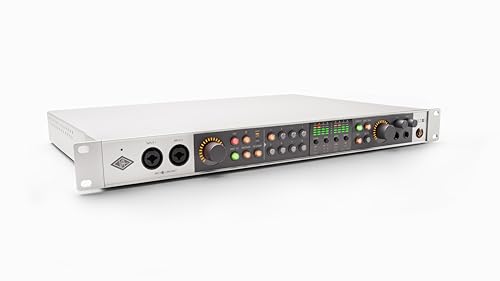
- Eight Vintage preamps and classic compressors
- 32-bit/192 kHz conversion
- Expandable with up to three Volt 876 units
Best For: Recording studios needing many microphone inputs
Best Straightforward MIDI Rack Unit

- 16-channel MIDI interface in a 19-inch chassis
- USB class-compliant for Mac and PC
- Bus-powered with included USB cable
Best For: Simple computer-based 16-channel MIDI systems
Best Rackmount Recording Interface
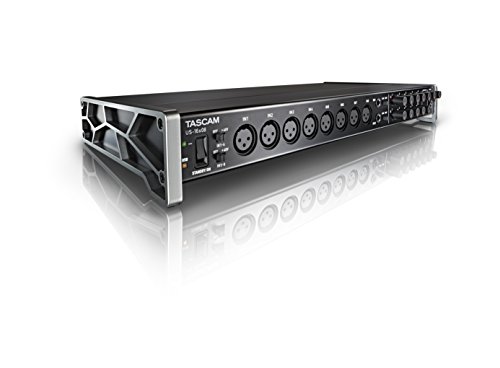
- 16 mic and line inputs for larger sessions
- Eight preamps with up to 56 dB of gain
- DSP mixer with EQ and compression
Best For: Drum recording and multi-microphone studio sessions
Best Compact Router
CME U6MIDI Pro 3-in-3-out MIDI Interface

- 3-in/3-out MIDI with standalone routing
- USB-C works across major operating systems
- Supports filtering, merging, splitting, and MPE
Best For: Portable MIDI routing and compact studio setups
Best High-Capacity Rack Unit
Black Lion Audio MIDI Eight 8x8 MIDI Interface

- Eight MIDI inputs and eight outputs
- Three standalone routing modes
- Front I/O with LED port activity indicators
Best For: Large hardware-based MIDI studios
Best USB Hub Integration
ESI M4U eX 8-Port USB MIDI Interface

- Eight adaptable MIDI input or output ports
- Built-in USB 3.0 hub with three connectors
- Standalone routing and plug-and-play operation
Best For: PC and Mac workstations needing MIDI and USB expansion
Best Pedalboard MIDI Router

- 2-in/2-out MIDI with zero-latency transmission
- USB-C support for major operating systems
- Standalone 5V USB or 9V DC power
Best For: Guitarists and compact pedalboard MIDI rigs
Best High-Channel Studio Interface

- 18 inputs and 20 outputs over USB
- Eight preamps with +48V phantom power
- ADAT I/O and 24-bit/96 kHz support
Best For: Multi-microphone home and project studios
Best Compact Recording Interface

- 5-pin MIDI input and output
- Two combo inputs with 48V phantom power
- Compact USB interface with 5-year warranty
Best For: Beginners and small home recording setups
Best Networked MIDI Hub – mioXL
For complex rackmount MIDI interfaces setups, the iConnectivity mioXL combines extensive DIN-MIDI, USB-MIDI, and network routing in one unit. Its 8 MIDI inputs, 12 outputs, 10 USB-MIDI host ports, and RTP-MIDI Ethernet connectivity make it suited to large hardware and computer-based rigs.
Best For: Advanced studios managing numerous MIDI instruments, computers, and mobile devices.
Pros:
- Provides 8 MIDI inputs and 12 outputs through 5-pin DIN connections.
- Offers 10 USB-MIDI host ports for class-compliant peripherals.
- Supports RTP-MIDI with 22 virtual network ports and assignable routing.
- Includes an OLED display, rotary encoder, and Auracle configuration software.
Cons:
- Its extensive routing features may be more than a simple MIDI setup requires.
- iOS connectivity may require a CCK or additional network hardware, depending on the connection method.
The mioXL stands out when flexible routing and broad device access matter more than simplicity. Plug-and-play class-compliant connectivity and preset-based configuration add convenience for demanding installations.
Best Rackmount Audio Upgrade – Volt 876
The Universal Audio Volt 876 is a rack-mount-style audio interface for recording-focused systems that also need room to expand. It combines eight Vintage preamps and compressors with 24×28 USB connectivity, 32-bit/192 kHz conversion, and support for Mac, PC, iPad, and iPhone.
Best For: Recording studios that prioritize multiple microphone inputs, onboard analog character, and high-resolution audio.
Pros:
- Includes eight Vintage preamps and classic compressor-style processing.
- Supports 32-bit/192 kHz conversion.
- Works with Mac, Windows, iPad, and iPhone systems.
- Can expand with up to three Volt 876 interfaces or ADAT-equipped gear.
Cons:
- It is an audio interface rather than a dedicated multiport MIDI interface.
- At 13.9 pounds, it is relatively substantial for a mobile setup.
Among rackmount audio interfaces, the Volt 876 is geared toward sizeable recording sessions rather than MIDI-only routing. Its preamps, bundled UAD ecosystem, and expansion options make it a strong choice when audio capture is the main priority.
Best Straightforward MIDI Rack Unit – MIDI 16×16
The midiplus MIDI 16×16 offers a straightforward option for rackmount MIDI interfaces, with 16 MIDI channels and USB connectivity in a 19-inch-wide chassis. It is USB class-compliant, bus-powered, and compatible with Mac, PC, and MIDI software.
Best For: Users who want a simple, computer-connected 16-channel MIDI interface without additional routing features.
Pros:
- Provides 16 MIDI channels in a rack-friendly 19-inch format.
- USB class-compliant operation supports Mac and PC systems.
- Works with USB 2.0 and USB 3.0 connections, with stated Windows 10 and Mac support for USB 3.0.
- USB bus power and an included cable simplify setup.
Cons:
- The notes specify one USB port, limiting direct computer connectivity.
- The operating system information is not fully specified.
- It does not list onboard network routing or advanced configuration features.
The MIDI 16×16 keeps the feature set focused and the setup uncomplicated. It is a practical fit for a computer-based MIDI system that needs 16-channel connectivity in a rack-width enclosure.
Best Rackmount Recording Interface – US-16×08
The Tascam US-16×08 is a rackmount USB audio/MIDI interface built for larger recording sessions. It captures 16 mic and line inputs, adds eight Ultra-HDDA microphone preamps, and provides eight balanced outputs plus DSP mixing for low-latency monitoring.
Best For: Drum recording, multi-microphone sessions, and home studios needing many analog inputs.
Pros:
- Captures 16 microphone and line inputs.
- Includes eight preamps with up to 56 dB of gain.
- Provides eight balanced line outputs, including two with front-panel level control.
- DSP mixing includes four-band EQ and compression on each channel.
Cons:
- The supplied compatibility details specify Windows and do not list Mac or iOS support.
- Its 96 kHz maximum sample rate is below some newer interfaces.
- It is primarily an audio recording interface, not a dedicated MIDI-routing hub.
The US-16×08 is a sensible rackmount choice when input count and monitoring control matter most. Its plentiful analog connections and DSP mixer make it particularly useful for drums and other multi-source recording work.
Best Compact Router – CME U6MIDI Pro 3-in-3-out MIDI Interface
The CME U6MIDI Pro is a compact option for rackmount MIDI interfaces when you need flexible routing without taking up rack space. Its three MIDI inputs and three outputs support standalone operation, USB-C computer connectivity, and detailed routing through the included software.
Best For: Musicians who need portable MIDI routing, filtering, merging, and splitting across computers or standalone hardware.
Pros:
- Works with macOS, iOS, Windows, Android, Linux, and Chrome OS.
- Supports MIDI routing, filtering, mapping, merge, split, and thru functions.
- Handles standard MIDI messages, including clock, SysEx, MIDI timecode, and MPE.
- Compact 3.49-ounce design with USB-C connectivity.
Cons:
- Offers three inputs and three outputs rather than the larger port count of dedicated rack units.
- Advanced configuration requires the UxMIDI Tools software.
The U6MIDI Pro is a strong fit when flexibility and portability matter more than rack-mounted expansion. Its standalone routing features and broad operating-system support make it useful for compact studio and live setups.
Best High-Capacity Rack Unit – Black Lion Audio MIDI Eight 8×8 MIDI Interface
The Black Lion Audio MIDI Eight is a practical choice among rackmount MIDI interfaces for larger hardware setups. With eight MIDI inputs and eight outputs, front-mounted I/O, LED port activity indicators, and three standalone routing modes, it is designed for centralized MIDI management.
Best For: Studios with multiple keyboards, synthesizers, and other MIDI hardware that need extensive connectivity and standalone routing.
Pros:
- Provides eight MIDI inputs and eight MIDI outputs.
- Includes three standalone routing modes for computer-free operation.
- Front-mounted I/O and LED indicators make connections and activity easy to monitor.
- Includes USB and five-pin MIDI connectivity.
Cons:
- Supports Windows and macOS only according to the supplied specifications.
- Its 8.6-pound weight may be less convenient for portable setups.
For a studio that has outgrown smaller MIDI interfaces, the MIDI Eight offers a substantial jump in port count. Its routing modes and front-panel monitoring also make it well suited to centralized hardware control.
Best USB Hub Integration – ESI M4U eX 8-Port USB MIDI Interface
The ESI M4U eX is a versatile alternative for rackmount MIDI interfaces when USB connectivity and expansion are priorities. Its eight adaptable MIDI ports can operate as inputs or outputs, while the built-in USB 3.0 hub adds three connectors for other studio devices.
Best For: PC and Mac users building a flexible MIDI workstation with multiple devices and a central USB hub.
Pros:
- Provides eight configurable MIDI ports with automatic input/output setup.
- Class-compliant, plug-and-play operation for Windows and macOS.
- Built-in USB 3.0 hub offers three additional USB connectors.
- Supports standalone routing and merging with low-latency operation.
Cons:
- Designed for Windows and macOS rather than a broader range of operating systems.
- The optional Windows driver is needed for complex multi-device and multi-client workflows.
The M4U eX is especially useful when a MIDI interface and USB hub need to share one central position. Its adaptable ports and standalone functionality give it flexibility for both studio and live applications.
Best Pedalboard MIDI Router – CME U4MIDI WC
For compact rackmount MIDI interfaces alternatives and pedalboard setups, the CME U4MIDI WC focuses on reliable 2-in/2-out MIDI communication without requiring a computer for every use. Its USB-C compatibility spans major operating systems, while optional external power supports standalone operation.
Best For: Guitarists, pedalboard users, and musicians who need flexible MIDI routing in a small enclosure.
Pros:
- 2-in/2-out MIDI with zero-latency and jitter-free transmission.
- Supports macOS, Windows, iOS, Android, Linux, and Chrome OS through USB-C.
- Offers MIDI thru, split, merge, mapper, and filter functions through UxMIDI Tools.
- Can run from 5V USB or 9V DC power for standalone use.
Cons:
- It is a MIDI interface rather than a multichannel USB audio interface.
- Optional WIDI Bluetooth MIDI requires the WIDI Core accessory.
The U4MIDI WC is a practical choice when space, routing flexibility, and pedal integration matter more than audio recording inputs. Its compact design and standalone power options make it particularly suitable for mobile or performance rigs.
Best High-Channel Studio Interface – Behringer UMC1820
The Behringer UMC1820 is a substantial option for studio systems comparing rackmount MIDI interfaces with broader audio connectivity. Alongside MIDI, it provides 18 inputs and 20 outputs over USB, ADAT I/O, and eight MIDAS-designed microphone preamplifiers with phantom power.
Best For: Home and project studios recording multiple microphones and instruments at once.
Pros:
- 18×20 USB 2.0 audio/MIDI connectivity for high-channel-count setups.
- Includes ADAT I/O for expanding compatible studio systems.
- Eight MIDAS-designed microphone preamps with +48V phantom power.
- Supports 24-bit/96 kHz audio and popular recording software.
Cons:
- Its 24.35-inch width and 4-pound weight make it less suitable for compact rigs.
- Supplied operating-system information specifically lists Mac OS X and Windows XP or higher.
The UMC1820 makes the most sense when MIDI is part of a larger recording setup rather than the primary requirement. Its extensive I/O and ADAT support give it room to serve multi-microphone sessions and expandable studio workflows.
Best Compact Recording Interface – Arturia MiniFuse 2
For buyers considering rackmount MIDI interfaces but wanting a smaller recording unit, the Arturia MiniFuse 2 combines 5-pin MIDI I/O with two combo inputs, balanced outputs, and headphone monitoring. Its straightforward USB workflow suits home recording, mobile production, and first studio setups.
Best For: Beginners, guitarists, vocalists, and creators recording a few sources alongside MIDI keyboards or synths.
Pros:
- Includes 5-pin MIDI input and output for synths, controllers, and drum machines.
- Two combo mic/instrument/line inputs with 48V phantom power.
- Provides balanced outputs, headphone volume control, and a USB Type-A hub.
- Includes a 5-year warranty and a broad software bundle.
Cons:
- Its four-channel specification is much smaller than a high-I/O rackmount interface.
- Listed operating-system support is limited to Windows and macOS.
The MiniFuse 2 is a versatile small-format alternative for users who need both basic audio recording and MIDI connectivity. It is easier to place in a compact workspace than a rack-oriented unit, while still offering useful connections and beginner-friendly software.
How We Picked the Best Rackmount Midi Interfaces
We selected these Rackmount Midi Interfaces based on practical studio requirements: available MIDI inputs and outputs, connection type, routing and standalone capabilities, computer compatibility, and suitability for expanding hardware setups. Because “rackmount” can describe both true rack units and compact interfaces used in rack-based systems, this list includes dedicated MIDI patch bays as well as audio/MIDI interfaces with rack-oriented designs.
We also considered whether each model fits a specific use case. Some prioritize high port counts and complex routing, while others combine MIDI with microphone preamps, line inputs, ADAT expansion, or portable operation.
Quick Comparison
| Best For | What to Look For | Notable Benefit |
|---|---|---|
| Large hardware studios | 8 or more MIDI outputs | Connects many synthesizers and drum machines |
| Recording studios | Audio inputs plus MIDI I/O | Handles microphones, instruments, and controllers |
| Complex MIDI routing | Standalone patching and presets | Reduces computer dependence |
| Compact setups | Two to four MIDI ports | Lower cost and simpler installation |
Key Buying Factors for Rackmount Midi Interfaces
Port Count and Direction
Count both MIDI inputs and outputs before buying. One input and one output may suit a single keyboard, but larger setups benefit from multiple independent ports. Separate outputs let you address several instruments at once without daisy-chaining, which can simplify timing and troubleshooting.
Routing and Standalone Operation
Dedicated interfaces may offer filtering, merging, patch storage, clock distribution, or standalone routing. These features matter if the interface will sit at the center of a hardware rig. If you only need to connect a controller to a DAW, advanced routing may add cost without much benefit.
Audio Features and Expansion
Audio/MIDI models can be a better value for recording setups because they combine MIDI connectivity with microphone preamps, line inputs, monitor outputs, and sometimes ADAT expansion. Check the total input count, driver support, and whether the design is genuinely rack-compatible or simply rack-friendly.
Connectivity and Compatibility
Confirm the required USB standard, operating-system support, and class-compliant operation. Traditional 5-pin DIN MIDI remains broadly compatible, while USB MIDI can reduce cabling between controllers and computers. Also check whether control software is required for configuration.
Who Should Buy Which Rackmount Midi Interfaces?
Choose a high-port-count dedicated interface if your setup includes several synthesizers, drum machines, and external sequencers. Select an audio/MIDI interface if you also need to record microphones or instruments and want one central studio connection. A compact two-in/two-out model is usually enough for a small controller-based setup, while a midrange multi-port interface offers room to expand without the cost or complexity of a full hardware patch bay.