Reliable power is essential when network switches, wireless systems, control hardware, and audio infrastructure share a stage rack. The right conditioner can help organize connections, reduce electrical noise, provide surge protection, and simplify startup and shutdown.
We selected 10 options ranging from compact power blocks to rack-mount sequencers with multiple outlets, USB charging, voltage monitoring, and higher-capacity designs. Use the buying guide below to match features, capacity, and control requirements to your setup.
Best 10 Stage Power Conditioners for Networking Equipment Picks for 2026
Rackmount Power Management

- 10 outlets with eight rear and two front always-on outlets
- Single-rack-space design with LCD voltage display
- 2000W capacity with surge and overload protection
Best For: Rack-based stage, studio, and home theater systems
Noise-Filtering Power Distribution

- Nine outlets with a 15A maximum current rating
- Noise filtering and surge protection for connected equipment
- Stainless-steel enclosure with LED illumination
Best For: Pro-audio and computer equipment setups
Extreme-Voltage Protection
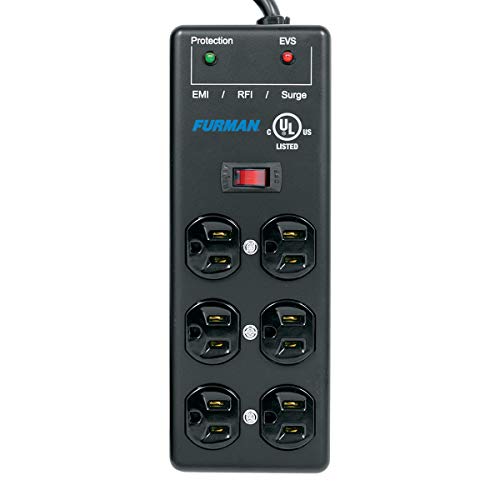
- Six protected outlets with 15A capacity
- EVS protection for dangerous over- and under-voltage
- EMI/RFI filtration and a 15-foot power cord
Best For: Stage, studio, and AV setups prioritizing voltage protection
Portable Audio Filtration

- Six outlets with 540-joule surge protection
- Audio filtration for professional-audio equipment
- Portable housing with a nine-foot power cable
Best For: Mobile and compact indoor audio setups
Best Zoned Sequencer
PMX-1100 10-Outlet Power Conditioner

- 10 protected outlets with 15-amp capacity
- Three-stage delayed power sequencing
- EMI/RFI filtering and status indicators
Best For: Organized racks needing staged startup and zone monitoring
Best Monitoring Features
Panamax MR4300 Power Conditioner

- Nine protected and filtered outlets
- Automatic Voltage Monitoring included
- Two USB ports and low-profile design
Best For: Compact setups emphasizing voltage monitoring and protection
Best Display and Charging
SW-Epsilon 10-Socket Conditioner

- Eight switched and two unswitched sockets
- LCD voltage monitoring and sequential control
- USB Type-C and Type-A charging
Best For: 1U racks needing voltage visibility and modern charging
Best Rackmount AVR

- Automatic voltage regulation for 89–147V input
- 2,400W capacity with 14 outlets
- 3U rackmount design with surge protection
Best For: Rack-mounted equipment needing voltage regulation and high outlet capacity
Best Sequenced Power Control

- 1U rackmount design with 10 sockets
- Sequential startup and independent channel switches
- LCD voltage display plus USB and Type-C charging
Best For: Equipment racks needing outlet sequencing and hands-on control
Best Flexible Sequencer

- Eight sequenced outlets and two always-on outlets
- Independent controls with LCD voltage display
- Bypass mode and external remote-switch support
Best For: Racks needing sequencing, monitoring, and remote power control
Rackmount Power Management – Pyle PCO875 Power Sequencer
The Pyle PCO875 is a practical option among stage power conditioners for networking equipment when you need rack-mounted power distribution, basic surge protection, and convenient status monitoring. Its 10 outlets, 2000W capacity, USB port, and digital voltage display suit compact stage, studio, home theater, or equipment-rack setups.
Best For: Rack-based systems that need multiple outlets, front-panel access, and a visible voltage readout.
Pros:
- Provides eight rear outlets plus two always-on front outlets.
- Offers built-in spike, surge, overload, and noise-interference protection.
- Fits a single rack space and includes a USB charging port and LCD display.
Cons:
- Its 2000W capacity and 13A rating may limit higher-demand equipment.
- The unit is larger and less portable than a basic power block.
Choose this model when centralized rack organization and outlet capacity matter more than portability. The voltage display adds useful at-a-glance monitoring for a stage or studio rack.
Noise-Filtering Power Distribution – Radial Power-2
The Radial Power-2 is a sturdy choice among stage power conditioners for networking equipment when you want nine-outlet distribution with noise filtering and surge protection. Its 15A rating and stainless-steel enclosure make it suitable for pro-audio, office, and computer equipment that benefits from centralized power management.
Best For: Pro-audio or mixed equipment setups needing nine outlets, LED illumination, and a durable enclosure.
Pros:
- Provides nine outlets with a 15A maximum current rating.
- Combines noise filtering, surge protection, and LED illumination.
- Supports pro-audio equipment, computers, and USB devices with a USB port.
Cons:
- It offers fewer outlets than the Pyle PCO875.
- The 12.4-pound weight may be less convenient for mobile setups.
The Power-2 is a sensible fit when durability and filtering are priorities. Its outlet count balances larger equipment groups with a relatively straightforward power-distribution design.
Extreme-Voltage Protection – Furman SS-6B-PRO
The Furman SS-6B-PRO is a compact option among stage power conditioners for networking equipment when protection against abnormal voltage is a central concern. It supplies six protected outlets, EMI/RFI filtration, and Extreme Voltage Shutdown, while its 15-foot cord helps reach distant outlets in stage, studio, and AV environments.
Best For: Stage and studio users who want heavy-duty construction and automatic shutdown during dangerous over- or under-voltage conditions.
Pros:
- EVS cuts power during dangerous voltage conditions and restores it once stable.
- Includes six outlets, surge suppression, and EMI/RFI filtration.
- Uses a rugged steel housing and a long 15-foot power cord.
Cons:
- Six outlets provide less capacity than nine- or 10-outlet conditioners.
- It does not provide a digital voltage display or rackmount format.
This power block is particularly appealing where voltage-event protection and reach are more important than maximum outlet count. Its compact form also makes it easy to place near a stage or AV rack.
Portable Audio Filtration – Black Lion Audio PG-P
The Black Lion Audio PG-P is a portable choice among stage power conditioners for networking equipment when you need straightforward six-outlet distribution and audio filtration. Its 540-joule surge rating and nine-foot cable make it convenient for indoor professional-audio setups where portability matters.
Best For: Mobile or compact professional-audio systems that need a portable power strip with filtration and a long cable.
Pros:
- Provides six outlets with a 540-joule surge-protection rating.
- Includes audio filtration for professional-audio equipment.
- Its portable design and nine-foot power cable support flexible placement.
Cons:
- Six outlets offer less expansion than the Pyle or Radial models.
- It lacks a stated voltage display, rackmount design, or EVS shutdown feature.
The PG-P makes sense for users who value easy transport and cable reach over extensive outlet capacity. It is a focused, portable solution for indoor audio equipment rather than a feature-heavy rack conditioner.
Best Zoned Sequencer – PMX-1100 10-Outlet Power Conditioner
For stage power conditioners for networking equipment, the Soundavo PMX-1100 offers 10 protected outlets, EMI/RFI filtering, and three-stage sequencing in a rack-friendly format. Its 15-amp capacity and front-panel status indicators make it useful when you need organized power control for connected systems.
Best For: Rack-based audio and networking setups that benefit from staged startup and clear zone-status monitoring.
Pros:
- Provides 10 protected outlets with an 1800-watt, 15-amp rating.
- Three delayed power zones switch on and off in sequence.
- Includes EMI/RFI filtering, wiring-fault indicators, and a front USB charger.
Cons:
- Only one USB charging port is provided.
- The sequencing features may be more than needed for simple installations.
The PMX-1100 stands out when staged power delivery is a priority. It is a practical choice for organized racks, though simpler systems may not need its three-zone control.
Best Monitoring Features – Panamax MR4300 Power Conditioner
Among stage power conditioners for networking equipment, the Panamax MR4300 focuses on filtered power, surge protection, and automatic voltage monitoring. It supplies nine protected outlets and is designed for equipment such as home theater and other connected AV systems.
Best For: Installations that prioritize voltage monitoring, noise filtration, and connected-equipment protection.
Pros:
- Offers nine protected and filtered outlets.
- Includes Automatic Voltage Monitoring and Protect or Disconnect technology.
- Provides Level 3 noise filtration and two USB ports.
Cons:
- It has fewer outlets than some 10-outlet alternatives.
- The supplied notes do not specify timed outlet sequencing.
The MR4300 is a solid fit when monitoring and protection technologies matter more than outlet count or sequencing. Its low-profile design and dual USB ports add convenience for compact equipment areas.
Best Display and Charging – SW-Epsilon 10-Socket Conditioner
SENWOSI SW-Epsilon 10 Socket Power Conditioner/Surge Sequencer USB Type-C/Type-A Charger
Check Price On AmazonThe SW-Epsilon is a versatile option among stage power conditioners for networking equipment, combining 10 sockets, AC noise filtering, sequential power control, and a front LCD voltage display. Its 1U metal rack design is suited to installations where centralized power and real-time status information are useful.
Best For: Rack systems that need a compact 1U conditioner with voltage visibility and USB-C/USB-A charging.
Pros:
- Provides eight switched rear sockets and two unswitched front sockets.
- Features EMI/RFI filtering and sequential power control.
- Includes an LCD voltage monitor plus USB Type-C and Type-A charging.
Cons:
- The supplied notes do not state a specific surge-joule rating.
- Its 6.39-pound weight may be a consideration for portable racks.
The SW-Epsilon is appealing when modern charging ports and visible voltage information are important. Its 1U metal construction also makes it a natural fit for permanently mounted rack systems.
Best Rackmount AVR – Tripp Lite LCR2400
For stage power conditioners for networking equipment, the Tripp Lite LCR2400 is a strong choice when rack installation, automatic voltage regulation, and high outlet capacity matter. It provides regulated 120V output across an 89–147V input range, plus surge suppression and EMI/RFI filtering.
Best For: Rack-mounted network, audio, and home-theater equipment that needs voltage regulation and substantial power capacity.
Pros:
- Automatic voltage regulation corrects brownouts and overvoltages.
- Offers 2,400W capacity, 20A output, and 14 AC outlets.
- Includes 1,440-joule surge protection and two isolated filter banks.
- Uses a metal 3U, 19-inch rackmount design with a 12-foot cord.
Cons:
- The 3U form factor requires more rack space than a 1U conditioner.
- At 14 pounds, it is less convenient for highly portable setups.
The LCR2400 stands out for installations where voltage stability is more important than compact size. Its rack-ready construction, AVR, filtering, and 20A capacity make it a practical option for protecting and powering a larger equipment stack.
Best Sequenced Power Control – ST-368 3300W Conditioner
Among stage power conditioners for networking equipment, this 1U rackmount unit emphasizes sequenced startup, individual channel control, and convenient front-panel monitoring. It combines 10 sockets with AC noise filtering, a voltage display, USB charging, and Type-C charging.
Best For: Audio or mixed equipment racks where sequential power-up, independent outlet control, and front-panel status monitoring are useful.
Pros:
- Provides up to 3,000W total output, with a listed 3,300W high-power design.
- Includes eight rear sockets and two front normally open sockets.
- Independent switches and sequential startup simplify equipment management.
- Built-in LCD voltage display, LED indicators, USB, and Type-C charging add convenience.
Cons:
- The supplied notes describe AC operation at 100–125V, limiting stated voltage flexibility.
- Its specifications focus on audio equipment rather than network-specific features.
This ST-368 is best viewed as a control-oriented rack power supply. Its 1U metal chassis and independent switching are appealing for organized racks, while the display and charging ports make front-panel access more practical.
Best Flexible Sequencer – MICNAUX 20A Rack Conditioner
For stage power conditioners for networking equipment, the MICNAUX rack conditioner offers sequenced outlets, real-time voltage monitoring, and remote-control flexibility. Its 10-outlet layout includes eight controlled rear outlets and two always-on front outlets, while bypass mode supports maintenance or emergency use.
Best For: Rack systems that need independent outlet control, voltage visibility, and remote switching options.
Pros:
- Provides eight sequenced rear outlets plus two always-on front outlets.
- Eight independent switches allow detailed equipment power management.
- Large LCD screen displays voltage in real time.
- Includes bypass mode and an external dry-contact remote switch.
Cons:
- Its listed maximum power is 2,000W, lower than the other supplied options.
- The notes list 110V output details despite stating 110–230V compatibility, so voltage requirements should be verified.
The MICNAUX is a useful choice when sequencing and remote operation are priorities. Its compact 1U rack form factor and clear display suit controlled equipment racks, though buyers should confirm compatibility with their intended input and output voltage.
How We Picked the Best Stage Power Conditioners for Networking Equipment
We focused on the features that matter in live production and installed systems: outlet count, current and wattage capacity, surge protection, power sequencing, rack compatibility, monitoring, and portability. Because networking equipment may run alongside audio, lighting, and control gear, we also considered whether each design can help organize a mixed equipment rack without creating unnecessary complexity.
The selection includes compact units for small mobile rigs, conventional power conditioners for general protection, and rack-mount sequencers for systems that need controlled startup. Product specifications should still be checked against your local voltage, plug type, connected load, and venue power requirements.
Quick Comparison
| Best For | Look For | Useful Features |
|---|---|---|
| Small portable rigs | Compact power block and adequate amperage | Surge protection, rugged enclosure, easy transport |
| Rack-mounted network systems | Front or rear outlets and rack installation | Voltage display, filtering, cable organization |
| Complex stage racks | Sequencing and independent control | Multiple zones, delayed startup, master switches |
| Higher-load setups | Ample wattage and current headroom | Heavy-duty outlets, thermal protection, robust construction |
Key Buying Factors for Stage Power Conditioners for Networking Equipment
Capacity and Load Headroom
Add the wattage or current draw of every connected device, including switches, routers, access points, converters, and auxiliary equipment. Choose a conditioner with capacity above your normal load rather than operating continuously at its limit. A high outlet count does not automatically mean a high usable load.
Protection and Power Quality
Look for documented surge protection and, where useful, line filtering or voltage monitoring. These features can help identify unstable incoming power and reduce interference from nearby equipment, but they do not replace a properly grounded circuit, a UPS, or venue-level electrical protection.
Sequencing and Control
Sequencing is valuable when a rack contains several devices that should power on or off in a controlled order. Multiple zones or independent controls provide more flexibility, while a basic master switch may be preferable for a simple portable setup.
Installation and Connectivity
Confirm rack height, outlet location, cable clearance, plug orientation, and front-panel access. USB-A or USB-C charging can be convenient, but charging ports should not be treated as a substitute for dedicated network or equipment power connections.
Who Should Buy Which Stage Power Conditioners for Networking Equipment?
Choose a compact conditioner if you travel with a small network or audio-control rig and value portability. A standard rack conditioner is a practical choice for studios, venues, and touring racks that mainly need organized outlets, filtering, and surge protection. Choose a sequencer when your system has multiple power zones or sensitive equipment that benefits from an orderly startup and shutdown routine. For larger installations, prioritize current capacity, independent controls, and serviceable rack integration over extra convenience features.