If you need to duplicate USB flash drives quickly and consistently, the right standalone unit can save hours of manual copying. This roundup focuses on practical, buyer-friendly options that fit real-world small business, IT, and production workflows.
We narrowed the list to versatile models that balance speed, capacity, ease of use, and value, with attention to USB flash media as well as select docking-station style cloners.
Best 10 USB Duplicators Under 500 Picks for 2026
Standalone USB Duplicator / Eraser
StarTech 1:2 USB Flash Drive Duplicator

- 1:2 standalone cloning and erasing
- Copy & Compare verification included
- Quick erase plus 3-pass overwrite
Best For: Technicians needing a compact flash-drive duplicator with wipe tools
Dual-Bay Offline Cloner
ORICO Dual-Bay SATA Drive Cloner Dock

- Offline clone without a computer
- Supports 2.5"/3.5" SATA HDDs and SSDs
- USB 3.0 with UASP and Trim
Best For: Anyone needing a dual-bay SATA dock that can clone offline
Portable 1-to-4 Flash Copier
EZ Dupe Mini USB Plus MK II 1-to-4
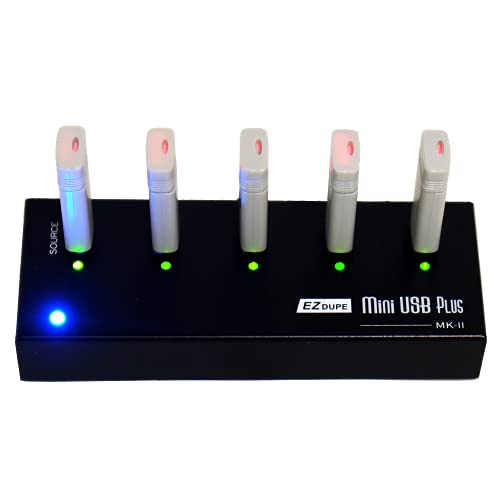
- Copies up to 4 USB flash drives
- Standalone operation, no computer needed
- Updated speed up to 2.5GB/min
Best For: Small teams needing portable multi-drive flash duplication
Dual-Bay Drive Dock & Cloner
Sabrent USB 3.0 SATA Dock Cloner
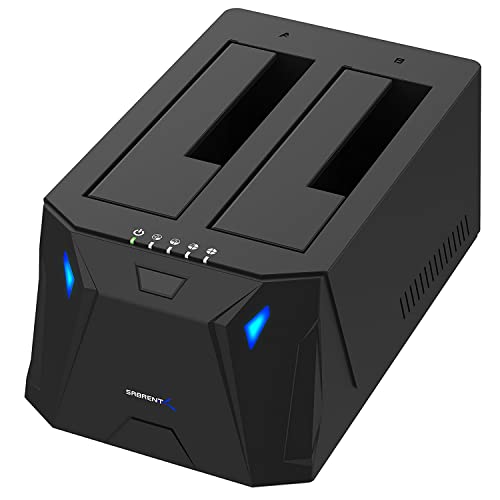
- Offline cloning for SATA HDDs and SSDs
- USB 3.0 with up to 5Gbps transfers
- Supports drives up to 10TB per bay
Best For: People needing an easy dual-bay SATA dock with offline cloning
Secure standalone clone-and-erase pick
Vinpower 1:3 Standalone USB Duplicator
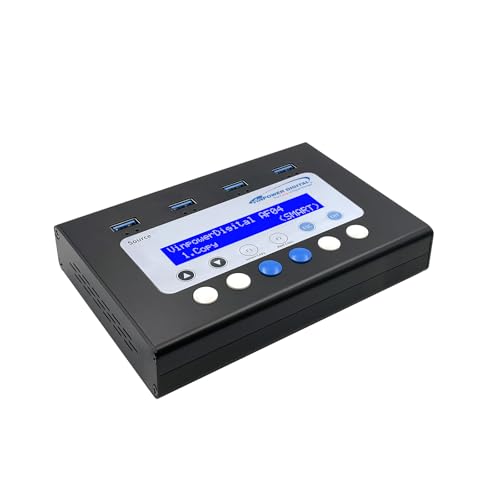
- No-PC standalone USB duplication
- Smart Copy and Raw Copy modes
- DoD 5220.22-M erase support
Best For: secure USB copying and wiping in professional environments
M.2 SSD cloning dock pick
GOWENIC Dual-Bay M.2 SATA Cloner

- Offline one-touch drive-to-drive cloning
- Dual-bay reader and duplicator design
- Supports B and B&M key M.2 SATA drives
Best For: M.2 SATA SSD backups and upgrades without a PC
Simple portable USB copier
BestDuplicator UB300 1:2 USB 2.0 Duplicator

- Standalone 1-to-2 USB copying
- Quick Copy and Whole Media Copy
- Built-in verify and erase tools
Best For: routine USB 2.0 drive duplication and testing
NVMe Cloning Pick
Rosewill Dual Bay M.2 Duplicator

- Dual-bay NVMe enclosure with offline clone function
- Up to 20Gbps USB 3.2 Gen 2x2 connection
- Includes S.M.A.R.T monitoring, TRIM, and cables
Best For: dual NVMe cloning and high-speed SSD docking
Flash Drive Batch Copier
DupliM 1 to 10 Mini Duplicator

- Copies up to 10 USB 3.0/2.0 drives at once
- Computer-connected with Windows and Mac software
- Can duplicate from images, drives, or folders
Best For: small teams duplicating many USB flash drives
Standalone Sanitizer Pick

- Duplicates and erases 2 USB drives without a PC
- Includes DoD 3-pass and other erase modes
- Also docks SATA HDDs and SSDs over 10Gbps USB
Best For: secure USB copying and SATA drive docking
Standalone USB Duplicator / Eraser – StarTech 1:2 USB Flash Drive Duplicator
If you need usb duplicators under 500 for simple flash-drive cloning and wiping, this StarTech standalone unit is built for practical IT work. It duplicates or erases USB flash media without a computer, supports verification, and offers both file-based and sector-by-sector copying for different deployment needs.
Best For: Technicians and IT teams that need a compact 1-to-2 USB flash drive duplicator with erase functions.
Pros:
- Standalone 1:2 duplicator and eraser with no computer required
- Supports system/file copy, sector-by-sector copy, quick erase, and 3-pass overwrite
- Copy & Compare verification helps confirm cloned drives
- LCD menu and activity LEDs make operation easy to monitor
Cons:
- Limited to 1-to-2 cloning rather than larger batch duplication
- Asynchronous mode requires source content under 64 MB
- Designed for USB flash media, not general-purpose drive docking
Overall, this is a solid pick when your priority is reliable standalone USB duplication and secure erasing in a small, focused format. Its speed, verification tools, and erase options make it more versatile than basic cloners.
Dual-Bay Offline Cloner – ORICO Dual-Bay SATA Drive Cloner Dock
For shoppers comparing usb duplicators under 500 that handle full-size drives, this ORICO docking station offers offline cloning plus everyday USB 3.0 docking. It works with 2.5-inch and 3.5-inch SATA HDDs and SSDs, so it fits backups, disk imaging, and direct drive-to-drive duplication without a PC.
Best For: Users who want a dual-bay SATA dock with offline clone support and broad device compatibility.
Pros:
- Offline clone function works without connecting to a computer
- Supports 2.5"/3.5" SATA HDDs and SSDs up to 44TB total
- USB 3.0 with UASP and Trim support for faster transfers
- Includes power adapter and USB-A cable for ready-to-use setup
Cons:
- Target disk must be larger than the source disk for cloning
- Best suited to SATA drives, not USB flash media
- No mention of advanced erase or verification features
This is a flexible choice if your cloning needs go beyond thumb drives and into SATA storage. The offline copy mode and broad compatibility make it useful for home, office, and repair workflows.
Portable 1-to-4 Flash Copier – EZ Dupe Mini USB Plus MK II 1-to-4
If you want usb duplicators under 500 for compact flash-drive workflows, this EZ Dupe unit is built for portable multi-copy jobs. It clones up to four USB flash drives at once, runs without a computer, and supports USB flash media as well as powered external storage.
Best For: Small teams that need a portable standalone duplicator for up to four USB flash drives.
Pros:
- Copies up to 4 USB flash drives simultaneously
- Standalone plug-and-use operation with no computer needed
- Improved speed over the original model, up to 2.5GB/min
- Supports USB 1.0/2.0/3.0 flash drives and powered external storage
Cons:
- External USB devices need their own power source
- Small source files can reduce the benefit of asynchronous copying
- Primarily aimed at flash media, not SATA drive duplication
For compact batch duplication, this model offers a strong mix of portability and multi-drive output. The higher copy speed and 1-to-4 layout make it a practical step up from basic two-bay units.
Dual-Bay Drive Dock & Cloner – Sabrent USB 3.0 SATA Dock Cloner
Among usb duplicators under 500, this Sabrent dual-bay dock is a straightforward choice for SATA drive cloning and everyday access. It supports 2.5-inch and 3.5-inch SATA HDDs or SSDs, offers offline cloning, and connects over USB 3.0 for faster transfer speeds.
Best For: Users who want a simple dual-bay SATA dock with offline cloning and plug-and-play use.
Pros:
- Supports 2.5"/3.5" SATA HDDs and SSDs
- Offline cloning works without drivers or a computer connection
- USB 3.0 transfer speeds up to 5Gbps
- Supports drives up to 10TB per bay
Cons:
- Offline cloning speed is listed at up to 60Mbps
- Designed for SATA drives rather than USB flash media
- No extra erase or verification features are listed
This Sabrent dock is best viewed as a practical drive station first and a cloner second. If you want dependable offline duplication for SATA drives with easy plug-and-play handling, it covers the essentials well.
Secure standalone clone-and-erase pick – Vinpower 1:3 Standalone USB Duplicator
If you need usb duplicators under 500 for secure, computer-free flash drive copying, this Vinpower unit is built for professional workflows. It runs standalone, supports both Smart Copy and Raw Copy, and adds DoD-level erasing for teams that need duplication and sanitization in one device.
Best For: IT, education, healthcare, government, and business users who need reliable standalone USB copying and secure erase features.
Pros:
- Standalone operation requires no PC, helping avoid virus and ransomware exposure.
- Smart Copy and Raw Copy modes support both file-based and bit-for-bit duplication.
- Includes DoD 5220.22-M USB erasing for secure drive reuse or disposal.
- Read Error Skip helps recover readable data from aging or damaged drives.
Cons:
- Copies only to three USB ports, so it is not a high-volume tower system.
- Built for flash drives and thumb drives, not broader storage formats.
For buyers who want a compact, standalone duplicator with both cloning and secure wipe capability, this Vinpower model offers a strong business-focused feature set. It is especially practical when data security matters as much as speed.
M.2 SSD cloning dock pick – GOWENIC Dual-Bay M.2 SATA Cloner
Among usb duplicators under 500, this GOWENIC docking station is aimed at users who need direct M.2 SATA SSD cloning without a computer. It supports one-touch offline copying between two drives and can also work as a reader, making it a practical choice for storage upgrades and system migration tasks.
Best For: PC users cloning compatible M.2 SATA SSDs for backup, migration, or upgrade work.
Pros:
- One-touch offline cloning transfers data directly between two drives.
- Dual-bay design lets it function as both a duplicator and a reader.
- Supports B key and B&M key M.2 SATA drives in multiple lengths.
- LED indicator shows cloning progress and completion status.
Cons:
- Only supports M.2 Serial ATA drives, not all SSD types.
- Positioned for PC users, so it is less focused on general flash-drive duplication.
If your goal is fast offline SSD cloning rather than USB flash duplication, this dock is a focused tool. Its value comes from simple operation, broad M.2 size support, and clear status feedback during the copy process.
Simple portable USB copier – BestDuplicator UB300 1:2 USB 2.0 Duplicator
If you want usb duplicators under 500 for straightforward flash-drive replication, the BestDuplicator UB300 keeps things simple. It clones one USB drive to two targets without a computer, adds quick copy and whole-media copy modes, and includes built-in test and erase functions for deployment work.
Best For: Technicians, schools, and small IT teams that need a compact standalone copier for USB 2.0 flash drives.
Pros:
- Copies one source drive to two targets at the same time without a PC.
- Offers Quick Copy and Whole Media Copy for flexible duplication needs.
- Includes capacity check, speed test, and erase functions for media verification.
- LCD screen and port indicators make status tracking easy.
Cons:
- Designed for USB 1.1 and USB 2.0 media, so it is not aimed at newer high-speed standards.
- Best results depend on using source and target media with similar capacity.
For basic standalone USB duplication, this model delivers the essentials without extra complexity. It is a practical fit when you need a portable copier for routine distribution, testing, or backup jobs.
NVMe Cloning Pick – Rosewill Dual Bay M.2 Duplicator
If you’re shopping for usb duplicators under 500 but need more than a basic flash-drive copier, this Rosewill unit is built for dual NVMe work. It functions as a tool-free M.2 enclosure and a standalone offline cloner, so it suits users who want fast drive access and simple one-button cloning in the same dock.
Best For: Users who want a dual-bay NVMe dock that can also clone drives offline.
Pros:
- Supports both M Key and B+M Key NVMe SSDs in a dual-bay design.
- Offers up to 20Gbps transfer speed over USB 3.2 Gen 2×2.
- Can clone SSDs with a single button press without a computer.
- Includes USB-C and USB-A cables plus a 12V/2A power adapter.
Cons:
- Designed for NVMe drives, not USB flash drives.
- Only supports two drives at a time.
This is a strong pick if your priority is fast NVMe cloning rather than large-scale flash duplication. The built-in S.M.A.R.T monitoring and TRIM support add useful drive-management features, making it more versatile than a simple copy dock.
Flash Drive Batch Copier – DupliM 1 to 10 Mini Duplicator
For buyers comparing usb duplicators under 500, this DupliM model is aimed squarely at flash-drive duplication workflows. It can copy up to 10 USB 3.0 or 2.0 drives at once, and it works as a computer-connected copier that can duplicate from image files, drives, or selected folders.
Best For: Small offices or teams that need to duplicate multiple USB flash drives at once.
Pros:
- Duplicates up to 10 USB drives simultaneously.
- Supports duplication from image files, flash drives, or chosen folders/files.
- Uses USB 3.0 for faster copying.
- Includes DupliM software, power adapter, and USB 3.0 cable for Windows and Mac.
Cons:
- Requires a connected computer rather than operating fully standalone.
- Focused on USB flash drives, not SSD or HDD cloning.
This is the most direct fit if your main job is producing multiple thumb drives efficiently. The software-based workflow makes it flexible, though it is less compact in purpose than standalone cloners designed for hard drives or SSDs.
Standalone Sanitizer Pick – StarTech USB Duplicator Dock
If you want usb duplicators under 500 with both cloning and wipe functions, this StarTech dock covers a lot of ground. It can duplicate and erase two USB drives without a PC, and it also works as a dual-bay SATA HDD/SSD dock with USB 3.2 Gen 2 connectivity for everyday access.
Best For: Users who need a compact copier that can clone, sanitize, and dock SATA drives.
Pros:
- Duplicates or erases two USB drives without needing a PC.
- Includes multiple erase and duplication modes, including DoD 3-pass overwrite.
- Acts as a dock for 2.5/3.5-inch SATA HDDs and SSDs over 10Gbps USB.
- LCD menu and LEDs make status and error checking straightforward.
Cons:
- Only duplicates two USB drives at a time.
- Best suited to SATA drives and USB media, not NVMe cloning.
This is the most flexible option in the group if you need duplication plus secure erase features. Its standalone operation and drive-dock capability make it practical for IT tasks, even if it is not a high-volume flash production system.
How We Picked These USB Duplicators Under 500
For USB Duplicators Under 500, the most important filter is reliability under repeated use. We prioritized standalone operation, sensible port counts, straightforward controls, and support for both copying and erasing where available. We also looked for models that make sense for office deployment, kiosk prep, field work, and light production needs.
Quick Comparison
In this price range, 1-to-2 and 1-to-3 units are the easiest to manage, while 1-to-4 and 1-to-10 units are better when you need higher throughput and can accept a larger footprint or more planning. Docking-station style devices are useful if you also need broader storage-device support, but they are not always the best fit if your main job is bulk USB flash duplication.
Key Buying Factors for USB Duplicators Under 500
Port Count and Workflow
Choose the smallest port count that still meets your daily output. Lower-count units are often faster to set up and easier to troubleshoot, while higher-count models increase batch capacity.
Standalone Operation Vs. Computer-Connected
Standalone duplicators are best for secure, repeatable jobs without tying up a PC. Computer-connected models can be flexible, but they add software, driver, and compatibility considerations.
Speed and Media Support
Check whether the unit is optimized for USB flash drives, SSDs, or mixed storage. A fast rated copy speed matters less if the controller cannot sustain it across your actual media.
Erase and Sanitization Features
Many buyers need more than cloning. Erase modes, verification, and sanitization options are valuable for refurbishing, redeployment, and data-handling workflows.
Physical Design and Ease of Use
LCD menus, clear status indicators, and tool-free bays reduce mistakes. Compact units are easier to store, but larger dock-style systems may be better if you swap drives frequently.
Who Should Buy Which USB Duplicators Under 500?
If you need a simple, low-maintenance setup, a 1-to-2 standalone USB duplicator is usually the safest choice. If your team regularly prepares small batches, look at 1-to-3 or 1-to-4 models for better throughput without adding much complexity. If you are handling mixed drive types or want a broader docking solution, a dual-bay cloner may be the better fit. For high-volume flash media work, a 1-to-10 copier can make sense, but only if your process is organized and you truly need that scale.
Overall, the best USB Duplicators Under 500 are the ones that match your daily volume, media type, and need for standalone convenience rather than simply offering the highest port count.