If you need to copy drives without a computer, usb duplicators with offline operation are the simplest way to clone, erase, and deploy storage quickly.
This roundup focuses on practical, buyer-friendly options for USB flash drives, NVMe SSDs, and SATA drives, so you can match the right duplicator to your workflow.
Best 10 USB Duplicators with Offline Operation Picks for 2026
Dual-Bay SATA Cloner
SABRENT USB 3.0 Dual Bay Hard Drive Docking Station & Cloner
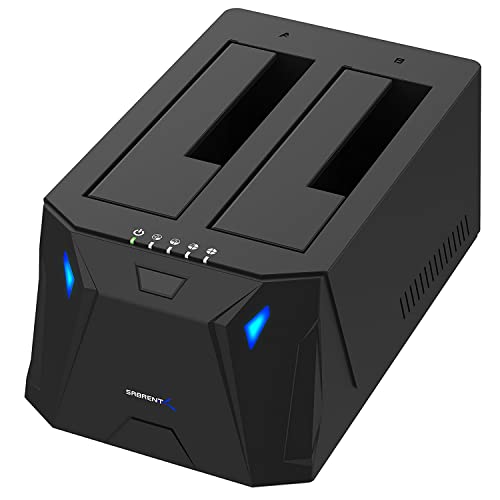
- Offline cloning up to 60Mbps
- Supports 2.5"/3.5" SATA HDDs and SSDs
- Plug-and-play with no drivers needed
Best For: Cloning standard SATA drives without a computer
4-in-1 SSD Cloner
Coolpie M.2 NVMe/SATA 4 Mode Cloner
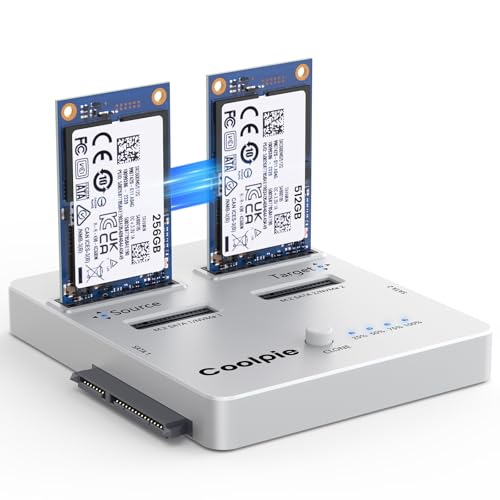
- One-button offline cloning
- Supports NVMe, SATA, mSATA, and HDD/SSD
- Up to 20Gbps USB 3.2 Gen 2x2
Best For: Mixed-drive users who want a fast, flexible offline cloner
USB Flash Duplicator
StarTech 1:2 Standalone USB Flash Drive Duplicator

- Standalone duplicate and erase modes
- LCD display with copy and compare
- Asynchronous copying for multiple drives
Best For: Professionals managing and sanitizing USB flash drives
Touchscreen USB Duplicator
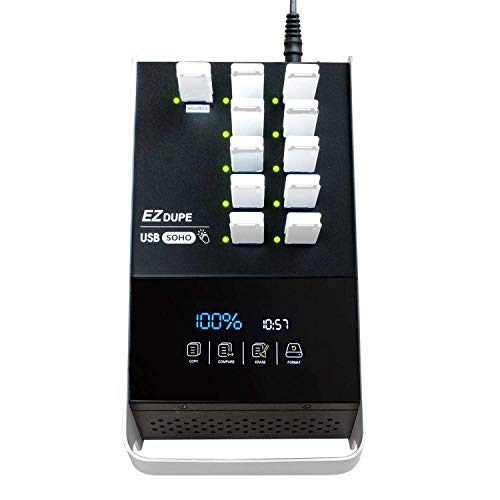
- Standalone copy, compare, format, erase
- Up to 10-way USB flash duplication
- Touchscreen menu for simple operation
Best For: Teams duplicating USB flash drives offline with an easy touch interface
Offline NVMe Cloner Dock

- Offline one-click NVMe cloning
- 10Gbps USB-C/A enclosure mode
- Fits M-Key and M+B Key NVMe SSDs
Best For: Anyone who needs a standalone NVMe cloner with fast enclosure functionality
WAVLINK USB-to-SATA Dock
Offline Clone Dual-Bay SATA Dock

- Offline clone support for SATA HDDs and SSDs
- Tool-free dock for 2.5-inch and 3.5-inch drives
- USB 3.0 with UASP and up to 6Gbps transfer
Best For: Users cloning standard SATA drives without a computer
ULXUUUN NVMe Cloner Dock
20Gbps Dual-Bay NVMe Offline Cloner

- One-button offline cloning for NVMe SSDs
- USB 3.2 Gen 2x2 speeds up to 20Gbps
- Supports M-Key and B+M Key drives from 2230 to 22110
Best For: Users who need fast standalone duplication for NVMe SSDs
Rosewill NVMe Clone Dock
Dual-Bay 20Gbps Offline NVMe Duplicator

- One-button offline cloning for NVMe SSDs
- USB 3.2 Gen 2x2 transfer speeds up to 20Gbps
- Includes S.M.A.R.T. monitoring and TRIM support
Best For: Users wanting a straightforward dual-bay NVMe clone dock
Dual-Bay SATA Cloner – SABRENT USB 3.0 Dual Bay Hard Drive Docking Station & Cloner
If you want usb duplicators with offline operation for standard SATA drives, this SABRENT dock keeps things simple. It works as a dual-bay docking station and standalone cloner, so you can copy drives without a computer while still using it as a USB 3.0 dock for everyday storage tasks.
Best For: Users cloning 2.5″ or 3.5″ SATA HDDs and SSDs who want a straightforward offline duplicator with dock functionality.
Pros:
- Supports offline cloning up to 60Mbps.
- Works with 2.5″ and 3.5″ SATA hard drives and SSDs.
- Plug-and-play design with no drivers needed.
- Also functions as a USB 3.0 docking station for normal drive access.
Cons:
- Only supports SATA drives, not M.2 NVMe or mSATA media.
- Offline cloning speed is slower than some newer high-bandwidth duplicators.
Overall, this is a practical choice if you need a reliable standalone SATA duplicator and don’t require support for newer SSD form factors. It’s especially appealing for basic drive maintenance, backups, and simple one-to-one cloning workflows.
4-in-1 SSD Cloner – Coolpie M.2 NVMe/SATA 4 Mode Cloner
For buyers comparing usb duplicators with offline operation, this Coolpie model stands out for its broad storage compatibility and one-button workflow. It supports offline cloning without a computer and adds real-time progress indicators, making it a strong pick when you need fast, flexible SSD duplication across several drive types.
Best For: Users who need a versatile offline cloner for NVMe, SATA, mSATA, and 2.5″/3.5″ drives.
Pros:
- One-button offline cloning with no computer required.
- Supports M.2 NVMe, M.2 SATA, mSATA, and SATA protocols.
- USB 3.2 Gen 2×2 interface offers up to 20Gbps bandwidth.
- Real-time progress display helps track cloning status.
Cons:
- NVMe and SATA cannot be mixed in the same clone job.
- Source drive capacity must not exceed the target drive.
This is a strong all-around option if you work with multiple SSD formats and want a single offline duplicator to cover them. Its speed and broad compatibility make it especially useful for mixed storage environments, as long as you stay within the protocol rules.
USB Flash Duplicator – StarTech 1:2 Standalone USB Flash Drive Duplicator
If your priority is usb duplicators with offline operation for flash media, this StarTech unit is built for no-computer workflows. It can duplicate, erase, and verify USB drives from a standalone LCD interface, which makes it practical for IT teams, technicians, and anyone managing lots of thumb drives.
Best For: IT pros who need a standalone USB flash drive duplicator, eraser, and sanitizer.
Pros:
- No computer required for cloning or erasing.
- Supports duplication, quick erase, and multi-pass overwrite modes.
- LCD menu lets you monitor performance and scan for errors or bad sectors.
- Asynchronous copy mode helps copy to multiple drives without waiting.
Cons:
- Designed for USB flash drives and USB external storage, not SATA or M.2 SSDs.
- Asynchronous copy source content must be under 64MB.
For flash-drive workflows, this is a purpose-built offline duplicator with useful verification and erase tools. It is less about raw speed and more about dependable, controlled drive management for professional use.
NVMe Offline Cloner – ACASIS 20Gbps M.2 NVMe SSD Cloner
This ACASIS unit is aimed at users who want usb duplicators with offline operation specifically for NVMe storage. It clones two M.2 NVMe SSDs without a computer, adds an aluminum cooling-focused design, and uses a one-click workflow that keeps the process straightforward.
Best For: NVMe SSD owners who want a tool-free offline cloner with strong cooling and fast transfer support.
Pros:
- One-click offline cloning with no computer, drivers, or software needed.
- Supports dual M.2 NVMe SSDs up to 8TB each.
- 20Gbps USB 3.2 Gen2x2 support, with 10Gbps on TB3/USB4/USB-A.
- Aluminum design helps improve heat dissipation during operation.
Cons:
- NVMe only; SATA SSDs are not supported.
- S.M.A.R.T. and TRIM are only available when connected to a computer.
This is a focused choice for NVMe duplication rather than general-purpose drive cloning. If you need a fast standalone duplicator for modern M.2 drives and value cooling and simplicity, it fits the brief well.
Touchscreen USB Duplicator – EZ Dupe SOHO Touch 1 to 10
If you need usb duplicators with offline operation for flash media workflows, the EZ Dupe SOHO Touch is built for simple standalone copying, comparing, formatting, and erasing without relying on a host computer. Its touch-screen menu keeps daily duplication tasks straightforward, while the 1-to-10 layout suits batches of USB thumb drives.
Best For: Small offices and teams that want a touch-based standalone USB flash drive duplicator for routine copy, compare, and erase jobs.
Pros:
- Standalone operation with touch-screen control for Copy, Compare, Format, and Erase
- Copies USB flash media at up to 35MB per second
- Supports USB 2.0, 3.0, and 3.1 thumb drives and multiple file formats
- Lightweight but heavy-duty design for daily use
Cons:
- Designed for USB flash media, not SSD cloning
- Speed is geared to flash-drive duplication rather than high-end storage cloning
Overall, this is a practical offline USB duplicator for users who value ease of use and reliable batch processing over advanced storage features.
Offline NVMe Cloner Dock – WAVLINK RapidFire S2
For buyers comparing usb duplicators with offline operation, this WAVLINK NVMe dock stands out as a standalone cloning option for M.2 NVMe SSDs. It supports one-click cloning without a computer, while also working as a 10Gbps USB-C/A enclosure for everyday external drive use.
Best For: Users who want a dual-bay NVMe dock that can clone drives offline and also serve as a fast USB-C/A enclosure.
Pros:
- Offline one-click cloning with no host computer required during clone mode
- 10Gbps USB-C 3.2 Gen 2 transfer support with included USB-C to A adapter
- Works with M-Key and M+B Key NVMe SSDs in multiple sizes up to 22110
- Plug-and-play design with anti-slip, gravity-balanced construction
Cons:
- Cloning is not available while connected to a host during the clone process
- Only supports NVMe SSDs, not SATA drives
This is a strong pick if you want offline NVMe cloning plus a flexible enclosure in one compact dock, but it is not the right choice for SATA-based drives.
20Gbps NVMe Duplicator – SSK Dual Bay Dock
If you want usb duplicators with offline operation for NVMe storage, the SSK dual-bay dock is designed for standalone drive cloning without a computer. It also functions as a high-speed 20Gbps NVMe enclosure, making it useful for both duplication and day-to-day storage access.
Best For: Professionals who want a standalone NVMe cloner with fast USB 3.2 Gen 2×2 transfer speeds and simple tool-free setup.
Pros:
- One-button offline clone function with no computer needed
- Up to 20Gbps USB 3.2 Gen 2×2 interface for fast transfers
- Supports M-Key and B+M Key NVMe SSDs with tool-free installation
- Includes S.M.A.R.T monitoring, TRIM, and UASP support
Cons:
- Cloning works only with NVMe drives, not SATA
- Target drive must be equal to or larger than the source drive
Overall, this dock is best suited to users who want a serious offline NVMe duplicator with strong speed, monitoring, and easy setup.
WAVLINK USB-to-SATA Dock – Offline Clone Dual-Bay SATA Dock
If you want usb duplicators with offline operation for standard SATA drives, this WAVLINK dual-bay dock is a practical pick. It supports 2.5-inch and 3.5-inch HDDs and SSDs, and its offline clone mode lets you duplicate a source drive to a target drive without installing drivers or relying on a computer.
Best For: Cloning and docking 2.5-inch or 3.5-inch SATA HDDs and SSDs with tool-free setup.
Pros:
- Supports offline cloning up to 60Mbps for SATA drives.
- Works with 2.5-inch and 3.5-inch SATA HDDs and SSDs.
- USB 3.0 plus UASP support, with speeds up to 6Gbps.
- No drivers needed and tool-free installation on supported systems.
Cons:
- Offline clone requires the target disk to be equal to or larger than the source.
- Does not support online cloning.
- Not compatible with M1/M2-based Mac systems.
This is a straightforward option if your workflow centers on SATA drive duplication rather than NVMe. The built-in power switch, hot-swapping support, and external dock design make it useful for routine backups and drive swaps.
ULXUUUN NVMe Cloner Dock – 20Gbps Dual-Bay NVMe Offline Cloner
For buyers comparing usb duplicators with offline operation for NVMe storage, this ULXUUUN dual-bay dock is built around standalone cloning and fast transfers. It supports NVMe SSDs only, accepts M-Key and B+M Key drives, and can duplicate drives with a one-button offline clone process.
Best For: Fast offline cloning of NVMe SSDs in a tool-free dual-bay enclosure.
Pros:
- Standalone one-button offline cloning with no computer required.
- USB 3.2 Gen 2×2 interface with transfer speeds up to 20Gbps.
- Supports dual NVMe operation and common sizes from 2230 to 22110.
- Includes USB-C to USB-C, USB-C to USB-A, and a 12V/2A power adapter.
Cons:
- NVMe SSD only; it does not support SATA drives.
- Target drive must be equal to or larger than the source.
- All data on the target drive is erased during cloning.
This is a strong fit if your priority is quick NVMe duplication and you want an enclosure that also handles regular high-speed drive access. The open-frame cooling design, S.M.A.R.T. monitoring, and TRIM support add useful management features beyond basic cloning.
Rosewill NVMe Clone Dock – Dual-Bay 20Gbps Offline NVMe Duplicator
This Rosewill option is aimed at buyers who want usb duplicators with offline operation for NVMe drives in a compact dual-bay enclosure. It supports M Key and B+M Key NVMe SSDs, runs over USB 3.2 Gen 2×2, and can clone drives with a single button press without needing a computer.
Best For: Simple offline NVMe cloning with a tool-free dual-bay dock.
Pros:
- One-click standalone cloning for supported NVMe SSDs.
- USB 3.2 Gen 2×2 interface with speeds up to 20Gbps.
- Supports both M Key and B+M Key NVMe SSDs.
- Includes USB-C and USB-A cables plus a 12V/2A power adapter.
Cons:
- Supports NVMe SSDs only, not SATA drives.
- Target drive must be equal to or larger than the source drive.
- All data on the target drive will be erased during cloning.
If you want a no-fuss NVMe duplicator with high-speed USB connectivity, this dock covers the basics cleanly. Built-in S.M.A.R.T. monitoring and TRIM support are helpful additions for keeping supported SSDs in good shape.
How We Picked the Best USB Duplicators with Offline Operation
We focused on USB Duplicators with Offline Operation that are built for real-world use: dependable standalone cloning, clear status feedback, and support for the most common drive types. We also looked at bay count, interface speed, tool-free design, and whether the unit is better suited to flash media, SATA drives, or NVMe SSDs.
Quick Comparison
If you mainly clone thumb drives for distribution or field work, a dedicated USB flash duplicator is usually the best fit. For SSD and HDD workflows, docking-station-style cloners are more flexible and often easier to reuse across different drive sizes. Higher-speed models help reduce wait times, but only if your source and target drives can take advantage of the added bandwidth.
Key Buying Factors for USB Duplicators with Offline Operation
Drive Type Compatibility
Check whether the unit supports USB flash drives, 2.5/3.5-inch SATA drives, M.2 NVMe, or SATA M.2. Buying for the wrong interface is the most common mistake.
Clone Speed and Bay Design
Standalone duplicators vary from simple 1-to-2 units to higher-capacity systems for batch copying. More bays can improve throughput in production settings, but they may also increase size and cost.
Offline Features
Look for true offline clone and erase functions if you want to work without a PC. An LCD screen, touch controls, or indicator lights can make operation much easier and reduce mistakes during duplication.
Erasing and Maintenance
Some USB Duplicators with Offline Operation also support secure erase or sanitize-style workflows, which is useful if you rotate drives or handle returned media.
Who Should Buy Which USB Duplicators with Offline Operation?
Choose a flash-drive duplicator if your priority is mass distribution of USB sticks. Pick an NVMe or SATA dock-style cloner if you need a more versatile station for IT imaging, storage upgrades, or lab use. For occasional home cloning, a simpler two-bay standalone unit is usually enough. For business deployments, training kits, or media production, a higher-capacity duplicator with offline controls will save time and reduce setup overhead.