Choosing the best DJ mixer for clubs means balancing sound quality, workflow, durability, connectivity, and the setup your venue already uses.
Our 2026 roundup covers traditional mixers, scratch-focused models, and all-in-one DJ systems for club residents, mobile performers, and serious home users preparing for professional gigs.
Best 10 Dj Mixer for Clubs Picks for 2026
Best Entry-Level Club Mixer

- Two-channel club-style workflow
- Free rekordbox DVS unlock
- Dedicated filters and Magvel Fader
Best For: Beginners building a home separates setup
Best Controller-Style Option
Hercules DJControl Inpulse 500

- Two-deck Serato and DJUCED control
- Built-in audio interface
- Large touch-sensitive jog wheels
Best For: Software DJs practicing or performing with a laptop
Best Effects-Focused Mixer

- Beat FX and Sound Color FX
- Free rekordbox DVS support
- Built-in USB sound card
Best For: Two-channel DJs wanting effects and DVS
Best Standalone Four-Deck System
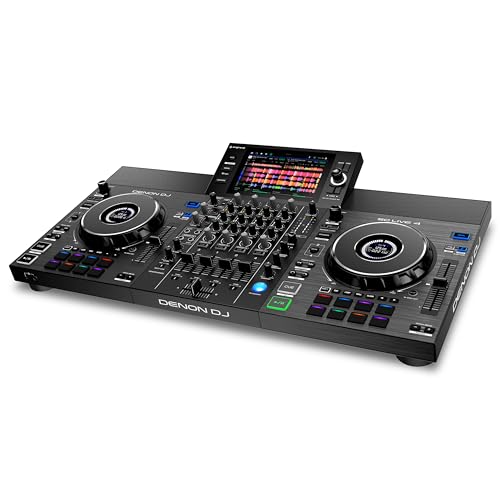
- Four-deck laptop-free operation
- Seven-inch touchscreen and media inputs
- XLR, booth, mic, and streaming connectivity
Best For: Mobile and club DJs wanting an all-in-one setup
Scratch Performance Pick

- Two-channel scratch-style mixer
- Serato DJ Pro and rekordbox compatible
- XLR and RCA outputs
Best For: Scratch DJs using software-based setups
Compact All-in-One Pick

- Integrated digital DJ system
- 7-inch touchscreen included
- Velocity pads and USB connectivity
Best For: Rekordbox DJs wanting a single-unit setup
Club Layout Controller Pick

- Four-channel club-style layout
- Full-size jog wheels and performance pads
- Rekordbox and Serato DJ Pro compatible
Best For: DJs practicing modern club workflows
Club-Ready Standalone Power

- Standalone four-deck playback
- 10.1-inch touchscreen with track tools
- Club-ready audio and extensive FX
Best For: DJs needing a professional standalone system for complex club sets
Flexible Pro Controller
DDJ-FLX10 4-Channel Controller

- Four-channel club-standard workflow
- Track Separation for live mashups
- Supports rekordbox and Serato DJ Pro
Best For: DJs wanting a versatile laptop-based controller for open-format sets
Beginner-Friendly Value
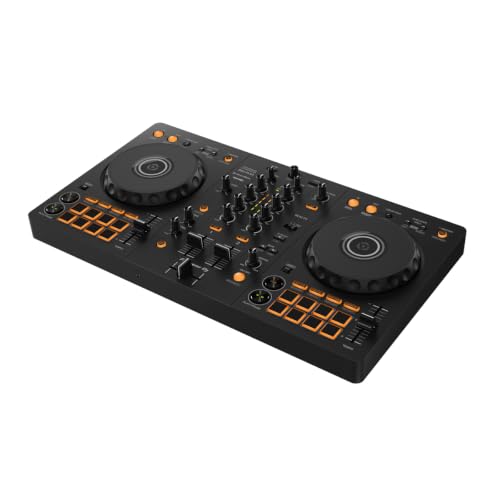
- Simple layout for learning
- Smart Fader eases beatmatching
- Portable and streaming-ready
Best For: Beginners and casual DJs building foundational mixing skills
Best Entry-Level Club Mixer – Pioneer DJM-250MK2
If you want a straightforward DJ mixer for clubs that also works well in a home separates setup, the Pioneer DJM-250MK2 focuses on the essentials. Its two-channel layout mirrors a familiar club workflow, while the dedicated filters and Magvel Fader add useful hands-on control.
Best For: Beginners learning beatmatching and DJs building a two-channel home setup.
Pros:
- Two-channel club-style layout supports standard booth workflows.
- Free rekordbox DVS unlock supports digital files with turntables or media players.
- Dedicated Sound Color FX Filter on each channel.
- Magvel Fader is designed for smooth blending and light scratching.
Cons:
- Two channels offer less room for larger or more complex sets.
- Its no-fuss design may feel limited for DJs seeking an extensive effects section.
The DJM-250MK2 is a practical starting point for learning club-style mixing without unnecessary complexity. USB connectivity, XLR and RCA outputs, and the DVS upgrade give it useful flexibility as your setup develops.
Best Controller-Style Option – Hercules DJControl Inpulse 500
The Hercules DJControl Inpulse 500 is a two-deck controller for DJs who prefer software-based mixing rather than a traditional standalone mixer. As a potential DJ mixer for clubs, it combines a built-in audio interface, large touch-sensitive jog wheels, performance pads, and a hardware input mixer.
Best For: Software DJs using Serato or DJUCED for practice, mobile work, or entry-level performances.
Pros:
- Works with Serato and DJUCED.
- Built-in audio interface and hardware input mixer.
- Large jog wheels with touch detection support scratching.
- Fold-out feet help lift the controller above spilled drinks.
Cons:
- It is a two-deck controller, not a conventional club mixer.
- Its USB-focused design depends on compatible DJ software and a computer.
Choose the Inpulse 500 if tactile controller features matter more than a traditional booth mixer layout. The RGB pads, filter/FX area, and Beatmatch Guide make it approachable, while the metal backing plate and retractable feet add practical durability.
Best Effects-Focused Mixer – Pioneer DJM-450
The Pioneer DJM-450 is a compact two-channel DJ mixer for clubs with a more complete effects setup than a basic beginner model. Beat FX, Sound Color FX, USB audio, and included rekordbox DVS support make it suitable for digital, turntable, and media-player workflows.
Best For: DJs who want a two-channel mixer with hands-on effects, DVS, and a familiar Pioneer booth layout.
Pros:
- Beat FX and Sound Color FX provide creative transition control.
- Free rekordbox DVS unlock supports digital vinyl-style mixing.
- Built-in sound card enables recording and software use over USB.
- Magvel Fader supports smooth blends and scratches.
Cons:
- Two channels may not suit four-deck or larger setups.
- Its compact format provides less expansion than a larger club mixer.
The DJM-450 is a strong fit for DJs who have outgrown a basic two-channel mixer but still want a compact footprint. Its effects, USB sound card, and DVS capability cover several common home and club-oriented workflows.
Best Standalone Four-Deck System – Denon DJ SC LIVE 4
The Denon DJ SC LIVE 4 is a four-deck standalone controller for DJs who want a complete, laptop-free setup. It can serve as a versatile DJ mixer for clubs or mobile performances, with Engine DJ OS, a seven-inch touchscreen, wireless streaming, multiple media inputs, and professional XLR outputs.
Best For: Mobile, streaming, and club DJs who want standalone operation and flexible music access.
Pros:
- Four-deck control with Engine DJ OS and no computer required.
- Seven-inch touchscreen, SD slot, and two USB inputs support track access.
- Wi-Fi streaming and Bluetooth expand playback options.
- Includes XLR main, 1/4-inch booth, microphone, and RCA connectivity.
Cons:
- Its 28.3-inch width makes it less compact than a conventional two-channel mixer.
- Built-in speakers are convenient but may not replace a dedicated club sound system.
- Standalone features may be more than needed for DJs who only mix from a laptop.
The SC LIVE 4 is the most self-contained option in this group. Its touchscreen, streaming support, four-deck layout, and professional outputs make it especially flexible for DJs moving between home practice, mobile events, streaming, and club-style sets.
Scratch Performance Pick – Pioneer DJM-S11
Pioneer DJ DJM-S11 Professional Scratch Style 2-Channel DJ Mixer for Serato DJ Pro or Rekordbox
Check Price On AmazonThe Pioneer DJM-S11 is a focused choice for DJs seeking a dj mixer for clubs built around two-channel scratch performance. Its USB connectivity, XLR and RCA outputs, and compatibility with Serato DJ Pro or rekordbox suit performance setups that prioritize hands-on control.
Best For: Scratch DJs and club performers who need a two-channel mixer with computer-based audio connectivity.
Pros:
- Designed for professional scratch-style DJ performance.
- Works with Serato DJ Pro or rekordbox.
- Provides XLR and RCA output options.
- USB connectivity supports computer-based setups.
Cons:
- Two channels may be limiting for DJs who regularly mix multiple external sources.
- It is a corded-electric unit rather than a portable, battery-powered option.
The DJM-S11 makes the most sense when scratch control and software integration matter more than a larger channel count. Its professional outputs also make it practical for connecting to club audio systems.
Compact All-in-One Pick – Pioneer DJ XDJ-RR
The Pioneer DJ XDJ-RR is an all-in-one option for DJs who want a straightforward dj mixer for clubs setup without assembling separate players and a mixer. It includes a 7-inch touchscreen, velocity pads, USB connectivity, and rekordbox support.
Best For: DJs seeking a compact, integrated system for rekordbox-based performances.
Pros:
- Combines DJ system functions in one unit.
- Includes a 7-inch touchscreen for navigation.
- Velocity pads support hands-on performance control.
- USB connectivity supports digital DJ workflows.
Cons:
- Its two-channel configuration may not suit more complex multi-source club setups.
- The supplied notes list a USB Type-B output connector rather than XLR outputs.
For DJs who value an integrated workflow, the XDJ-RR keeps the setup simple while providing touchscreen and pad control. Check the venue’s connection requirements before relying on it as the primary club system.
Club Layout Controller Pick – AlphaTheta DDJ-GRV6
The AlphaTheta DDJ-GRV6 is a four-channel controller for DJs looking for a dj mixer for clubs experience with a layout inspired by CDJ-3000 and DJM-A9 equipment. Full-size jog wheels, eight pads above each jog, Groove Circuit, and support for rekordbox and Serato DJ Pro give it a performance-focused design.
Best For: DJs practicing club-style workflows who want rekordbox and Serato DJ Pro support in one controller.
Pros:
- Four-channel layout supports more involved mixes.
- Club-standard-inspired layout helps build booth familiarity.
- Full-size jog wheels and performance pads provide hands-on control.
- Supports both rekordbox and Serato DJ Pro out of the box.
Cons:
- It is a controller that requires a compatible computer or other supported device.
- The supplied notes identify the material as plastic.
The DDJ-GRV6 is a strong stepping-stone choice for DJs preparing for club equipment while retaining flexible software support. Its four-channel design and performance features make it more adaptable than a basic two-channel controller.
Club-Ready Standalone Power – XDJ-AZ 4-Deck System
The Pioneer DJ XDJ-AZ is a strong choice for shoppers seeking a professional dj mixer for clubs without relying on a computer. Its club-standard four-deck layout, large touchscreen, extensive effects, and high-quality audio output suit complex live sets and seamless transitions.
Best For: DJs who want a standalone, four-deck system for club-style performances, layering, and advanced transitions.
Pros:
- Four-deck standalone playback supports complex mixes from a USB device.
- 10.1-inch touchscreen displays up to 13 tracks and includes Playlist Bank and Touch Preview.
- Includes six Sound Color FX and 14 Beat FX, plus adjustable full-size jog wheels.
- Built-in Wi-Fi, Bluetooth 5.3, and low-latency SonicLink expand connectivity options.
Cons:
- At 30 pounds and over 47 inches wide, it is substantially less portable than a controller.
- Its professional feature set may be more than beginners need.
The XDJ-AZ is the most complete club-oriented option here, combining standalone operation with a spacious interface and four-deck control. Choose it when performance flexibility and a booth-style workflow matter more than portability.
Flexible Pro Controller – DDJ-FLX10 4-Channel Controller
The Pioneer DJ DDJ-FLX10 is a capable computer-based dj mixer for clubs, offering a four-channel workflow that closely reflects a CDJ and DJM booth setup. It adds track separation for live mashups and supports both rekordbox and Serato DJ Pro.
Best For: Serious hobbyists, mobile DJs, and professionals who want a versatile four-channel controller with software flexibility.
Pros:
- Four-channel layout and pro FX provide a club-standard mixing workflow.
- Track Separation lets you isolate vocals, drums, and instruments for on-the-fly remixes.
- Large jog wheels feature multicolor displays for waveforms, artwork, and playing parts.
- Works with rekordbox and Serato DJ Pro and includes DMX output for lighting control.
Cons:
- Requires a compatible computer and supported DJ software for operation.
- At 14.8 pounds, it is portable but less lightweight than entry-level controllers.
The DDJ-FLX10 is a practical middle ground for DJs who want club-style control while keeping the flexibility of a laptop setup. Its four channels and track separation features make it especially useful for open-format sets and live remixing.
Beginner-Friendly Value – DDJ-FLX4 2-Channel Controller
The Pioneer DJ DDJ-FLX4 is an accessible entry point for anyone learning to use a dj mixer for clubs. Its simple two-channel layout, Smart Fader, performance pads, and broad device compatibility make it easy to practice core mixing skills and expand over time.
Best For: Beginners, casual DJs, and streamers who want a portable controller with room to build their skills.
Pros:
- User-friendly layout is based on professional Pioneer DJ gear.
- Smart Fader can automatically adjust volume, bass, and BPM for easier blends.
- Sixteen performance pads support Hot Cues, Pad FX, Beat Jump, and Sampler functions.
- Connects to PC, Mac, iPhone, iPad, or Android and supports streaming services and livestreaming.
Cons:
- Two-channel, two-deck control is less suited to complex club performances.
- Its beginner-focused feature set offers less hands-on control than the larger systems.
The DDJ-FLX4 is the easiest option to learn on and a sensible choice for home practice, streaming, and smaller setups. It is not designed for advanced four-deck club mixing, but its portability and straightforward controls make progression approachable.
How We Picked the Best Dj Mixer for Clubs
We evaluated each model by looking at its channel count, input and output options, performance controls, software or media compatibility, portability, and suitability for real-world club use. We also considered whether a product is best used as a traditional mixer, a controller, or a complete standalone system.
Club-ready equipment should support dependable booth connections, clear monitoring, flexible source selection, and a workflow that matches the DJ’s preferred style. Models with DVS support, advanced effects, standalone playback, or four-deck control received consideration for more demanding setups, while accessible two-channel options remain useful for smaller venues and developing DJs.
Quick Comparison
| Best For | Recommended Type | Why It Stands Out |
|---|---|---|
| Traditional club mixing | Two- or four-channel mixer | Familiar booth workflow and flexible source connections |
| Scratch performance | Battle-style mixer | Fast controls, performance pads, and software integration |
| Standalone performance | All-in-one DJ system | Plays from media without requiring a laptop |
| Portable gigs | DJ controller | Integrated controls in a compact, computer-based setup |
| Advanced four-deck sets | Four-channel controller or system | More layering, transitions, and creative mixing options |
Key Buying Factors for a Dj Mixer for Clubs
Channel Count and Layout
Two channels are sufficient for straightforward transitions, but four channels provide room for extra decks, samples, microphones, or external hardware. Before buying, confirm that the layout feels familiar and leaves enough space for fast adjustments.
Inputs, Outputs, and Booth Connectivity
Check for the connections your venue requires, including balanced master outputs, booth output, headphone monitoring, microphone inputs, phono inputs, and line-level inputs. A mixer may be excellent on paper but unsuitable if it cannot connect cleanly to the club’s sound system or media players.
Software, Media, and DVS Support
Controllers depend on compatible software, while standalone systems typically use USB drives or internal features. If you use rekordbox, Serato DJ Pro, or another platform, verify licensing, computer requirements, library compatibility, and whether DVS is supported for turntable or media-player control.
Effects and Performance Controls
Beat effects, filters, pads, stem or track-separation features, and loop controls can expand your performance options. Prioritize the tools you will actually use rather than paying for features that complicate your workflow.
Reliability and Portability
For frequent club work, sturdy controls, dependable jog wheels or faders, quality audio outputs, and easy transport matter as much as headline features. Consider the equipment’s size and weight if you regularly move between venues.
Who Should Buy Which Dj Mixer for Clubs?
Choose a traditional Pioneer DJ mixer if you want a familiar club-booth layout and plan to connect separate media players or turntables. Scratch-focused DJs should look for a battle-style mixer with responsive faders, performance pads, and strong Serato or rekordbox support.
A standalone system is a better fit if you want to perform without a laptop, while a four-channel controller or all-in-one unit suits DJs who layer multiple decks and effects. Beginners and occasional performers can save space and money with a compact two-channel controller, provided it offers the software support and outputs they need.
Ultimately, the best Dj Mixer for Clubs is the one that matches the venue’s existing setup, your preferred music library workflow, and the level of control you need during a live set.