A network audio player can give an existing stereo system modern streaming features without forcing you to replace speakers or start over. The options in this roundup range from dedicated streamers and network receivers to complete audio components with phono, CD, Bluetooth, or multi-room support.
Use the buying guide below to compare connection options, audio formats, room coverage, and ease of use before choosing the best fit for your home stereo.
Best 10 Network Audio Player for Home Stereo Picks for 2026
Best Overall
WiiM Ultra Hi-Res Music Streamer
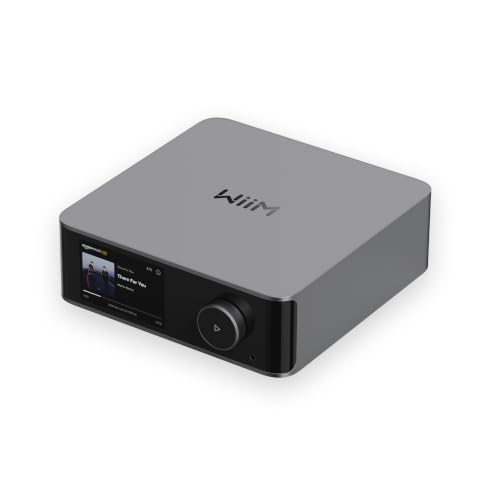
- High-resolution streaming with ESS DAC
- Broad digital and analog connectivity
- Multiroom, EQ, and room-correction features
Best For: Flexible stereo systems and multiroom listeners
Best Home Theater Hub

- HEOS network streaming and multiroom support
- Seven-channel Dolby Atmos/DTS:X amplification
- 8K HDMI, eARC, phono, and subwoofer connections
Best For: Streaming-enabled home theater systems
Best CD-and-Streaming Combo

- Integrated CD player and Wi-Fi streamer
- Supports high-resolution PCM and DSD512
- Expandable storage up to 8TB
Best For: CD collectors and high-resolution library playback
Best Internet Radio Tuner

- Access to 100,000 internet radio stations
- Chromecast, Spotify Connect, and SiriusXM
- Analog and digital connections for existing stereos
Best For: Adding streaming and radio to traditional receivers
Best Audiophile Receiver
Onkyo TX-8470 Network Stereo Receiver

- Two-channel hi-fi design with 100W output
- Wi-Fi, Roon, Tidal, and Deezer built in
- MM/MC phono input for vinyl collections
Best For: Audiophile stereo systems with streaming and vinyl
Best Compact All-in-One
Aiwa Exos Home CD and Bluetooth Speaker

- 30W RMS stereo sound in an all-in-one system
- CD player, FM radio, and Bluetooth playback
- Optical, auxiliary, and remote-control support
Best For: Casual multi-source listening in smaller rooms
Best High-Resolution Network Receiver
Yamaha R-N600A Network Receiver

- ESS SABRE DAC for high-resolution playback
- Wi-Fi, Ethernet, Bluetooth, MusicCast, and USB
- Phono and optical inputs support vinyl and TV audio
Best For: High-resolution digital and analog stereo systems
Versatile Karaoke Receiver

- Bluetooth 5.0 plus USB, SD, FM, AUX, and RCA
- Dual microphone inputs with adjustable controls
- Front-panel controls and digital display
Best For: Karaoke, parties, and flexible source selection
Whole-Home Streaming System
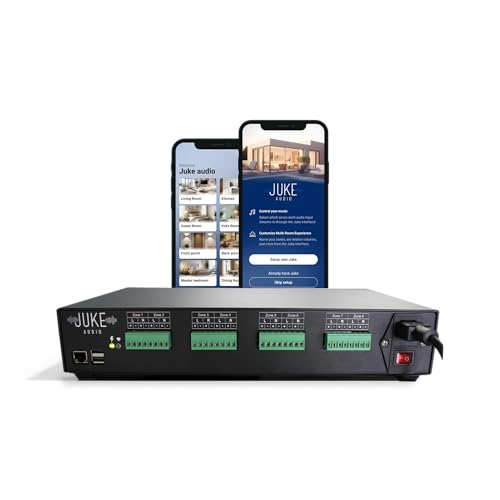
- Controls up to eight audio zones
- AirPlay 2, Spotify Connect, Bluetooth, and more
- Supports independent or synchronized room playback
Best For: Multi-room installations and whole-home audio
Turntable-Friendly Stereo Receiver

- Bluetooth streaming and built-in phono input
- Four RCA inputs plus 3.5mm connectivity
- A/B speaker switching for up to four speakers
Best For: Traditional stereo systems with vinyl and Bluetooth
Best Overall – WiiM Ultra Hi-Res Music Streamer
The WiiM Ultra is a versatile network audio player for home stereo setups, combining high-resolution streaming, a touchscreen, room correction, and extensive wired connectivity. It can serve as the central source for digital and analog components, though AirPlay users should note that it cannot function as an AirPlay receiver.
Best For: Listeners who want a feature-rich streamer for stereo, headphone, subwoofer, and multiroom systems.
Pros:
- ESS ES9038 Q2M DAC supports playback up to 24-bit/192 kHz.
- Includes HDMI ARC, phono, RCA, optical, coaxial, USB, Ethernet, and headphone connections.
- Offers multiroom support, room correction, independent EQ, and a 3.5-inch touchscreen.
- Supports Spotify Connect, TIDAL Connect, Qobuz Connect, Roon Ready, DLNA, and NAS playback.
Cons:
- It is not compatible with AirPlay as a receiver.
- Its extensive feature set may be more than a simple streaming setup requires.
The WiiM Ultra is a strong all-around choice when flexibility matters as much as streaming quality. Its broad input and output selection makes it easy to integrate into both modern and legacy systems.
Best Home Theater Hub – Denon AVR-X1700H AV Receiver
The Denon AVR-X1700H is a network audio player for home stereo users who also need a full AV receiver. Its built-in HEOS platform, Wi-Fi, Bluetooth, AirPlay 2, and multiroom support make it suitable for systems built around both music and immersive home theater.
Best For: Home theater owners who want streaming, surround sound, video switching, and amplification in one component.
Pros:
- Seven-channel, 80-watt-per-channel amplification supports Dolby Atmos and DTS:X.
- Built-in HEOS enables multiroom and multi-source streaming.
- Supports Wi-Fi, Bluetooth, AirPlay 2, Alexa voice control, and popular services including Spotify and Pandora.
- Provides six HDMI inputs, 8K video support, eARC, phono input, and subwoofer pre-outs.
Cons:
- Its AV receiver design is more complex and larger in scope than a stereo-only streamer.
- Music output is centered on speaker amplification rather than dedicated headphone connectivity.
Choose the AVR-X1700H if streaming is only one part of your system. It is particularly practical for buyers who need a single component to handle network music, physical sources, video, and surround sound.
Best CD-and-Streaming Combo – KAIBOER DMP-K8 Hi-Fi Streamer
The KAIBOER DMP-K8 combines a CD player with a network audio player for home stereo systems. It supports DLNA and AirPlay streaming over Wi-Fi, high-resolution formats up to 32-bit/768 kHz and DSD512, and internal storage expansion for listeners building a substantial digital library.
Best For: Audiophiles who want physical CD playback, high-resolution streaming, and expandable local storage in one source component.
Pros:
- Combines CD playback with Wi-Fi streaming through AirPlay and DLNA.
- Supports up to 32-bit/768 kHz and DSD512 according to the supplied specifications.
- Includes 8GB DDR4, 64GB eMMC, dual drive bays, and support for up to 8TB storage.
- Offers a 7.8-inch display, app control, and USB, HDMI, and optical outputs.
Cons:
- No built-in headphone jack is listed.
- Its storage and app ecosystem may be unnecessary for buyers who only stream occasionally.
The DMP-K8 stands out for preserving a disc collection while also supporting modern network playback. It makes the most sense as a dedicated digital transport or source for an amplifier, DAC, or headphone system.
Best Internet Radio Tuner – Grace Link Music Streamer
The Grace Link is a straightforward network audio player for home stereo systems that prioritizes internet radio and mainstream streaming services. It connects to an existing receiver or stereo through analog or digital outputs and adds Chromecast, Spotify Connect, SiriusXM, Bluetooth, and network playback without a built-in speaker.
Best For: Owners of traditional stereos who want internet radio, streaming apps, and simple multiroom capabilities.
Pros:
- Supports 100,000 internet radio stations and 100 presets.
- Includes Spotify Connect, Pandora, Amazon Music, SiriusXM, Chromecast, Bluetooth, and UPnP/DLNA playback.
- Provides both analog and digital outputs plus analog inputs for a CD player or turntable.
- Offers app, remote, and front-panel control with a 2.8-inch color display.
Cons:
- There is no built-in speaker, so it requires an external stereo or powered audio system.
- Its five-band equalizer is less extensive than the advanced correction options on some newer streamers.
The Grace Link is a practical upgrade for an older receiver or stereo system. Its large internet-radio catalog and familiar streaming integrations make it especially appealing for broadcast, talk, and everyday music listening.
Best Audiophile Receiver – Onkyo TX-8470 Network Stereo Receiver
Onkyo TX-8470 2 Channel Stereo Receiver with Wi-Fi, Bluetooth, Phono, Hi-Res Audio and Roon Ready
Check Price On AmazonThe Onkyo TX-8470 is a strong network audio player for home stereo setups that prioritize two-channel sound, vinyl playback, and high-resolution streaming. Built-in Wi-Fi, Roon, Tidal, and Deezer support make it a versatile centerpiece for compatible speakers.
Best For: Audiophiles building a two-channel system with streaming and turntable support.
Pros:
- Two-channel amplifier design focused on refined stereo playback.
- Built-in Wi-Fi, Roon, Tidal, and Deezer support.
- Dedicated MM/MC phono circuitry for vinyl playback.
- Dirac Full Band and four HDMI ports add system flexibility.
Cons:
- Designed for stereo rather than multichannel surround systems.
- Requires separate speakers for playback.
The TX-8470 is the most complete option here for a traditional home stereo that combines serious listening with modern network features. Its phono input and streaming support make it especially well suited to mixed digital and vinyl libraries.
Best Compact All-in-One – Aiwa Exos Home CD and Bluetooth Speaker
The Aiwa Exos Home is a simple network audio player for home stereo listening when convenience matters more than a full network receiver. It combines Bluetooth streaming with a CD player, FM radio, optical input, and auxiliary connectivity in one stereo speaker system.
Best For: Casual listeners who want CD, Bluetooth, radio, and TV audio in a compact setup.
Pros:
- 30W RMS stereo output with dual tweeters and bass drivers.
- Built-in CD player and FM tuner with 20 presets.
- Bluetooth, optical, and auxiliary inputs support several sources.
- Included IR remote simplifies room-wide control.
Cons:
- Uses Bluetooth rather than built-in Wi-Fi network streaming.
- Not a separate receiver-and-speaker component system.
The Exos Home is best viewed as an accessible all-in-one stereo rather than a dedicated network hi-fi component. Its broad input selection makes it practical for bedrooms, offices, and living rooms that need straightforward source switching.
Best High-Resolution Network Receiver – Yamaha R-N600A Network Receiver
The Yamaha R-N600A is a network audio player for home stereo systems that emphasizes high-resolution playback and flexible source support. Ethernet, Wi-Fi, Bluetooth, MusicCast, a built-in DAC, USB playback, and phono input give it broad compatibility for digital and analog listening.
Best For: Listeners seeking high-resolution network playback alongside vinyl and TV connectivity.
Pros:
- ESS SABRE DAC supports high-resolution audio playback.
- Network and USB support includes native DSD 11.2 MHz and 384 kHz playback.
- Built-in phono input supports a vinyl collection.
- Optical input provides a route for TV sound.
Cons:
- Only Spotify is specifically listed among supported internet services.
- At 21.6 pounds, it is less compact than an all-in-one speaker system.
The R-N600A is a capable choice for a component-based stereo system with demanding digital sources. Its DAC, USB playback, network connectivity, phono input, and optical TV connection make it particularly flexible for listeners who want one receiver to handle varied media.
Versatile Karaoke Receiver – Pyle PDA77BU
The Pyle PDA77BU is a practical network audio player for home stereo setups that prioritizes flexible local and wireless playback. Bluetooth 5.0, USB, SD card, FM radio, RCA, AUX, and microphone inputs make it suited to casual listening, entertaining, and karaoke.
Best For: Karaoke nights, parties, and listeners who want many source options in one compact receiver.
Pros:
- Bluetooth 5.0 supports wireless streaming from phones, tablets, and laptops.
- Includes USB, SD card, FM radio, AUX, and RCA connectivity.
- Dual microphone inputs provide separate mic controls for karaoke and presentations.
- Front-panel controls and a digital LED display simplify adjustments.
Cons:
- Its feature set is centered on Bluetooth and physical media rather than built-in multi-room streaming.
- The advertised 800-watt figure is peak output, so it should not be treated as continuous power.
Choose this receiver when source flexibility and microphone support matter more than advanced network-audio features. It is a versatile entertainment hub for a straightforward home stereo system.
Whole-Home Streaming System – Juke-8
The Juke-8 is the strongest fit here for a network audio player for home stereo applications requiring multiple rooms. It combines amplification, streaming, app control, and speaker-zone management in one system, with AirPlay 2, Spotify Connect, Bluetooth, and support for up to eight zones.
Best For: Whole-home audio installations where different rooms need independent or synchronized music control.
Pros:
- Supports up to eight audio zones and simultaneous audio streams.
- Works with AirPlay 2, Spotify Connect, Bluetooth, Pandora, Tidal, and TuneIn.
- App control handles volume, inputs, zone grouping, and connection checks.
- Can power in-wall, in-ceiling, and outdoor speakers.
Cons:
- Its 40-watt output specification may be less suitable for demanding high-volume systems.
- It is a specialized whole-home installation product rather than a simple two-channel receiver.
The Juke-8 is the most capable choice for integrated multi-room streaming and app-based control. Its value is highest when you plan to install and manage several speaker zones rather than replace a single traditional receiver.
Turntable-Friendly Stereo Receiver – Sony STRDH190
The Sony STRDH190 is a straightforward network audio player for home stereo listening when Bluetooth convenience and traditional components are both important. Its phono input, four stereo RCA inputs, FM tuner, and A/B speaker switching make it a practical centerpiece for a conventional two-channel system.
Best For: Stereo listeners who want to connect a turntable, stream from mobile devices, and run two speaker pairs.
Pros:
- Bluetooth enables wireless playback from compatible mobile devices.
- Built-in phono input supports direct turntable connection.
- Provides four stereo RCA inputs, a 3.5mm input, and an RCA output.
- A/B switching supports up to four speakers and separate-zone listening options.
Cons:
- It is a two-channel receiver without dedicated multi-room network streaming.
- FM radio uses 30 presets, and the system is focused on stereo rather than surround sound.
The STRDH190 is a sensible choice for a traditional stereo rack built around vinyl, Bluetooth, and analog sources. Its low-profile design and broad input selection make it easy to integrate into an established home audio setup.
How We Picked the Best Network Audio Player for Home Stereo
We compared these models by looking at their role in a home audio system, streaming and network capabilities, wired inputs and outputs, amplification, source compatibility, and everyday usability. A dedicated streamer may suit an owner who already has a stereo amplifier, while a network receiver can combine streaming, amplification, and source switching in one chassis.
We also considered useful extras such as phono inputs, CD playback, Bluetooth, AirPlay or Chromecast support, multi-room control, voice-assistant compatibility, and app-based operation. Because system requirements vary widely, the best choice depends as much on your existing equipment as on headline specifications.
Quick Comparison
| Type | Best For | What to Check |
|---|---|---|
| Dedicated network streamer | Modernizing an existing amplifier | Outputs, DAC quality, app support, and streaming services |
| Network stereo receiver | Streaming plus two-channel amplification | Speaker power, phono input, impedance, and room size |
| AV receiver | Music, television, and surround sound | HDMI features, channel count, and speaker configuration |
| All-in-one or Bluetooth system | Simple setups and casual listening | Built-in speakers, source options, and upgrade limits |
| Multi-room amplifier | Whole-home audio | Zone count, app ecosystem, wiring, and source sharing |
Key Buying Factors for a Network Audio Player for Home Stereo
System Compatibility
Start with the equipment you already own. A dedicated player generally needs an amplifier or powered speakers, while a receiver includes amplification for passive speakers. Check whether you need RCA, optical, coaxial, USB, HDMI, or balanced connections, and confirm that the output level and input type match your system.
Streaming and Network Support
Look for the services you actually use rather than relying on a long feature list. Wi-Fi streaming, AirPlay, Chromecast, Spotify Connect, DLNA, Roon, and manufacturer apps each offer different levels of control. Ethernet can provide a more dependable connection when the player is near your router.
Audio Quality and Formats
Hi-res support can be valuable, but it should not outweigh reliable software and good system matching. Review supported PCM and DSD formats, the built-in DAC, volume-control behavior, and whether the unit performs conversion before output. Stable playback and sensible controls matter more than the highest theoretical sample rate for many listeners.
Inputs, Amplification, and Expansion
Consider future sources such as a turntable, CD player, television, or USB drive. If amplification is included, compare continuous power—not only maximum or peak figures—with your speakers’ sensitivity, impedance, and room size. For multi-room use, verify zone control and whether all sources can be shared as expected.
Who Should Buy Which Network Audio Player for Home Stereo?
Choose a dedicated network streamer if you already like your amplifier and speakers and want better streaming without replacing the core system. Choose a network stereo receiver if you want one central component for streaming, wired sources, turntable playback, and passive speakers. An AV receiver makes more sense when television, HDMI switching, or surround sound is part of the plan.
For a compact, low-complexity setup, an all-in-one system or Bluetooth speaker is easier to place and operate, though it offers less long-term flexibility. Multi-room buyers should prioritize zone management and ecosystem compatibility over maximum audio specifications. Finally, confirm app support, firmware history, warranty coverage, and return policies before purchase—networked products depend on software as well as hardware.