Choosing the best audio mixer for a podcast studio can simplify microphone setup, monitoring, guest connections, and live production. The right model depends on how many people you record, which microphones you use, and how much hands-on control you want.
We compared 10 popular options, including dedicated podcast consoles, traditional mixers, USB audio interfaces, and complete starter bundles, to help you find a practical fit for your studio and budget.
Best 10 Audio Mixer for Podcast Studio Picks for 2026
Best Flexible Starter Mixer
MAONO AME2 Audio Interface Mixer

- XLR preamps with phantom power and up to 60dB gain
- 11 customizable sound pads with looping options
- Supports instruments, phones, cameras, and live streaming
Best For: Home podcasters, streamers, and musicians seeking flexible connectivity
Best Compact Premium Console
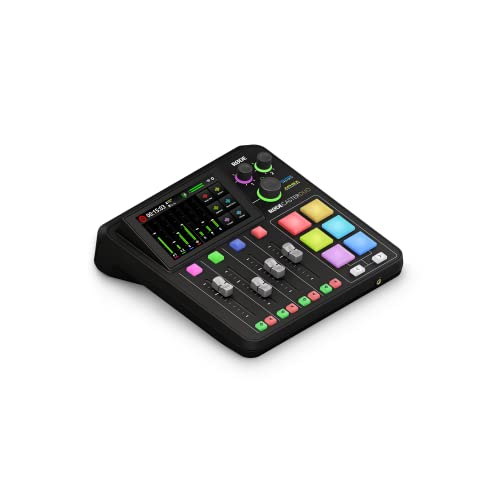
- Two combo inputs with high-gain Revolution Preamps
- Four faders, touchscreen, and six SMART pads
- APHEX processing for podcasting, music, and streaming
Best For: Compact two-input production and streaming setups
Best Traditional Analog Mixer

- 10 inputs with USB and SPX digital effects
- Class A D-PRE preamps and three-band EQ
- Rugged metal chassis with one-knob compressors
Best For: Multi-source studios preferring conventional mixer controls
Best All-in-One Podcast Hub

- Four XLR inputs and integrated headphone outputs
- APHEX voice processing and eight SMART pads
- Records to computer, microSD, or USB drive
Best For: Multi-person podcasts and standalone production workflows
Versatile Podcast Hub

- Two XLR inputs with up to 60dB gain
- Eight customizable sound-effect pads
- Battery-powered with USB-C and mobile connectivity
Best For: Podcasters and streamers wanting effects and flexible routing
Studio-Grade Recording Choice
Focusrite Scarlett 2i2 4th Gen

- Two mic preamps and Hi-Z instrument inputs
- 24-bit/192kHz recording with 120dB dynamic range
- Includes a broad recording software bundle
Best For: Computer-based podcast and music recording
Feature-Packed Live Option

- 16 background effects and four voice-changer modes
- Bluetooth, XLR, and 3.5mm input options
- Supports up to three phones for live streaming
Best For: Interactive livestreaming, gaming, and effects-driven podcasts
Versatile Mixer Pick

- Eight channels with XLR and 1/4-inch inputs
- Bluetooth streaming, USB playback, and DSP effects
- +48V phantom power and three-band EQ
Best For: Multi-source podcast studios and live production
Complete Starter Kit
BM-800 Podcast Equipment Bundle
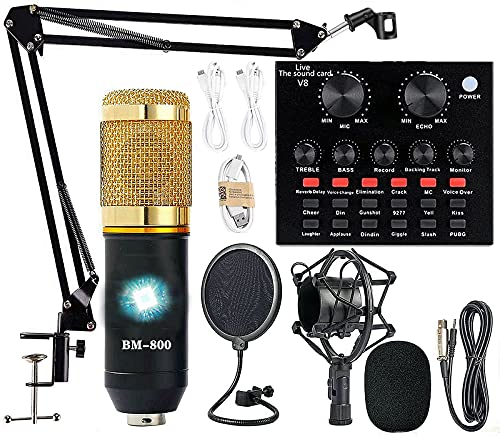
- Includes microphone, arm stand, shock mount, and pop filter
- Cardioid condenser microphone for voice recording
- USB connectivity with voice-changing effects
Best For: Beginners recording solo podcasts and livestreams
Dual-Mic Creation Kit
Podcast Bundle with V8SS Mixer

- Two microphones and two-channel mixer for interviews
- USB-C connectivity across major device platforms
- DSP effects, voice variations, and instrument inputs
Best For: Two-person podcasts, livestreams, and creative recording
Best Flexible Starter Mixer – MAONO AME2 Audio Interface Mixer
The MAONO AME2 is a versatile audio mixer for podcast studio setups that need microphone control, sound pads, instrument input, and live-streaming connections in one compact console. Its XLR inputs support phantom power, while USB-C, smartphone, camera, Bluetooth, and 6.35mm instrument connectivity broaden its usefulness.
Best For: Home podcasters, streamers, voice-over creators, and musicians who want hands-on effects and flexible analog connectivity.
Pros:
- Supports XLR condenser and dynamic microphones with up to 60dB gain and 48V phantom power.
- Offers 11 customizable sound pads, including looping and longer recording slots.
- Includes reverb, auto-tune, tone controls, pitch shifting, sidechain, and loopback features.
- Accepts guitars, basses, smartphones, cameras, and other analog sources.
Cons:
- USB microphones are not supported.
- The many controls and effects may require setup time for beginners.
Choose the AME2 when customization and broad device compatibility matter more than a minimal interface. It is especially practical for creators who want sound effects and instrument recording without adding separate gear.
Best Compact Premium Console – RØDE RØDECaster Duo
The RØDE RØDECaster Duo is a compact audio mixer for podcast studio work, music, streaming, and general content creation. It combines two Neutrik combo inputs, broadcast-oriented preamps, physical faders, SMART pads, a touchscreen, and APHEX processing in a single production unit.
Best For: Creators who want a polished, space-saving console for two microphones or instruments and hands-on production control.
Pros:
- Two combo inputs use high-gain Revolution Preamps with stated 76dB gain.
- Four broadcast-quality faders and a high-resolution touchscreen provide direct control.
- Includes six SMART pads with bank switching for triggering production sounds.
- APHEX effects include Aural Exciter and Big Bottom processing.
Cons:
- Its four-channel configuration is more limited than larger production consoles.
- It is a corded-electric unit rather than a portable battery-powered mixer.
The RØDECaster Duo suits users who value a refined workflow and integrated processing in a smaller footprint. Its two combo inputs make it a focused choice for compact recording and streaming setups.
Best Traditional Analog Mixer – YAMAHA MG10XU 10-Input Mixer
The YAMAHA MG10XU is a traditional 10-input audio mixer for podcast studio setups that need multiple sources, physical controls, USB connectivity, and built-in effects. Its discrete Class A D-PRE preamps, three-band EQ, high-pass filters, and one-knob compressors support practical hands-on mixing.
Best For: Podcasters, small production teams, and musicians who prefer a rugged conventional mixer with several inputs and straightforward controls.
Pros:
- Provides 10 inputs for handling a broader mix of microphones and other sources.
- Includes USB connectivity and SPX digital effects.
- Three-band EQ and high-pass filters help shape and clean up sources.
- One-knob compressors simplify control over vocals, guitars, bass, and drums.
Cons:
- It does not offer the dedicated podcast sound pads and touchscreen workflow found on production consoles.
- The metal chassis and full-size layout make it less compact than smaller podcast-focused units.
The MG10XU is a strong fit when channel count and familiar mixer controls are priorities. It is less specialized for live podcast effects, but its input capacity and analog-style workflow work well in a more conventional studio.
Best All-in-One Podcast Hub – RØDE RØDECaster Pro II
The RØDE RØDECaster Pro II is an all-in-one audio mixer for podcast studio production, with four XLR microphone inputs, headphone outputs, SMART pads, APHEX processing, and standalone recording. It can record to a computer, microSD card, or USB drive, making it useful for both desk-based and computer-free workflows.
Best For: Podcast teams and solo creators who need four microphone inputs, integrated voice processing, and standalone recording options.
Pros:
- Four studio preamps accommodate multi-person podcast conversations.
- APHEX presets are designed to make voices broadcast-ready with a single tap.
- Eight customizable SMART pads can trigger music, effects, and mix-minus phone calls.
- Supports multitrack recording to a computer, microSD card, or USB drive.
Cons:
- It is a relatively feature-rich console, so learning the full workflow may take time.
- Microphones must be added separately.
The Pro II is the most podcast-focused option in this group for creators who want a complete production hub. Its four inputs, live control features, and standalone recording make it particularly well suited to regular multi-person shows.
Versatile Podcast Hub – MAONO E2 Gen2 Audio Mixer
If you need an audio mixer for podcast studio use, the MAONO E2 Gen2 is a flexible all-in-one option for co-hosted shows, streaming, and mobile recording. It combines two XLR combo inputs, up to 60dB of gain, customizable sound pads, loopback, and multiple device connections.
Best For: Podcasters and streamers who want effects, mobile connectivity, and battery-powered flexibility.
Pros:
- Two low-noise XLR combo inputs with up to 60dB of gain
- Eight customizable sound-effect buttons with adjustable volume
- USB-C, Bluetooth, AUX, phone, and tablet connectivity
- Built-in 1500mA battery provides up to eight hours of use
Cons:
- Its extensive effects and routing may take time for beginners to learn
- It is more feature-focused than a minimal recording interface
The E2 Gen2 is a strong choice when your podcast studio needs interactive production features rather than only basic microphone recording. Loopback, mute, monitoring, pitch effects, and reverb support live and edited content alike.
Studio-Grade Recording Choice – Focusrite Scarlett 2i2 4th Gen
For a straightforward audio mixer for podcast studio recording, the Focusrite Scarlett 2i2 4th Gen focuses on clean capture and dependable level control. It offers two microphone preamps, Hi-Z instrument inputs, USB-C connectivity, and recording features suited to vocals, interviews, and music.
Best For: Creators prioritizing studio-quality recording, simple two-input operation, and included production software.
Pros:
- Two mic preamps and two Hi-Z instrument inputs
- 24-bit/192kHz recording with a stated 120dB dynamic range
- Auto Gain and Clip Safe help manage recording levels
- Includes Pro Tools Intro+, Ableton Live Lite, Cubase LE, and Hitmaker Expansion
Cons:
- Only two audio input channels are provided
- It does not include the dedicated sound pads, voice effects, or battery operation found on podcast-focused mixers
The Scarlett 2i2 is best when your studio workflow centers on recording into a computer or compatible mobile device. Air mode can add presence to vocals and guitars, while the included software helps you begin producing without assembling a separate software bundle.
Feature-Packed Live Option – SINWE F988 Podcast Sound Card
The SINWE F988 is a feature-heavy audio mixer for podcast studio setups that also support live streaming, gaming, singing, and voice-over work. Its four-channel design includes Bluetooth accompaniment, multiple effects, voice changers, noise reduction, and connections for microphones, phones, and other sources.
Best For: Live creators who want voice effects, sound triggers, and multi-phone streaming support.
Pros:
- Offers 16 fixed background effects, seven podcast and recording modes, and four voice-changer modes
- Supports XLR, 3.5mm, and Bluetooth inputs
- Can connect up to three mobile phones for multi-platform live streaming
- Compatible with Windows, Mac OS, iPad, and smartphones, with adapters possibly required
Cons:
- The product information lists differing warranty periods: a 12-month guarantee and a 90-day warranty detail
- Some iPad and smartphone connections may require adapters
- The large number of controls and effects may be less suitable for a simple recording workflow
The F988 stands out for interactive broadcasts rather than minimalist studio capture. Its DSP noise-reduction features, lighting controls, sound effects, and voice modes give live content more production variety, while the four-channel layout supports a broader source mix.
Versatile Mixer Pick – Pyle 8-Channel DJ Audio Mixer
For creators seeking an audio mixer for podcast studio setups, the Pyle PMXU83BT offers eight channels, XLR and 1/4-inch inputs, Bluetooth streaming, USB playback, and onboard DSP effects. Its +48V phantom power and three-band EQ on every channel make it adaptable for microphones, music, and live production.
Best For: Podcast studios that also handle live events, karaoke, music playback, or multi-input recording.
Pros:
- Eight channels support more complex audio setups.
- Bluetooth enables wireless music streaming from a smartphone.
- +48V phantom power supports compatible condenser microphones.
- Steel chassis and sealed controls are suited to frequent use.
Cons:
- Its feature set is broader than necessary for a simple one-microphone podcast.
- The supplied notes do not identify included recording software.
This is a practical choice when a podcast studio needs traditional mixer controls and room to connect several sources. The compact design and multi-voltage power supply add flexibility, while USB playback and DSP effects expand its usefulness beyond voice recording.
Complete Starter Kit – BM-800 Podcast Equipment Bundle
This BM-800 bundle is an accessible way to build an audio mixer for podcast studio workflow around a microphone, stand, pop filter, and live sound card. It combines a cardioid condenser microphone with voice effects and USB connectivity for podcasting, streaming, and short-form video.
Best For: Beginners who want a bundled microphone and live sound card for podcasting, streaming, or mobile content.
Pros:
- Includes the microphone, suspension arm, shock mount, pop filter, and foam cover.
- Cardioid pickup is designed to focus on sound in front of the microphone.
- Works with Windows, Mac OS, smartphones, tablets, gaming systems, and other listed devices.
- Voice effects add creative options for live content.
Cons:
- It has one channel, limiting multi-microphone podcast setups.
- The microphone and accessories are more starter-oriented than studio expansion focused.
- The unit should be charged before initial use.
For a first recording setup, this package reduces the need to buy accessories separately. Its single-channel design is best suited to solo creators, while the included voice changer makes it especially relevant to livestreams and playful social content.
Dual-Mic Creation Kit – Podcast Bundle with V8SS Mixer
This dual-microphone bundle gives an audio mixer for podcast studio setups a more collaborative focus, pairing two condenser microphones with a two-channel live sound card. USB-C connectivity, DSP processing, noise reduction, voice effects, and instrument inputs support podcasts, streaming, recording, and other creator workflows.
Best For: Two-person podcasts and creators who want microphones, live effects, and instrument connectivity in one package.
Pros:
- Two channels and two included microphones suit conversations and interviews.
- USB-C supports connection to PCs, smartphones, and iPads.
- DSP processing, noise reduction, four voice variations, and ten sound effects add live-production flexibility.
- Inputs support electric guitar, bass, and electronic drums.
Cons:
- Battery power means it should be fully charged before first use or extended storage.
- The supplied notes recommend contacting support if driver installation does not start automatically.
- Its effects-focused design may be more than needed for straightforward voice recording.
The V8SS is a strong fit when a podcast setup needs to support two speakers and interactive live production. Its cross-platform USB-C connectivity and instrument inputs make it more adaptable than a voice-only starter kit, though users should plan around charging and possible driver support.
How We Picked the Best Audio Mixer for Podcast Studio
We focused on the features that matter most during real podcast sessions: microphone connectivity, USB or computer integration, headphone monitoring, physical controls, portability, and support for solo, co-hosted, and guest recordings. We also considered whether each product is best suited to a polished studio, a compact desk setup, live streaming, or a first-time creator.
Because these products cover different categories, we did not judge a traditional mixer and a dedicated podcast console by exactly the same standards. Instead, we evaluated how effectively each option handles its intended use and how much extra equipment it may require.
Quick Comparison
| Best For | Look For | Typical Advantage |
|---|---|---|
| Solo podcasts | One or two mic inputs and simple USB connectivity | Lower cost and easier setup |
| Two-person shows | Multiple XLR inputs and separate headphone monitoring | Better conversation recording control |
| Guest interviews | Extra inputs, routing, and reliable monitoring | More flexible studio expansion |
| Live production | Sound pads, effects, Bluetooth, or streaming controls | Faster hands-on operation |
| New creators | Included microphone, cables, or accessories | Reduced setup complexity |
Key Buying Factors for an Audio Mixer for Podcast Studio
Inputs and Microphone Compatibility
Count your microphones before buying. XLR inputs are preferable for dynamic and condenser podcast microphones, while phantom power is necessary for many condenser models. A mixer with spare inputs gives you room for a co-host, in-person guest, phone feed, or additional audio source.
USB Connection and Recording Workflow
Confirm how the mixer connects to your computer and whether it sends a stereo mix or separate channels. A simple stereo output is easy for beginners, while multitrack recording offers more control when editing voices individually.
Monitoring and Control
Look for dedicated headphone outputs, independent volume controls, mute buttons, and clear level meters. These features help hosts hear themselves without distracting echo or clipping. Built-in effects and sound pads can be useful for live shows, but they are not essential for straightforward recorded interviews.
Size, Software, and Included Equipment
A compact console suits a small desk, whereas a larger mixer may provide more inputs but require permanent placement. Check operating-system compatibility, included software, cable requirements, and whether a bundle’s microphone quality matches your expectations.
Who Should Buy Which Audio Mixer for Podcast Studio?
Choose a dedicated podcast console if you want accessible controls, sound effects, guest routing, or live-streaming features. These models are especially useful for creators who prefer operating the show from hardware instead of relying heavily on software.
Choose a traditional mixer if you need several inputs, flexible level control, or a setup that may expand beyond podcasting. It can be a strong choice for studios that also record music, voiceover, or live audio.
Choose a USB audio interface if clean microphone recording is your priority and you already plan to edit, process, and mix in computer software. Interfaces are often the simplest option for solo hosts and two-person productions.
Choose a bundle if you are starting from scratch and want microphones and accessories included. Before buying, verify the microphone type, connection standards, monitoring options, and whether the included components can be upgraded later.