If you want clean, detailed scans of gaming figures, scale models, or display pieces, the right scanner can save hours of cleanup and guesswork.
This roundup of the best 3D scanner for miniatures options in 2026 focuses on accuracy, scan stability, color capture, and ease of use so you can match the tool to your workflow.
Best 10 3d Scanner for Miniatures Picks for 2026
Precision Mini Capture
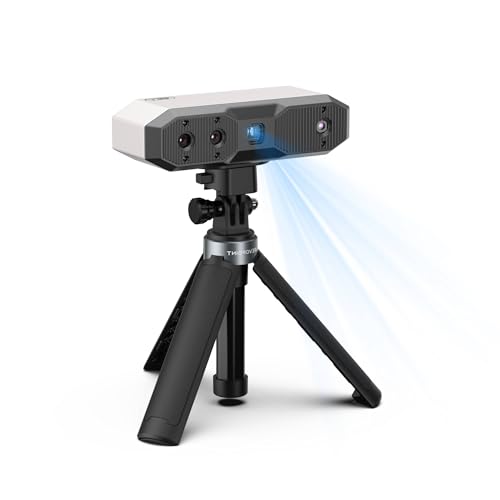
- Up to 0.02 mm single-frame precision
- IMU and tactile buttons help steady handheld scanning
- USB or Wi‑Fi 6 plus included Revo Scan software
Best For: Small, detailed miniatures and other tiny objects
Entry-Level Detail Scanner

- 0.07 mm accuracy and 0.10 mm resolution
- Markerless AI tracking helps recover scans quickly
- JMStudio handles scanning, editing, and optimization
Best For: Beginners scanning small models and hobby projects
Steady Hand Scanner
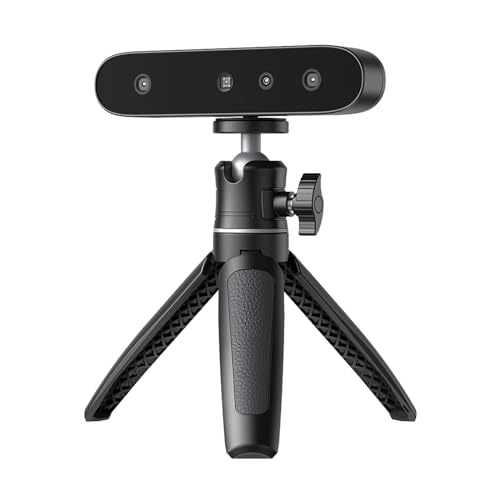
- Anti-shake tech helps reduce motion errors
- 24-bit full-color scanning with 2MP color camera
- Very light 105 g design with simple startup
Best For: Portable, beginner-friendly scanning with color capture
Pro Multi-Mode Scanner
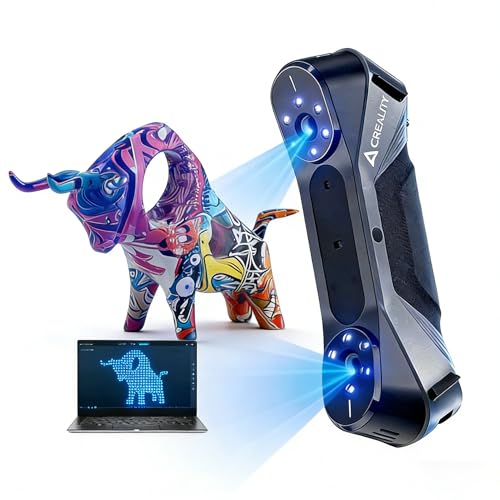
- Up to 0.02 mm accuracy with 60 fps scanning
- Laser and infrared modes cover tiny to very large objects
- 24-bit RGB color and outdoor-capable lighting
Best For: Advanced scanning across miniatures and larger objects
Budget-Friendly Entry Scanner
3DMakerpro Fox for Miniatures and Small Objects

- Up to 0.07mm accuracy with NIR light
- Markerless tracking and anti-shake support
- Works with 40mm to 1200mm objects
Best For: Beginners scanning miniatures and small desktop objects
High-Precision Tiny-Object Pick
Revopoint MINI 2 for Detailed Miniatures

- Up to 0.02mm single-frame precision
- Blue light and flash LEDs improve scanning
- USB and Wi-Fi 6 connection options
Best For: Users prioritizing fine detail on small miniatures and compact parts
Fast Color Scanner Choice
Creality Ferret SE for Larger Miniatures

- 0.1mm accuracy with 30FPS scanning
- Captures full color and texture details
- Scans black and metal objects without spray
Best For: Beginners scanning colored miniatures and medium-size models
Premium Detail Scanner

- 0.02mm accuracy for fine miniature detail
- Blue laser and NIR scanning for more object sizes
- 24-bit color capture with marker-free scanning
Best For: Detailed miniature scans with extra flexibility for larger objects
Wireless Mid-Range Scanner
Creality CR-Scan Ferret Pro WiFi 6

- 0.1mm accuracy and 30FPS scanning
- WiFi 6 bridge for stable wireless transfer
- Anti-shake tracking and common export formats
Best For: Wireless scanning with good everyday detail for 3D printing
Portable Beginner Scanner

- 105g lightweight design for portability
- WiFi6 works with Windows, macOS, Android, and iOS
- 0.1mm accuracy with 24-bit full-color scanning
Best For: Beginners who want a portable wireless scanner for general use
Precision Mini Capture – Revopoint MINI 2 3D Scanner
If you want a 3d scanner for miniatures, the Revopoint MINI 2 is built around tiny-detail capture, fast frame rates, and stable handheld use. Its blue-light system is aimed at small objects, and the included software workflow makes it practical for 3D printing and post-processing.
Best For: Hobbyists and makers scanning miniatures, small parts, and detailed models for printing or CAD work.
Pros:
- Up to 0.02 mm single-frame precision for fine miniature details
- Fast scanning up to 16 fps with IMU support to reduce bad frames
- RGB camera and Flash LEDs help capture texture and improve marker recognition
- Lightweight 175 g design with USB or Wi‑Fi 6 connection options
Cons:
- Scanning results can vary by material and color
- May work better with scanning spray on some objects
- Object size is limited, so it is not meant for very large scans
Overall, the MINI 2 is a strong pick when detail matters most and your subjects are small enough to stay within its scanning range. It leans toward precision and portability rather than all-purpose scanning.
Entry-Level Detail Scanner – 3DMakerpro Fox
The 3DMakerpro Fox is a practical 3d scanner for miniatures if you want an entry-level path into detailed scanning without a steep learning curve. It focuses on useful accuracy, markerless tracking, and software that handles scanning and optimization in one workflow.
Best For: Beginners and hobbyists who want a straightforward scanner for small projects, printing, and measurement.
Pros:
- 0.07 mm accuracy and 0.10 mm resolution for useful detail capture
- Markerless AI visual tracking can relock after fast movement
- JMStudio combines scanning, editing, and optimization
- Entry-level setup from a brand with an established software ecosystem
Cons:
- Not positioned as a high-end industrial scanner
- Medium-format design may be more than you need for very tiny subjects
- Still depends on software workflow for best results
For users who want a sensible balance of ease and detail, the Fox makes a good starter scanner. It is especially appealing if you want a guided software experience instead of wrestling with a complex setup.
Steady Hand Scanner – Creality CR-Ferret SE
The Creality CR-Ferret SE is a compact 3d scanner for miniatures, but its main strength is stable capture rather than ultra-fine detail. If you want a lightweight scanner that is easy to start and can handle shaky hands, this model keeps the workflow simple.
Best For: Users who want an affordable, portable scanner with easy operation and solid color capture.
Pros:
- Anti-shake tech is designed to reduce errors from hand tremors
- 24-bit full-color scanning with a built-in 2MP color camera
- Lightweight 105 g body for easy portability
- Simple scan start process makes it beginner-friendly
Cons:
- Ferret SE supports PC scanning only
- No battery handle included
- Resolution is less suited to the smallest, most intricate miniatures than higher-precision scanners
This is a good choice if convenience and steady handheld capture matter more than extreme precision. It fits users who want a low-friction scanner for general small-object work and full-color models.
Pro Multi-Mode Scanner – Creality CR-Scan Raptor
The Creality CR-Scan Raptor is the most advanced 3d scanner for miniatures in this group, but it is also built for much larger objects. With metrological accuracy, multiple scanning modes, and strong color support, it is a serious tool for users who want more versatility and higher-end capture.
Best For: Advanced users who need one scanner for miniatures, medium objects, and more demanding scanning jobs.
Pros:
- Up to 0.02 mm accuracy for metrology-level work
- Supports objects from 5 mm to 2000 mm
- Blue 7-line laser and infrared structured light provide multiple scanning modes
- 24-bit RGB color plus outdoor-capable texture fill lighting
Cons:
- Requires a capable computer with 8+ cores and 16+ threads
- Likely more scanner than a casual miniature hobbyist needs
- Advanced feature set may add complexity compared with simpler models
If you want top-tier flexibility, the Raptor stands out for precision, speed, and its ability to handle both tiny and large subjects. It is best suited to users who can take advantage of its broader feature set.
Budget-Friendly Entry Scanner – 3DMakerpro Fox for Miniatures and Small Objects
If you want a 3d scanner for miniatures and other small objects without jumping straight into an expensive pro setup, the 3DMakerpro Fox is positioned as an approachable entry-level option. It uses NIR light, offers up to 0.07mm accuracy, and works on small-to-medium items from 40mm to 1200mm, making it a practical fit for desktop-scale scanning when you’re willing to learn the workflow.
Best For: Beginners who want a budget-friendly scanner for miniatures, desktop parts, and small prototype objects.
Pros:
- Up to 0.07mm accuracy with NIR light for fine structural detail.
- Markerless tracking and anti-shake support simplify setup.
- Designed for objects from 40mm to 1200mm, including desktop miniatures.
- JMStudio includes scanning, editing, fusion, and export tools.
Cons:
- Results depend on patience and a learning curve.
- Basic CAD or 3D modeling experience is ideally needed.
- Requires a capable PC, with a dedicated GPU strongly recommended.
This is a good value pick if you want to get into scanning miniatures and accept that there’s a real setup and refinement process. It’s best suited to users who want a versatile starter scanner and don’t mind investing time in software and mesh cleanup.
High-Precision Tiny-Object Pick – Revopoint MINI 2 for Detailed Miniatures
The Revopoint MINI 2 is a strong 3d scanner for miniatures when detail matters most. Its blue light system delivers up to 0.02mm single-frame precision, and the larger capture range, RGB camera, and flash LEDs are all aimed at improving small-object scanning with better texture, tracking, and feature recognition.
Best For: Users who need very fine detail capture on small miniatures, texture-rich models, and compact parts.
Pros:
- Up to 0.02mm precision for tiny intricate details.
- Blue light helps filter ambient light interference for cleaner scans.
- RGB camera and 6 flash LEDs improve texture and marker recognition.
- USB and Wi-Fi 6 connectivity add flexible scanning options.
Cons:
- Results can vary depending on material and color.
- Scanning spray may be needed for better results.
- Revo Design is sold separately and only supports Windows.
For miniature work where you care about tiny surface detail and cleaner tracking, this model stands out more than general-purpose scanners. It is especially appealing if you want a lightweight unit with software for scanning and export already included.
Fast Color Scanner Choice – Creality Ferret SE for Larger Miniatures
The Creality CR-Ferret SE is a practical 3d scanner for miniatures when you want quick scanning, color capture, and easier handling on a budget-friendly desktop scanner. It combines 0.1mm accuracy, 30FPS speed, and anti-shake tracking, while also handling black and metal objects without spraying, which can simplify real-world scanning sessions.
Best For: Beginners and hobbyists scanning colored miniatures, black objects, and medium-size models.
Pros:
- 0.1mm accuracy and 30FPS scanning speed.
- Anti-shake one-shot imaging helps reduce scan failures.
- 2MP color camera captures vivid textures and original colors.
- Works on black and metal objects without white spray.
Cons:
- Less precision than the highest-detail miniature scanners.
- Best suited to medium-to-large objects rather than very tiny ones.
- Some fine-detail work may still need careful scanning technique.
This is the most convenient option if your miniature or model workflow also includes darker surfaces or larger pieces. It focuses on speed and ease of use, making it a solid all-rounder rather than a specialist ultra-fine-detail scanner.
Premium Detail Scanner – Creality CR-Scan Raptor
If you want a 3d scanner for miniatures that can also handle larger models, the CR-Scan Raptor stands out for its dual blue laser and NIR setup. It is designed to capture fine geometry with up to 0.02mm accuracy, making it a strong pick for detailed figurines, small parts, and other precision-focused scans.
Best For: Users who want high-detail miniature scans plus the flexibility to scan medium and large objects too.
Pros:
- Up to 0.02mm accuracy and 0.1mm fine-detail resolution for sharp miniature detail
- 7 parallel blue laser lines plus NIR scanning for broad object-size flexibility
- Marker-free scanning helps reduce setup time on feature-rich objects
- 24-bit full-color scanning with 12 circular LED texture lights
Cons:
- Recommended system requirements are relatively demanding, especially on Windows
- Larger feature set may be more than needed if you only scan simple objects
For buyers prioritizing precision, the Raptor is the most capable option here for miniature work. Its combination of fine resolution, stable handheld tracking, and color capture makes it a versatile choice if you also want room to grow into more advanced scanning tasks.
Wireless Mid-Range Scanner – Creality CR-Scan Ferret Pro WiFi 6
The CR-Scan Ferret Pro is a practical 3d scanner for miniatures if you want wireless convenience and solid everyday accuracy. It offers up to 0.1mm accuracy, 30FPS scanning, and WiFi 6 transmission, making it a good fit for users who want smooth handheld scanning without a complicated setup.
Best For: Makers who want a wireless scanner with solid detail for medium-size objects and occasional miniature-style work.
Pros:
- Up to 0.1mm accuracy with 0.16mm resolution and 30FPS scanning
- WiFi 6 bridge provides faster, more stable wireless data transfer
- Anti-shake tracking improves scanning success for beginners
- Supports OBJ, STL, and PLY export for 3D printing workflows
Cons:
- Not ideal for highly reflective, transparent, or extremely dark surfaces
- Best suited to medium and larger objects rather than very tiny, ultra-fine parts
This model is a strong balance of portability and performance. If you value wireless scanning and want dependable results for general 3D printing work, it offers a simpler path than more specialized high-detail scanners.
Portable Beginner Scanner – Creality CR-Scan Ferret Pro
The CR-Scan Ferret Pro is an easy-to-carry 3d scanner for miniatures if you want a beginner-friendly wireless option for general scanning. It uses 24-bit full-color capture, anti-shake tracking, and WiFi6 connectivity to keep the workflow straightforward for entry-level users.
Best For: Beginners who want a lightweight wireless scanner for portable 3D scanning and larger miniature-sized subjects.
Pros:
- Lightweight 105g design makes it easy to carry and use on the go
- WiFi6 wireless scanning works across Windows, macOS, Android, and iOS
- Up to 0.1mm accuracy with 24-bit full-color scanning
- Includes a WiFi box, tripod, power bank, phone holder, and carrying case
Cons:
- Not suitable for very small or highly detailed items like jewelry or precision parts
- Best results depend on avoiding reflective, transparent, or very dark surfaces
For newcomers, this is the most approachable option in the group. It emphasizes portability and simple wireless use, but the supplied notes make clear it is better for general objects than extremely fine miniature detail.
How We Picked the Best 3d Scanner for Miniatures
We prioritized scanners that are practical for miniature-sized subjects, with a strong mix of resolution, tracking stability, color support, and workflow simplicity. For this category, small-object performance matters more than raw scan speed alone, so we looked for models that can preserve fine surface detail without making setup overly complicated.
Quick Comparison
For miniature work, the main tradeoff is usually detail versus convenience. Some models are better suited to highly detailed figures and small parts, while others are more flexible for larger objects or mixed-size scanning. Handheld options can be faster and more versatile, but desktop-friendly designs often make it easier to capture tiny subjects with fewer tracking issues.
Key Buying Factors for a 3d Scanner for Miniatures
Accuracy and Detail
Miniatures demand tight accuracy, especially around faces, armor textures, weapons, and accessories. Look for scanners marketed with fine point precision, strong depth detail, and reliable small-object performance.
Tracking and Stability
Anti-shake features, robust tracking, and consistent frame capture matter because tiny subjects are easy to lose during scanning. Stable tracking reduces holes, drift, and the need for repeated passes.
Color Capture
Full-color scanning is useful if you want reference textures, paint matching, or a quick archive of a painted model. If your end goal is 3D printing only, color is less important than geometry quality.
Working Distance and Object Size
Choose a scanner that handles the size of your typical subjects. A scanner tuned for very small objects can be excellent for miniatures but less convenient for larger terrain pieces, busts, or props.
Software Workflow
The best 3d Scanner for Miniatures should also fit your software comfort level. Straightforward capture, easy mesh cleanup, and export compatibility can matter as much as hardware specifications.
Who Should Buy Which 3d Scanner for Miniatures?
If you scan tabletop miniatures, collectibles, or highly detailed small parts, prioritize high-resolution models with strong close-range performance. If you also want to scan medium-sized models or occasionally larger objects, a more flexible handheld scanner may be the better all-around choice. Beginners should lean toward simpler setup and more forgiving tracking, while advanced users may prefer higher-detail systems that reward careful positioning and post-processing.
In short, pick the scanner that matches your smallest subjects, your preferred workflow, and how much cleanup you are willing to do after capture.