The best audio mixer for beginners should make microphones, headphones, music, and calls easier to control—not overwhelm you with unnecessary features. This roundup compares compact mixers and starter bundles for podcasting, streaming, gaming, DJing, and basic recording.
From simple four-channel boards to USB interfaces with effects and 48V phantom power, these options cover different budgets and workflows. Use the buying guide below to match inputs, controls, connectivity, and intended use before choosing.
Best 10 Audio Mixer for Beginners Picks for 2026
Best Feature-Rich Pick

- XLR inputs with phantom power and up to 60dB gain
- 11 customizable sound pads and built-in effects
- Supports podcasting, streaming, and instruments
Best For: Beginners wanting an expandable podcast and streaming mixer
Best Simple Line Mixer

- Combines four audio sources into mono or stereo output
- Supports 3.5mm and 6.35mm connections
- Compact, low-noise design
Best For: Basic source combining for instruments, gaming, and home audio
Best Analog Learning Tool

- Six inputs with D-PRE microphone preamps
- Three-band EQ, high-pass filters, and compressors
- Rugged chassis for recording and live use
Best For: Learning hands-on analog mixing with vocals and instruments
Best All-in-One Starter Kit
BM-800 AM100-V8 Podcast Bundle
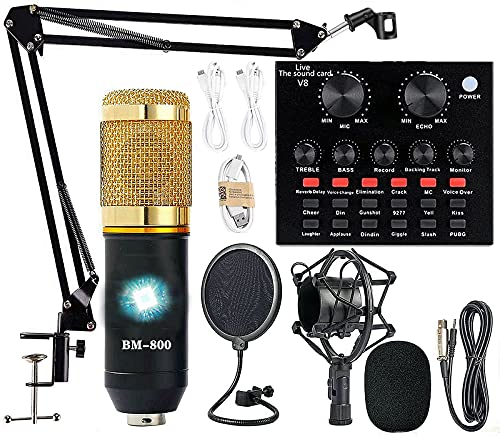
- Includes microphone, arm, mount, pop filter, and sound card
- Works with computers, phones, tablets, and game consoles
- Built-in voice-changing effects for streaming
Best For: First-time podcasters and livestreamers wanting a complete kit
Best Gaming Mixer

- Four individually adjustable channels
- XLR input with 48V phantom power
- Mute, monitoring, voice effects, and RGB
Best For: Beginner gamers and streamers
Best Portable Mixer

- Bluetooth music input and USB recording
- XLR and 6.35mm device support
- Compact design for mobile setups
Best For: Home recording, podcasts, and small events
Best Starter Bundle

- Includes mixer, microphone, arm, and accessories
- 16 effects and seven recording modes
- Plug-and-play support across major devices
Best For: First-time podcasters and streamers
Best Beginner Gaming Pick

- XLR input with 48V phantom power
- One-click noise reduction and monitoring
- Voice effects, sound pads, and RGB lighting
Best For: New gamers and streamers using an XLR microphone
Best Feature-Rich Starter

- 16 background effects and seven recording modes
- XLR, 3.5mm, and Bluetooth inputs
- Supports up to three phones for streaming
Best For: Beginners exploring podcasts, streams, and voice effects
Best for Game-Chat Control

- Dedicated game/chat balance dial
- XLR support with 48V phantom power
- USB-C, optical, and auxiliary connections
Best For: PC and console gamers managing game and chat audio
Best Feature-Rich Pick – MAONO AME2 Podcast Mixer
The MAONO AME2 is a strong audio mixer for beginners who want to start podcasting, streaming, or recording instruments without quickly outgrowing a basic setup. It combines XLR microphone support, USB-C connectivity, sound pads, effects, and an instrument input in one console.
Best For: Beginners building a versatile podcast, livestream, or home-recording setup.
Pros:
- Supports XLR condenser and dynamic microphones with up to 60dB gain and 48V phantom power.
- Includes 11 customizable sound pads, reverb modes, auto-tune, tone controls, and pitch effects.
- Works with computers, smartphones, tablets, cameras, Windows, and Mac OS.
- Dedicated instrument input supports guitar, bass, and other 6.35mm instruments.
Cons:
- USB microphones are not supported.
- The large feature set may take time for first-time users to learn.
- Its podcast-focused controls may be more than needed for simple line mixing.
Choose the AME2 if you want beginner-friendly connectivity today with room to experiment with live effects and content-creation features later.
Best Simple Line Mixer – LZSIG 4-Channel Mini Mixer
The LZSIG 4-Channel Mini Mixer is a practical audio mixer for beginners who need to combine several line-level sources into one output. Its compact design and support for both 3.5mm and 6.35mm connections make it useful for straightforward home, gaming, or instrument setups.
Best For: Beginners combining keyboards, electronic drums, guitars, computers, CD players, or gaming consoles.
Pros:
- Combines up to four audio sources into a single mono or stereo output.
- Accepts both 3.5mm and 6.35mm TS/TRS cables.
- Ultra-low-noise design uses a power-management chip and low-noise op-amps.
- Compact size is convenient for small workspaces or portable setups.
Cons:
- Power adapter is sold separately.
- It is a line mixer rather than a microphone-focused console with preamps and effects.
- Basic routing provides fewer hands-on mixing controls than larger mixers.
This is a good starting point when your main goal is combining multiple existing audio sources, especially if you do not need XLR microphone inputs or recording software features.
Best Analog Learning Tool – Yamaha MG06 Compact Mixer
The Yamaha MG06 is a dependable audio mixer for beginners who want to learn traditional analog mixing. It offers six inputs, studio-grade D-PRE preamps, EQ, high-pass filters, and one-knob compressors in a rugged chassis, making it suitable for vocals, instruments, lectures, and small performances.
Best For: Beginners learning hands-on analog mixing for vocals, instruments, lectures, and live use.
Pros:
- Six-input layout provides room for multiple microphones or instruments.
- Studio-grade D-PRE preamps are designed for natural-sounding bass and smooth highs.
- Three-band EQ and high-pass filters help shape sound and reduce unwanted noise.
- One-knob compressors simplify control of vocals, guitars, bass, and drums.
Cons:
- There is no USB connectivity for direct computer recording.
- It uses a traditional analog workflow with fewer digital conveniences.
- Its XLR and TRS connections may require suitable cables for beginner setups.
The MG06 is a strong choice if you prefer physical controls and dependable sound over built-in USB recording or podcast-specific effects.
Best All-in-One Starter Kit – BM-800 AM100-V8 Podcast Bundle
The BM-800 AM100-V8 bundle is an approachable audio mixer for beginners who want a complete podcast or livestream package rather than a standalone console. It includes a condenser microphone, arm stand, shock mount, pop filter, wind cover, cables, and a live sound card for quick setup with computers and mobile devices.
Best For: First-time podcasters, streamers, and short-form video creators who need a bundled microphone setup.
Pros:
- Includes the microphone, adjustable scissor arm, shock mount, pop filter, foam cover, and cables.
- Cardioid condenser microphone is designed to capture sound from in front of the mic.
- Compatible with Windows, Mac OS, smartphones, tablets, PS4, Xbox, and Switch.
- Voice-changing effects support calls, livestreams, singing, and social video.
Cons:
- The setup has one audio channel, limiting expansion for multiple microphones.
- The condenser microphone requires charging before use.
- Its feature set is geared toward casual content creation rather than advanced multichannel mixing.
This bundle makes sense when convenience matters most and you need the core microphone hardware included, but consider a larger mixer if you expect to add multiple microphones or instruments.
Best Gaming Mixer – FIFINE Ampligame SC3W
The FIFINE Ampligame SC3W is a practical audio mixer for beginners who want hands-on control for gaming, streaming, podcasting, or recording. Its four individual channels, USB plug-and-play connectivity, XLR input, and clearly separated controls make it easier to adjust different audio sources without complicated software.
Best For: Beginner gamers and streamers who need XLR microphone support, monitoring, and quick-access controls.
Pros:
- Four individually adjustable channels help separate and balance connected devices.
- Supports XLR microphones with built-in 48V phantom power for compatible condenser microphones.
- Includes mute, volume, real-time monitoring, voice-changing, customizable sound buttons, and RGB lighting.
- Multiple ports support dual-PC streaming and varied audio setups.
Cons:
- Its gaming-focused RGB lighting and voice effects may be unnecessary for straightforward recording.
- The unit has a corded-electric power source and does not list a battery option.
With its dedicated faders and beginner-friendly controls, the SC3W is a strong choice when immediate adjustments matter more than advanced production features. It is especially well suited to interactive gaming and live-streaming setups.
Best Portable Mixer – 4-Channel DJ Audio Mixer
This compact 4-channel board is an approachable audio mixer for beginners who want Bluetooth playback, USB recording, and support for microphones or instruments in one unit. Its straightforward controls and portable size make it useful for home recording, small events, podcasts, karaoke, and mobile live streams.
Best For: Beginners needing a flexible mixer for Bluetooth music, USB recording, microphones, and small live setups.
Pros:
- Accepts XLR and 6.35mm inputs for condenser or dynamic microphones, guitars, bass, and keyboards.
- Bluetooth supports wireless music input from smartphones, tablets, and laptops.
- Built-in USB interface enables plug-and-play PC recording and live streaming without extra drivers.
- Compact 7.87-by-6.7-by-1.57-inch design is convenient for portable use.
Cons:
- Bluetooth supports input only, not wireless audio output.
- Using USB flash-drive playback and recording requires the MP3 Route function.
- The mixer uses corded power, which limits completely mobile operation.
This model offers broad connectivity without requiring a complicated setup, making it a versatile starting point for beginners. It is a particularly good fit if Bluetooth playback and USB recording are priorities.
Best Starter Bundle – ALSO GO F998 Podcast Kit
The ALSO GO F998 bundle is an audio mixer for beginners who want a complete podcast or streaming setup rather than a mixer alone. It includes a BM800 condenser microphone, boom arm, pop filter, shock mount, earphone, cables, and a sound card with preset effects and controls, reducing the need to buy separate accessories.
Best For: First-time podcasters, streamers, singers, and creators who need an all-in-one microphone and mixer package.
Pros:
- Bundle includes the mixer, BM800 microphone, adjustable arm, pop filter, shock mount, earphone, and required cables.
- Offers 16 background effects, seven podcast and recording modes, four voice-changer modes, and nine adjustable knobs.
- Plug-and-play compatibility is listed for PC, Mac, iOS, Android, smartphones, laptops, and Xbox.
- Cardioid pickup, a dual-layer pop filter, and a foam cap are designed to help reduce unwanted noise.
Cons:
- With two channels, it offers less channel capacity than the four-channel mixers in this roundup.
- The included BM800 is a condenser microphone, so the bundle is less flexible for users seeking a dynamic-mic setup.
- Its many effects and controls may take time for beginners to learn.
For someone starting from scratch, this kit provides the most complete path to a working voice setup. The included accessories and beginner-oriented sound controls make it convenient for podcasting and content creation, though it is less suited to larger multi-source mixes.
Best Beginner Gaming Pick – MAONO G1 Neo
The MAONO G1 Neo is a practical audio mixer for beginners building a gaming or streaming setup around an XLR microphone. Its straightforward controls, one-click noise reduction, loopback, direct monitoring, and Bluetooth accompaniment make it approachable while still offering useful creative features.
Best For: New gamers and streamers who want XLR microphone support, voice effects, sound pads, and RGB lighting in a compact mixer.
Pros:
- Built-in preamp and 48V phantom power support XLR condenser microphones.
- One-click noise reduction, mute, loopback, and direct monitoring simplify streaming.
- Includes voice changing, customizable sound pads, reverb, sidechain, and RGB effects.
- Works with computers, phones, tablets, PS4, and PS5, plus popular streaming software.
Cons:
- Not compatible with USB microphones or Xbox.
- XLR microphone setup requires keeping phantom power off for dynamic microphones.
- The included instructions should be reviewed before setup.
For beginners focused on gaming content, the G1 Neo balances accessible controls with streaming-oriented effects. It is especially appealing if you want visual customization and quick audio adjustments without moving to a larger mixer.
Best Feature-Rich Starter – SINWE F988 Live Sound Card
The SINWE F988 is an audio mixer for beginners who want a broad selection of podcasting and live-streaming effects. Its four-channel design combines XLR, 3.5mm, and Bluetooth inputs with voice changing, background effects, and noise-reduction functions.
Best For: Beginners experimenting with podcasts, live streams, gaming audio, voice-over work, or multi-device streaming.
Pros:
- Offers 16 fixed background effects, seven podcast and recording modes, and four voice changer modes.
- Supports XLR, 3.5mm, and Bluetooth audio inputs.
- Can connect up to three mobile phones for multi-platform live streaming.
- Compatible with Windows, Mac OS, iPad, and smartphones, with adapters potentially required.
Cons:
- The product information lists different warranty periods, so buyers should verify coverage.
- Mobile-device connections may require adapters.
- Its many effects may take time for first-time users to learn.
The F988 stands out for variety rather than minimalism. Beginners who want to try several content formats and audio effects may appreciate its flexible inputs and controls, while users seeking a very simple interface may prefer a more focused mixer.
Best for Game-Chat Control – FIFINE SC8 Gaming Audio Mixer
The FIFINE SC8 is an audio mixer for beginners who want dedicated controls for gaming, chat, and streaming audio. It combines XLR microphone support with game/chat balancing, USB-C plug-and-play connectivity, optical input, virtual 7.1 surround, and programmable sound buttons.
Best For: PC and console gamers who need quick control over microphone, game, chat, and background audio levels.
Pros:
- 48V phantom power and a Dynamic/Condenser toggle support different XLR microphone types.
- Dedicated game/chat balance control helps prioritize gameplay or teammate communication.
- Supports PC, PS5, Switch, mobile, PS4, and TV connections through USB-C, optical, and auxiliary inputs.
- Includes virtual 7.1 surround, three EQ presets, eight voice effects, and four customizable buttons.
Cons:
- Not compatible with USB microphones.
- An XLR cable is not included.
- The available features may be more than a beginner needs for basic audio mixing.
The SC8 is a strong choice for beginners who prioritize gaming controls over a traditional studio layout. Its dedicated game/chat dial and multiple connection options make it particularly useful for multiplayer sessions and console-based streaming.
How We Picked the Best Audio Mixer for Beginners
We focused on features that matter most when learning audio: straightforward controls, useful input options, dependable monitoring, compact designs, and compatibility with common microphones and computers. We also considered whether each mixer suits a specific use case, such as podcasting, gaming, live streaming, DJing, or casual home recording.
Because beginner needs vary, this list includes both traditional compact mixers and audio interfaces with mixer-style controls. Starter bundles are convenient for buyers who need a microphone and accessories, while standalone mixers are often the better long-term choice for users who already own audio equipment.
Quick Comparison
| Best For | Look For | Most Useful Features |
|---|---|---|
| Podcasting | Multiple microphone inputs | Headphone monitoring, USB connection, voice effects |
| Streaming and gaming | Simple computer integration | Mute controls, independent volume knobs, sound pads |
| Home recording | Clean microphone preamps | XLR input, gain control, phantom power |
| DJing | Music playback flexibility | Bluetooth, USB MP3 input, channel faders |
| Basic live sound | Several input channels | Master output, low-noise operation, durable controls |
Key Buying Factors for an Audio Mixer for Beginners
Inputs and Microphone Compatibility
Check how many sources you need to connect now and later. XLR inputs support many podcast and recording microphones, while 3.5mm, RCA, Bluetooth, or USB inputs can accommodate phones, computers, and music players. If you plan to use a condenser microphone, confirm that the mixer provides 48V phantom power.
Computer Connection and Monitoring
A USB-equipped mixer or interface is usually the simplest route for recording and streaming from a computer. Look for a headphone output with independent volume control and, when useful, direct monitoring to reduce distracting latency.
Controls and Learning Curve
Physical channel volume, gain, mute, and master controls are easier to understand than software-only controls. Effects, voice changers, and sound pads can be fun for streams, but they should not replace the fundamentals of clean gain staging and reliable monitoring.
Size, Noise, and Power
Compact mixers suit small desks and mobile setups. For a polished result, prioritize low-noise operation and a stable power connection. Battery or bus-powered models may be convenient, but verify whether the selected microphone and accessories require additional power.
Who Should Buy Which Audio Mixer for Beginners?
Choose a simple compact mixer if you want basic control over a microphone, music source, and headphones without a complicated setup. Podcast beginners should favor models with multiple microphone inputs, USB connectivity, and monitoring controls. Streamers and gamers may prefer an interface with quick mute buttons, independent channel controls, and customizable effects.
For home recording, prioritize an XLR input, clean preamp performance, and 48V phantom power over novelty features. DJ and party setups benefit from Bluetooth or USB playback and several easy-to-access channels. Finally, a bundle makes sense when you need a microphone and starter accessories immediately; otherwise, buying a better standalone mixer can provide more flexibility as your skills and equipment grow.