Heavy camera bodies and long lenses need more than a basic support stick. The right monopod can reduce fatigue, improve framing, and add valuable stability without the bulk of a full tripod.
We selected 10 camera monopods for heavy cameras with attention to load capacity, locking systems, height, materials, bases, and video or still-photography versatility. The lineup includes professional fluid-head models, compact travel options, and budget-friendly supports.
Best 10 Camera Monopods for Heavy Cameras Picks for 2026
Heavy-Duty Modular Pick
SIRUI P-424FS Carbon Fiber Monopod Kit

- 26.5-pound stated load limit
- Includes VA-5 fluid video head
- Converts to tabletop tripod or extension rod
Best For: Heavy DSLR and camcorder video setups
Fast-Deploy Video Pick
IFOOTAGE Cobra 3 A180T Aluminum Monopod
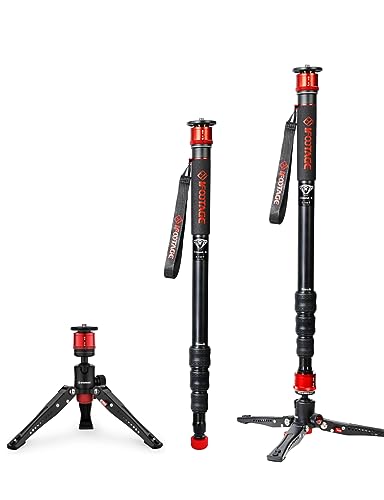
- 71.7-inch maximum height
- 17.6-pound stated payload
- Detachable mini tripod with quick disconnect
Best For: Mobile videography and event shooting
Lightweight Carbon-Fiber Pick
Manfrotto 290 Carbon Fiber Monopod

- 1.1-pound listed weight
- 22-pound stated load capacity
- Folds to 19.29 inches
Best For: Travel photography with DSLR cameras
Versatile High-Capacity Pick
SmallRig CT-10 Tripod & Monopod

- 33-pound stated vertical capacity
- Converts from tripod to monopod
- 360-degree ball head and accessory threads
Best For: Traveling creators who need tripod and monopod modes
Best All-Around Video Support

- 17.6-lb capacity in a 2.5-lb carbon-fiber body
- Standing pedal control enables fast adjustments
- Converts between monopod, trekking pole, and low tripod
Best For: Travel shooters and videographers using SLR cameras or camcorders
Highest Load Capacity

- 26.4-lb stated load capacity
- Quick-release mounting for rapid setup
- Detachable feet provide three support configurations
Best For: Heavy camera rigs and users who need flexible support modes
Best for Fast Adjustments
SmallRig S5565 Carbon Fiber Monopod

- One-button lift-and-lock operation
- Legs rated to support up to 33.07 lb
- Quick-release feet and broad thread compatibility
Best For: Fast-paced shoots using cameras, cages, gimbals, or video heads
Best All-in-One Support
COMAN KX3232Q6 Fluid-Head Monopod

- 22-pound load capacity
- Q6 fluid head with 360° panning
- Removable tripod base for three configurations
Best For: Video shooters needing fluid movement and freestanding support
Best Lightweight Carbon Fiber

- 650-gram carbon-fiber construction
- Supports up to 22 pounds
- 15- to 62-inch range with six sections
Best For: Travel and wildlife photographers using heavy telephoto lenses
Best High-Capacity Design
COMAN M1Pro Carbon-Fiber Monopod

- 44.09-pound maximum load rating
- One-click extension to 65 inches
- Steel support feet and accessory ports
Best For: Professional heavy rigs, telescopes, and birding scopes
Heavy-Duty Modular Pick – SIRUI P-424FS Carbon Fiber Monopod Kit
For photographers and videographers seeking camera monopods for heavy cameras, the SIRUI P-424FS combines a carbon-fiber support leg, removable tripod base, and VA-5 fluid video head. Its stated 26.5-pound load limit and modular design make it particularly versatile for demanding setups.
Best For: Heavy DSLR or camcorder setups, video work, and creators who want monopod, extension-rod, and tabletop-tripod functionality in one kit.
Pros:
- Supports up to 26.5 pounds with 10-layer carbon-fiber construction and large-diameter legs.
- Includes a VA-5 fluid video head and a removable tripod base for smoother video operation.
- Converts among a monopod, extension rod, and tabletop tripod.
- Offers 360-degree panning and up to 40-degree base tilting.
Cons:
- Its 66.3-inch length and full kit design may be more than casual shooters need.
- The tripod base is not intended as a fully independent, water-resistant support system.
The SIRUI is the most feature-rich choice here for heavy camera support, especially when fluid video movement and modular flexibility matter more than minimal weight.
Fast-Deploy Video Pick – IFOOTAGE Cobra 3 A180T Aluminum Monopod
The IFOOTAGE Cobra 3 A180T is a practical option among camera monopods for heavy cameras when quick setup and a tall working height are priorities. Its aluminum construction, modular quick-disconnect system, and 17.6-pound payload suit many DSLR and camcorder configurations.
Best For: Videographers and event shooters who need a 71.7-inch monopod with fast height adjustment and a detachable mini-tripod base.
Pros:
- Reaches 71.7 inches while folding to 27.2 inches.
- Supports a stated payload of 17.6 pounds.
- Uses twist-lock joints and a quick-disconnect release/lock mechanism for faster deployment.
- Includes 1/4-inch and 3/8-inch mount compatibility and a detachable foldable mini tripod.
Cons:
- Aluminum construction weighs 2.76 pounds, making it heavier than some carbon-fiber alternatives.
- Its payload is lower than the SIRUI and SmallRig options listed here.
The Cobra 3 balances height, portability, and deployment speed well. It is a strong fit for mobile video work, provided your camera and lens combination stays within its 17.6-pound rating.
Lightweight Carbon-Fiber Pick – Manfrotto 290 Carbon Fiber Monopod
The Manfrotto 290 is a straightforward choice for photographers who want camera monopods for heavy cameras without carrying a large multi-part kit. Its carbon-fiber body, four-section design, and stated 22-pound load capacity provide a useful balance of support and portability.
Best For: Travel photographers and shooters who want a compact carbon-fiber monopod for DSLR or camera use.
Pros:
- Carbon-fiber construction keeps the monopod listed at 1.1 pounds.
- Supports a stated safety payload of 22 pounds.
- Four sections allow rapid height adjustment from 19.29 to 59.4 inches.
- Includes rubber leg warmers and an angled wrist strap for handling comfort.
Cons:
- Its 59.4-inch maximum height is shorter than the other full-height options here.
- The supplied product information does not list a tripod base or included head.
The 290 is a sensible minimalist option: light, compact, and rated for substantial camera weight. Choose it when travel convenience matters more than maximum height or integrated video accessories.
Versatile High-Capacity Pick – SmallRig CT-10 Tripod & Monopod
The SmallRig CT-10 stands apart among camera monopods for heavy cameras by combining a full tripod and a monopod in one aluminum system. Its stated vertical capacity of 33 pounds, 360-degree ball head, and broad 16-to-71-inch height range offer flexibility for cameras, phones, and other compatible devices.
Best For: Content creators and travelers who need both tripod stability and monopod mobility, including setups with compatible DSLR, mirrorless, phone, or projector equipment.
Pros:
- Converts between a tripod and monopod for different shooting situations.
- Offers a 33-pound vertical load rating and 11-pound tilt rating.
- Its 360-degree metal ball head supports horizontal and vertical shooting.
- Includes 1/4-inch and 3/8-inch compatibility plus three additional 1/4-inch threaded holes for accessories.
Cons:
- At 3.4 pounds, it is heavier than the listed Manfrotto and IFOOTAGE monopods.
- Telephoto lenses may require an additional tripod or telephoto lens mount for better balance.
- Its 16.9-inch folded size is longer than the Manfrotto’s listed folded length.
The CT-10 is best when versatility is the priority. It offers impressive stated vertical capacity and accessory mounting, but its weight and telephoto-lens balance considerations make it less streamlined than a dedicated monopod.
Best All-Around Video Support – IFOOTAGE Cobra 3 C180F-P
For camera monopods for heavy cameras, the IFOOTAGE Cobra 3 offers a useful balance of capacity, portability, and fast operation. Its carbon-fiber construction supports up to 17.6 pounds, while the pedal-controlled locking system lets you adjust the monopod while standing.
Best For: Videographers and photographers who want a lightweight, versatile monopod for SLR cameras and camcorders.
Pros:
- 17.6-pound load capacity with a 2.5-pound net weight.
- Pedal and pull-knob controls enable quick height adjustment without squatting.
- Functions as a monopod, trekking pole, or low tripod.
- 71-inch maximum height and 27.1-inch folded length suit travel shooting.
Cons:
- Not water resistant.
- Its 17.6-pound capacity is lower than some aluminum alternatives.
The Cobra 3 is a strong choice when quick setup and flexible shooting positions matter more than maximum load capacity. Its carbon-fiber build also keeps the kit relatively easy to carry.
Highest Load Capacity – SIRUI AM-404FL with QC-55
Among camera monopods for heavy cameras, the SIRUI AM-404FL stands out for its stated 26.4-pound load capacity and quick-release setup. Its aluminum construction, detachable feet, and 75.8-inch maximum height make it suited to demanding photo and video work.
Best For: Photographers and videographers who prioritize high load capacity, quick camera changes, and multiple support configurations.
Pros:
- Supports up to 26.4 pounds according to the supplied specifications.
- Quick-release system works on both the monopod and tripod base.
- Can be used as a footed monopod, extension rod, or low-angle tripod.
- Built-in 360-degree panning and reversible 1/4-inch/3/8-inch mounting screw add flexibility.
Cons:
- At 2.1 kilograms, it is heavier than the IFOOTAGE model.
- Not water resistant.
- The aluminum build may be less convenient for extended carrying.
The SIRUI is the most capacity-focused option in this group. Choose it when supporting heavier equipment and switching between monopod and low-tripod modes are more important than minimizing carry weight.
Best for Fast Adjustments – SmallRig S5565 Carbon Fiber Monopod
The SmallRig S5565 is a practical pick among camera monopods for heavy cameras when quick one-handed operation is a priority. Its one-button lift-and-lock design, carbon-fiber and aluminum construction, and 33.07-pound leg load rating provide a useful combination of speed and support.
Best For: Fast-moving photographers and videographers using cameras, cages, gimbals, or compatible video heads.
Pros:
- Legs support loads up to 33.07 pounds according to the supplied notes.
- One-button lift-and-lock system enables quick height changes.
- Quick-release feet speed up transitions between shooting positions.
- 68.9-inch maximum height and 29.9-inch folded length balance reach with portability.
Cons:
- The included fluid-head specification lists a lower 11-pound maximum payload.
- At 5.51 pounds, it is the heaviest listed option.
- Its four-section design may require more adjustments to reach full height.
The S5565 offers strong leg support and fast controls, but buyers should distinguish the 33.07-pound leg rating from the included fluid head’s 11-pound payload. It is best matched with a compatible head and rig within that lower limit.
Best All-in-One Support – COMAN KX3232Q6 Fluid-Head Monopod
For photographers comparing camera monopods for heavy cameras, the COMAN KX3232Q6 combines a 22-pound load rating with a removable tripod base and a Q6 fluid head. Its aluminum construction, five-section design, and 73.2-inch maximum height make it a versatile option for video, wildlife, and travel setups.
Best For: Video shooters and photographers who want fluid-head movement plus freestanding and low-angle support.
Pros:
- Supports up to 22 pounds while weighing 3.9 pounds.
- Q6 fluid head offers 360-degree panning and +90/-60-degree tilt.
- Three-in-one design works as a monopod, portable stand, or low-angle tripod.
- Quick-release plate and built-in hex keys simplify camera setup.
Cons:
- At 26 inches folded, it is less compact than shorter monopods.
- Aluminum construction is heavier than the carbon-fiber alternatives here.
- The included head and base add bulk compared with a basic monopod.
The KX3232Q6 is a strong choice when a heavy camera setup needs more than simple vertical support. Its fluid head and detachable base add useful shooting flexibility, though travelers prioritizing minimum weight may prefer a simpler carbon-fiber model.
Best Lightweight Carbon Fiber – Koolehaoda MP-286C Monopod
The Koolehaoda MP-286C is a practical pick among camera monopods for heavy cameras when portability matters. Its 10-layer carbon-fiber construction supports up to 22 pounds at a listed weight of 650 grams, while six twist-lock sections extend from 15 to 62 inches.
Best For: Travel, wildlife, sports, and outdoor photographers carrying heavy telephoto equipment over long periods.
Pros:
- Carbon-fiber construction helps balance rigidity, vibration dampening, and low weight.
- Supports cameras and lenses up to 22 pounds.
- Reversible mounting plate includes both 1/4-inch and 3/8-inch screws.
- Includes a metal spike, wrist strap, phone holder, and carrying bag.
Cons:
- It is a basic monopod and does not include a fluid head or tripod base.
- Its 62-inch maximum height is lower than the two COMAN options.
- Twist locks may require manually adjusting multiple sections.
The MP-286C stands out for carrying efficiency: it reaches a useful shooting height while remaining notably light. Choose it when you already have a compatible head or need a straightforward support pole rather than an integrated stand system.
Best High-Capacity Design – COMAN M1Pro Carbon-Fiber Monopod
For especially demanding camera rigs, the COMAN M1Pro offers one of the highest capacities among these camera monopods for heavy cameras, rated for up to 44.09 pounds. Its carbon-fiber body reaches 65 inches, while steel support feet, one-click adjustment, and accessory ports expand its usefulness on location.
Best For: Professional camera, camcorder, telescope, and birding-scope setups that require high load capacity and quick deployment.
Pros:
- 44.09-pound maximum load rating suits heavy rigs and telescopes.
- 3K carbon-fiber tubes with UV-resistant coating provide a durable, portable build.
- One-click lifting system enables rapid height adjustment to 65 inches.
- 190mm steel support feet and three 1/4-inch accessory ports add versatility.
Cons:
- It weighs 4 pounds, making it heavier than the Koolehaoda.
- No head is included, so a compatible head must be added separately.
- Its 25.98-inch folded length is not the shortest for travel.
The M1Pro is the capacity-focused option in this group, with a load rating well above the others and a stable detachable-foot system. Its lack of an included head increases the overall setup cost, but it gives users flexibility to choose the head suited to their rig.
How We Picked These Camera Monopods for Heavy Cameras
We focused on the features that matter when a monopod must support a substantial camera and lens combination: stated load capacity, construction material, maximum and minimum height, section locks, foot or base design, head compatibility, portability, and control during repositioning. Carbon fiber models generally reduce carrying weight and absorb vibration well, while aluminum models often offer strong value and a solid feel.
We also considered whether each design is better suited to still photography, video, travel, or mixed use. A built-in tripod base or feet can improve balance, but it does not turn a monopod into a hands-free tripod unless the manufacturer specifically supports that use.
Quick Comparison
| Best For | Look For | Recommended Type |
|---|---|---|
| Professional video | Fluid head, smooth base movement, secure locks | Video monopod with fluid head |
| Heavy DSLR or mirrorless kit | High load rating, rigid sections, dependable feet | Heavy-duty carbon fiber or aluminum model |
| Travel and hiking | Low folded length, light weight, compact sections | Carbon-fiber travel monopod |
| Everyday photography | Fast setup, comfortable height, universal plate | Four- or five-section monopod |
Key Buying Factors for Camera Monopods for Heavy Cameras
Load Capacity and Balance
Check the manufacturer’s maximum load rating, then account for the camera body, lens, battery grip, cage, microphone, and any other accessories. A useful margin above your actual setup improves stability and reduces strain on locks. Balance also matters: a long, front-heavy lens may require a stronger base or a compatible tilt or fluid head.
Material and Section Locks
Carbon fiber is usually lighter and easier to carry for long periods. Aluminum can be heavier but is often less expensive and may feel very rigid. Flip locks are quick to inspect and operate, while twist locks can keep the profile clean and compact. Whichever style you choose, verify that every section locks firmly without slipping.
Feet, Bases, and Heads
Rubber feet work well on hard surfaces and indoor floors. A folding tripod base or three-foot support adds useful control for video, but it still needs supervision with expensive equipment. For video, a fluid head and controlled panning base are especially valuable. For stills, a standard mounting plate or ball head may provide faster framing.
Height, Folded Size, and Weight
Choose a maximum height that lets you work comfortably without fully extending every section. Compare folded length if the monopod must fit inside luggage or a camera backpack. A lighter model is easier to carry, but excessive weight savings may reduce rigidity with very large lenses.
Who Should Buy Which Camera Monopods for Heavy Cameras?
Choose a fluid-head model if you shoot events, sports, wildlife video, or other subjects requiring smooth movement. A high-capacity carbon-fiber monopod is a strong fit for photographers who regularly carry a professional body and telephoto lens. Aluminum models make sense for buyers who prioritize value and rugged everyday use. Travelers should favor compact carbon-fiber designs with a short folded length, while casual photographers can save money with a simpler monopod and add a compatible head later.