Wedding videographers need support that improves stability without slowing down fast-moving coverage. The right monopod can help with ceremony close-ups, speeches, first dances, and crowded reception floors while remaining easier to reposition than a tripod.
These 10 camera monopods for wedding videography include lightweight carbon-fiber designs, aluminum models with feet, fluid-head options, and compact travel-friendly choices. Use the guide below to match capacity, movement, and setup speed to your shooting style.
Best 10 Camera Monopods for Wedding Videography Picks for 2026
Best All-Around Support
COMAN KX3232Q6 Fluid-Head Monopod

- 73.2-inch aluminum monopod with 22-pound capacity
- Q6 fluid head with 360-degree pan and broad tilt range
- Detachable feet support stand and low-angle configurations
Best For: Flexible wedding coverage with multiple shooting angles
Best for Fast Repositioning
SIRUI SVM-165 Carbon Fiber Monopod

- One-step height adjustment for fast setup
- 3.4-pound carbon-fiber body supports up to 22 pounds
- Modular base offers three shooting configurations
Best For: Mobile event coverage and quick height changes
Best Value Fluid-Head Kit

- 71.2-inch aluminum monopod with included fluid head
- 360-degree pan and +90/-50-degree tilt
- Pivoting removable feet support portrait shooting and tabletop use
Best For: Complete fluid-head coverage with practical base flexibility
Best Lightweight Deployment
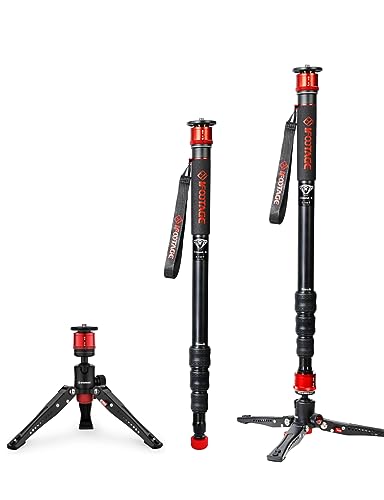
- 2.76-pound aluminum body with 71.7-inch reach
- Compact 27.2-inch folded length
- Quick-disconnect design and detachable mini-tripod base
Best For: Portable wedding coverage with fast setup
Best One-Handed Carbon Fiber Pick
SmallRig 65.6" Ball Head Monopod

- One-touch height adjustment
- Lightweight 1.73kg carbon fiber build
- 5kg ball head with accessory mounts
Best For: Fast-moving wedding coverage in confined spaces
Best Budget Support Base
NEEWER Extendable Camera Monopod
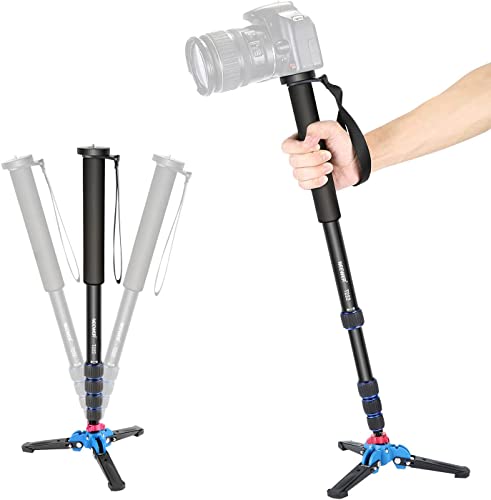
- Detachable three-leg support base
- 168cm maximum height
- 360-degree rotation with 15-degree tilt
Best For: Flexible wedding setups with added base support
Best Heavy-Duty Carbon Fiber Option

- 20kg maximum load capacity
- One-key height adjustment
- Detachable 190mm support feet
Best For: Heavier wedding camera and camcorder rigs
Versatile Setup
SmallRig CT-10 Camera Tripod Monopod

- Converts from tripod to monopod
- 360-degree ball head for multiple angles
- 16- to 71-inch height range
Best For: Wedding shooters needing one flexible support system
Travel Ready
Manbily A-222 Monopod with Feet

- Lightweight 0.67-kilogram aluminum build
- 21- to 67-inch adjustment range
- Includes removable base and two feet
Best For: Mobile shooters who value portability and fast setup
Fluid Motion
NEEWER TP78 Monopod with Fluid Head

- 360-degree pan and -70/+90-degree tilt
- 74.8-inch maximum height
- Removable base and Manfrotto-system plate
Best For: Wedding videographers prioritizing controlled camera movement
Best All-Around Support – COMAN KX3232Q6 Fluid-Head Monopod
For wedding videographers who need flexible camera monopods for wedding videography, the COMAN KX3232Q6 combines a 73.2-inch reach, fluid head, and detachable feet. Its 22-pound capacity and multiple setup modes make it suitable for changing angles and camera configurations throughout a busy event.
Best For: Videographers who want one adaptable monopod for upright, low-angle, overhead, and supported shots.
Pros:
- Q6 fluid head supports 360-degree panning and +90/-60-degree tilt.
- 22-pound load capacity accommodates cameras and compatible setups.
- Detachable base provides fixed-monopod, stand, low-angle tripod, and desktop-tripod configurations.
- Quick-release plate, folding board, and built-in hex keys streamline setup.
Cons:
- At 3.9 pounds, it is heavier than some travel-focused options.
- Its 26-inch minimum height and 64 cm folded size may be less compact for small bags.
- The aluminum construction is not listed as water resistant.
The KX3232Q6 is a versatile choice when wedding coverage demands stable support without committing to a full tripod. Its fluid head and modular base are particularly useful for transitions between ceremony, reception, and creative low-angle work.
Best for Fast Repositioning – SIRUI SVM-165 Carbon Fiber Monopod
The SIRUI SVM-165 is a strong option among camera monopods for wedding videography when quick height changes and mobility matter. Its one-step twist-lock adjustment, carbon-fiber build, and 22-pound load rating support fast-moving coverage without excessive carrying weight.
Best For: Wedding videographers who frequently change positions and shooting heights during live events.
Pros:
- Rapid twist-lock system adjusts the shooting height in one step.
- Carbon-fiber construction keeps weight to 3.4 pounds while supporting up to 22 pounds.
- Modular 3-in-1 design works as a monopod with feet, extension rod, or low-angle tripod.
- Quick-release system and reversible 1/4-inch and 3/8-inch screw improve compatibility.
Cons:
- Its 65-inch maximum height is shorter than several alternatives in this group.
- The listed minimum and folded height is 32.3 inches, limiting compactness.
- The supplied details list differing warranty durations, so buyers should verify current coverage.
The SVM-165 prioritizes efficient movement and rapid setup. Its lighter carbon-fiber design and one-step adjustment make it well suited to ceremonies and receptions where missing a moment is a bigger concern than reaching maximum monopod height.
Best Value Fluid-Head Kit – Cayer FP34 Video Monopod
The Cayer FP34 offers a practical package for camera monopods for wedding videography, pairing a 71.2-inch aluminum monopod with a fluid head and folding three-leg base. It is designed for fast setup and travel while retaining useful pan, tilt, and portrait-orientation controls.
Best For: Wedding shooters seeking an included fluid head and stable base at a moderate 13.2-pound capacity.
Pros:
- Included fluid head provides 360-degree panning and +90/-50-degree tilt.
- Four-section aluminum leg uses quick flip locks and reaches 71.2 inches.
- Pivoting foot supports swiveling, tilting, and a 90-degree drop notch for portrait orientation.
- Removable feet can function as a small tabletop tripod.
Cons:
- Its 13.2-pound capacity is lower than the COMAN and SIRUI options.
- At 4.2 pounds, it is the heaviest listed monopod in this selection.
- The included standard quick-release plate may require a separately purchased compatible plate for some setups.
The FP34 is a sensible kit for videographers who want core fluid-head functionality without assembling separate components. Its pivoting base and portrait drop-notch add useful flexibility for wedding details and vertical coverage.
Best Lightweight Deployment – IFOOTAGE Cobra 3 A180T
The IFOOTAGE Cobra 3 A180T is a lightweight choice among camera monopods for wedding videography. Its 2.76-pound aluminum body, 71.7-inch maximum height, twist-lock joints, and automatic quick-disconnect mechanism favor fast deployment when moving between wedding locations or shooting positions.
Best For: Videographers who value low carry weight, quick setup, and a compact folded profile.
Pros:
- Lightweight 2.76-pound design is easy to carry between locations.
- Reaches 71.7 inches and folds to 27.2 inches.
- Detachable mini-tripod base creates a versatile 3-in-1 support system.
- Automatic quick-disconnect mechanism and convertible 1/4-inch and 3/8-inch mounts speed equipment changes.
Cons:
- Its 17.6-pound payload is below the 22-pound ratings of some competing models.
- The supplied details do not specify a fluid head as included.
- The warranty is listed as 12 months, shorter than the longer coverage noted for some alternatives.
The Cobra 3 A180T makes a strong case for portability without giving up full event-height reach. It is especially appealing when a wedding videographer needs to move quickly and prefers a compact, low-profile support base.
Best One-Handed Carbon Fiber Pick – SmallRig 65.6" Ball Head Monopod
For wedding videographers who need camera monopods for wedding videography in crowded venues, the SmallRig 65.6-inch carbon fiber monopod combines a compact 68cm folded length with one-touch height adjustment. Its ball head, bubble level, and 5kg head capacity suit fast-moving ceremony and reception coverage.
Best For: Wedding videographers who prioritize quick, one-handed repositioning and a lightweight carbon fiber setup.
Pros:
- One-touch locking allows rapid height changes during active shoots.
- Carbon fiber construction weighs 1.73kg and folds to 68cm.
- Ball head supports up to 5kg and includes a built-in bubble level.
- 1/4-inch locating hole and dual-thread spigot support accessory expansion.
Cons:
- The ball head is rated for 5kg, lower than the leg capacity.
- It does not include a tripod-style support base.
The SmallRig is a strong choice when portability and quick operation matter more than hands-free standing. Its carbon fiber build and accessory-mounting options make it adaptable for wedding-day camera configurations.
Best Budget Support Base – NEEWER Extendable Camera Monopod
For camera monopods for wedding videography that need extra flexibility, the NEEWER T222 pairs a 66-inch aluminum monopod with a detachable, foldable three-leg base. Its 15-degree tilt and 360-degree panoramic rotation can help wedding shooters adjust framing while keeping the setup portable.
Best For: Wedding videographers seeking an aluminum monopod with a detachable support base and broad angle adjustment.
Pros:
- Extends to 168cm and folds to a relatively compact 52cm.
- Detachable three-leg base provides additional support.
- 15-degree base tilt enables 360-degree panoramic rotation.
- Five-section adjustment system supports varied shooting heights.
Cons:
- The manufacturer notes that the monopod must be held when a camera is mounted.
- Aluminum construction is less lightweight than the listed carbon fiber alternatives.
- The base is not described as water resistant.
The NEEWER stands out for wedding crews that value adaptable positioning and a supportive base without moving to a more specialized system. It remains best used with a hand on the monopod, especially with a camera attached.
Best Heavy-Duty Carbon Fiber Option – COMAN M1 62.8" Monopod
For demanding camera monopods for wedding videography, the COMAN M1 offers a 20kg load rating, one-key height adjustment, and detachable 190mm support feet. It folds to 60.5cm and weighs 1.43kg, making it a practical option for videographers moving between ceremony, portraits, and reception locations.
Best For: Wedding videographers using heavier camera, camcorder, or accessory-equipped rigs who still want a travel-friendly monopod.
Pros:
- 20kg maximum load rating supports substantial camera setups.
- One-key adjustment extends the monopod to 160cm quickly.
- Carbon fiber construction weighs 1.43kg and folds to 60.5cm.
- Detachable steel support feet and three 1/4-inch ports expand shooting options.
Cons:
- No head is included, so a compatible head may be needed.
- The listed minimum height is 28 inches, limiting very low setups.
- Its 62.8-inch maximum height is slightly shorter than the tallest option here.
The COMAN M1 is the most load-focused choice in this group while remaining relatively light to carry. Its detachable base and dual top screws make it particularly adaptable for professional wedding rigs, provided you supply the appropriate head.
Versatile Setup – SmallRig CT-10 Camera Tripod Monopod
For wedding videographers who need flexibility between locked-off shots and mobile coverage, the SmallRig CT-10 is a 2-in-1 option among camera monopods for wedding videography. It converts from an aluminum tripod to a monopod, reaches 71 inches, and includes a 360-degree ball head for horizontal or vertical shooting.
Best For: Wedding shooters who want one support system for travel, portraits, detail shots, and general event coverage.
Pros:
- Converts between a tripod and monopod for flexible shooting setups.
- 360-degree ball head supports horizontal and vertical positioning.
- Adjusts from 16 to 71 inches with four-section legs and flip locks.
- Supports up to 33 pounds vertically and includes extra 1/4-inch mounting threads.
Cons:
- At 3.4 pounds, it is heavier than a simple monopod.
- Telephoto zoom lenses may require an additional tripod or lens mount for balance.
- The ball head is not a dedicated fluid video head.
The CT-10 is a practical choice when a wedding kit needs both a stable tripod and a quickly deployable monopod. Its larger folded size and weight are worth considering if you will move constantly between ceremony and reception locations.
Travel Ready – Manbily A-222 Monopod with Feet
The Manbily A-222 is a lightweight option for camera monopods for wedding videography, combining a five-section aluminum column with a removable three-foot base. Its quick-lock design adjusts from 21 to 67 inches, while interchangeable rubber and metal feet adapt to paved surfaces or softer ground.
Best For: Mobile wedding videographers who prioritize portability and quick height adjustments during changing event locations.
Pros:
- Lightweight 0.67-kilogram design with a compact 21-inch folded size.
- Supports up to 15.5 pounds for compatible camera setups.
- 1/4-turn locks allow fast adjustment from 21 to 67 inches.
- Includes a wrist strap plus rubber and metal interchangeable feet.
Cons:
- The base is intended to increase stability, not function as a standalone tripod.
- It has no ball head or dedicated video head.
- For better stability, the manufacturer recommends avoiding the smallest tube section when extended.
The A-222 suits run-and-gun coverage where low weight matters more than hands-free support. Keep the wrist strap around your hand, especially when repositioning quickly or working around guests.
Fluid Motion – NEEWER TP78 Monopod with Fluid Head
For wedding videographers making pans and tilts during ceremonies or receptions, the NEEWER TP78 adds a fluid video head to a 74.8-inch aluminum monopod. It offers 360-degree panning, -70 to +90-degree tilting, a detachable base, and five-section adjustment from 26.8 to 74.8 inches.
Best For: Videographers who want smoother camera movement and a tall, adjustable monopod for DSLR cameras or camcorders.
Pros:
- Fluid head provides 360-degree pan and -70 to +90-degree tilt control.
- Detachable feet support uneven-ground positioning and can separate into a desktop tripod.
- Manfrotto-system quick-release plate includes 1/4- and 3/8-inch screws.
- Supports up to 13.2 pounds and includes a handle, lanyard, and carrying bag.
Cons:
- Its 13.2-pound capacity is lower than the SmallRig CT-10’s listed vertical capacity.
- At 3.8 pounds, it is not the lightest option for extended movement.
- The support base is removable, but the product remains more involved than a basic monopod.
The TP78 is the strongest fit here for video-first operation because its pan-tilt fluid head is designed for controlled movement. Its height, accessories, and removable base make it adaptable, though its weight may matter during long wedding days.
How We Picked the Best Camera Monopods for Wedding Videography
We focused on the features that matter during real wedding shoots: maximum height, load capacity, construction, base stability, head movement, portability, and adjustment speed. Models with removable or foldable feet received attention because they can provide extra support during stationary shots without sacrificing monopod mobility. We also considered whether a design is better suited to lightweight mirrorless cameras, DSLR kits, or heavier video rigs.
Specifications can vary by configuration, so confirm the manufacturer’s stated load rating and included head before buying. A monopod’s capacity should comfortably exceed the combined weight of your camera, lens, microphone, monitor, and other accessories.
Quick Comparison
| Feature | What to look for | Best suited to |
|---|---|---|
| Carbon fiber | Lower weight and good vibration control | All-day handheld-style coverage and travel |
| Aluminum | Typically affordable and durable | Budget-conscious wedding teams and frequent setup changes |
| Feet or mini base | Extra support when standing in one position | Ceremonies, speeches, and static framing |
| Fluid head | Smoother pans and tilts | Video cameras, tracking, and cinematic movement |
| Ball head | Fast angle adjustment | Hybrid photo/video use and rapidly changing compositions |
Key Buying Factors for Camera Monopods for Wedding Videography
Stability and Base Design
Feet can reduce fatigue and help hold a composition, but they do not turn a monopod into a fully safe unattended tripod. Look for a strong locking mechanism, a secure base, and enough spread for your working environment. Keep a hand on the rig whenever guests, children, or crowded dance floors could bump it.
Head Movement and Compatibility
A fluid head is generally preferable for controlled video pans and tilts. A ball head is faster for repositioning but may be less predictable for smooth motion. Check mounting threads, quick-release compatibility, and whether your camera plate clears the lens or battery grip.
Weight, Height, and Capacity
A taller monopod can help you shoot over guests, while a compact model is easier to carry between venues. Carbon fiber is often the better choice for long days, but aluminum can deliver excellent value. Choose a load rating with meaningful headroom rather than matching your rig’s weight exactly.
Adjustment Speed and Transport
Fast-locking sections, one-step height adjustment, and foldable bases are useful when moving from the aisle to the reception. Measure the folded length against your camera bag or carry-on before purchasing.
Who Should Buy Which Camera Monopods for Wedding Videography?
Choose a carbon-fiber monopod if you cover multiple locations or carry equipment for eight to twelve hours. Select an aluminum model if durability, value, and frequent setup changes matter most. For smooth ceremony and reception movement, prioritize a fluid head. For hybrid shooters who alternate between stills and video, a ball-head design may be more versatile.
Models with removable feet are a strong all-around choice for wedding videographers who need occasional hands-free support but still want a mobile setup. Higher-capacity options make more sense for cinema cameras, long lenses, monitors, or wireless video accessories. Before the event, test the locks, base, head, and quick-release plate with your complete rig so setup problems do not appear during the ceremony.