If you need fast access to SATA hard drives or SSDs on a Mac, the right dock can make backups, cloning, and file transfers much simpler.
Below, we’ve narrowed the field to 10 options that balance compatibility, speed, and everyday usability for Mac users.
Best 10 Hard Drive Docking Stations for Mac Picks for 2026
Basic Single-Bay SATA Dock
SABRENT USB 3.0 to SATA Hard Drive Docking Station
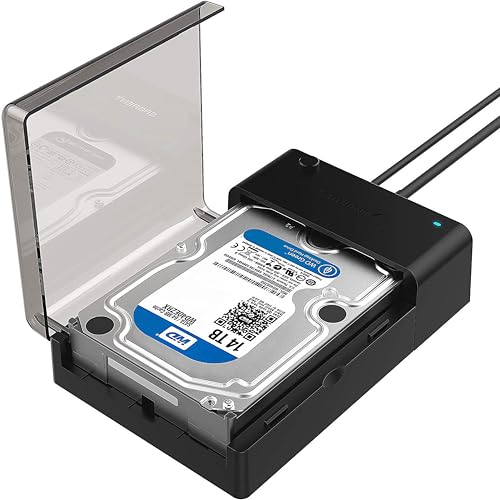
- Works with 2.5-inch and 3.5-inch SATA drives
- Tool-free plug-and-play design on macOS
- Includes 12V adapter for 3.5-inch stability
Best For: Simple bare-SATA drive access on Macs with USB-A
Premium Dual-Drive USB-C Dock
OWC Drive Dock USB 10Gb/s Dual Bay SATA/U.2 NVMe

- Dual-bay dock for SATA and U.2 NVMe drives
- Includes USB-C and USB-A cables
- Internal power supply with fanless aluminum housing
Best For: Power users needing dual-drive support and wider format flexibility
Value Lay-Flat SATA Dock
ORICO Hard Drive Lay-Flat Docking Station
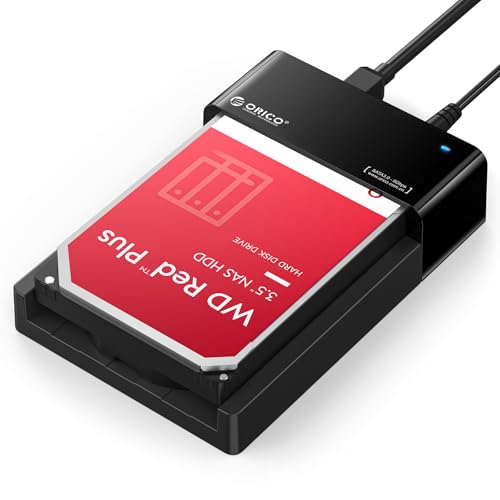
- Supports 2.5-inch and 3.5-inch SATA drives up to 24TB
- USB 3.0 with UASP and tool-free hot swap
- Includes power adapter, cable, and adapter converter
Best For: Affordable single-drive SATA tasks on Mac
Dual-Bay Cloning Dock
SABRENT USB 3.0 Dual Bay Hard Drive Docking Station & Cloner
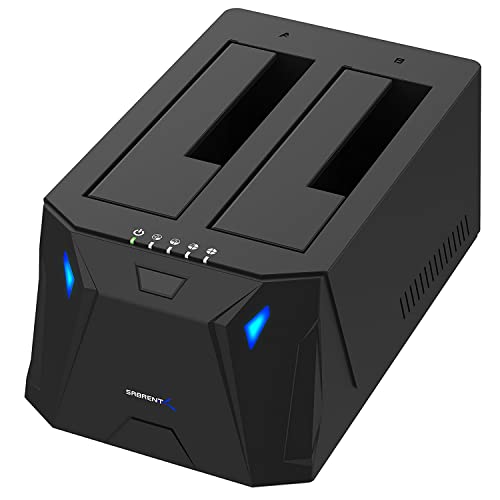
- Two-bay SATA dock for drives or SSDs
- Offline cloning support for drive duplication
- Plug-and-play USB 3.0 operation
Best For: Mac users who need SATA cloning and dual-drive handling
Dual-Drive USB 3.0 Dock
Thermaltake BlacX Duet dual-bay SATA dock

- Supports 2.5-inch and 3.5-inch SATA I/II/III drives
- USB 3.0 SuperSpeed up to 5.0 Gbps
- Works with Windows and Mac OS, hot-swappable
Best For: Mac users who want a straightforward dual-bay SATA dock
USB-C Cloning Dock
SABRENT EC-CH2B dual-bay USB-C cloning dock

- Offline 1-to-1 cloning with no computer needed
- Mounts two SATA drives and reads/writes both
- USB-C connection, plug-and-play on Mac
Best For: Mac users who want dual-drive access plus offline cloning
Single-Bay USB 3.0 Dock
SABRENT EC-UBLB single-bay SATA dock
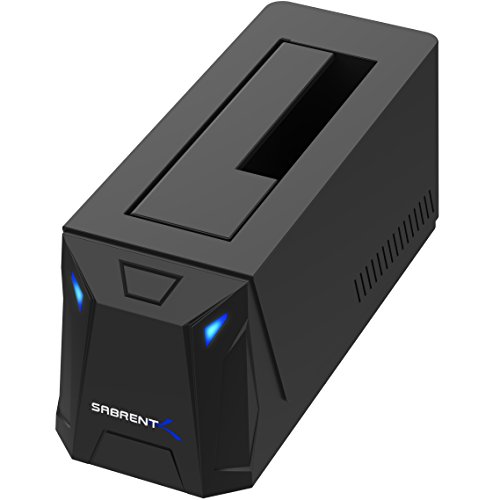
- Supports 2.5-inch and 3.5-inch SATA HDDs and SSDs
- USB 3.0 with UASP up to 5Gbps
- Works with Mac Disk Utility for new drives
Best For: Mac users who want a simple one-drive dock with UASP speed
Dual-Bay Offline Clone Dock
WAVLINK USB 3.0/USB-C SATA Dock

- Dual-bay support for 2.5-inch and 3.5-inch SATA drives
- Offline clone function works without a computer
- USB 3.0 with UASP and tool-free hot-swap design
Best For: Intel Mac users who need dual-drive backup and cloning
Fast USB-C Single-Bay Dock

- 10Gbps USB-C connection for fast SATA access
- Supports 2.5-inch and 3.5-inch drives up to 20TB
- Tool-free hot-swap design with USB-A and USB-C cables
Best For: Mac users who want a fast single-drive dock with simple setup
Four-Bay Clone Dock

- Supports up to four 2.5-inch or 3.5-inch SATA drives
- Offline clone function with LED progress indicators
- Trayless USB 3.0 design for easy drive swaps
Best For: Mac users who need to manage and clone multiple drives
Basic Single-Bay SATA Dock – SABRENT USB 3.0 to SATA Hard Drive Docking Station
If you want a straightforward option for hard drive docking stations for mac, this SABRENT dock keeps the focus on bare SATA drives and simple plug-and-play use. It works with 2.5-inch and 3.5-inch SATA HDDs and SSDs, and the included 12V adapter helps keep 3.5-inch drives running reliably.
Best For: Mac users who need a simple single-bay SATA dock for drive access, backups, or quick transfers.
Pros:
- Supports 2.5-inch and 3.5-inch SATA I/II/III drives and SSDs
- Tool-free, hot-swap design with no drivers needed on macOS
- Includes 12V power adapter for 3.5-inch drive stability
- USB 3.0 with UASP support for faster transfers on a compatible host
Cons:
- USB Type-A host cable is included, not USB-C
- Does not support IDE/PATA, M.2, SAS, or drives already in an enclosure
- S.M.A.R.T. diagnostics are not passed through the USB bridge
For Mac setups with a USB-A port, this is an easy dock to recommend if your goal is basic SATA drive access rather than broad format support. It is best suited to users who know they have a bare SATA drive and want a no-frills bay that works out of the box.
Premium Dual-Drive USB-C Dock – OWC Drive Dock USB 10Gb/s Dual Bay SATA/U.2 NVMe
Among hard drive docking stations for mac, this OWC model stands out if you want two bays, faster 10Gb/s connectivity, and support for more drive types. It can handle SATA drives plus U.2 NVMe, includes both USB-C and USB-A cables, and uses an internal power supply instead of a bulky external brick.
Best For: Mac users who want a high-end dock with dual-drive support, internal power, and room to grow.
Pros:
- Dual-bay design supports simultaneous drive operation
- Includes USB-C and USB-A cables for broader Mac compatibility
- 10Gb/s USB 3.2 connectivity with up to 1010MB/s stated performance
- Built-in power supply and fanless aluminum enclosure
Cons:
- More expensive and heavier than a basic single-bay dock
- Best fit for users who actually need U.2 NVMe or dual-drive use
- Some drive formats require the right adapter to use
This is a strong pick when you want one dock for both SATA and certain NVMe workflows on a Mac. The extra flexibility and cleaner power setup make it a practical upgrade for users who move data between multiple drives often.
Value Lay-Flat SATA Dock – ORICO Hard Drive Lay-Flat Docking Station
If you’re comparing hard drive docking stations for mac and want a simple, budget-friendly lay-flat design, this ORICO dock covers the essentials. It supports 2.5-inch and 3.5-inch SATA drives, offers USB 3.0 with UASP, and includes the power and cable accessories you need to get started.
Best For: Mac users looking for an affordable SATA-only dock for backups, cloning, and drive swaps.
Pros:
- Supports 2.5-inch and 3.5-inch SATA HDDs and SSDs up to 24TB
- USB 3.0 with UASP for up to 5Gbps connectivity
- Tool-free, hot-swappable lay-flat design
- Includes 12V adapter, USB cable, adapter converter, and manual
Cons:
- SATA-only design, so it does not cover NVMe or M.2 drives
- Single-drive dock with no multi-bay expansion
- Uses a USB Type-A connection, not native USB-C
This ORICO dock is a practical fit for Mac users who mainly need dependable access to one SATA drive at a time. Its included accessories and simple hot-swap layout make it easy to keep around for backups or one-off migrations.
Dual-Bay Cloning Dock – SABRENT USB 3.0 Dual Bay Hard Drive Docking Station & Cloner
For users shopping hard drive docking stations for mac with cloning in mind, this SABRENT dual-bay unit is built for simple offline duplication as well as normal drive access. It supports 2.5-inch and 3.5-inch SATA hard drives or SSDs, and the dual slots make it easy to compare, copy, or swap between two drives.
Best For: Mac users who want a dual-bay SATA dock with offline cloning support.
Pros:
- Dual-bay design supports two SATA drives or SSDs
- Offline cloning function for drive-to-drive duplication
- Plug-and-play operation with no drivers needed
- USB 3.0 transfer speeds up to 5Gbps
Cons:
- Limited to SATA drives, not NVMe or M.2
- Listed support tops out at 10TB drives in the supplied notes
- Uses USB 3.0 rather than a newer USB-C dock design
This is the right choice if your Mac workflow includes cloning old drives or managing two SATA disks at once. It gives you the convenience of a dock plus the utility of a standalone duplicator in one compact unit.
Dual-Drive USB 3.0 Dock – Thermaltake BlacX Duet dual-bay SATA dock
If you want one of the simpler hard drive docking stations for Mac, the Thermaltake BlacX Duet keeps things straightforward: it supports 2.5-inch and 3.5-inch SATA drives, works with Mac OS, and uses USB 3.0 for quick transfers. The hot-swap, plug-and-play design makes it easy to drop in a drive when you need access without installing extra software.
Best For: Mac users who want a basic dual-bay SATA dock for fast, no-fuss drive access.
Pros:
- Supports 2.5-inch and 3.5-inch SATA I/II/III drives
- USB 3.0 SuperSpeed with up to 5.0 Gbps transfer rate
- Hot-swap support and plug-and-play setup
- Compatible with Windows and Mac OS
Cons:
- Does not include cloning features
- No software bundled, so setup stays manual
- Uses a traditional USB 3.0 connection rather than USB-C
Overall, this is a practical dock for everyday SATA drive handling on a Mac, especially if you value simple access over extra features. It is a solid fit for users who just need quick plug-in storage without a learning curve.
USB-C Cloning Dock – SABRENT EC-CH2B dual-bay USB-C cloning dock
For hard drive docking stations for Mac with a little more flexibility, the SABRENT Dual-Bay USB-C dock stands out because it can read and write two SATA drives at once and also clone drives offline without a computer. It supports 2.5-inch and 3.5-inch SATA HDDs and SSDs, and the included USB-C cable makes it a good match for newer Macs with USB-C ports.
Best For: Mac users who want a dual-bay dock for file access and simple offline cloning.
Pros:
- Offline 1-to-1 cloning without a computer
- Reads and writes two drives at once when connected
- Supports 2.5-inch and 3.5-inch SATA HDDs and SSDs
- USB 3.0 speeds up to 5Gbps with Mac compatibility
Cons:
- Only supports SATA drives, not IDE/PATA, M.2, or NVMe
- Offline cloning is limited to up to 60MBps by design
- Requires a USB-C port or separate USB-C to USB-A cable
This dock is a smart pick if you want more than just basic drive mounting on a Mac. The offline cloning function adds real utility for drive upgrades, while the dual-bay design keeps file transfers convenient.
Single-Bay USB 3.0 Dock – SABRENT EC-UBLB single-bay SATA dock
If you need a no-frills option among hard drive docking stations for Mac, the SABRENT USB 3.0 dock covers the essentials well. It takes standard 2.5-inch and 3.5-inch SATA drives and SSDs, supports Mac Disk Utility for new drive setup, and uses USB 3.0 with UASP for up to 5Gbps performance.
Best For: Mac users who want a simple single-bay SATA dock with fast USB 3.0 access.
Pros:
- Supports 2.5-inch and 3.5-inch SATA HDDs and SSDs
- USB 3.0 with UASP and up to 5Gbps speeds
- Plug in a new drive and initialize it in macOS Disk Utility
- Hot-swap support with clear LED status indicators
Cons:
- Single-bay design only supports one drive at a time
- Uses an AC adapter, so it is not bus-powered
- New or blank drives must be initialized before they appear
This is a solid everyday dock if you just want one SATA drive connected to a Mac without extra features. The sleep mode and LED indicators are useful touches, but the design stays focused on basic drive access.
Dual-Bay Offline Clone Dock – WAVLINK USB 3.0/USB-C SATA Dock
If you want hard drive docking stations for mac that can handle two SATA drives at once, this WAVLINK dock is built for straightforward backups, transfers, and offline cloning. It supports 2.5-inch and 3.5-inch HDDs and SSDs, works with Mac OS X, and uses a tool-free design so drive swaps stay simple.
Best For: Mac users who need a dual-bay dock for backup work and offline drive cloning.
Pros:
- Supports two 2.5-inch or 3.5-inch SATA HDDs/SSDs.
- Offers offline cloning without needing a computer.
- USB 3.0 with UASP support for up to 6Gbps transfer speed.
- Tool-free setup with hot-swapping support.
Cons:
- Offline cloning requires the target drive to be equal or larger than the source.
- Not compatible with M1/M2-based Mac systems.
For Mac users on compatible Intel-based systems, this is a practical dock if you value dual-drive support and cloning in one unit. The power switch, stable external power, and sleep mode add convenience for regular storage tasks.
Fast USB-C Single-Bay Dock – SABRENT DS-UC1B USB-C Dock
Among hard drive docking stations for mac, this SABRENT USB-C model is a strong pick if you want a simple single-bay dock with faster SATA access. It supports 2.5-inch and 3.5-inch SATA SSDs and HDDs, works with MacOS, and includes both USB-A and USB-C to USB-C cables for flexible setup.
Best For: Mac users who want a fast, easy-to-use single-bay SATA dock for one drive at a time.
Pros:
- USB 3.2 Gen 2×1 connection rated up to 10Gbps.
- Tool-free, hot-swappable dock for quick drive changes.
- Supports 2.5-inch and 3.5-inch SATA SSDs and HDDs.
- Includes both USB-A and USB-C to USB-C cables.
Cons:
- Single-bay design only handles one drive at a time.
- Plastic enclosure may feel less premium than metal alternatives.
This dock makes sense if your Mac workflow is mostly backup, transfer, and occasional drive access rather than multi-drive management. The included power adapter and broad compatibility make it a low-friction choice for everyday SATA use.
Four-Bay Clone Dock – SABRENT DS-U3B4 4-Bay Dock
If you need hard drive docking stations for mac that can manage multiple drives at once, this four-bay SABRENT dock is designed for bulk access and backups. It supports up to four 2.5-inch or 3.5-inch SATA HDDs and SSDs, connects over USB 3.0, and includes offline cloning with LED progress indicators.
Best For: Mac users who need a multi-drive dock for backups, cloning, and drive management.
Pros:
- Holds up to four SATA HDDs or SSDs in one dock.
- Offline clone function works without a computer.
- USB 3.0 connection supports up to 5Gbps transfer speeds.
- Trayless, tool-free design simplifies drive insertion and removal.
Cons:
- Uses USB 3.0 rather than faster USB-C/10Gbps connectivity.
- Bulkier than single-bay docks.
This is the most capable option in the group if your Mac setup regularly involves several SATA drives. It trades compactness for flexibility, making it a better fit for serious backup, cloning, or multi-disk workflows.
How We Picked the Best Hard Drive Docking Stations for Mac
We focused on Hard Drive Docking Stations for Mac that offer dependable macOS compatibility, practical drive support, and the right connection type for modern Apple setups. Priority went to docks with USB-C or USB 3.x performance, UASP support where available, and a layout that makes drive swaps easy. We also considered dual-bay and multi-bay designs for users who want cloning, while keeping single-bay options in the mix for simpler workflows.
Quick Comparison
Single-bay docks are usually best for quick access, occasional backups, and compact desks. Dual-bay models are the sweet spot for many Mac users because they can handle two drives at once and may support offline cloning. Four-bay docks are more specialized, making sense if you manage multiple drives regularly or need a small storage hub.
Key Buying Factors for Hard Drive Docking Stations for Mac
Connection and Speed
For newer Macs, USB-C is often the most convenient choice, while USB 3.0 docks remain perfectly usable if you already have the right ports or adapters. If you work with large photo, video, or archive files, faster 10Gb/s-class options can save time.
Drive Compatibility
Look for support for 2.5-inch and 3.5-inch SATA HDDs and SSDs if you want flexibility. Some docks also support broader use cases like dual-bay cloning, but not every model handles the same drive sizes or functions.
Mac Workflow Features
If you plan to clone drives, check that the docking station supports offline cloning and understand whether cloning is one-way or requires a source and target drive of equal or larger capacity. For backup and file access, a simple plug-and-play dock may be enough.
Build, Stability, and Cooling
A stable vertical or lay-flat design can reduce accidental disconnects, while solid base weight helps if you swap drives frequently. Cooling matters too, especially for long transfers or multi-bay docks that may run warmer under load.
Who Should Buy Which Hard Drive Docking Stations for Mac?
If you want the simplest setup, choose a single-bay USB dock for occasional drive access. If you need backups or cloning, go with a dual-bay model. Power users and technicians should consider a multi-bay dock for handling several drives at once. For most shoppers comparing Hard Drive Docking Stations for Mac, the best choice is the one that matches your port layout, drive mix, and how often you move data.