For editors, fast and reliable drive cloning can save hours during backups, replacements, and project handoffs. The right dock or duplicator makes it easier to copy large media libraries without interrupting your workflow.
Below, we focus on options that balance speed, capacity, offline cloning, and day-to-day usability for editing bays and mobile post-production setups.
Best 10 Hard Drive Duplicators for Video Editing Picks for 2026
Simple dual-bay clone dock
SABRENT EC-HD2B Dual-Bay Dock & Cloner
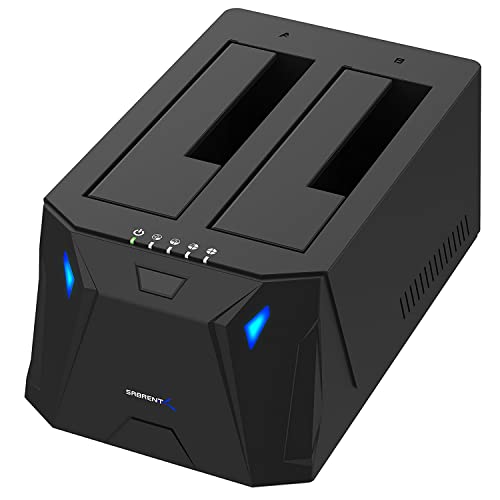
- Offline cloning without a computer
- Supports 2.5"/3.5" SATA HDDs and SSDs
- USB 3.0 plug-and-play dock
Best For: Editors who need an easy-to-use clone dock for SATA drives
IT-focused sector clone dock
StarTech SDOCK2U313R Dual-Bay Duplicator
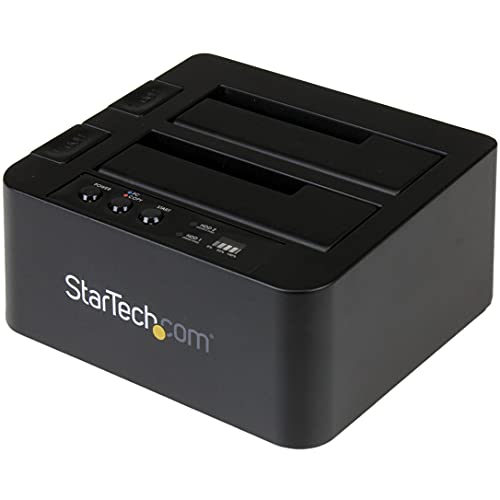
- Standalone sector-by-sector cloning
- Works as a USB-to-SATA dock
- Tool-less top-loading design
Best For: Editors and technicians who need full-disk duplication with no PC
High-capacity clone and dock
UGREEN 48TB Dual-Bay Clone Dock

- Offline cloning with two SATA bays
- Up to 32TB x 2 capacity support
- USB 3.0 with cooling and dust cover
Best For: Video editors with large SATA libraries who want simple cloning
Modern high-capacity clone dock
SUITOK Dual Bay 5Gbps Cloner Dock

- One-key offline cloning
- 5Gbps USB 3.2 Gen 1 transfer
- Supports up to 40TB total capacity
Best For: Editors wanting a stylish dual-bay dock with quick cloning
Standalone Cloner
Systor SYS101HS-DP standalone HDD/SSD duplicator

- No-PC cloning and erasing
- Supports 2.5-inch and 3.5-inch SATA HDD/SSDs
- Up to 90MB/s copy speed
Best For: Editors needing a simple standalone duplicator with secure drive sanitizing
Dual-Bay Clone Dock
ORICO DD28C3-C USB-C dual bay cloning dock

- Offline cloning with USB-C/USB-A support
- 2.5-inch and 3.5-inch SATA HDD/SSD compatibility
- Up to 22TB per drive and 5Gbps USB 3.0
Best For: Editors who want a dual-bay dock for cloning plus USB drive access
Clone Dock + Hub
MAIWO K3082H dual-bay cloner with USB hub

- Offline clone mode with no drivers
- Three USB 3.0 hub ports built in
- Supports 2.5-inch and 3.5-inch SATA drives
Best For: Editors who want cloning plus extra USB expansion on the same dock
Portable Triple-Bay Cloner
Rosewill M.2 NVMe & SATA SSD / HDD Dock

- Offline cloning without a host computer
- Supports M.2 NVMe, SATA SSD, and HDD drives
- USB 3.2 Gen 2x1 up to 10Gbps
Best For: Editors who need a compact, tool-free cloning dock for mixed drives
Dual-Bay SATA Dock

- Dual-bay dock for 2.5-inch and 3.5-inch SATA drives
- Offline cloning with tool-free installation
- USB 3.0 / USB-C with UASP up to 6Gbps
Best For: Video editors who need a simple dual-bay SATA dock for offline cloning
Four-Bay Copier and Wiper Station

- Standalone cloning, docking, and drive erasing
- Supports SATA and IDE 2.5-inch / 3.5-inch drives
- LCD menu with Quick Erase and Secure Erase
Best For: Editors and tech teams that need a standalone 4-bay copier and drive eraser
Simple dual-bay clone dock – SABRENT EC-HD2B Dual-Bay Dock & Cloner
If you’re shopping for hard drive duplicators for video editing, the SABRENT EC-HD2B is a practical dual-bay dock that handles 2.5-inch and 3.5-inch SATA HDDs or SSDs with no drivers required. It supports offline cloning and also works as a USB 3.0 docking station, making it useful for moving media drives between machines or creating quick backups.
Best For: Editors who want a simple dual-bay dock with offline cloning and broad SATA drive support.
Pros:
- Supports 2.5-inch and 3.5-inch SATA HDDs and SSDs.
- Offline cloning works without connecting to a computer.
- USB 3.0 connection supports transfer speeds up to 5Gbps.
- Plug-and-play design with no drivers needed.
Cons:
- Offline cloning speed is listed up to 60Mbps.
- Best suited to SATA drives rather than broader storage workflows.
For straightforward drive duplication and everyday media-shuttle duties, this Sabrent dock keeps things simple. It is a good fit if you want a compact cloning station that can also serve as a regular USB drive dock for editing storage.
IT-focused sector clone dock – StarTech SDOCK2U313R Dual-Bay Duplicator
Among hard drive duplicators for video editing, the StarTech SDOCK2U313R is built for users who want standalone cloning plus dock-style access in one unit. It copies 2.5-inch and 3.5-inch SATA drives sector by sector with no computer required, and it can also function as a USB-to-SATA dock for quick access to project drives.
Best For: Video editors and IT users who need full-disk cloning with no PC involved.
Pros:
- Standalone sector-by-sector cloning works without a computer.
- Supports 2.5-inch and 3.5-inch SATA HDDs and SSDs of any capacity.
- Can also be used as a USB-to-SATA adapter dock.
- Top-loading, tool-less design with eject buttons and status LEDs.
Cons:
- Target disk must be equal to or larger than the source disk.
- IDE support requires a separate adapter.
This is a strong choice when clone integrity matters more than extra features. Its sector-by-sector approach and IT-focused design make it well suited to careful drive migration, backups, and recovery workflows.
High-capacity clone and dock – UGREEN 48TB Dual-Bay Clone Dock
If you want hard drive duplicators for video editing that also cover large media libraries, the UGREEN dual-bay dock supports offline cloning and two SATA drives at once. It handles 2.5-inch and 3.5-inch SATA III drives, offers USB 3.0 transfer speeds, and is designed with cooling and protection features for regular desktop use.
Best For: Editors who need a high-capacity dual-bay dock for cloning and file transfers.
Pros:
- Offline cloning works without a computer.
- Supports two SATA drives at once, including 2.5-inch and 3.5-inch models.
- USB 3.0 connection provides up to 5Gbps transfer speeds.
- Includes 360-degree cooling, dust cover, and anti-slip pads.
Cons:
- Offline cloning requires the target drive to be at least as large as the source.
- Listed compatibility notes are more specific to SATA drives and older desktop/mobile OS versions.
For editors managing big footage archives, this dock is appealing because it combines cloning, high stated capacity, and basic protection features. It is a practical desktop tool when you want a simple SATA duplicator that can also serve as a storage dock.
Modern high-capacity clone dock – SUITOK Dual Bay 5Gbps Cloner Dock
For video editing setups that need fast drive swaps and offline duplication, this SUITOK dual-bay dock offers 5Gbps USB 3.2 Gen 1 transfer, one-key cloning, and support for 2.5-inch and 3.5-inch SATA drives. It is aimed at users who want a tool-free desktop duplicator that can also serve as a storage hub for large media libraries.
Best For: Editors who want a modern-looking clone dock with quick SATA transfers and easy drive handling.
Pros:
- One-key offline cloning works without a computer.
- USB 3.2 Gen 1 supports 5Gbps data transfer.
- Supports up to 40TB total capacity across both bays.
- Includes UASP, TRIM, and S.M.A.R.T. support.
Cons:
- Offline cloning still requires the target drive to be at least as large as the source.
- Many added design extras, like RGB lighting, are aesthetic rather than workflow-critical.
This dock stands out if you want a straightforward cloner with modern desktop styling and useful drive-health features. It fits well in a video editing workspace where fast access, easy swapping, and large-capacity SATA support all matter.
Standalone Cloner – Systor SYS101HS-DP standalone HDD/SSD duplicator
If you want hard drive duplicators for video editing workflows that can copy or erase drives without tying up a workstation, the Systor SYS101HS-DP is built for that kind of standalone job. It handles both HDDs and SSDs, supports 2.5-inch and 3.5-inch SATA drives without adapters, and copies data or entire drives at up to 90MB per second.
Best For: Editors and small teams who need a standalone duplicator for fast drive cloning and sanitizing.
Pros:
- Standalone operation requires no computer or software
- Supports 2.5-inch and 3.5-inch SATA HDDs and SSDs
- Copies at up to 90MB per second
- Can erase drives and supports DoD 5220.22-M sanitization
Cons:
- Only supports SATA drives
- Single 1:1 duplicator, not a multi-bay workflow hub
- Best suited to cloning and erasing rather than extra connectivity
For video editing setups that regularly move media drives, this Systor unit is a straightforward cloning tool with a strong focus on speed and sanitization. It is a practical pick when your priority is making exact drive copies quickly and keeping retired drives securely wiped.
Dual-Bay Clone Dock – ORICO DD28C3-C USB-C dual bay cloning dock
Among hard drive duplicators for video editing, the ORICO DD28C3-C stands out if you want a dock that doubles as a clone station and USB-connected enclosure. It supports 2.5-inch and 3.5-inch drives, offline cloning, and UASP/TRIM over USB 3.0 with transfer rates up to 5Gbps.
Best For: Video editors who want a dual-bay dock for both offline cloning and everyday drive access.
Pros:
- Offline clone mode works without a computer
- Supports 2.5-inch and 3.5-inch HDDs and SSDs
- USB-C to USB-A/C cable included for flexible connections
- Dual-bay design supports up to 22TB per drive
Cons:
- Clone mode requires the target disk to be larger than the source disk
- Two-bay design limits you to one source and one target at a time
- Plastic ABS build is more utilitarian than premium
This ORICO dock is a sensible choice if you need both cloning and a convenient way to work with SATA drives over USB. For editing teams that shuttle media between systems, its offline clone function and broad device compatibility make it especially practical.
Clone Dock + Hub – MAIWO K3082H dual-bay cloner with USB hub
If you are comparing hard drive duplicators for video editing, the MAIWO K3082H is appealing because it combines offline cloning with extra USB expansion. It supports 2.5-inch and 3.5-inch SATA HDDs and SSDs, handles up to 24TB per bay, and uses a 5Gbps USB 3.0 interface for fast transfers when connected to a computer.
Best For: Editors who want a cloning dock with built-in USB hub convenience.
Pros:
- Offline cloning works without a computer or drivers
- Supports 2.5-inch and 3.5-inch SATA HDDs and SSDs
- Three USB 3.0 hub ports add extra connectivity
- Independent 12V 3A power helps keep the dock stable
Cons:
- Still limited to two drives for cloning
- Requires the target drive to be at least as large as the source for clone jobs
- Best value comes when you also need the USB hub, not just duplication
The MAIWO is a practical pick for editing desks that need drive cloning plus a few extra USB ports in one compact unit. Its offline copy mode and stable external power make it a useful companion for moving media drives and centralizing storage.
Portable Triple-Bay Cloner – Rosewill M.2 NVMe & SATA SSD / HDD Dock
If you want hard drive duplicators for video editing that can move between field and desk work, this Rosewill unit stands out for its triple-bay design and offline cloning. It supports M.2 NVMe and SATA SSDs plus 2.5-inch and 3.5-inch HDDs, so it can serve as both a dock and a duplicator without a host computer.
Best For: Editors who need a compact, tool-free cloning dock for mixed drive types and quick on-the-go storage handling.
Pros:
- Offline cloning lets you duplicate drives without connecting to a computer.
- Supports M.2 NVMe, SATA SSDs, and 2.5-inch / 3.5-inch HDDs in one unit.
- USB 3.2 Gen 2×1 connection offers up to 10Gbps data transfer.
- Tool-free installation keeps drive swaps fast and simple.
Cons:
- Cloning is limited to offline use, so it is not an online duplicator workflow.
- Plastic enclosure may feel less rugged than metal alternatives.
For editors juggling SSD scratch disks and larger archive drives, this Rosewill dock is a flexible all-in-one option. The mix of cloning, docking, and high-speed USB makes it practical when you need speed and portability in a small footprint.
Dual-Bay SATA Dock – WAVLINK USB C / USB 3.0 Dock
This WAVLINK model is a straightforward choice if you are comparing hard drive duplicators for video editing and want a dock that handles everyday SATA drives with minimal setup. It works with 2.5-inch and 3.5-inch HDDs and SSDs, supports offline cloning, and adds USB 3.0 and USB-C connectivity for easy desktop workflows.
Best For: Video editors who need a simple dual-bay SATA dock for offline cloning and regular drive access.
Pros:
- Works with 2.5-inch and 3.5-inch SATA HDDs and SSDs.
- Supports offline cloning from source disk to target disk.
- UASP support delivers transfer speeds up to 6Gbps.
- Tool-free setup and no driver installation simplify use.
Cons:
- Offline cloning requires the target drive to be equal to or larger than the source.
- Not compatible with M1/M2-based Mac systems.
For basic duplicating and fast access to SATA media, this dock covers the essentials without adding complexity. It is a practical fit when your workflow centers on cloning, swapping, and moving large video files between standard drives.
Four-Bay Copier and Wiper Station – StarTech SATDOCK4U3RE
If your video workflow needs more than basic cloning, this StarTech unit is built like a heavier-duty tool for duplicating, erasing, and docking drives. It works as a standalone 1:3 HDD/SSD cloner, supports 2.5-inch and 3.5-inch SATA and IDE drives, and adds Quick Erase and Secure Erase options for drive sanitation.
Best For: Editors and tech teams that need a standalone 4-bay copier, dock, and drive eraser in one device.
Pros:
- Standalone duplication and erasure work without a host computer.
- Supports 2.5-inch / 3.5-inch SATA and IDE SSDs and HDDs.
- LCD menu makes mode selection and drive checks more practical.
- Includes Quick Erase and Secure Erase for drive sanitizing.
Cons:
- Target disk must be equal to or larger than the source disk for duplication.
- Bulkier 4-bay design is less portable than smaller docks.
For a studio or post-production environment, this model offers the broadest utility of the three. It is especially useful when you need to clone, wipe, and inspect multiple drives as part of a repeatable video asset workflow.
How We Picked the Best Hard Drive Duplicators for Video Editing
We prioritized models that fit real editing workflows: dependable cloning, support for 2.5-inch and 3.5-inch SATA drives, strong transfer performance, and simple offline operation. For editors handling large footage libraries, speed matters, but so does consistency when moving projects between workstations, backup drives, and archive media.
We also looked at capacity limits, bay count, power stability, and whether a unit doubles as a dock for daily access. That matters because Hard Drive Duplicators for Video Editing are often used for more than one task: cloning, reading, offloading, and quick drive swaps.
Quick Comparison
Dual-bay docks are usually the best fit for most editors because they offer a practical mix of cloning and everyday drive access. They are easier to live with on a desk, simpler to power, and often more affordable than higher-bay duplicators. Triple-bay and 4-bay units are better if you regularly duplicate multiple drives, maintain backup sets, or need to prepare several destination drives at once.
If you work with NVMe as well as SATA media, a hybrid dock can be useful, but SATA support remains the main priority for most video editing storage workflows.
Key Buying Factors for Hard Drive Duplicators for Video Editing
Speed and Interface
Look for USB 3.0, USB-C, USB 3.2, or UASP support if you want fast file transfers between shoots and edit bays. For offline cloning, the published duplication speed is more important than the USB rate. Higher duplication throughput helps when copying large SSDs or near-full HDDs.
Drive Compatibility and Capacity
Make sure the dock supports the drive sizes you actually use, especially 2.5-inch SSDs and 3.5-inch HDDs. Capacity support should match your archive needs; many editing teams now use large-capacity drives for 4K, 6K, and 8K media storage.
Offline Cloning and Erasing
Offline clone buttons are helpful when you need to duplicate a source drive without tying up a computer. Erase functions can also be valuable for repurposing drives, but they are most useful when they are clearly indicated and easy to control.
Workflow Flexibility
A dock that can both clone and act as a reader is often the smartest choice for editors. That dual use reduces desk clutter and lets you move from backup tasks to media ingest without changing hardware.
Who Should Buy Which Hard Drive Duplicators for Video Editing?
Choose a dual-bay model if you want the best everyday balance of cost, convenience, and cloning ability. Pick a higher-bay duplicator if you manage multiple archive copies, studio backups, or frequent drive refreshes. If your workflow includes both SATA and NVMe media, a hybrid dock may be the most practical long-term option.
For most editors, the best choice is the unit that fits your current drive format, supports your largest media volumes, and makes cloning easy enough to use regularly. That consistency is what turns a duplicator into a real workflow tool.