Finding dependable WiFi adapters for Linux can be harder than choosing a Windows-only dongle. Driver support, kernel compatibility, chipset behavior, and the intended Linux distribution all matter.
This roundup covers 10 USB options for desktops, laptops, Raspberry Pi systems, and other Linux devices, including compact budget adapters and faster dual-band or tri-band models.
Best 10 Wifi Adapters for Linux Picks for 2026
Best WiFi 6E Upgrade

- WiFi 6E support with 6GHz connectivity
- Dual adjustable antennas
- Compatible with many Linux distributions
Best For: Linux users with WiFi 6E routers
Best Long-Range Linux Adapter
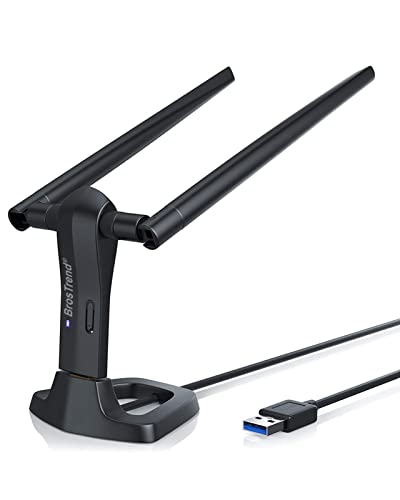
- Two adjustable 5dBi external antennas
- Supports PC and ARM architectures
- AC1200 dual-band speeds
Best For: Linux desktops and Raspberry Pi systems needing extra range
Best Compact Dual-Band Option

- Compact USB 3.0 design
- Dual-band AC1300 connectivity
- MU-MIMO and beamforming support
Best For: Portable Windows and compatible Mac setups
Best Plug-and-Play Linux Pick
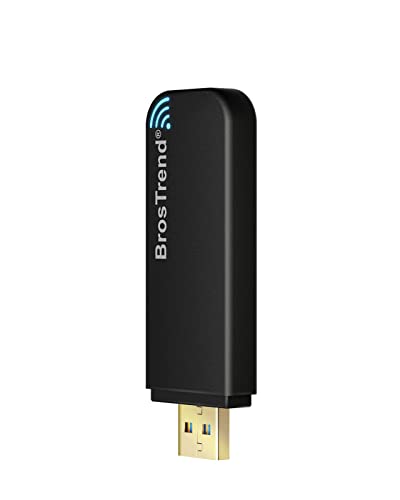
- Built-in support for Linux kernel 6.2+
- Dual-band AC1200 speeds
- Supports PC and ARM architectures
Best For: Linux users wanting straightforward installation
Best High-Gain Option

- Dual-band speeds up to 433 Mbps on 5GHz
- Adjustable 5dBi high-gain antenna
- Windows support; verify Linux drivers
Best For: Windows users prioritizing range and dual-band flexibility
Best Linux Plug-and-Play Pick

- Built-in driver support for Linux kernel 6.2+
- Works with many Linux distributions and ARM devices
- Dual-band Wi-Fi with adjustable 5dBi antenna
Best For: Linux users who want broad compatibility and easy setup
Best Nano Budget Option

- Ultra-compact nano USB design
- Linux kernel support from 2.6.18 to 4.4.3
- 2.4GHz-only speeds up to 150 Mbps
Best For: Older Linux systems needing a discreet basic adapter
Best Nano Dongle

- Tiny 19 × 14 × 5 mm design
- Low-power 2.4 GHz connectivity
- WPA3 and in-kernel Linux support
Best For: Compact Linux SBC projects
Best Compact WiFi 6 Pick

- Dual-band WiFi 6 connectivity
- Up to 600 Mbps on 5 GHz
- Compact USB 2.0 form factor
Best For: Portable Linux laptops and desktops
Best WiFi 6E Upgrade – Panda Wireless PAU0F AXE3000
The Panda Wireless PAU0F is a strong choice among wifi adapters for linux if you want access to the newer 6GHz WiFi 6E band. It uses USB 3.0, includes two adjustable antennas, and supports a broad selection of Linux distributions, including Ubuntu, Mint, Fedora, Manjaro, Kali, and Raspbian.
Best For: Linux users with a WiFi 6E router who want low-latency 6GHz connectivity and adjustable antenna positioning.
Pros:
- Supports WiFi 6E on Linux and Windows 11, including the 6GHz band.
- Dual adjustable antennas help optimize range and connection strength.
- Supports WPA, WPA2, and WPA3 security standards.
- Works with desktops, laptops, Raspberry Pi devices, and smartphones.
Cons:
- 6GHz support requires a compatible WiFi 6E router.
- Windows 10 is not supported for 6GHz use.
- Virtual machine guest OS use may require contacting Panda Wireless.
The PAU0F stands out when your network already supports WiFi 6E and you want a Linux-friendly adapter with flexible antenna placement. It is less compelling for older routers that cannot use the 6GHz band.
Best Long-Range Linux Adapter – BrosTrend AC1200 AC3L
The BrosTrend AC3L is one of the more practical wifi adapters for linux when signal range matters. Its two external 5dBi antennas, USB 3.0 extension cradle, and dual-band AC1200 performance suit desktops, Raspberry Pi systems, Odroid devices, and compatible Linux PCs.
Best For: Linux desktop and single-board-computer users who need adjustable external antennas and broad distribution support.
Pros:
- Offers up to 867Mbps on 5GHz and 300Mbps on 2.4GHz.
- Two 5dBi antennas rotate and adjust 360 degrees.
- Supports x86, x86_64, aarch64, and armhf architectures.
- Includes WPA3 support and multiple operating modes, including AP and P2P.
Cons:
- Requires Linux kernel 6.2 or newer for the listed broad compatibility.
- Some older distributions, including RHEL, CentOS, and openSUSE Leap, are unsupported.
- The external antenna setup is less compact than a small dongle.
With high-gain antennas and a long USB 3.0 cradle, the AC3L is particularly useful when the computer is positioned away from the router or needs better antenna placement. Check your kernel and distribution before buying.
Best Compact Dual-Band Option – TP-Link Archer T3U AC1300
The TP-Link Archer T3U is a compact dual-band USB adapter for users comparing wifi adapters for linux alongside Windows and macOS options. It supports up to AC1300 speeds, uses USB 3.0, and includes MU-MIMO and beamforming features, though the supplied compatibility details list Windows and older macOS versions rather than Linux.
Best For: Windows or compatible Mac users who want a small, portable dual-band adapter for desktops and laptops.
Pros:
- Supports dual-band 2.4GHz and 5GHz WiFi with AC1300-class speeds.
- Compact design is easy to carry between computers.
- USB 3.0 provides a high-speed connection to the host computer.
- MU-MIMO and beamforming are designed to help provide a smoother connection.
Cons:
- The supplied specifications do not list Linux support.
- Mac compatibility is listed only through OS X 10.14.
- It does not include the external antennas offered by some larger adapters.
The Archer T3U is a sensible compact choice for supported Windows and Mac systems, but Linux buyers should verify driver availability before purchase. Its portability is the main advantage over antenna-equipped alternatives.
Best Plug-and-Play Linux Pick – BrosTrend AC1200 AC1L
The BrosTrend AC1L is designed specifically for Linux users seeking wifi adapters for linux with simple setup. It works out of the box with distributions using kernel 6.2 or newer, supports several PC and ARM architectures, and provides dual-band AC1200 connectivity through USB 3.0.
Best For: Linux users who prioritize built-in kernel support, broad distribution compatibility, and a straightforward USB installation.
Pros:
- Plug-and-play operation is listed for Linux kernel 6.2 and newer.
- Supports Ubuntu, Mint, Debian, Raspberry Pi OS, Kali, Fedora, Arch, Manjaro, and more.
- Provides up to 867Mbps on 5GHz and 300Mbps on 2.4GHz.
- Supports x86, x86_64, aarch64, and armhf systems.
Cons:
- Older kernels may require the manual driver installer.
- Bluetooth is not supported.
- It has internal antennas rather than adjustable external antennas.
The AC1L is a well-targeted option for Linux installations where avoiding a separate driver search is important. Its internal antennas make it more compact, while users needing maximum range may prefer the externally antenna-equipped AC3L.
Best High-Gain Option – TP-Link Archer T2U Plus AC600
The TP-Link Archer T2U Plus is a practical choice among wifi adapters for linux shoppers who want dual-band connectivity and a large, adjustable antenna. However, the supplied compatibility information lists Windows support, so Linux users should verify driver availability before buying.
Best For: Windows desktop or laptop users who need improved range and flexible 2.4GHz/5GHz connectivity.
Pros:
- Dual-band AC600 speeds up to 433 Mbps on 5GHz and 200 Mbps on 2.4GHz.
- 5dBi high-gain antenna can be rotated toward the router.
- Supports Windows 11, 10, 8.1, 8, 7, and XP, with a two-year warranty.
Cons:
- The supplied notes list Windows compatibility but do not confirm Linux support.
- The external antenna makes it less discreet than a nano adapter.
Choose this model when reception and dual-band flexibility matter more than Linux-ready setup. For a Linux system, confirm a compatible driver before ordering.
Best Linux Plug-and-Play Pick – BrosTrend AC650 Linux Adapter
The BrosTrend AC650 stands out among wifi adapters for linux because it is designed to work out of the box with distributions using Linux kernel 6.2 or newer. It also supports a broad range of distributions and hardware platforms, making it a flexible USB upgrade.
Best For: Linux desktop, laptop, Raspberry Pi, and single-board computer users seeking broad compatibility.
Pros:
- Plug-and-play support with the built-in Linux driver on kernel 6.2 and newer.
- Compatible with Ubuntu, Mint, Debian, Raspberry Pi OS, Kali, Fedora, Arch, Manjaro, and more.
- Dual-band AC650 connectivity with speeds up to 433 Mbps on 5GHz and 200 Mbps on 2.4GHz.
- Adjustable 5dBi external antenna and support for x86, x86_64, aarch64, and armhf hardware.
Cons:
- Older Linux kernels may require the manual driver installer.
- Uses USB 2.0 rather than a faster USB interface.
This is the strongest fit of the three for Linux-focused buyers. Kernel 6.2-or-newer users get the simplest setup, while older-kernel users should confirm that their distribution is covered by the installer.
Best Nano Budget Option – TP-Link TL-WN725N N150
The TP-Link TL-WN725N is a tiny, simple option among wifi adapters for linux. It supports Linux kernels 2.6.18 through 4.4.3 according to the supplied notes, but it is limited to 2.4GHz and may require a separate driver installation.
Best For: Linux users with a supported older kernel who want a compact, low-profile adapter for basic wireless access.
Pros:
- Nano design can remain plugged in with minimal protrusion.
- Supports Linux kernel versions 2.6.18-4.4.3, plus Windows and selected Mac OS versions.
- Provides up to 150 Mbps on the 2.4GHz band and includes two-year support.
Cons:
- 2.4GHz only; it does not support 5GHz.
- Linux driver installation may be required.
- The stated Linux kernel range is older and narrower than the BrosTrend adapter’s listed support.
The TL-WN725N makes sense for older Linux systems, basic browsing, or situations where a nearly invisible dongle is the priority. It is less suitable for modern distributions or users who need 5GHz performance.
Best with Extra Features – AXE5400 Tri-Band Linux Adapter
For demanding wifi adapters for linux setups, the BrosTrend AXE5400 adds WiFi 6E connectivity through USB 3.0. Its tri-band design and adjustable antennas suit desktops, laptops, and supported Raspberry Pi systems, though installation and distribution compatibility require careful checking.
Best For: Linux users who want high-throughput 6 GHz and 5 GHz networking on supported Debian-based distributions.
Pros:
- AXE5400 tri-band speeds with up to 2,402 Mbps on 6 GHz and 5 GHz.
- Supports the 6 GHz band, OFDMA, MU-MIMO, and WPA3 security.
- Two adjustable antennas can improve reception and link quality.
- Supports x86 PCs and compatible Raspberry Pi hardware.
Cons:
- Requires driver installation before plugging in the adapter and an internet connection during setup.
- Not compatible with several distributions, including Arch Linux, Fedora Workstation, Kali Linux, and Manjaro.
- The 6 GHz band requires a recent Linux distribution.
This is the performance-focused option in the group, especially for supported Linux systems with a compatible WiFi 6E router. Verify your distribution before buying, since the listed exclusions are extensive.
Best Nano Dongle – WiFi 4 USB Adapter for Linux
This GenBasic nano dongle is a straightforward choice among wifi adapters for linux when low power use and a tiny footprint matter most. It provides 2.4 GHz WiFi 4 connectivity and is designed for Linux single-board computers with compatible in-kernel support.
Best For: Linux SBC users who need a compact, low-power 2.4 GHz adapter for basic wireless access.
Pros:
- Ultra-compact design helps keep adjacent USB ports clear.
- Low-power operation is designed for USB 2.0’s 500 mA budget.
- Supports current Linux LTS versions with no installation required for most kernels.
- Offers WPA3 SAE, AP mode, and monitoring/sniffing functionality.
Cons:
- Limited to 2.4 GHz WiFi 4 and up to 150 Mbps PHY speed.
- Linux support requires the CONFIG_MT7601U kernel option.
- Insufficient SBC power can cause disconnects or reduced throughput.
Choose this adapter for compatibility-oriented, space-constrained projects rather than high-speed networking. Check the kernel requirement and SBC power supply before relying on it for continuous use.
Best Compact WiFi 6 Pick – AX900 Mini Linux Adapter
The BrosTrend AX900 is a compact option for shoppers comparing wifi adapters for linux for everyday browsing, video calls, and coding. Its dual-band WiFi 6 connection fits mobile-friendly setups, while its listed support is focused on Debian-based distributions.
Best For: Linux laptop and desktop users who want a small dual-band WiFi 6 adapter for routine wireless work.
Pros:
- Dual-band WiFi 6 provides up to 600 Mbps on 5 GHz and 286 Mbps on 2.4 GHz.
- Very small 1.4 × 0.7 × 0.3-inch design minimizes port obstruction.
- Features 1024-QAM, MU-MIMO, BSS Color, and beamforming support.
- Works with supported PCs and Raspberry Pi hardware through USB 2.0.
Cons:
- Driver installation requires an internet connection.
- Not compatible with distributions including Arch Linux, Fedora Workstation, Kali Linux, and Manjaro.
- Its USB 2.0 interface is less suited to maximum-throughput use than USB 3.0 alternatives.
The AX900 balances modern WiFi 6 features with a discreet form factor. It is a practical everyday pick if your Linux distribution appears on the supported list and you value portability over peak speed.
How We Picked These Wifi Adapters for Linux
We focused on USB adapters that are explicitly marketed for Linux or commonly used with Linux-compatible systems. The selection spans basic 2.4GHz nano dongles, dual-band AC models, and newer WiFi 6 or WiFi 6E adapters. We also considered the range of supported distributions and devices, including Ubuntu, Mint, Kali, Raspberry Pi OS, Zorin, MX Linux, and other Debian- or Arch-based systems.
Compatibility claims can vary by kernel version and chipset revision, so buyers should verify the current driver instructions before ordering. A model that works immediately on one distribution may require a manual driver or firmware package on another.
Quick Comparison
- Best for maximum speed: Tri-band WiFi 6E adapters such as the Panda Wireless PAU0F and BrosTrend AXE5400.
- Best all-around choice: A dual-band AC1200 or WiFi 6 adapter offers a useful balance of speed, range, and cost.
- Best for simple upgrades: TP-Link AC600 and AC1300 models suit everyday browsing, streaming, and downloads.
- Best for compact installations: Nano-style adapters are convenient for small PCs, travel systems, and Raspberry Pi projects.
- Best for older hardware: N150 and basic 2.4GHz models can provide inexpensive wireless access without demanding USB 3.0 performance.
Key Buying Factors for Wifi Adapters for Linux
Chipset and Driver Support
Linux support depends more on the chipset and available driver than on the advertised wireless standard. Check whether the manufacturer provides Linux drivers, whether the adapter is supported by your kernel, and whether installation requires compiling or DKMS.
Wireless Standard and Bands
Dual-band adapters can use less congested 5GHz networks for better performance, while 2.4GHz generally offers longer range. WiFi 6 and WiFi 6E models can be worthwhile with a compatible router, but their advantages may be limited by older kernels, USB ports, or driver support. WiFi 6E also requires a 6GHz-capable router and regional support.
USB Connection and Antenna Design
USB 3.0 is preferable for faster adapters, particularly when transferring large files. A compact nano design minimizes clutter but may have less range than an adapter with an external or adjustable antenna. Avoid placing high-speed adapters beside heavily used USB 3.0 devices if interference affects performance.
Intended Device and Workload
Confirm that the adapter supports your hardware and operating system. Raspberry Pi, Odroid, desktop PCs, and laptops may have different power, port, and driver requirements. For web browsing, office work, and streaming, AC600 or AC1200 performance is usually sufficient; gaming, file transfers, and multiple users benefit from faster models.
Who Should Buy Which Wifi Adapters for Linux?
Choose a basic nano adapter for an inexpensive desktop replacement or light-duty Linux machine. Pick a dual-band AC1200 or AC1300 model for a practical everyday upgrade with stronger throughput. Choose a WiFi 6 adapter if you own a modern router and want improved efficiency on busy networks. For the highest potential speed and 6GHz access, consider a tri-band WiFi 6E model, but only after confirming Linux driver support for your exact distribution and kernel.