Organizing studio hardware becomes much easier when your interfaces, preamps, power conditioners, and processors have a secure, accessible home. The best rack systems for recording studios balance usable capacity with the right footprint, mobility, and protection.
This roundup covers compact desktop racks, open-frame AV stands, rolling cabinets, and road-ready cases so you can match your equipment and workspace without paying for capacity you will not use.
Best 10 Rack Ups Systems for Recording Studios Picks for 2026
Best Mobile Rack
12U Rolling Open-Frame Studio Rack

- 12U standard 19-inch rack capacity
- 550-pound steel-frame load rating
- Locking casters and included setup hardware
Best For: Mobile recording studios and live-sound equipment
Best Desktop Turret

- Compact 4U desktop format
- 20-degree angle improves equipment access
- Baltic birch plywood with included rack screws
Best For: Small home studios and desktop audio setups
Best Flexible Floor Rack
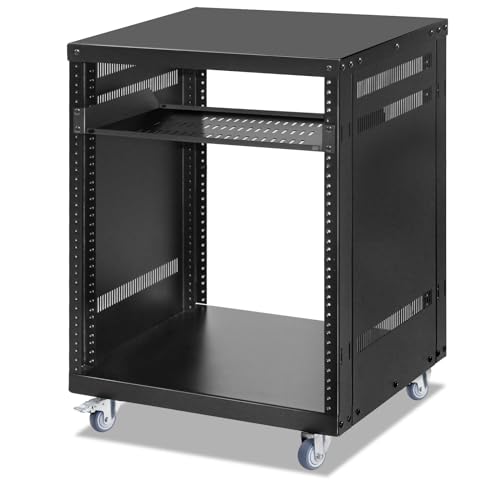
- 12U standard 19-inch rack capacity
- Adjustable shelf for non-rackable gear
- Open frame with four caster wheels
Best For: Mixed studio, AV, and networking equipment
Best Mid-Size Desktop Rack

- 8U of standard 19-inch rack space
- 20-degree angled turret design
- 14.4-inch depth with rear cable passthroughs
Best For: Home studios needing accessible mid-size desktop mounting
Best Mobile Capacity

- 12U open-frame rack with 18-inch depth
- 500-pound stated maximum capacity
- Lockable casters and top storage shelf
Best For: Mobile studio and AV setups needing accessible equipment storage
Best Compact Desktop Rack

- Compact 2U desktop format
- 12.75-inch rack depth
- 100-pound capacity with non-slip feet
Best For: Small home studios and control rooms
Best Large-Capacity Rack Case

- 24U steel rack with front and rear rails
- 440-pound stated load capacity
- Locking casters and bottom cable ports
Best For: Large studios and live-sound systems with extensive rack gear
Best with Extra Features
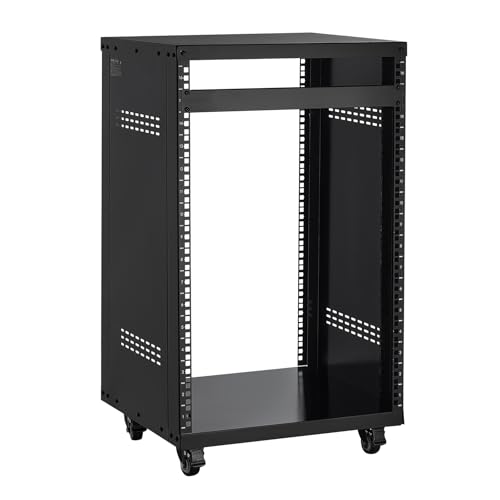
- 16U capacity with 200-pound weight rating
- Lockable casters and a top storage shelf
- Open access for wiring and maintenance
Best For: Larger studios and movable AV setups
Best Compact 6U Rack

- Six rack units for compact studio setups
- 14.7-inch internal rackable depth
- Baltic birch plywood with pre-installed rails
Best For: Home studios and desktop recording rooms
Best Small Footprint Rack

- Compact 2U, 19-inch-wide design
- 14-inch equipment depth
- Golden oak plywood finish with included rails
Best For: Small home studios with limited rack needs
Best Mobile Rack – 12U Rolling Open-Frame Studio Rack
For rack ups systems for recording studios that need substantial capacity and easy repositioning, the AxcessAbles 12U rack combines a steel open frame with locking wheels. Its standard 19-inch mounting format, 18-inch depth, and included hardware make it a practical choice for studio and audio equipment.
Best For: Recording studios, live-sound setups, and homelabs that need mobile storage for mixers, interfaces, preamps, power conditioners, or amplifiers.
Pros:
- 12U of standard 19-inch rack space with an 18-inch depth.
- Heavy-duty steel frame supports up to 550 pounds.
- Locking casters provide mobility while helping keep the rack in place.
- Open construction improves cable access and airflow; screws, spacer, blank panel, and assembly tool are included.
Cons:
- Open-frame construction provides less protection from dust than an enclosed cabinet.
- Assembly is required.
This is a strong all-around option when a studio needs more rack space and the flexibility to roll equipment into position. Its open design favors accessibility and ventilation over enclosure.
Best Desktop Turret – 4U Angled Baltic Birch Rack
For compact rack ups systems for recording studios, the Sound Town 4U desktop rack keeps equipment close at hand without requiring a floor cabinet. Its 20-degree turret angle improves visibility and operation, while the 12-inch depth suits smaller studio gear.
Best For: Home studios and desktop setups using up to four rack units of standard 19-inch audio equipment.
Pros:
- Compact 4U design fits on a desktop.
- 20-degree angled layout makes mounted equipment easier to view and operate.
- Solid Baltic birch plywood construction has a weathered brown finish.
- Pre-installed 10/32 rack rails and included screws simplify mounting.
Cons:
- Assembly is required.
- Its 12-inch depth may not accommodate deeper rack equipment.
This rack is a straightforward choice for producers who want accessible desktop mounting in a small footprint. Confirm your equipment depth before buying, especially if you plan to install larger interfaces or processors.
Best Flexible Floor Rack – 12U Adjustable-Shelf AV Rack
Among rack ups systems for recording studios, this 12U open-frame rack stands out for its adjustable shelf and compact floor design. The standard 19-inch format supports rack-mounted gear, while the shelf accommodates equipment that does not use conventional rack hardware.
Best For: Studios and AV workspaces combining rack-mounted equipment with routers, NAS units, CCTV hardware, or other non-standard components.
Pros:
- 12U of standard 19-inch rack space with a 17.7-inch mounting depth.
- Adjustable steel shelf adds flexibility for non-rackable equipment.
- Open-frame construction promotes airflow and provides cable access.
- Two locking and two swivel casters support repositioning.
Cons:
- Listed as unassembled.
- Open construction offers less enclosure than a cabinet-style rack.
- The 17.7-inch depth may limit compatibility with deeper equipment.
This model makes sense when a studio system includes both rack gear and loose components. Its shelf and caster layout add versatility, but users should check the depth of every device before loading the rack.
Best Mid-Size Desktop Rack – 8U Angled Studio Rack
For rack ups systems for recording studios that need more capacity than a small desktop unit, the Sound Town 8U rack offers an angled workspace-friendly design. Its 14.4-inch rackable depth, Baltic birch construction, and rear cable cutouts suit compact recording rooms.
Best For: Home studios needing accessible desktop storage for several standard 19-inch audio devices.
Pros:
- Provides 8U of standard 19-inch rack space.
- 20-degree turret angle improves equipment visibility and access.
- 15mm Baltic birch plywood construction offers a durable, finished appearance.
- Dual rear cable passthroughs support cable organization.
Cons:
- Assembly is required.
- Its 14.4-inch internal depth may not suit deeper rack equipment.
- Desktop format is less suitable for large floor-based systems.
This is a practical middle ground for a home studio: it offers useful capacity without taking up the space of a rolling rack. Measure your equipment carefully, particularly rear connectors and cable clearance.
Best Mobile Capacity – VEVOR 12U AV Rack Stand
For rack ups systems for recording studios that need flexible placement and generous capacity, the VEVOR 12U AV Rack Stand offers an open design, 18-inch depth, and lockable casters. Its steel frame is suited to audio, video, network, and server equipment while keeping wiring accessible.
Best For: Studios and shared spaces that need a movable, open-access rack for multiple components.
Pros:
- 12U capacity with support for equipment up to 18 inches deep.
- Heavy-duty Q235 carbon-steel construction with a stated 500-pound maximum capacity.
- Lockable caster wheels, an extra top shelf, removable side panels, and open front and back improve usability.
Cons:
- Open-frame construction provides less protection than an enclosed rack cabinet.
- At 33.1 pounds, it may be more rack than a small setup requires.
The VEVOR is a practical choice when mobility, ventilation, and straightforward cable access matter more than enclosure. Its included screws, cage nuts, casters, wrench, and manual also support a simpler installation.
Best Compact Desktop Rack – Gator Frameworks Elite 2U
For compact rack ups systems for recording studios, the Gator Frameworks Elite Series 2U Desktop Studio Rack keeps essential gear within reach without requiring a floor-standing cabinet. It is sized for preamps, audio interfaces, effects processors, and similar equipment in home studios or control rooms.
Best For: Home studios and control rooms that need a small, stable desktop rack for up to 2U of gear.
Pros:
- Compact 2U format fits neatly on a desktop.
- Provides a 12.75-inch mounting depth for compatible equipment.
- Sturdy 1-inch plywood construction, non-slip feet, and a 100-pound load capacity support stable use.
Cons:
- Only accommodates 2U of equipment.
- Its 12.75-inch depth is less suitable for deeper rack hardware.
- Desktop placement may not suit larger multi-component systems.
The Gator is a focused solution for organizing a few core studio devices. Choose it when a desktop footprint and stable access are more important than expansion room or caster-based mobility.
Best Large-Capacity Rack Case – Rockville RR24U 24U Rack Case
For larger rack ups systems for recording studios, the Rockville RR24U provides 24U of space in a tall, wheeled rack case. Front and rear rails, reversible mounting holes, cable-management ports, and a 440-pound capacity make it suited to substantial studio, live-sound, and server equipment collections.
Best For: Larger studios and live-sound setups that need high capacity, front-and-rear mounting, and transportability.
Pros:
- 24U design offers considerable room for expanding equipment collections.
- Front and rear rails support secure mounting and improved cable organization.
- Steel construction supports up to 440 pounds, with 3-inch locking casters for movement and stability.
- Reversible rails accept threaded or square holes, with included cage nuts.
Cons:
- Its 48-inch height and 54-pound weight require substantial floor space.
- The rack is intended for indoor use.
- Its large capacity may be excessive for a compact studio.
The Rockville is the strongest fit when your system needs room to grow and equipment must be mounted from both sides. Its cable ports and locking wheels add practical value for installations that are frequently rearranged or transported.
Best with Extra Features – VEVOR 16U AV Rack
For recording studios that need substantial, movable storage, the VEVOR 16U is one of the more flexible rack ups systems for recording studios. Its 18-inch depth, open front and back, and universal 19-inch mounting support make equipment access, wiring, and maintenance straightforward.
Best For: Studios, venues, and AV spaces with multiple rack-mount components that may need to be repositioned.
Pros:
- 16U capacity and 200-pound maximum weight rating
- Lockable caster wheels make the rack easy to move and secure
- Top shelf, removable side panels, and open-frame access improve organization
- Includes screws, cage nuts, a blank panel, wrench, and casters
Cons:
- Its 34.33-inch height and 35.9-pound weight may be more than compact studios need
- Open construction provides less enclosure than a fully cabinet-style rack
- No warranty is listed in the supplied details
This is the strongest choice here for larger setups and frequent layout changes. Choose it when capacity, ventilation, and mobility matter more than a compact desktop footprint.
Best Compact 6U Rack – Sound Town DIY Desktop Rack
The Sound Town SDRK-Y6D offers a practical desktop format for smaller recording rooms. Among rack ups systems for recording studios, this 6U rack balances standard 19-inch compatibility with a 14.7-inch internal depth, making it suitable for compact gear collections and home-studio workstations.
Best For: Home studios and recording rooms that need a modest desktop rack for standard rack-mount equipment.
Pros:
- Six rack units provide useful capacity without a full floor rack
- Pre-installed 10-32 threaded rails and included screws simplify mounting
- 5/8-inch Baltic birch plywood construction offers a durable studio finish
- Pre-cut panels are designed for straightforward DIY assembly
Cons:
- Assembly is required
- Its 14.7-inch rackable depth may not suit deeper equipment
- Desktop format offers less capacity than a larger floor-standing rack
This model is a sensible middle ground for producers who want more than a small utility rack but do not need a full equipment tower. Confirm your equipment depth before ordering.
Best Small Footprint Rack – Sound Town 2U Studio Rack
The Sound Town SDRK-Y2 is a compact 2U option for studios with only a few rack-mount components. Its 19-inch width and 14-inch depth fit common equipment, while the plywood construction and golden oak finish give this rack ups system for recording studios a furniture-style appearance.
Best For: Small home studios needing a simple, freestanding rack for one or two rack-mount devices.
Pros:
- Compact 2U design takes up limited space
- Standard 19-inch width supports compatible rack equipment
- Pre-installed 10-32 rails and included screws support installation
- Golden oak Baltic birch plywood finish suits a studio room
Cons:
- Only 2U of rack space is available
- Assembly is required
- Its 14-inch depth may limit compatibility with deeper gear
This is the most space-conscious choice in the lineup. It works well when your rack needs are limited, but a larger model will provide better growth room for an expanding setup.
How We Picked the Best Rack Ups Systems for Recording Studios
We selected these rack systems for recording studios based on rack-unit capacity, construction, accessibility, stability, portability, and suitability for common studio hardware. The list includes desktop turret-style racks for compact workstations, open-frame stands for flexible installations, and enclosed or case-style options for larger collections and mobile rigs.
Because studio layouts vary widely, we considered practical differences such as caster wheels, removable panels, adjustable shelves, angled mounting, assembly requirements, and available depth. Always verify the product’s internal depth against the deepest device in your setup.
Quick Comparison
| Rack type | Best suited for | Main advantage |
|---|---|---|
| 2U–4U desktop rack | Small home studios | Minimal footprint and easy desktop access |
| 6U–8U desktop rack | Growing setups | More capacity without a floor cabinet |
| 12U open or rolling rack | Hybrid studio and AV systems | Flexible access and easier equipment changes |
| 16U–24U cabinet or case | Large or mobile rigs | High capacity and better organization |
Key Buying Factors for Rack Systems for Recording Studios
Rack Capacity and Future Expansion
One rack unit equals 1.75 inches of vertical space. Count your current devices, allow room for ventilation and cable routing, and consider leaving several units open for future upgrades. A rack that is slightly larger than your immediate needs is often more economical than replacing a smaller one later.
Depth, Ventilation, and Access
Check both the listed rack depth and the usable internal depth. Rear connectors, power plugs, and cable bends require extra clearance. Open-frame designs provide excellent ventilation and quick access, while enclosed cabinets offer more protection but may need careful heat management.
Mobility and Stability
Casters are useful when your interface, outboard gear, or patching area must move around the room. Look for locking wheels and a sturdy frame, especially for tall 12U or larger racks. Desktop models should have a stable base and an angle that keeps controls visible without blocking your workspace.
Build Quality and Installation
Wood desktop racks can complement a studio and reduce visual clutter, but DIY models require assembly and careful alignment. Steel racks generally suit heavier equipment and frequent repositioning. Confirm the included hardware, shelf support, and mounting compatibility before ordering.
Who Should Buy Which Rack Ups Systems for Recording Studios?
Choose a 2U–4U desktop model if you have a small interface, preamp, or headphone amplifier and want direct access from your workstation. Choose a 6U–8U desktop rack for a home studio that is expanding but still needs to conserve floor space.
Choose a 12U rolling or open-frame rack if you need flexible access, a shelf for non-rack equipment, or the ability to reposition gear. Choose a 16U–24U rack case or cabinet for extensive outboard collections, live-sound systems, or equipment that must be transported and protected.
Before buying, sketch your equipment layout, measure the available space, and total the weight of your gear. The best choice is the rack that provides enough capacity, airflow, and cable clearance while fitting naturally into how you record and work.