The right power amplifier can give a home cinema system greater headroom, cleaner dynamics, and more convincing surround sound. The best choice depends on your speaker load, channel requirements, room size, and whether you already own a capable AV processor or receiver.
We compare 10 options across multi-channel theater amplification, stereo power, wireless streaming, and budget-friendly flexibility so you can match your upgrade to the rest of your system.
Best 10 Power Amplifiers for Home Cinema Picks for 2026
Best High-Power Value

- Seven Class AB channels with up to 210W per channel
- XLR, RCA, 12V trigger, and status LEDs
- Five-year warranty
Best For: High-output seven-channel home theaters
Best Premium Seven-Channel Amp

- 150W per channel into 8 ohms
- Toroidal transformer for dynamic headroom
- Balanced XLR and RCA inputs
Best For: Premium seven-channel component theaters
Best All-in-One Streaming Amp

- 100W per channel in stereo
- HDMI eARC and three-channel LCR mode
- BluOS streaming and Dirac Live readiness
Best For: Compact music and TV systems
Best Two-Channel Expansion Amp
Marantz MM7025 Stereo Power Amplifier
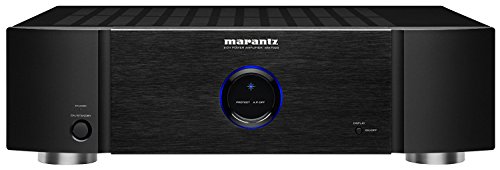
- 140W per channel into 8 ohms
- Balanced XLR and RCA inputs
- Supports stereo or two-zone use
Best For: Stereo upgrades and two-channel system expansion
Best Flexible Power Amplifier

- Six Class D channels
- Up to 400W bridged at 8 ohms
- 12V trigger and channel LEDs
Best For: Expansive theaters and multi-room audio
Best Feature-Packed Budget Amp
Pyle PDA7BU 5-Channel Receiver

- 200W five-channel output
- Bluetooth, USB, SD, and RCA inputs
- Dual-mic karaoke support
Best For: Compact 5.1 entertainment systems
Best Premium 5-Channel Amplifier
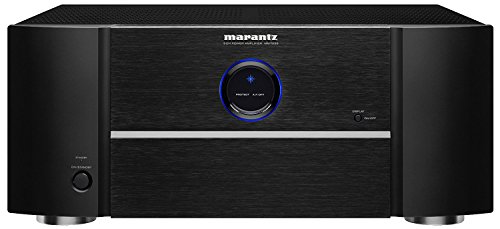
- 140W across five channels
- XLR and RCA inputs
- Current-feedback and HDAM circuitry
Best For: Separates-based five-channel theaters
Compact Two-Channel Power

- 2x90 watts per channel
- RCA and XLR inputs
- Black finish
Best For: Two-channel home cinema systems needing flexible analog inputs
Five-Channel Theater Power
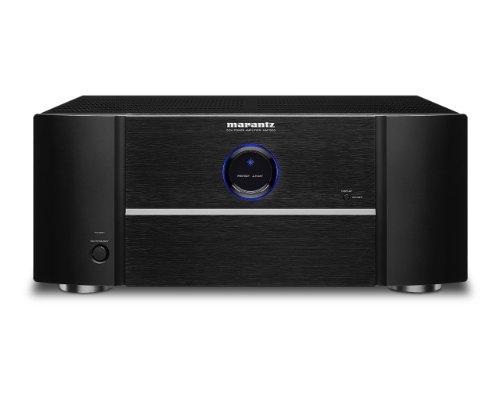
- 140 watts per channel into 8 ohms
- Five-channel amplifier
- RCA and XLR inputs
Best For: High-output five-channel home theater systems
Connected Four-Channel Receiver

- Four independently controlled channels
- Bluetooth 5.3, optical, and coaxial inputs
- Dual microphone inputs with echo and talkover
Best For: Versatile home theater and karaoke systems with multiple sources
Best High-Power Value – OSD Audio Nero HTA7200
For listeners building a demanding surround system, the OSD Audio Nero HTA7200 is one of the most powerful power amplifiers for home cinema in this lineup. Its seven Class AB channels deliver up to 210 watts per channel into 4-ohm loads, while balanced and unbalanced inputs make it flexible for custom installations.
Best For: Home theaters needing substantial seven-channel power, monitoring features, and broad system compatibility.
Pros:
- Seven channels rated at 210 watts each into 4 ohms, or 145 watts into 8 ohms, with all channels driven.
- Balanced XLR, RCA, and 12V trigger connections support flexible integration.
- Channel status LEDs and a 110 dB signal-to-noise ratio support easy monitoring and quiet performance.
- A five-year warranty adds long-term peace of mind.
Cons:
- At 71 pounds, it is a substantial component to position and install.
- Its 7.1-channel design may be more amplifier than smaller systems require.
The Nero HTA7200 is a strong choice when output and channel count matter more than compactness. Its monitoring LEDs, trigger control, and XLR inputs make it particularly suitable for a dedicated theater rack.
Best Premium Seven-Channel Amp – Marantz MM8077
The Marantz MM8077 is a refined option for buyers comparing premium power amplifiers for home cinema. It supplies 150 watts per channel into 8 ohms and 180 watts into 6 ohms, with matched output-stage topology across all seven channels for consistent system performance.
Best For: Enthusiasts who want a premium seven-channel amplifier with balanced connectivity and strong dynamic headroom.
Pros:
- Seven identical channels provide 150 watts into 8 ohms and 180 watts into 6 ohms.
- A high-current toroidal transformer is designed to handle dynamic peaks and demanding loads.
- Each channel accepts balanced XLR or unbalanced RCA connections.
- Copper-plated construction, gold-plated terminals, and remote power control support durable installation.
Cons:
- The seven-channel output is less suitable for buyers who only need a stereo amplifier.
- Its 40-pound chassis and premium feature set may exceed the needs of simpler systems.
The MM8077 emphasizes consistent, controlled performance across every channel. Its power supply, connection options, and construction make it a logical match for a high-quality component-based theater.
Best All-in-One Streaming Amp – Bluesound POWERNODE (2025)
The 2025 Bluesound POWERNODE takes a different approach to power amplifiers for home cinema by combining amplification, streaming, room correction readiness, and TV connectivity in a compact unit. It delivers 100 watts per channel in stereo and supports an 80-watt-per-channel three-channel LCR mode.
Best For: Music-focused listeners who want a compact TV and streaming system instead of a separate AV receiver and amplifier stack.
Pros:
- HDMI eARC connects directly to a TV, while three-channel LCR mode supports a compact home theater.
- BluOS supports numerous streaming services, personal libraries, and multi-room playback.
- Dirac Live room correction readiness, AirPlay 2, aptX Adaptive Bluetooth, and Roon Ready support add flexibility.
- USB-C, optical, RCA, turntable, and dedicated headphone connections cover varied sources.
Cons:
- Its three-channel LCR mode is not a full seven-channel surround amplifier.
- The listed 100-watt output is intended for a compact integrated system rather than the highest-power installations.
The POWERNODE is compelling when simplicity and streaming matter as much as amplification. It can serve as a stereo system for everyday listening and transition to a compact LCR theater without requiring a separate receiver.
Best Two-Channel Expansion Amp – Marantz MM7025 Stereo Power Amplifier
The Marantz MM7025 is a practical two-channel choice for buyers who need targeted power rather than a full multichannel chassis. Rated at 140 watts per channel into 8 ohms, it can reinforce a stereo setup, drive a pair of theater channels, or serve two zones.
Best For: Stereo systems, front-channel upgrades, or multi-room installations that need a dedicated two-channel amplifier.
Pros:
- 140 watts per channel into 8 ohms provides substantial power for two speakers.
- Balanced XLR and single-ended RCA inputs support different system configurations.
- It can operate as a dedicated stereo amplifier or power speakers in two zones.
- A quiet cooling fan and chassis under 14 inches deep help with cabinet placement.
Cons:
- Only two channels are available, so larger surround systems need additional amplification.
- It lacks the streaming and room-correction features found in integrated models.
The MM7025 makes sense when your system needs more current and volume for two channels without replacing the rest of the electronics. Its compact depth and dual input formats also make it straightforward to add to an existing setup.
Best Flexible Power Amplifier – OSD Audio Nero HTX-6150
For demanding home cinema systems, the OSD Audio Nero HTX-6150 is a flexible choice among power amplifiers for home cinema. Its six Class D channels can deliver 100 watts per channel at 8 ohms or 175 watts at 4 ohms, with bridging options for higher-power configurations.
Best For: Expansive home theaters, multi-room audio systems, and installations that need flexible channel or subwoofer amplification.
Pros:
- Six-channel Class D design with fan cooling.
- Flexible bridging options, including up to 400 watts at 8 ohms.
- Dedicated bridging and crossover controls for two channels.
- 12V trigger and individual channel-status LEDs simplify system management.
Cons:
- Its 17 x 18 x 5-inch size and 23.9-pound weight require substantial installation space.
- Its advanced bridging options may be more capability than a simple stereo setup needs.
The Nero HTX-6150 stands out when you want one amplifier to support several speakers, zones, or higher-powered bridged channels. RCA inputs, monitoring LEDs, and trigger control make it practical for a more involved installation.
Best Feature-Packed Budget Amp – Pyle PDA7BU 5-Channel Receiver
The Pyle PDA7BU combines five-channel home theater amplification with convenient everyday features. For shoppers comparing power amplifiers for home cinema, it offers 200 watts across five channels, a subwoofer output, Bluetooth streaming, and several wired media inputs.
Best For: Compact 5.1 setups, casual movie and music listening, and entertainment spaces that also need karaoke or wireless playback.
Pros:
- Five-channel output supports Front Right, Front Left, Center, and surround channels.
- Bluetooth, USB, SD, 3.5mm auxiliary, and RCA connectivity provide flexible source options.
- Dual microphone inputs with adjustable echo and mic volume support karaoke.
- Includes a remote control, FM antenna, and detachable rack-mount hardware.
Cons:
- The supplied notes specify 200 watts but do not provide a per-channel power breakdown.
- At 9.8 inches deep and 19 inches wide, it may need a dedicated shelf or rack space.
The PDA7BU is less about specialized amplification control and more about an all-in-one entertainment hub. Its broad connectivity and party-friendly extras make it a practical pick for straightforward 5.1 systems.
Best Premium 5-Channel Amplifier – Marantz MM7055
The Marantz MM7055 is a dedicated five-channel power amplifier designed for home theater separates. It delivers 140 watts per channel at 8 ohms and includes both XLR and RCA inputs, making it a strong consideration for buyers seeking power amplifiers for home cinema with flexible system integration.
Best For: Home theater separates, five-channel speaker systems, and installations where balanced XLR connectivity and dedicated amplification are priorities.
Pros:
- Five channels rated at 140 watts each at 8 ohms.
- Provides both XLR and RCA inputs for system-connection flexibility.
- Uses a current-feedback power amplifier with Marantz HDAM circuitry.
- Gold-plated terminals and a detachable power cord support a polished installation.
Cons:
- Its 37-pound weight makes installation less convenient than a compact amplifier.
- It is a dedicated power amplifier rather than an all-in-one receiver with streaming or media features.
The MM7055 is aimed at a more serious separates-based theater rather than a casual, feature-heavy setup. Its five-channel output, XLR/RCA inputs, and dedicated amplifier design suit systems built around a separate processor or receiver preamp outputs.
Compact Two-Channel Power – Monolith M2100X
The Monolith M2100X is a straightforward option for shoppers comparing power amplifiers for home cinema. It provides two channels at 90 watts per channel and accepts both RCA and XLR inputs, making it suitable for systems that need flexible source connectivity.
Best For: Home cinema setups needing a two-channel amplifier with RCA and XLR input options.
Pros:
- Delivers 90 watts per channel across two channels.
- Supports both RCA and XLR inputs.
- Simple black finish for conventional home theater installations.
Cons:
- Limited to two channels.
- The supplied dimensions and weight details appear inconsistent, so verify fit and installation requirements before ordering.
Choose the M2100X if two-channel output and flexible analog connectivity match your system. Buyers needing five channels or built-in streaming and karaoke functions should consider a different amplifier type.
Five-Channel Theater Power – Marantz MM7055
The Marantz MM7055 is designed for serious multichannel systems and is a strong contender among power amplifiers for home cinema. Its five channels deliver 140 watts per channel into 8 ohms, while balanced XLR and unbalanced RCA inputs support flexible system integration.
Best For: Five-channel home theater systems seeking high output and flexible RCA or XLR connectivity.
Pros:
- Provides 140 watts per channel into 8 ohms across five channels.
- Offers both balanced XLR and unbalanced RCA inputs.
- Uses an aluminum thermal tunnel for heat management and quieter operation.
- Features gold-plated, four-way binding-post terminals.
Cons:
- Dedicated cooling is required to manage heat generated by the amplifier.
- Its five-channel design may be more than needed for a basic stereo system.
The MM7055 is a practical choice when your priority is substantial five-channel output and installation flexibility. It can also form part of larger Marantz-based surround systems when paired with additional compatible amplification.
Connected Four-Channel Receiver – Donner MAMP5
The Donner MAMP5 combines amplification, source selection, and party-friendly controls in one unit. For shoppers comparing power amplifiers for home cinema, it offers four independently controlled channels, Bluetooth 5.3, optical and coaxial inputs, plus microphone features for karaoke or presentations.
Best For: Flexible home audio, theater, karaoke, and multi-speaker setups that need varied inputs.
Pros:
- Offers four independently controlled channels with 25 watts RMS per channel and 1000 watts peak power.
- Supports Bluetooth 5.3, USB, RCA, AUX, optical, coaxial, and FM inputs.
- Includes two microphone inputs, echo, talkover, and adjustable treble, midrange, and bass controls.
- Can support up to four groups of speakers rated from 4 to 16 ohms.
Cons:
- It has no HDMI input.
- The listed RMS output is substantially lower than the advertised peak rating.
- The remote battery is not included, and the manufacturer recommends switching the unit off using its front power button to avoid humming.
The MAMP5 makes the most sense for buyers who value connectivity and karaoke-oriented features as much as theater playback. Its optical and coaxial inputs can accommodate many smart TVs, but users seeking a dedicated high-power cinema amplifier may prefer a more specialized design.
How We Picked the Best Power Amplifiers for Home Cinema
We focused on the factors that matter most in a real home theater: channel count, published power ratings, speaker-load compatibility, connection options, system flexibility, and overall use case. The selection includes dedicated multi-channel amplifiers for surround systems, two-channel models for front-stage or music applications, and compact integrated amplifiers for buyers who need streaming or simple source control.
Specifications can vary by impedance, number of channels driven, and measurement method, so wattage should be treated as a starting point rather than the only measure of performance. We also considered whether each model suits a dedicated theater, a mixed music-and-movie system, or a casual secondary setup.
Quick Comparison
| Best For | Recommended Type | What to Look For |
|---|---|---|
| Large surround systems | Seven-channel amplifier | High continuous output, stable performance, and adequate ventilation |
| Adding power to front speakers | Two-channel amplifier | RCA and, ideally, balanced XLR inputs |
| Compact or distributed audio | Wireless integrated amplifier | Streaming support, app control, and room-placement flexibility |
| Budget home entertainment | Bluetooth multi-channel receiver | Simple inputs, microphone features, and realistic power expectations |
Key Buying Factors for Power Amplifiers for Home Cinema
Channel Count and Expansion Plans
Choose enough channels for your current layout while considering future upgrades. Five-channel models suit conventional surround systems, while seven-channel units are better for larger rooms or systems with additional surround or height speakers. A two-channel amplifier can be an efficient way to strengthen the left and right channels without replacing the entire system.
Power, Impedance, and Headroom
Match the amplifier to your speakers’ impedance and sensitivity. A model that remains stable at lower impedances is useful with demanding speakers, but more wattage does not automatically mean better sound. Extra headroom helps reduce clipping during loud movie peaks, provided the amplifier is properly ventilated and paired with a suitable preamp or AV processor.
Connections and System Compatibility
Check whether your processor provides RCA, balanced XLR, or both. XLR connections can be valuable in longer cable runs or electrically noisy installations. Also confirm that the amplifier’s gain structure, trigger input, physical size, and cooling requirements fit your rack or cabinet.
Integrated Features Versus Dedicated Amplification
Dedicated amplifiers are designed to receive a signal from an AV processor. Wireless or Bluetooth models may include streaming, USB, microphone inputs, or built-in source control, but they are not always direct substitutes for a high-current theater power amp. Prioritize the features you will actually use.
Who Should Buy Which Power Amplifiers for Home Cinema?
Choose a seven-channel amplifier if you are powering a full surround array or want consistent amplification across multiple theater channels. Choose a two-channel model if your main goal is stronger front-channel performance or high-quality stereo listening. Choose a five- or six-channel amplifier for a flexible middle ground that supports a traditional theater without unnecessary capacity.
Choose a wireless integrated amplifier for a simpler music-focused room, multi-room setup, or system that needs built-in streaming. Choose a budget Bluetooth receiver for casual entertainment, karaoke, or secondary-room use, but verify its real-world output and speaker requirements before connecting demanding home theater speakers.