The best short-throw projector for meetings can produce a large, readable image from a compact distance, helping teams share presentations without rearranging an entire conference room.
We compared these 10 options for brightness, resolution, connectivity, setup features, sound, and portability so you can match the projector to your meeting space and workflow.
Best 10 Short Throw Projector for Meetings Picks for 2026
Best Smart Short-Throw Pick
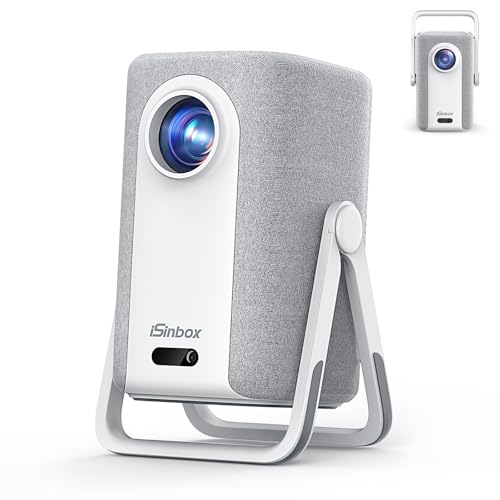
- 100-inch image from about 7.9 feet
- Auto focus, keystone, and obstacle avoidance
- Built-in apps with Netflix compatibility
Best For: Flexible presentations, streaming, and compact rooms
Best Bright Business Option

- 3,300 lumens for brighter rooms
- 0.6:1 throw ratio for close placement
- HDMI, USB, MHL, and network connectivity
Best For: Office, classroom, and conference-room presentations
Best Portable Short-Throw Pick

- 2.4-pound design with a 360-degree stand
- Native 1080p with 4K input and HDR10
- Autofocus, keystone, zoom, and Wi-Fi 6
Best For: Mobile presentations and multipurpose home use
Best Feature-Rich Value
Short Throw 4K-Support Projector

- 100-inch image from about 8 feet
- AI setup with autofocus and 6D keystone
- Netflix, Wi-Fi 6, Dolby Audio, and eARC
Best For: Small offices and mixed presentation-entertainment use
Best Offset Setup
Antmap 4K-Support Short Throw Projector

- 100% offset projection reduces blocked views
- Auto keystone and electric focus simplify setup
- Wi-Fi 6, Bluetooth, and multiple ports
Best For: Meeting rooms using low table, shelf, or floor placement
Best Compact Option
Mini 4K-Support Portable Short Throw Projector

- Short throw projection suits smaller rooms
- Electric focus and keystone ease setup
- Compact design with HDMI, USB, and AUX
Best For: Portable meetings in space-limited rooms
Best Smart Features
TOPTRO A2 VIDAA Short Throw Projector
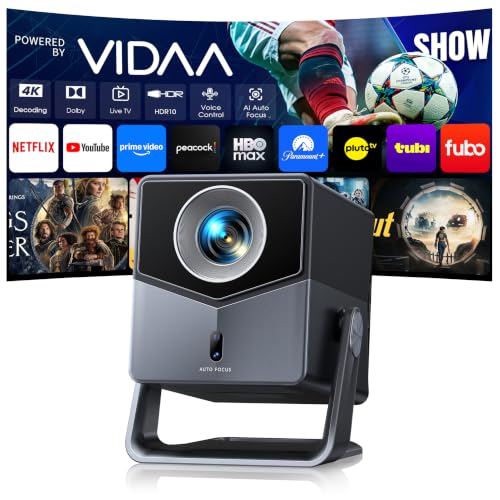
- 1.0:1 throw ratio suits shorter room distances
- AI autofocus and 650 ISO ANSI brightness
- VIDAA apps, voice control, and 36W Dolby Audio
Best For: Hybrid rooms used for meetings and entertainment
Best Compact Ultra-Short-Throw Pick
YQHS Android 14 Mini Projector

- 0.65:1 ultra-short-throw ratio for tight spaces
- 1080p HDR10 with autofocus and auto keystone
- USB-C PD power supports portable use
Best For: Small rooms and mobile presentation setups
Best Flexible Setup
Google TV 360° Stand Projector

- 360° stand enables wall, ceiling, and tripod projection
- Native 1080p with 4K support and HDR10
- 500 ISO ANSI brightness and 30W built-in audio
Best For: Multipurpose rooms with changing projector positions
Best Portable Smart Option
Google TV Short Throw Projector

- 0.8:1 throw ratio with 100-inch projection from 5.9 feet
- AI setup includes focus, keystone, obstacle avoidance, and screen fit
- Wi-Fi 6, mirroring, HDMI, and USB support
Best For: Mobile presenters needing broad device compatibility
Best Smart Short-Throw Pick – iSinbox 4K Smart Projector
If you want a short throw projector for meetings that can also handle streaming and home entertainment, the iSinbox combines a 1.1:1 throw ratio with automatic setup tools. It can project a 100-inch image from about 7.9 feet and supports native 1080p with 4K HDR10+ input.
Best For: Buyers who want a flexible projector for presentations, streaming, and compact-room use.
Pros:
- 1.1:1 throw ratio supports a 100-inch image from approximately 7.9 feet.
- AI autofocus, 6D keystone, obstacle avoidance, and 50–100% digital zoom simplify setup.
- Built-in streaming apps, Netflix compatibility, and a portable handle-and-stand design add flexibility.
Cons:
- Native resolution is 1080p, despite supporting 4K HDR10+ content.
- The supplied notes identify the actual throw ratio as 1.1:1, not the 1.2:1 shown on the packaging.
The iSinbox is a convenient all-purpose choice when quick positioning and built-in entertainment matter. For business use, confirm that its smart features and native 1080p resolution match your presentation needs.
Best Bright Business Option – NEC NP-M333XS XGA Projector
For a short throw projector for meetings in classrooms or conference rooms, the NEC NP-M333XS emphasizes brightness and business-friendly connectivity. Its 3,300-lumen output and 0.6:1 throw ratio allow large images from relatively short distances.
Best For: Office, education, and meeting-room presentations where brightness and wired connectivity are priorities.
Pros:
- 3,300-lumen brightness is suited to presentation environments.
- 0.6:1 throw ratio projects 60- to 150-inch images from approximately 2.21 to 5.76 feet.
- Supports HDMI, MHL, USB video, and network connectivity, with up to 8,000 hours of lamp life in Eco mode.
Cons:
- Native XGA resolution is 1024 × 768, below modern Full HD projectors.
- Uses a replaceable lamp rather than a solid-state light source.
- At 8.2 pounds, it is less convenient to carry between meeting rooms than mini projectors.
The NEC is a practical meeting-room specialist with strong brightness and a notably short throw. Its lower native resolution makes it better suited to standard slides, charts, and classroom material than detailed video or high-resolution spreadsheets.
Best Portable Short-Throw Pick – iWIMIUS S29 Mini Projector
The iWIMIUS S29 is a compact short throw projector for meetings when portability and quick setup are important. Its 1.1:1 ratio, 360-degree stand, autofocus, and automatic keystone correction make it easy to position in offices, classrooms, bedrooms, or temporary presentation spaces.
Best For: Mobile presenters who want a lightweight projector that can also serve as a home-entertainment device.
Pros:
- Weighs 2.4 pounds and includes a built-in 360-degree adjustable stand.
- Native 1080p resolution accepts 4K input and supports HDR10.
- Autofocus, 4D/4P keystone, and 50–100% zoom help correct placement quickly.
- Wi-Fi 6, Bluetooth 5.2, built-in apps, and dual 10W Dolby Audio speakers are included.
Cons:
- 4K content is displayed at the projector’s native 1080p resolution.
- Some apps may only be available through the web browser.
- The supplied notes do not specify brightness, so room-light performance is difficult to assess.
The S29 offers an appealing balance of portability, smart features, and automatic image correction. Before using it for important meetings, verify that its unspecified brightness is sufficient for the room and screen size.
Best Feature-Rich Value – Short Throw 4K-Support Projector
This feature-rich model is a short throw projector for meetings that prioritizes easy setup and broad connectivity. Its 1.1:1 ratio can produce a 100-inch image from about 8 feet, while AI autofocus, 6D keystone correction, and Wi-Fi 6 reduce setup time.
Best For: Home offices and small meeting spaces where streaming, wireless connectivity, and simple positioning are useful.
Pros:
- 1.1:1 throw ratio supports a 100-inch image from approximately 8 feet.
- AI autofocus, 6D keystone, obstacle detection, and 50–100% zoom simplify placement.
- Native 1080p resolution supports 4K input, HDR10+, Dolby Audio, DTS, and eARC.
- Built-in apps, Netflix compatibility, Wi-Fi 6, and an integrated handle improve convenience.
Cons:
- Native display resolution is 1080p rather than 4K.
- The supplied notes do not provide a brightness rating for evaluating use in bright meeting rooms.
- Streaming-app availability and functionality may depend on the built-in smart TV platform.
The projector is well equipped for casual presentations and mixed work-and-entertainment use, especially when fast automatic alignment is valuable. For formal business settings, check its brightness and confirm compatibility with your presentation devices before buying.
Best Offset Setup – Antmap 4K-Support Short Throw Projector
If you need a short throw projector for meetings in a room where people may walk in front of the image, this Antmap model is worth considering. Its 100% offset design projects upward from a table, shelf, or floor, while auto keystone and electric focus simplify setup. Native 1080P resolution, 600 ANSI brightness, and broad wired and wireless connectivity also make it adaptable for presentations and shared media.
Best For: Meeting rooms that need a clear, unobstructed image from a low placement position.
Pros:
- 100% offset projection helps avoid blocked views and tripod clutter.
- Auto keystone and electric focus support quick image adjustment.
- Wi-Fi 6, Bluetooth, HDMI, USB-C, USB, and AV provide flexible connections.
- Built-in 12W speaker and 360-degree rotating stand add placement flexibility.
Cons:
- Native resolution is 1080P; 4K is supported rather than displayed natively.
- Its 3.8-pound desktop design is less compact than a typical mini projector.
The offset design is the main advantage for meetings, especially when floor or table placement is preferable to ceiling mounting. It is also a versatile choice for presentations that may transition into home entertainment.
Best Compact Option – Mini 4K-Support Portable Short Throw Projector
This compact model is a practical short throw projector for meetings when portability matters. It can create a screen up to 200 inches from a shorter distance, and its electric focus, electric keystone, and rotatable stand help adapt to changing room layouts. The projector supports 1080P viewing and 4K input, with HDMI, USB, and AUX connections for laptops and other equipment.
Best For: Portable presentations in small offices, dorm-style workspaces, or multipurpose rooms.
Pros:
- Short throw design works well where available wall-to-projector distance is limited.
- Electric focus and keystone correction make alignment faster.
- 270-degree rotatable stand supports flexible wall or ceiling projection.
- HDMI, USB, and AUX ports support laptops, TV sticks, and consoles.
Cons:
- Bluetooth and built-in apps are not supported.
- iOS mirroring requires a compatible wired USB connection.
- The supplied notes do not specify brightness, so room-light performance is less clear.
Choose this projector for its compact form and flexible positioning rather than integrated smart features. For meetings, plan to connect a laptop or other source through HDMI or USB.
Best Smart Features – TOPTRO A2 VIDAA Short Throw Projector
For teams that want a short throw projector for meetings with minimal added equipment, the TOPTRO A2 combines a 1.0:1 throw ratio with a smart VIDAA platform and AI autofocus. It supports 4K decoding while using native 1080P resolution, offers 650 ISO ANSI brightness and HDR10, and includes voice control, Wi-Fi 6, Bluetooth, and HDMI ARC/CEC.
Best For: Hybrid meeting spaces that also serve as presentation, streaming, sports, or entertainment rooms.
Pros:
- 1.0:1 throw ratio projects a 100-inch image from about 2.2 meters.
- AI autofocus supports faster setup and adjustment.
- VIDAA provides built-in streaming apps and live TV without requiring a streaming stick.
- 36W Dolby Audio, Wi-Fi 6, Bluetooth, voice control, and HDMI ARC/CEC add convenience.
Cons:
- Native output is 1080P; 4K content is decoded and displayed at 1080P.
- The feature-rich smart platform may be more than a meeting-only setup requires.
This is the most complete all-around option when the projector will be used beyond work. Its short throw ratio and automatic focusing are useful in meeting spaces, while the smart operating system and strong built-in audio reduce the need for extra devices.
Best Compact Ultra-Short-Throw Pick – YQHS Android 14 Mini Projector
If you need a short throw projector for meetings in a cramped room, the YQHS stands out for its 0.65:1 throw ratio and portable USB-C power design. It can project a 60-inch image from about 0.8 meters and includes autofocus and automatic keystone correction for quicker setup.
Best For: Small meeting rooms, mobile presentations, bedrooms, RVs, and users who value built-in streaming apps.
Pros:
- Ultra-short-throw design supports large images in limited space.
- Native 1080p resolution with HDR10 and 4K-format compatibility.
- USB-C PD power support works with compatible chargers and power banks.
- Android 14 apps, autofocus, and auto keystone simplify operation.
Cons:
- Requires a 45W-or-higher PD power source with 12V output.
- Its 350-lumen brightness may be better suited to controlled lighting than bright conference rooms.
- The supplied notes emphasize entertainment features more than dedicated business connectivity.
The YQHS is a flexible choice when portability and minimal throw distance matter most. For meetings, plan to use a compatible USB-C power source and dim the room for the clearest image.
Best Flexible Setup – Google TV 360° Stand Projector
This Google TV model is a practical short throw projector for meetings when you need flexible placement. Its built-in 360° stand supports wall, ceiling, tripod, and desktop projection, while AI autofocus and keystone correction help produce a usable image with less manual adjustment.
Best For: Flexible home-office presentations, multipurpose rooms, ceiling projection, and users who want strong built-in audio.
Pros:
- 360° rotatable stand supports multiple projection angles and mounting options.
- Native 1080p output, 4K decoding support, HDR10, and stated 500 ISO ANSI brightness.
- AI autofocus and auto keystone support quick setup.
- Google TV, voice control, Wi-Fi 6, and a 30W speaker system add convenience.
Cons:
- 4K content is decoded but displayed at the native 1080p resolution.
- The 1.17:1 ratio is short throw, but not as close-range as the 0.65:1 model in this roundup.
- Its entertainment-focused smart platform may be more than needed for basic presentations.
The adjustable stand is the main advantage for meeting spaces that do not have a fixed projector position. Its higher stated brightness and powerful speaker system also make it suitable for mixed presentation and entertainment use.
Best Portable Smart Option – Google TV Short Throw Projector
For presenters who move between rooms, this portable model combines a short-throw design with AI setup tools and broad device compatibility. It supports screen mirroring from phones and laptops, plus HDMI and USB connections, making it a versatile short throw projector for meetings and presentations.
Best For: Mobile presenters, small offices, travel, dorms, and mixed use involving laptops, phones, streaming, and outdoor viewing.
Pros:
- 0.8:1 throw ratio projects up to a 100-inch image from about 5.9 feet.
- AI autofocus, keystone, obstacle avoidance, and screen fit reduce setup work.
- Wi-Fi 6, Bluetooth 5.3, screen mirroring, HDMI ARC/CEC, and USB provide flexible connections.
- Compact 2.6-pound design and rotatable stand support portability.
Cons:
- Native resolution is 1080p, despite 4K support.
- For maximum clarity, larger projected image sizes require careful distance and placement.
- The supplied notes do not specify a brightness rating, making room-light performance harder to assess.
This is the strongest fit for users who prioritize mobility and connection options. Its automatic screen adjustments can save time between meetings, while the rotatable stand expands placement possibilities.
How We Picked the Best Short Throw Projector for Meetings
We focused on features that matter in real meeting environments rather than treating home-theater specifications as the only priority. Our comparison considers image brightness, native resolution, throw distance, autofocus, keystone correction, wireless connectivity, built-in operating systems, speaker quality, portability, and power requirements.
We also separated practical office strengths from entertainment-oriented extras. Streaming apps, HDR, and high-output speakers can be useful for presentations and team events, but dependable HDMI input, readable text, simple setup, and compatibility with laptops are usually more important for everyday work.
Quick Comparison
| What to Compare | Why It Matters in Meetings |
|---|---|
| Throw distance | Determines how close the projector can sit to the screen while producing a large image. |
| Brightness | Higher brightness helps presentations remain visible in rooms with ambient light. |
| Resolution | Full HD or higher makes spreadsheets, diagrams, and small text easier to read. |
| Connectivity | HDMI, USB, Wi-Fi, Bluetooth, and wireless casting support different meeting setups. |
| Setup automation | Autofocus and automatic keystone correction reduce delays between presenters. |
| Sound | Built-in speakers are convenient for video calls and clips, though large rooms may need external audio. |
Key Buying Factors for a Short-Throw Projector for Meetings
Throw Ratio and Room Layout
Measure the distance between the intended mounting position and the screen before buying. A short-throw model is useful when a presenter needs to stand close to the image or when a conference table leaves little room behind the projector. Ultra-short-throw designs can sit just inches from a wall, but they typically require a flat, carefully positioned projection surface.
Brightness and Text Clarity
For conference rooms with windows or overhead lighting, prioritize verified brightness and a strong contrast ratio. Resolution also matters: native 1080p is a sensible baseline for presentations, while advertised “4K support” often means the projector accepts a 4K signal rather than displaying true 4K. Check the native resolution when fine text is important.
Inputs, Wireless Features, and Compatibility
At minimum, look for reliable HDMI connectivity for laptops and meeting-room hardware. Wi-Fi casting can make sharing easier, but wireless performance depends on the network and device. USB-C power or charging may improve portability, while Bluetooth is mainly useful for speakers, headphones, or other audio accessories.
Focus, Keystone, and Audio
Autofocus and automatic keystone correction are valuable when the projector moves between rooms. However, digital correction can reduce usable image area, so physical placement remains preferable. Built-in speakers are convenient for small groups; larger meetings generally benefit from a dedicated sound system.
Who Should Buy Which Short Throw Projector for Meetings?
For a fixed office conference room: Choose the brightest model with dependable HDMI input, suitable resolution, and a throw distance that fits the room. A business-focused model may be preferable to a feature-heavy portable projector.
For hybrid teams and frequent presenters: Prioritize autofocus, automatic keystone correction, wireless casting, and quick startup. These features reduce setup time when presenters use different laptops and locations.
For small rooms or tight desks: Select a short-throw or ultra-short-throw design that can create a large image without placing the projector behind the audience.
For mobile presentations and team events: Look for a compact chassis, built-in streaming features, strong speakers, and flexible power options. Confirm that the projector still offers a usable wired connection for business-critical presentations.
For mixed work and entertainment: Models with smart TV platforms, HDR, Dolby audio, and 4K signal support can serve both presentations and after-hours viewing. Just verify native resolution and brightness before paying extra for entertainment features.