Choosing a helmet mounted thermal monocular is mostly about balancing image quality, comfort, and how well the unit works hands-free in the dark.
In this roundup, we focus on compact thermal options that are practical for helmet use, with an eye on field of view, refresh rate, mounting support, and overall value.
Best 10 Helmet Mounted Thermal Monocular Picks for 2026
Tactical Thermal Pick
FLIR Breach PTQ136 helmet mountable monocular

- 320 x 256 Boson core with 60Hz refresh
- Helmet mountable with built-in mini-rail
- Records video and stores up to 1,000 snapshots
Best For: Law enforcement, tactical use, and hunting
True 1x Helmet Option
RIX Stride ST3 Lite with BM-01 mount

- True 1x base magnification for natural viewing
- 384x288 sensor with sub-20mK NETD
- Light 0.42 lb design with wide FOV
Best For: Hands-free patrol, hunting, and night observation
Battery Life Value Pick
TOPDON TS004 thermal monocular

- Up to 11 hours of battery life
- Wireless phone monitoring through the app
- IP67 waterproof with 13mm lens
Best For: Outdoor users who want long runtime and app viewing
High-Resolution Helmet Choice
RIX Stride ST6 Lite with BM-01 mount

- True 1x helmet design with natural viewing
- 640x512 sensor with sub-20mK NETD
- Light 0.45 lb build with IP67 protection
Best For: Helmet users who want the clearest thermal image in this group
Compact Helmet-Mounted Thermal Monocular
Armasight Sidekick 320 Mini Thermal Monocular

- Under 210 g for easy hands-free carry
- Helmet and headset mounting via built-in mini-rail
- 60Hz frame rate with 1024 x 768 OLED display
Best For: Lightweight users who want simple helmet-mounted thermal viewing
Budget Helmet Thermal Spotter
Nightfox Arctic Thermal Night Vision Monocular

- Head strap and dovetail adaptor included for helmet mounting
- 50fps 256x192 thermal sensor with low latency
- IP65 waterproofing and up to 9 hours of battery life
Best For: Hunters and field users wanting an affordable mounted thermal scanner
High-Detail Helmet Thermal Monocular
Armasight Sidekick 640 Mini Thermal Monocular

- 640 core for more detailed thermal imaging
- Under 250 g with helmet and headset mounting
- 60Hz frame rate plus one-touch video recording
Best For: Users who want the clearest compact helmet-mounted thermal option
Helmet-Mounted Pick
True 1x Helmet-Mounted Thermal Monocular

- True 1× base magnification for natural viewing
- 0.42 lb body for comfortable helmet wear
- Wide 17.5° × 13.1° FOV for fast scanning
Best For: hands-free thermal viewing with natural perspective
Recording-Ready Option
384 Sensor Thermal Monocular with Recording
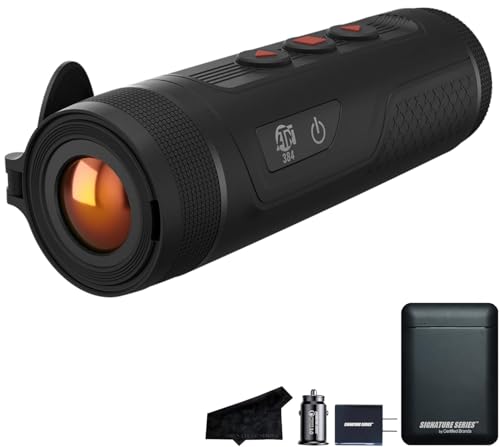
- Up to 1300 m detection range
- Wi‑Fi, app control, and built-in recording
- 384×288 sensor with 50 Hz refresh
Best For: long-range thermal viewing with capture and sharing features
High-Resolution Upgrade
High-Resolution Helmet-Mounted Thermal Monocular

- 640×512 sensor for sharper thermal detail
- True 1× design with helmet-mounted support
- 0.45 lb body stays compact and portable
Best For: buyers who want the best image detail in a helmet-mounted thermal monocular
Tactical Thermal Pick – FLIR Breach PTQ136 helmet mountable monocular
If you want a helmet mounted thermal monocular built for fast, practical use, the FLIR Breach PTQ136 is a compact option with a 320 x 256 Boson core, 60Hz refresh rate, and 1-4x digital zoom. Its lightweight body and built-in mini-rail make it easy to integrate into a helmet setup, while the IP67 rating and onboard recording suit demanding field conditions.
Best For: Law enforcement, tactical users, and hunters who want a lightweight helmet-compatible thermal monocular with recording.
Pros:
- 32um Boson thermal core with 320 x 256 resolution for spotting heat signatures in dark, foggy, or smoky conditions
- Helmet mountable design with a built-in mini-rail and very light 7.4 oz weight
- Onboard video recording and storage for up to 1,000 snapshots
- Seven viewing palettes plus a digital compass for adaptable field use
Cons:
- Uses 1-4x digital zoom rather than true optical magnification
- Smaller 9.1 mm objective and 24-degree field of view may feel limiting for some scanning styles
Overall, the Breach PTQ136 is a strong choice if helmet integration, portability, and mission-ready features matter more than larger-screen style viewing. It is best suited to users who need a durable thermal monocular that stays light on the head and still delivers useful image tools.
True 1x Helmet Option – RIX Stride ST3 Lite with BM-01 mount
The RIX Stride ST3 Lite is purpose-built as a helmet mounted thermal monocular, and its true 1x base magnification is the main reason to look at it. That 1x view helps keep your surroundings feeling natural, while the 384×288 sensor, 50Hz refresh rate, and wide field of view support smooth hands-free observation.
Best For: Users who want a true 1x helmet thermal for natural, hands-free viewing during patrols or hunting.
Pros:
- True 1x base magnification designed specifically for helmet-mounted use
- 384×288 thermal sensor with less than 20mK NETD for clear image contrast
- Wide 17.5° x 13.1° field of view for faster scanning
- Compact 0.42 lb build for reduced helmet fatigue
Cons:
- Resolution is lower than the ST6 Lite model in the same line
- Focused on helmet, handheld, and vehicle use rather than advanced recording features
The ST3 Lite stands out if your priority is a natural, distortion-free 1x perspective on a helmet. It gives you a practical balance of portability, field of view, and thermal clarity without adding unnecessary bulk.
Battery Life Value Pick – TOPDON TS004 thermal monocular
The TOPDON TS004 is a practical thermal monocular for buyers who value long runtime and phone connectivity over helmet mounting. It offers 256×192 IR resolution, a 50Hz refresh rate, a 13mm lens, and wireless app support, making it a useful field tool for hunting, camping, and general outdoor observation.
Best For: Buyers who want long battery life and wireless phone monitoring for outdoor thermal viewing.
Pros:
- Up to 11 hours of battery life from the 5000mAh battery
- Wireless connection to a phone with live monitoring through the TopInfrared App
- IP67 waterproof design with silicone housing for outdoor durability
- 13mm lens with detection up to 410 meters
Cons:
- Not described as helmet mountable
- Lower 256×192 IR resolution than higher-end thermal options
If you need a straightforward thermal monocular for extended use, the TS004 is appealing because it keeps going for hours and connects easily to a smartphone. It is a sensible choice for field users who care more about runtime and convenience than helmet integration.
High-Resolution Helmet Choice – RIX Stride ST6 Lite with BM-01 mount
The RIX Stride ST6 Lite is the higher-resolution sibling in this helmet mounted thermal monocular category, pairing a true 1x base magnification with a 640×512 thermal sensor. For users who want hands-free viewing with more detail, it keeps the same lightweight, helmet-ready design while stepping up image performance.
Best For: Users who want a premium helmet-mounted thermal with higher resolution and a natural 1x view.
Pros:
- True 1x base magnification made for helmet-mounted use
- 640×512 thermal sensor with less than 20mK NETD for sharper detail
- 50Hz refresh rate for smooth thermal viewing
- Light 0.45 lb design with IP67 protection
Cons:
- Does not add recording or app connectivity features in the supplied notes
- As a thermal monocular, it is still built around observation rather than broader multifunction use
The ST6 Lite is the most detail-focused pick here for helmet users who want a natural 1x perspective. It makes the most sense when image clarity is the priority and you still want a compact unit that stays comfortable on the helmet.
Compact Helmet-Mounted Thermal Monocular – Armasight Sidekick 320 Mini Thermal Monocular
If you want a helmet mounted thermal monocular that stays small and simple, the Armasight Sidekick 320 is built for hands-free field use without adding much weight. Its 12-micron 320 core, 60Hz refresh, and built-in mini-rail make it a practical option for scanning, spotting, and moving between handheld and mounted use.
Best For: Users who want a lightweight helmet-mounted thermal unit with straightforward controls and a compact footprint.
Pros:
- Weighs under 210 grams, making it easy to wear for extended periods.
- Built-in mini-rail supports headset and helmet mounting for hands-free use.
- 60Hz frame rate helps deliver smooth viewing in the field.
- 1024 x 768 OLED display and image detail enhancement support a crisp image.
Cons:
- 320 thermal resolution is lower than the higher-end 640 version.
- Best suited to users who are comfortable with a compact 3-button control layout.
Overall, the Sidekick 320 is a strong pick if you value portability and helmet compatibility over maximum resolution. It keeps the package lean while still offering the core features most buyers want in a field-ready thermal monocular.
Budget Helmet Thermal Spotter – Nightfox Arctic Thermal Night Vision Monocular
The Nightfox Arctic is a helmet mounted thermal monocular designed for practical hands-free scanning, with a head strap and dovetail adaptor included for helmet mounting. It combines a 256×192 thermal sensor, 50fps output, and a wide 24° field of view, making it a flexible choice for tracking movement and covering more ground quickly.
Best For: Hunters, security users, and search-and-rescue shoppers who want a versatile mounted thermal spotter with long battery life.
Pros:
- Includes both a head strap and dovetail adaptor for helmet mounting.
- 50fps sensor and ≤30mK sensitivity support smooth thermal tracking.
- 24° field of view is useful for wide-area scanning.
- IP65 waterproofing and 9-hour battery life improve field readiness.
Cons:
- 256×192 resolution is modest compared with higher-resolution thermal units.
- Detection range is listed at around 100yd (180m), which may not suit longer-range users.
For buyers focused on portability, mounting flexibility, and all-night runtime, the Arctic covers the essentials well. It is a sensible option when you want a thermal monocular that works on the head or helmet without overcomplicating the setup.
High-Detail Helmet Thermal Monocular – Armasight Sidekick 640 Mini Thermal Monocular
If image detail matters most in a helmet mounted thermal monocular, the Armasight Sidekick 640 is the more capable option here. It uses a 12-micron 640 core, a 60Hz frame rate, and a high-definition 1024×768 OLED display, while still staying compact enough for headset or helmet mounting.
Best For: Buyers who want the sharpest thermal image and still need a lightweight helmet-mountable design.
Pros:
- 640 thermal core offers more detail than the 320 model.
- Weighs under 250 g and supports helmet or headset mounting.
- 60Hz frame rate helps keep the image smooth in motion.
- 3-button controls and one-touch video recording keep operation simple.
Cons:
- Higher-detail performance typically comes with a higher step up in cost and complexity.
- Still a compact monocular, so it is geared more toward observation than full goggle-style coverage.
The Sidekick 640 is the strongest choice in this group if you want the clearest thermal view in a small, mountable package. It balances resolution, refresh rate, and portability in a way that suits serious field use.
Helmet-Mounted Pick – True 1x Helmet-Mounted Thermal Monocular
If you want a helmet mounted thermal monocular that keeps your view natural and hands-free, the RIX STRIDE ST3 Lite is built around true 1× use. Its compact 384 thermal sensor setup, wide field of view, and lightweight body make it a practical pick for hunting, patrol, vehicle work, and night observation when you need fast scanning without image distortion.
Best For: Users who want a lightweight true 1× helmet-mounted thermal monocular for versatile field use.
Pros:
- True 1× base magnification for natural helmet-mounted viewing
- Lightweight 0.42 lb design for more comfortable long sessions
- Wide 17.5° × 13.1° field of view for faster scanning
- 384×288 sensor with NETD <20mK and 50Hz refresh for clear thermal imagery
Cons:
- 384 resolution is lower than the ST6 Lite model in this lineup
- Digital zoom tops out at 6×, which may not suit all long-range needs
- Best fit is hands-free use rather than a dedicated high-magnification spotting setup
Overall, the ST3 Lite is the more compact and efficient choice if helmet mounting is the priority and you want one device that also handles handheld or vehicle use. It balances portability, field of view, and practical mounting flexibility well for real-world night work.
Recording-Ready Option – 384 Sensor Thermal Monocular with Recording
The ATN BlazeTrek 325 is a thermal monocular for buyers who want longer-range detection and built-in capture features. With a 384×288 sensor, 25 mm lens, up to 1300 meters of detection range, and Wi‑Fi plus recording support, it is geared toward users who want a capable thermal imaging tool that can also save and share what they see.
Best For: Users who want a recording-ready thermal monocular with Wi-Fi connectivity and long detection range.
Pros:
- 384×288 thermal sensor with 50 Hz refresh for smooth imaging
- Up to 1300 m detection range for extended observation
- Built-in photo/video recording and MicroSD support up to 256GB
- Wi-Fi and app connectivity for remote control and media capture
Cons:
- Fixed focus design may be less flexible than adjustable-focus options
- Not described as helmet-mounted in the supplied details
- Heavier at 11.2 oz than the RIX Lite models here
In practical terms, the BlazeTrek 325 stands out when documentation and connectivity matter as much as detection. It is a strong fit for buyers who want thermal performance plus built-in ways to record and review activity.
High-Resolution Upgrade – High-Resolution Helmet-Mounted Thermal Monocular
If you want a helmet mounted thermal monocular with more image detail, the RIX STRIDE ST6 Lite steps up to a 640×512 sensor while keeping the same true 1× helmet-friendly setup. It is still compact, lightweight, and usable in handheld or vehicle roles, but the higher-resolution thermal core makes it the stronger choice for buyers who want sharper detail in challenging conditions.
Best For: Users who want the highest-resolution helmet-mounted thermal monocular in this group.
Pros:
- 640×512 thermal sensor with NETD <20mK for clearer imaging
- True 1× base magnification designed for helmet-mounted use
- Lightweight 0.45 lb build for comfortable extended wear
- Wide 17.5° × 13.1° field of view plus 1×–6× digital zoom
Cons:
- Higher-resolution capability may come at a premium versus the ST3 Lite
- Still limited to 6× digital magnification for longer-range viewing
- Like the ST3 Lite, it is more of a versatile field tool than a specialized spotting monocular
For buyers comparing helmet-mounted options, the ST6 Lite is the most capable image-wise while preserving the practical 1× setup that keeps movement and awareness natural. It is the best fit when you want stronger thermal detail without giving up portability.
How We Picked the Best Helmet Mounted Thermal Monocular
For this Helmet Mounted Thermal Monocular roundup, we prioritized models that are actually usable on a helmet or head mount, not just portable thermal units. Key factors included sensor resolution, refresh rate, weight and size, battery life, mounting compatibility, and whether the controls remain manageable while worn.
We also looked for a useful spread of performance levels, from affordable entry options to higher-resolution picks for users who want better target definition and wider situational awareness.
Quick Comparison
The main tradeoff is simple: lower-resolution models can be lighter and more affordable, while higher-resolution units typically provide clearer detail, better edge definition, and more confidence when scanning at longer distances. Higher refresh rates can also make motion look smoother, which matters when you are tracking movement from a helmet-mounted position.
Wide field of view helps with close-range scanning and fast situational awareness, while narrower views may offer more apparent reach and detail. Wireless features, compass tools, and image enhancement can be helpful, but they should come after core image performance and comfort.
Key Buying Factors for a Helmet Mounted Thermal Monocular
Resolution and Sensor Quality
Resolution affects how much detail you can see in heat signatures. A 320-class device can be a solid starting point, but 384 and 640 options generally give a more refined image, especially when you need to separate objects or interpret shape at distance.
Refresh Rate
Look for a smoother image if you expect to move your head often. Faster refresh rates can reduce stutter and make scanning more natural in a helmet-mounted setup.
Mounting and Ergonomics
A true Helmet Mounted Thermal Monocular should pair cleanly with a mount and stay balanced enough for longer sessions. Button layout matters too, because a simple control scheme is much easier to manage when the unit is mounted in front of your eye.
Field of View, Range, and Intended Use
Choose wider field of view for navigation, scanning, and close- to mid-range awareness. Choose stronger resolution and image processing if your priority is identifying details at greater distances.
Durability and Weather Resistance
Since helmet use often means outdoor use, check for water resistance and a build that can handle dust, moisture, and rough handling. IP-rated protection is a useful sign, but it should be paired with solid construction and reliable controls.
Who Should Buy Which Helmet Mounted Thermal Monocular?
If you want the best overall image quality, lean toward higher-resolution options such as 640-class models. If you want a balanced value pick for helmet use, 320- or 384-class models can deliver good practicality without pushing the price too high.
If you care most about lightweight comfort and quick scanning, prioritize compact bodies, simple controls, and a wider field of view. If you need the most capable Helmet Mounted Thermal Monocular for detail and confidence at distance, make resolution and refresh rate your top priorities before extra features.